
When you first bring a walker or a rollator into your home, it feels like a new lease on life. It’s a tool for independence, a way to keep moving, and a steady hand when your own balance feels a little shaky. But here’s something we see quite often at Fall Guys Products: just because a tool is designed for safety doesn’t mean it’s being used safely.
Most of us don't get a formal "driver’s ed" course for a walker. Usually, it’s handed over in a hospital hallway or picked up at a store, and we’re left to figure it out on our own. Over time, it’s easy to develop habits that actually increase your risk of a fall rather than preventing one.
If you or a loved one are using a walker, take a few minutes to walk through these seven common mistakes. Some might seem minor, but in the world of fall prevention, the small details are what keep you upright and confident.
1. Setting the Height Incorrectly
This is arguably the most common mistake. Walkers are not "one size fits all." If the handles are too low, you end up hunched over, which shifts your center of gravity too far forward and puts immense strain on your lower back and neck. If the handles are too high, your arms will be bent at an awkward angle, meaning you can't actually put your weight through your arms to support your legs. This leads to shoulder fatigue and a lack of stability.
The Fix: The Wrist Crease Rule
To get the height just right, stand as straight as you comfortably can. Let your arms hang naturally at your sides. The handgrips of the walker should align perfectly with the crease on the inside of your wrist. When you place your hands on the grips, your elbows should have a slight, comfortable bend: about 15 degrees. This angle allows you to push down effectively if you lose your balance.

2. Walking "Behind" the Walker Instead of "In" It
Have you ever seen someone pushing their walker far out in front of them, looking like they are pushing a grocery cart through a crowded supermarket? This is a major safety hazard. When the walker is too far ahead, it cannot support your body weight if you trip. Instead of the walker catching you, you end up leaning forward, which actually pulls you into a fall.
The Fix: Step Into the Frame
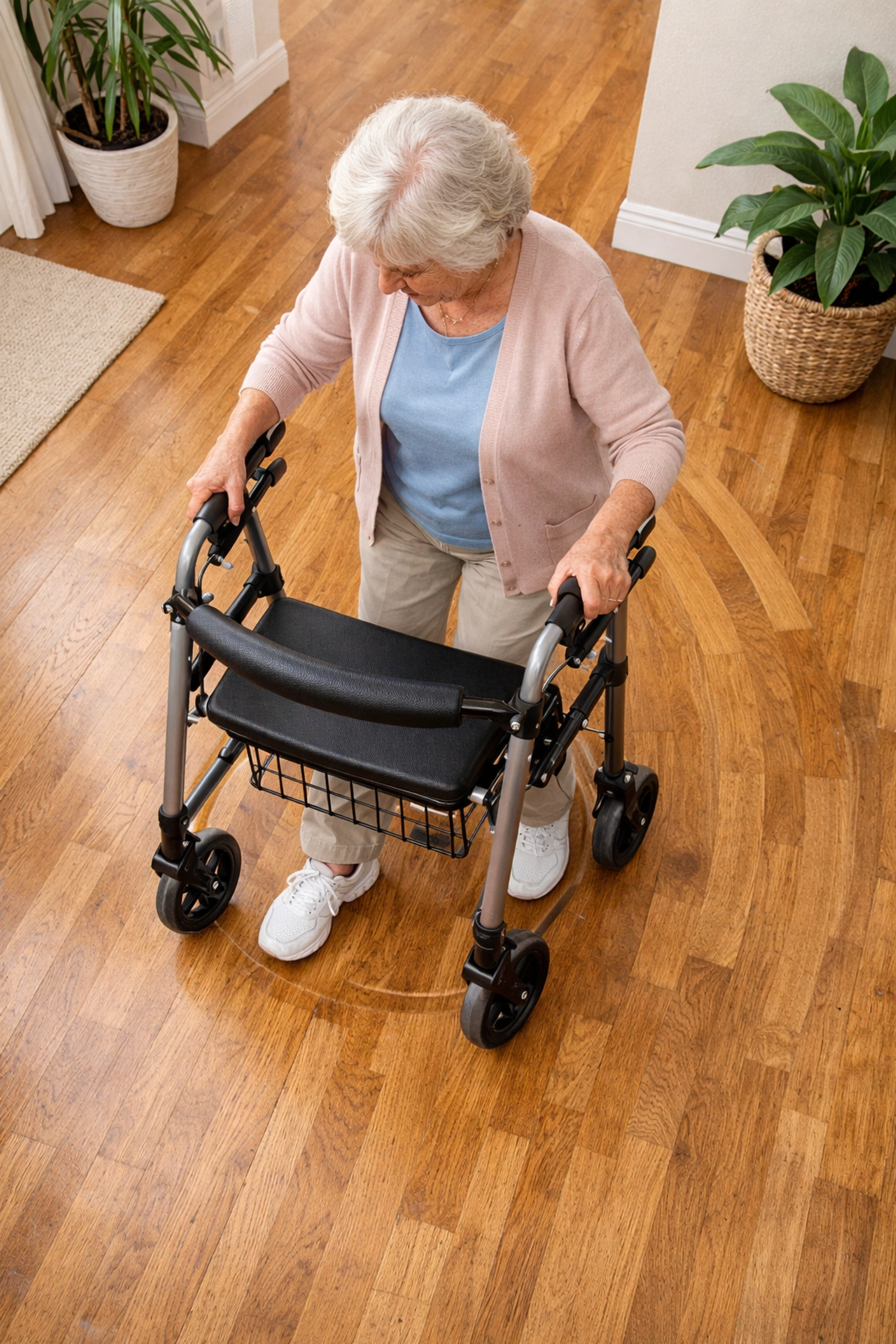
Think of the walker as a protective "bubble" or a frame that you live inside while you move. Your feet should always stay between the back legs of the walker. As you move, push the walker forward just a short distance: about a step’s length: and then step into it. Keep your torso upright and your weight centered over your feet. This ensures that if you do stumble, the support is directly beneath your hands and within your center of mass.
3. Forgetting the Brakes During Transitions
This mistake is specific to rollators: those walkers with four wheels and a built-in seat. Rollators are fantastic for long walks because they allow you to take a break whenever you need one. However, the wheels make them inherently "mobile." A common cause of falls is attempting to sit down on the walker or stand up from it while the brakes are disengaged. If those wheels roll away while you’re mid-transition, there is nothing to stop you from falling.
The Fix: "Lock Before You Rock"
Get into the habit of engaging the brakes every single time the walker is stationary. Before you turn around to sit on the walker's seat, click the brakes into the locked position. Before you use the walker to help you stand up from a chair, ensure it is locked. Give the walker a small nudge with your hand to make sure it isn't going anywhere before you shift your weight onto it.
4. Turning Too Sharply (The Pivot Mistake)
In a hurry to get to the phone or answer the door, many people try to pivot on one foot while holding their walker. This is a recipe for a "tangle-foot" fall. Because a walker has a wide base, your feet can easily get caught on the legs or wheels during a sharp turn. Additionally, turning too quickly can cause the walker to tip if your weight isn't distributed evenly.
The Fix: The Wide Arc
Never pivot on one foot. Instead, treat your walker like a large vehicle. Make wide, controlled turns. Keep your body facing the front of the walker at all times. If you need to turn 180 degrees, take several small steps in a semi-circle, moving the walker bit by bit as you go. It takes a few extra seconds, but it keeps your center of gravity stable and your feet clear of the equipment.
5. Using the Walker to "Pull" Yourself Up
When rising from a seated position: whether from a couch, a bed, or a toilet: it’s tempting to grab the walker handles and pull yourself up. The problem is that walkers are designed to take downward pressure, not horizontal pulling. If you pull on the handles, the walker can easily tip backward toward you, providing zero support and potentially hitting you as you fall.
The Fix: Push, Don't Pull
Always use the armrests of your chair, the mattress, or a sturdy grab bar to push yourself upward. Keep your hands on the surface you are leaving until you are fully upright and have found your balance. Only then should you reach forward and place your hands on the walker grips. The walker is there to help you stay up, not to get you up.
6. Overloading the Front with Weight
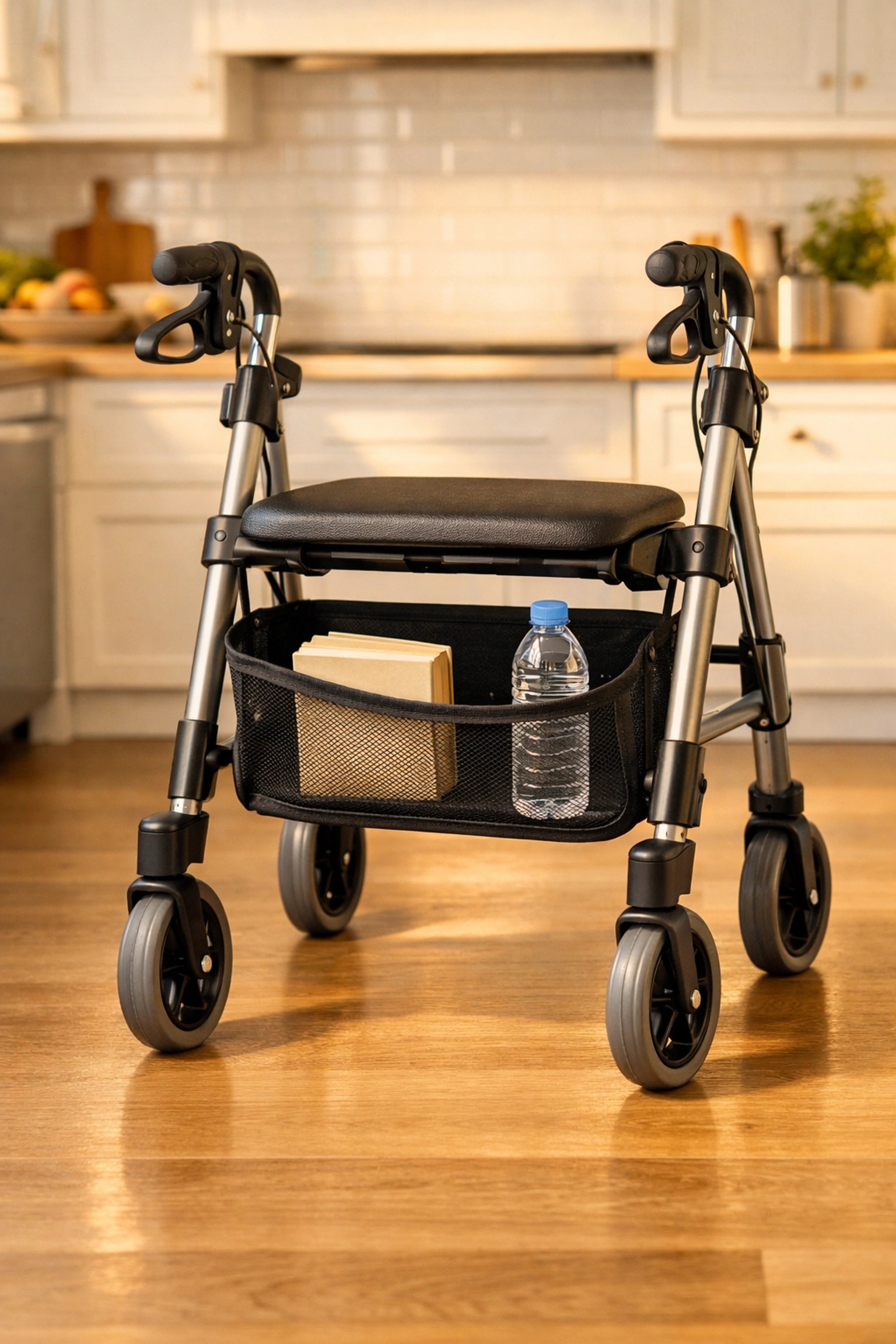
It’s natural to want to carry things with you: a book, a purse, a heavy coat, or a bag of groceries. However, hanging these items over the front crossbar of the walker changes the physics of the device. It shifts the center of gravity forward, making the walker prone to tipping over if you hit a small obstacle like a door threshold or a rug. It also makes the walker harder to steer and maneuver.
The Fix: Use Balanced Storage
If you need to carry items, use accessories specifically designed for your walker, such as a basket or a pouch that sits low and centered within the frame. Even then, be mindful of the weight. For heavier items, it is always safer to ask for help or use a separate rolling cart. Keeping the front of the walker light ensures it remains responsive and stable.
7. Moving Too Fast or Leaning Too Much
Speed is often the enemy of stability. When using a rollator, it’s easy to let the wheels get ahead of you, especially on smooth surfaces or slight inclines. If you find yourself "chasing" your walker, you are moving too fast. Similarly, leaning your entire body weight onto the handles: using the walker like a crutch rather than a balance aid: makes the device unstable and causes significant fatigue in your arms and shoulders.
The Fix: Maintain a Controlled Pace
The goal of a walker is to provide a steady rhythm to your gait. Walk at a pace where you feel in total control of the device. If you are going downhill, keep the brakes slightly squeezed (often called "feathering" the brakes) to control your speed. Keep your posture upright; your hands should be there for balance and minor support, but your legs should still be doing the primary work of carrying your weight.

Bonus: Maintenance and Environment
Beyond how you use the walker, the condition of the tool itself matters. Over time, the rubber tips on a standard walker can wear down, becoming slick and losing their grip on the floor. On rollators, the brakes can loosen, or the wheels can become misaligned.
Weekly Check-In:
- Check the Tips: Are the rubber feet on your walker worn flat? Replace them immediately if they look smooth.
- Test the Brakes: Do the brakes hold firm when you lock them, or does the walker still slide?
- Clear the Path: Even the best walker technique won't save you from a loose throw rug or a stray power cord. Ensure your "walker highway" through your home is clear of clutter.
A Reassuring Note on Independence
Adjusting to a walker can feel like a big change, and it’s okay to feel a little frustrated as you learn the ropes. But remember: the walker isn't a sign of slowing down; it’s a tool that allows you to keep going. By avoiding these seven common mistakes, you aren't just staying safe: you’re ensuring that you can continue to move through your home and your community with confidence.
If you’re ever unsure about the fit or your technique, don’t hesitate to ask a physical therapist for a quick "tune-up." They are experts at gait training and can provide personalized adjustments that make a world of difference. Stay steady, take your time, and keep moving forward.

