
The bathroom is often considered the most dangerous room in the house, especially for seniors or those with limited mobility. It is a space filled with hard, slippery surfaces, moisture, and tight corners. Statistically, the majority of household falls occur in the bathroom: usually while getting in or out of the tub or shower, or when sitting down and standing up from the toilet.
Fortunately, most of these accidents are preventable. Implementing the right safety equipment can transform a high-risk area into a secure environment where independence is maintained. Bathroom safety rails, often called grab bars or assist rails, are the cornerstone of this transformation.
But safety doesn’t have to mean your bathroom needs to look like a clinical hospital wing. Modern design has caught up with necessity. Today, there are dozens of ways to integrate stability into your home elegantly. Here are 15 bathroom safety rail ideas to help prevent slips and falls.
1. The Classic Horizontal Grab Bar
The horizontal grab bar is the gold standard for a reason. Usually installed along the side wall of a bathtub or shower, it provides a stable place to hold onto while moving through the space. Because it is parallel to the floor, it allows a person to "walk" their hands along the bar as they move forward or backward. For maximum safety, these should be mounted into wall studs to ensure they can support full body weight.
2. Vertical Entry Rails
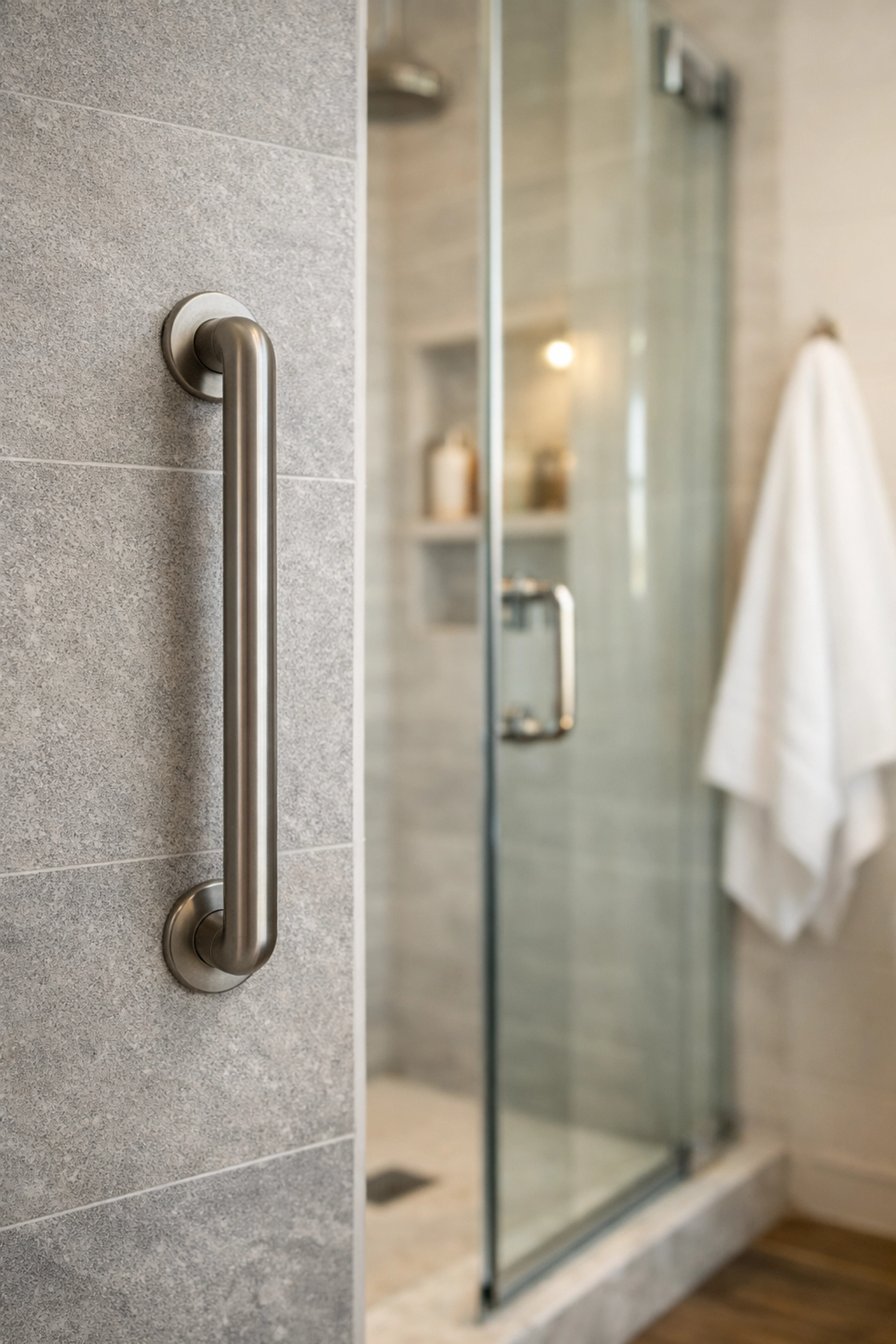
Getting into the shower is often the most precarious moment. A vertical grab bar installed on the entry wall: or even the outer "jamb" of the shower: provides a solid anchor point to hold onto while stepping over the threshold. This is particularly helpful for those with balance issues who need to steady themselves before their feet are firmly planted on the wet floor.
3. L-Shaped Corner Rails
An L-shaped rail provides the best of both worlds. It features a vertical section and a horizontal section connected at a 90-degree angle. This configuration is excellent for shower corners. The vertical part helps with standing stability, while the horizontal part offers support while moving or washing. It provides a continuous line of support so the user never has to let go of a secure surface.
4. Floor-to-Ceiling Transfer Poles
Sometimes, the walls aren't in the right place to provide support. In large bathrooms or near the center of the room, a floor-to-ceiling transfer pole (often called a tension pole) is a lifesaver. These poles use tension to stay securely in place between the floor and the ceiling. They can be placed right next to the bathtub or the toilet, providing a 360-degree gripping surface. Many of these poles also include a horizontal "crossbar" or a curved handle for extra leverage.
5. Integrated Towel Bar Grab Bars
One of the most common mistakes people make is grabbing a standard towel rack for balance. Standard towel racks are designed to hold the weight of a piece of fabric, not a human being. They will likely pull out of the drywall if leaned upon. However, many manufacturers now create "dual-purpose" rails. These look exactly like high-end towel bars but are structurally reinforced and anchored to act as legitimate safety grab bars.
6. Flip-Up Bathroom Rails
In smaller bathrooms, space is at a premium. A fixed rail sticking out from the wall near the toilet might make it difficult for others to use the space or for a wheelchair to navigate. Flip-up rails are the solution. These are mounted to the wall behind the toilet and can be lowered when needed and flipped up against the wall when not in use. They often feature a "paper roll holder" attachment to save even more space.
7. Toilet Safety Frames
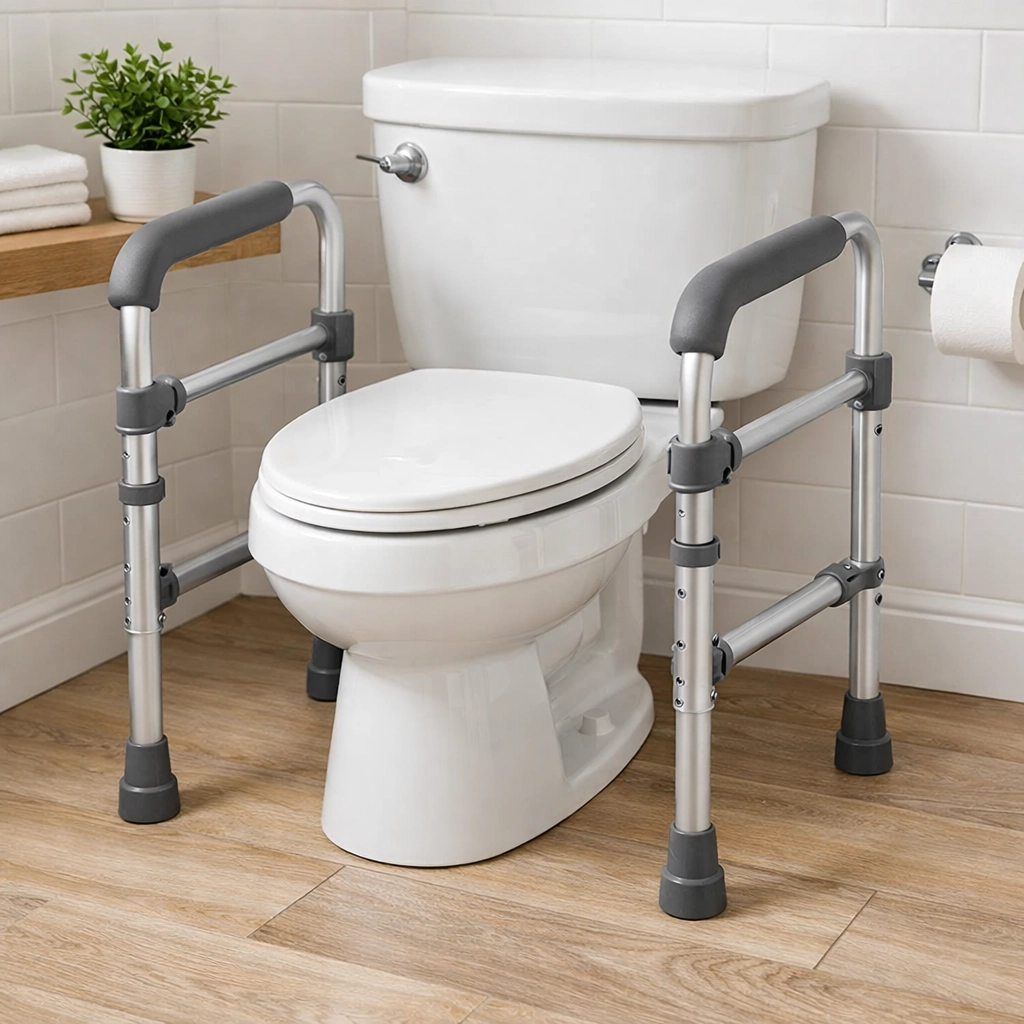
Unlike bars that are drilled into the wall, a toilet safety frame (or "commode rail") typically attaches directly to the toilet using the existing seat bolts. It provides two handles: one on each side: giving the user the ability to use both arms to lower themselves or push themselves up. This is a great "no-drill" option for renters or those who need immediate assistance without a permanent installation.
8. Angled or "Wave" Bars
Not everyone’s grip is the same. For individuals with arthritis or limited wrist mobility, a perfectly horizontal bar can sometimes be uncomfortable. Angled bars, or "wave" bars, provide different heights and angles for the hand to rest. This allows the user to find the most ergonomic grip for their specific height and physical needs, reducing strain on the joints while maintaining a firm hold.
9. Textured and Knurled Finishes
The primary enemy of safety in the bathroom is water. A smooth stainless steel bar can become very slippery when your hands are soapy or wet. When choosing a rail, look for those with a textured or "knurled" finish. This creates a cross-hatch pattern on the metal that provides extra friction. If you prefer a more modern look, many matte finishes offer a "soft-touch" grip that provides similar slip-resistance without the industrial look.
10. Floor-Mounted Grab Bars
If your bathroom walls are made of thin materials or if there is a window where a bar should be, floor-mounted rails are an excellent alternative. These are bolted directly into the floor joists. They are incredibly sturdy and are often used next to "clawfoot" tubs or in open-concept "wet rooms" where wall support is out of reach.
11. High-Contrast Colors
For individuals with low vision or dementia, a chrome bar against a white tile wall can be nearly invisible. This phenomenon is known as "visual blending." To make the bathroom safer, use rails that provide high visual contrast. A matte black bar on a light tile, or even a bright red or blue bar, helps the user clearly identify where the support is located, preventing a "missed grab" during a stumble.
12. LED-Lit Safety Rails
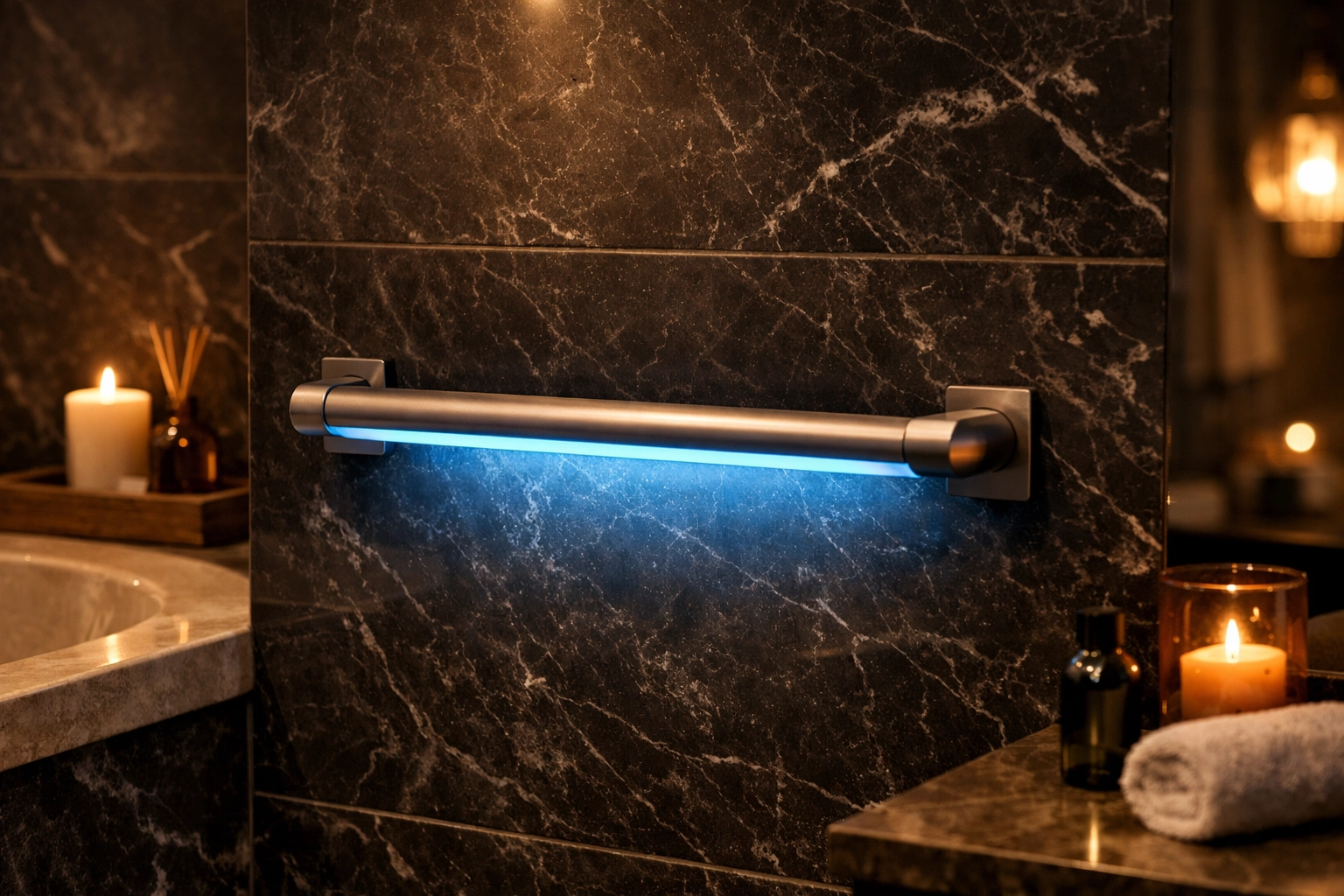
Nighttime trips to the bathroom are a major fall risk. Walking into a dark room while groggy increases the chance of a trip. Some modern safety rails come equipped with integrated LED lights. These provide a soft glow that illuminates the path and highlights the grab bar itself. It acts as both a nightlight and a safety device, ensuring that even in the middle of the night, support is visible.
13. Bariatric-Rated Heavy Duty Rails
Standard grab bars are usually rated to support about 250 pounds. However, for higher-weight individuals, standard bars may not provide enough security. Bariatric safety rails are engineered with thicker steel and more robust mounting systems to support 500 pounds or more. It is essential to check the weight rating of any equipment before installation to ensure it meets the specific needs of the user.
14. Suction-Cup Rails (For Travel/Temporary Use)
A word of caution: suction-cup rails are widely available, but they should never be used as a permanent safety solution. They rely on a vacuum seal that can fail without warning, especially on textured tile or over grout lines. However, for a senior who is traveling and staying in a hotel or a relative's home, a high-quality suction bar can provide a temporary balance aid (not a weight-bearing device). Always test the suction every single time you use it.
15. The "Tri-Point" Placement Strategy
While not a single rail "type," the most effective idea for bathroom safety is the tri-point strategy. This involves installing three separate rails to create a "path" of safety:
- One at the entry/exit point of the shower.
- One on the back wall of the shower.
- One near the faucet or "work area."
This ensures that the user always has at least one hand on a secure surface at all times during the bathing process.
Key Considerations for Installation
Choosing the right rail is only half the battle; how it is installed determines its effectiveness.
The Importance of Studs
Whenever possible, grab bars should be screwed directly into the wooden studs behind the wall. If a stud isn't available in the exact spot you need the bar, specialized "hollow wall" anchors (like the WingIt system) can be used, but these require specific installation steps to be safe.
Standard Heights
While individual needs vary, the Americans with Disabilities Act (ADA) suggests that horizontal grab bars be installed between 33 and 36 inches from the floor. For toilet rails, the goal is to have the handles sit at a height that allows the user's arms to be at a 90-degree angle when sitting, providing the best leverage for standing up.
Professional Assessment
If you aren't sure which rails are right for your home, consider an in-home assessment. Occupational therapists or aging-in-place specialists can look at how a person moves through their specific bathroom and recommend the exact placement of rails to minimize risk.
Conclusion
Preventing falls in the bathroom is about creating a "safety net" of support. By combining different types of rails: such as a floor-to-ceiling pole for the center of the room, an L-shaped bar for the shower, and a flip-up rail for the toilet: you create an environment where a slip doesn't have to result in a fall.
Investing in bathroom safety is an investment in independence. With the variety of styles and configurations available today, you can ensure that your bathroom remains a place of comfort and privacy rather than a place of risk. Take a look at your current bathroom layout and ask: "If I lost my balance right now, what would I grab?" If the answer is a shower curtain or a towel rack, it’s time to consider one of these 15 safety rail ideas.

