
Stairs are one of those things we rarely think about until they start feeling a bit more challenging than they used to. For many of us, the stairs in our homes have been there for decades. We know every creak and every slight tilt of the floorboards. But as we age, or as we care for someone who is getting older, those familiar steps can transition from a simple transition between floors into a significant safety hazard.
The reality is that stair-related incidents are among the most common causes of household injuries for seniors. However, most of these incidents aren't "accidents" in the sense that they are unavoidable. Often, they are the result of small, cumulative safety oversights: mistakes we make because we’ve grown accustomed to our environment.
In this guide, we’re going to walk through the most common stair safety mistakes, why they happen, and how you can fix them to keep your home a safe, reassuring place for everyone.
1. The "One-Handrail" Oversight
Many older homes were built with a handrail on only one side of the staircase. At the time of construction, this met building codes and seemed perfectly sufficient. However, relying on a single handrail is one of the most common mistakes in home safety.
As we age, our balance can shift. We might have more strength on one side of our body than the other due to arthritis, a previous injury, or a stroke. If you only have a handrail on the right side, but your right side is your "weak" side, you aren't getting the support you truly need when descending.
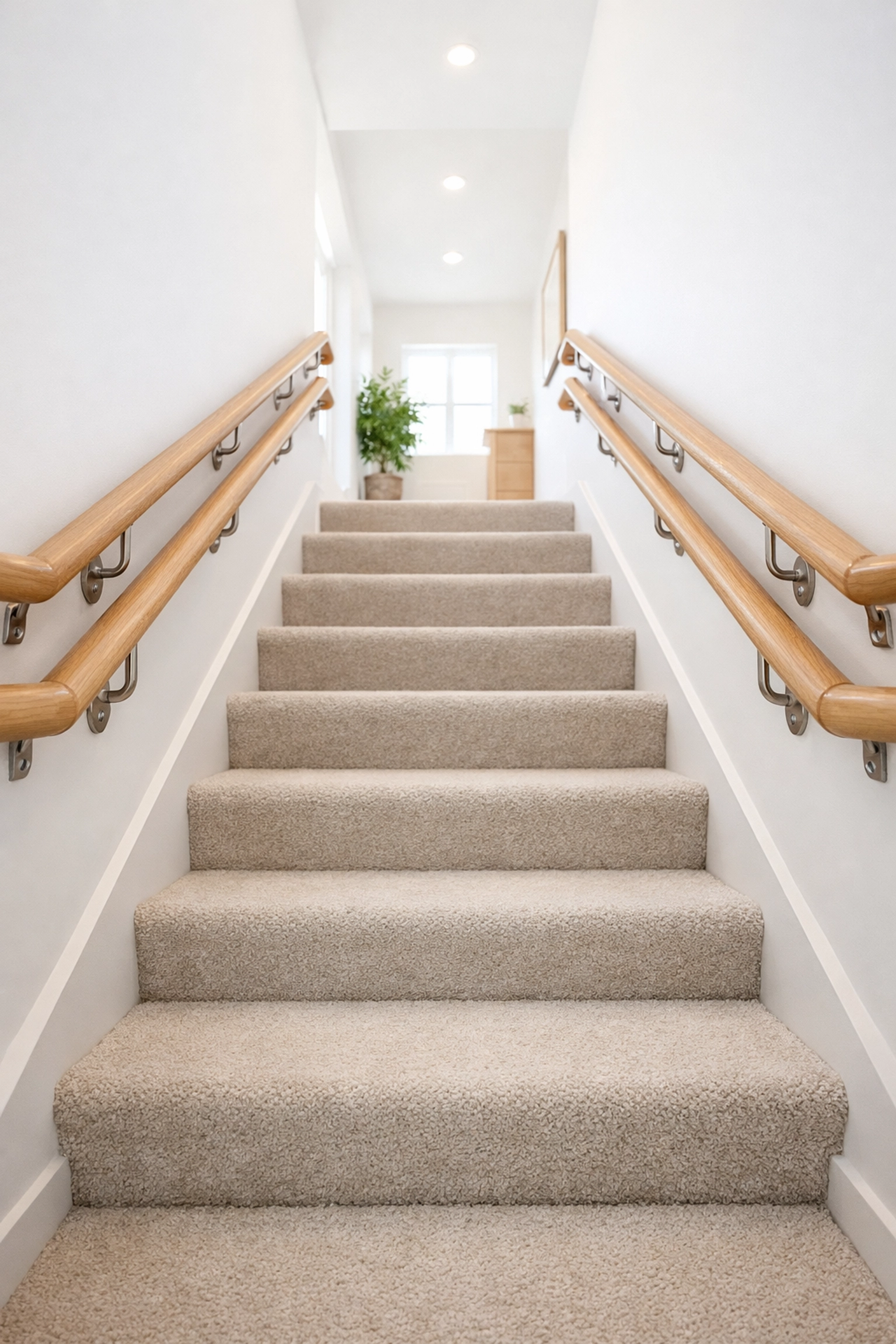
The Fix: Every staircase should ideally have two handrails: one on each side. This allows for a "power grip" with both hands, providing maximum stability. Furthermore, handrails should extend at least 12 inches (300mm) beyond the top and bottom steps. This ensures that you have a firm grip before you even take your first step up or down and that you remain supported until you are safely on level ground.
2. Neglecting the "Shadow Zones" (Poor Lighting)
We often think that if we can see the stairs, they are safe. But "visible" and "well-lit" are two different things. Dim lighting or poorly placed fixtures can create shadows that mask the edge of a step, making it look deeper or shallower than it actually is. This is particularly dangerous for those with declining vision or issues with depth perception.
Many people also make the mistake of having the light switch at only one end of the stairs. If you’re at the bottom and the light is off at the top, you might be tempted to "just make a quick run for it" in the dark.
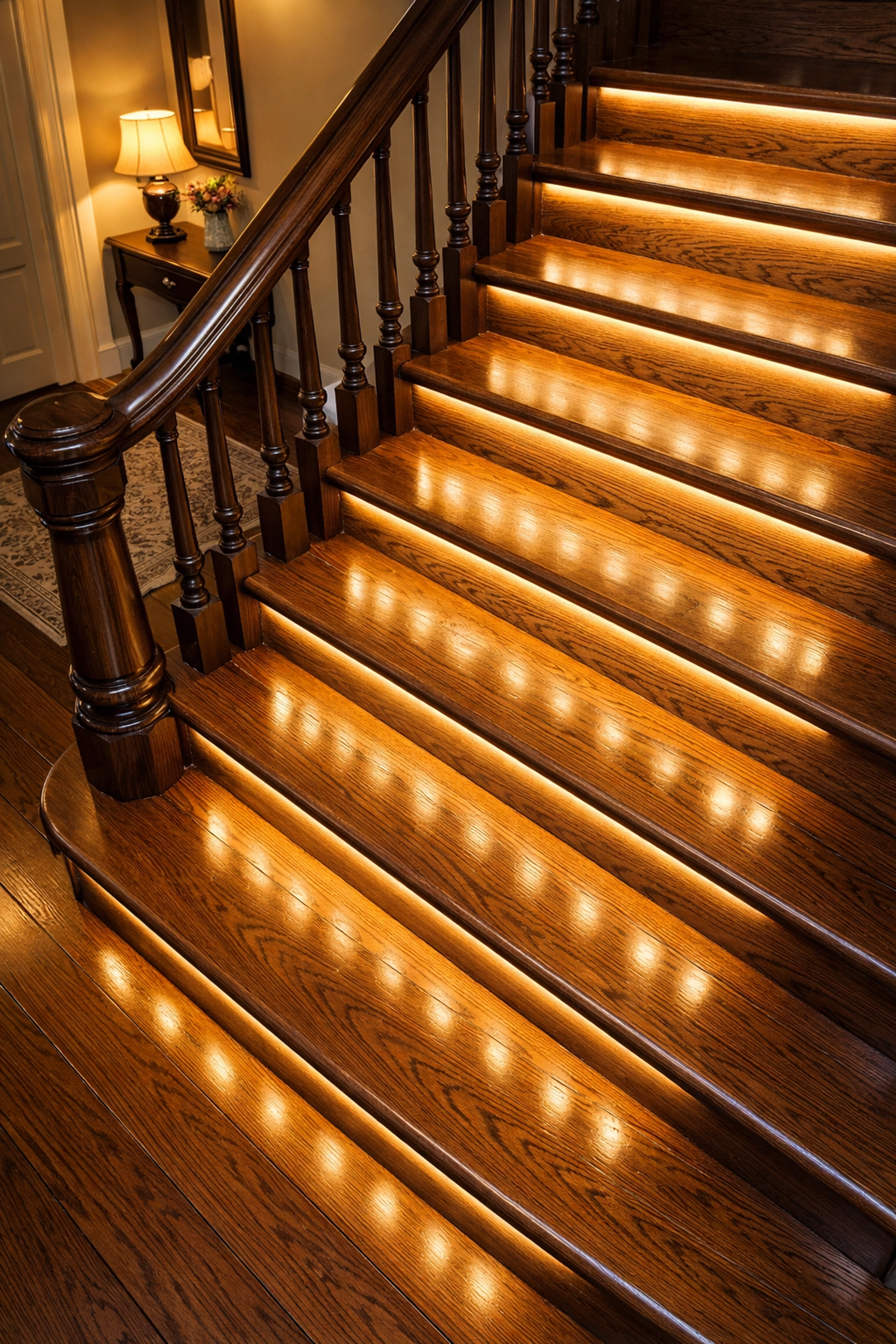
The Fix: Install high-intensity, non-glare lighting. LED strips under the lip of each tread are an excellent way to define exactly where one step ends and the next begins. Ensure there are "three-way" switches at both the top and bottom of the stairs. Better yet, motion-activated lights can remove the need to fumble for a switch entirely.
3. The Danger of "Socks-Only" Navigation
It feels cozy to walk around the house in socks, especially on polished hardwood stairs. However, this is a major safety mistake. Socks provide zero traction on smooth surfaces like wood, tile, or laminate. Even "non-slip" socks can lose their grip over time as the rubberized tread wears down or gets dusty.
Conversely, wearing loose-fitting slippers or walking barefoot can also be risky. Bare feet can stick to certain surfaces or lack the structural support needed for a steady climb, while loose slippers can easily slide off the heel, causing a trip.
The Fix: Wear sturdy, rubber-soled shoes with a closed heel inside the home. If you prefer to be shoe-free, invest in high-quality indoor footwear designed for stability. Additionally, check the surface of your stairs. If they are bare wood or tile, consider adding non-slip adhesive transparent strips or low-pile carpet treads to increase traction.
4. Treating Stairs Like a Storage Unit
We’ve all done it: we put a book, a basket of laundry, or a pair of shoes on the bottom step, intending to take them up "on the next trip." This creates a significant tripping hazard. Even if you think you’ll remember the item is there, it’s easy to get distracted or lose sight of it when navigating the stairs from above.
Clutter narrows the usable path of the stairs and can catch a toe or a heel, leading to a loss of balance. It also forces you to step awkwardly to avoid the object, shifting your center of gravity.
The Fix: Adopt a "Zero-Object Policy" for stairways. Nothing should ever sit on a step, not even for a minute. If you need to move items between floors, use a sturdy basket that you carry only when your hands are free to use the handrails, or ask a family member for assistance.
5. Overlooking Step Consistency and Dimensions
Did you know that our brains "map" a staircase after the first two steps? Once we start climbing, our muscle memory takes over. If one step is even a quarter-inch higher or lower than the others (often called a "phantom step"), it can cause a trip.
Old houses are notorious for "settling," which can lead to uneven risers or treads that tilt slightly forward. Furthermore, steps that are too shallow (not enough room for your whole foot) or too steep are inherently more difficult to navigate safely.
The Fix: Periodically inspect your stairs for signs of wear, such as loose boards, wobbling treads, or carpet that has become un-tacked. If you notice an uneven step, it’s worth having a carpenter or a home safety specialist take a look. While you can't easily change the architecture of your home, ensuring everything is tight, level, and secure makes a world of difference.
6. Depth Perception and the "Invisible" Edge
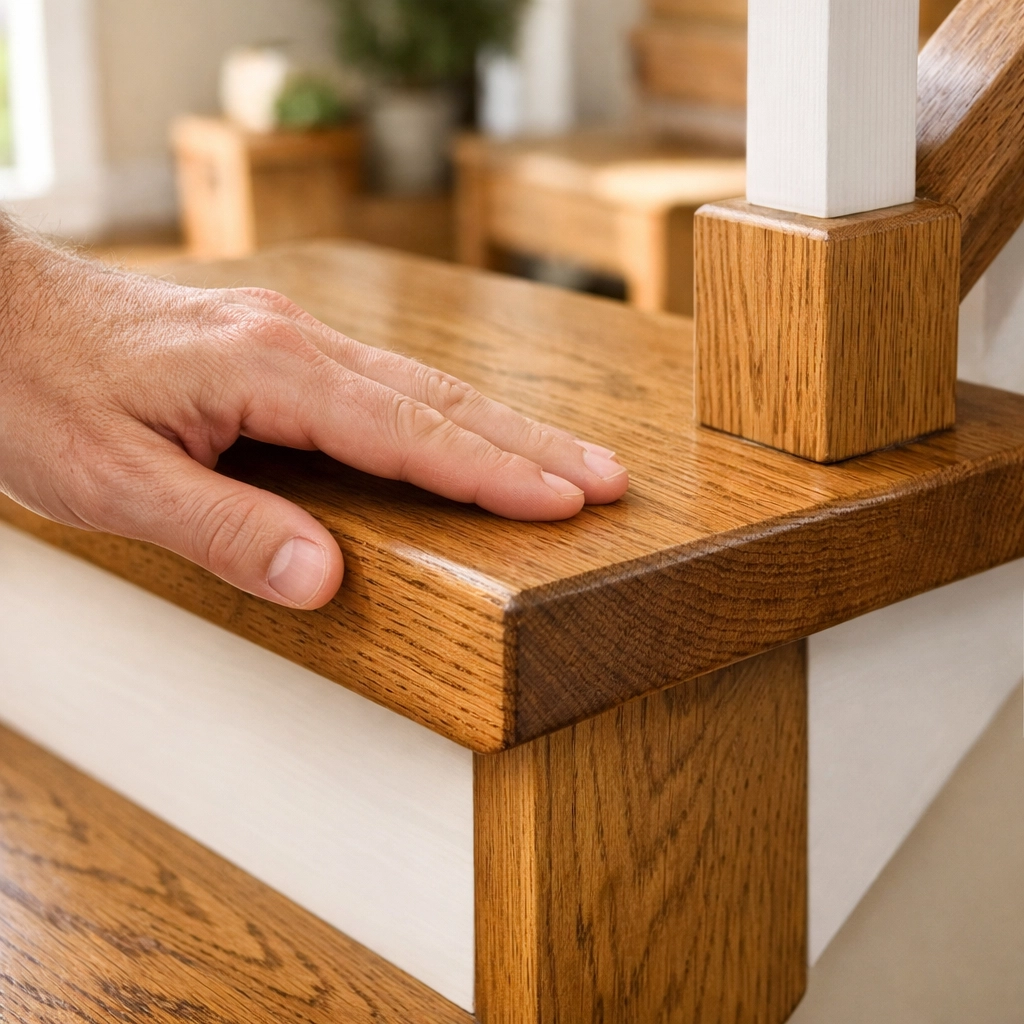
As we age, our ability to distinguish between similar colors and textures decreases. If your stairs are covered in a dark, uniform carpet, or if they are made of a single shade of oak, the "nose" (the edge) of each step can blend into the tread below it. This makes it very difficult to judge exactly where to place your foot.
This issue is compounded for those who wear bifocals or trifocals. Looking down through the bottom portion of the lens: the part meant for reading: distorts the distance to the floor, making the steps appear blurry or closer than they actually are.
The Fix: Create visual contrast. You can apply a strip of contrasting colored tape (such as a bright yellow or a stark white) to the edge of each step. This provides a clear visual cue for where each step ends. For those with bifocals, the best advice is often to tuck the chin down further so you are looking through the "distance" portion of the lens, or to have a dedicated pair of single-vision glasses specifically for moving around the house.
7. The Two-Hand Carry Trap
Carrying a heavy laundry basket, a tray of food, or a bulky box up the stairs is a recipe for trouble. When you use both hands to carry an object, you have zero hands available for the handrail. If you lose your balance: even slightly: you have no way to catch yourself.
Furthermore, large objects often block your view of your feet and the steps below, making it impossible to see where you are placing your weight.
The Fix: Always keep at least one hand free for the handrail. If an item is too heavy or bulky to carry with one hand, don't take it up the stairs yourself. Break large loads into smaller, one-handed trips, or use a "stair slide" or a backpack to transport items while keeping your hands free.
8. Weak or Decorative Railings
Sometimes, the mistake isn't that there isn't a railing, but that the railing isn't functional. Many decorative railings are too wide to grip properly. If you can’t wrap your fingers and thumb entirely around the rail (a "circumferential grip"), you won't be able to hold on securely if you actually slip.
Additionally, railings can become loose over time. A handrail that wobbles when you put weight on it is arguably more dangerous than no handrail at all, as it provides a false sense of security.
The Fix: Ensure your handrail is "graspable." The ideal diameter is between 1.25 and 2 inches. If your current railing is too thick or is a flat "2×4" style, you can often mount a smaller, rounder secondary rail to the existing structure. Check the brackets regularly to ensure they are screwed into the wall studs and don't budge under pressure.
9. Ignoring the "Landing" Zone
Safety doesn't end at the last step. The areas immediately at the top and bottom of the stairs: the landings: are just as critical. A common mistake is placing a loose throw rug at the base of the stairs to catch dirt or "look nice." These rugs can easily slide out from under you as you transition from the stairs to the floor.
Another issue is furniture placement. If a chair or a hall table is too close to the stair opening, it can restrict your movement or catch your sleeve as you pass.
The Fix: Remove all loose rugs from the top and bottom of the staircase. If you must have a rug, ensure it is wall-to-wall or professionally tacked down with a non-slip pad. Keep the landing zones clear of furniture and ensure there is plenty of room to turn and move away from the stairs once you've finished your climb.
10. Rushing and Fatigue
Perhaps the most common mistake of all isn't physical: it's behavioral. We often rush to answer the door, grab a ringing phone, or "just get it over with" because our legs feel tired. Navigating stairs when you are winded or in a hurry significantly increases the chance of a misstep.
The Fix: Take it slow. Make a conscious effort to pause at the top or bottom of the stairs to catch your breath before beginning. Use the "step-to" pattern (placing both feet on the same step before moving to the next) if you are feeling tired or unsteady. Remember, the phone call or the person at the door can wait thirty seconds: your safety is the priority.
Moving Toward a Safer Home
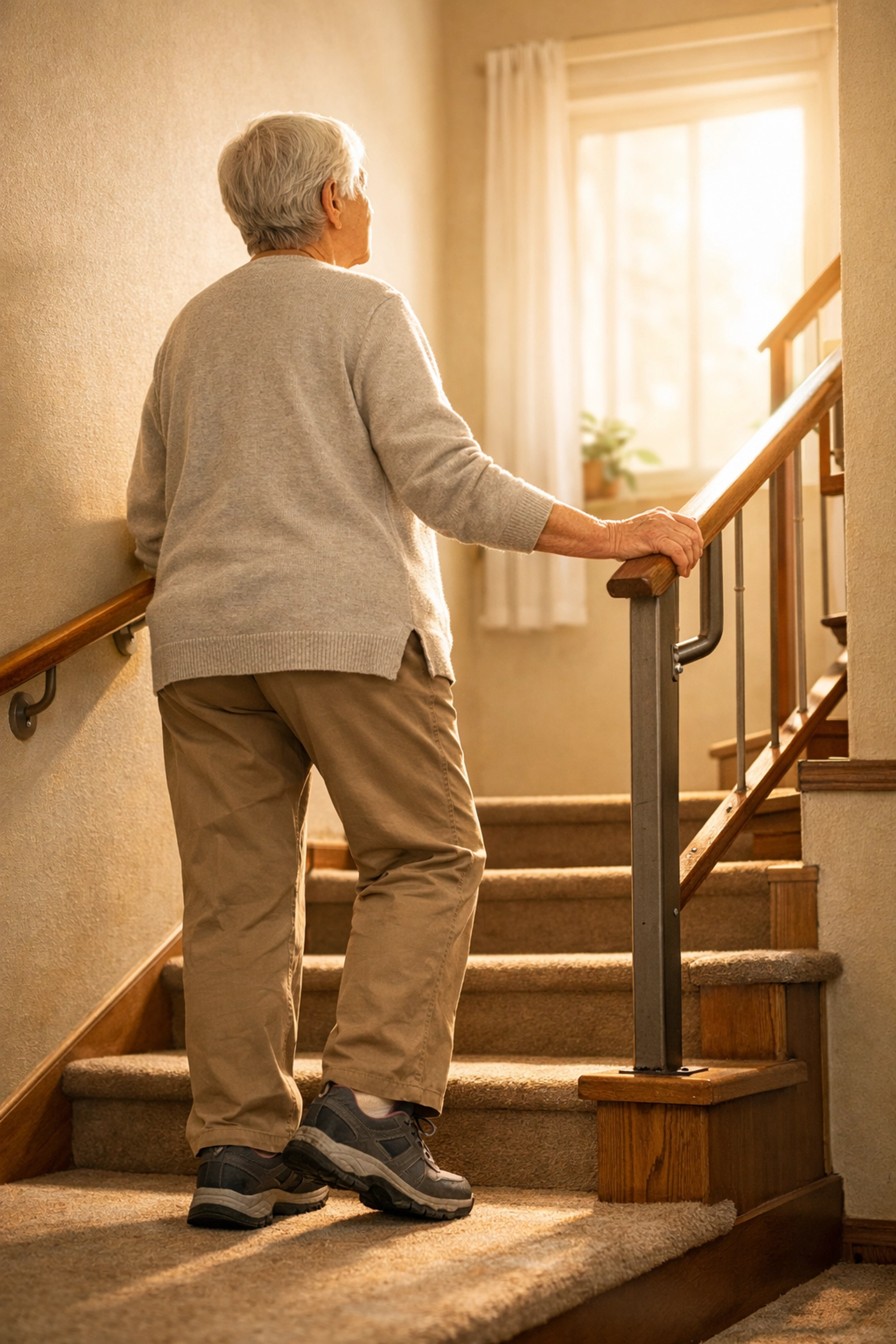
Identifying these mistakes is the first step toward creating a safer living environment. Many of the fixes: clearing clutter, improving lighting, or checking your footwear: can be done in a single afternoon. Others, like installing secondary handrails or adding non-slip treads, might take a bit more effort but offer immense peace of mind.
Stair safety isn't about losing independence; it’s about preserving it. By making these small adjustments, you ensure that you can move through your home with confidence, grace, and most importantly, safety. Take a look at your stairs today through a fresh set of eyes. What small change can you make right now to make your next trip up or down a little more secure?

