
Stairs are often the most intimidating part of a home. Whether you are a homeowner looking to age in place or a caregiver helping a loved one stay independent, the staircase represents a significant challenge to mobility.
I’m Brian Kerr, the founder of Fall Guys Products. Over the years, I’ve seen how much anxiety a simple flight of stairs can cause. But here is the thing: stairs don't have to be a "no-go" zone. Often, it isn’t the stairs themselves that cause problems, but small, overlooked mistakes in how they are designed, maintained, or used.
When we talk about fall prevention, we aren’t just talking about avoiding an accident; we’re talking about preserving your freedom to move through your own home with confidence. Let’s dive into the seven most common mistakes people make with stair safety and, more importantly, how you can fix them today.
1. The Trap of Inconsistent Step Heights
Have you ever walked up a flight of stairs and felt yourself stumble for seemingly no reason? It might not be your balance; it might be the math of the staircase.
Architects and safety experts talk a lot about "stair rhythm." When we walk up or down stairs, our brains subconsciously measure the height (the riser) and the depth (the tread) of the first two steps. Once that rhythm is established, our bodies go on autopilot.
The mistake many people make: especially in older homes or DIY renovations: is having steps that vary even by half an inch. A top step that is slightly taller or a middle step that is slightly shallower can catch a toe or cause a heel to slip.
How to Fix It:
Check your stairs with a tape measure. Each riser should be the same height, and each tread should be the same depth. If you find a significant discrepancy, it may require a carpenter to shim or adjust the treads. At the very least, if you have one "odd" step, mark it clearly with high-contrast anti-slip tape to alert your brain to change its rhythm.
2. Falling for the "Bottom-of-Flight Illusion"
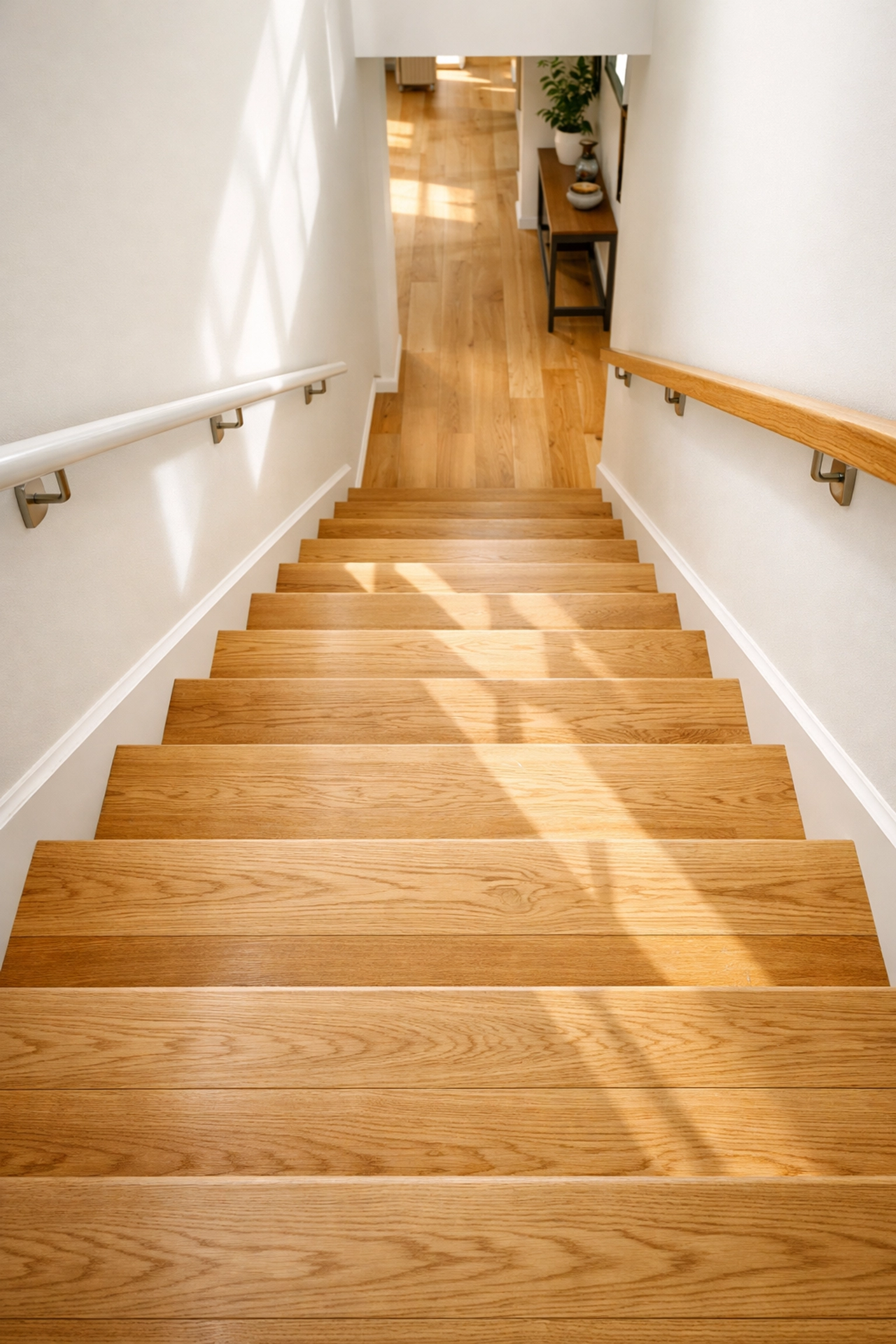
One of the most common places for a fall is not at the top of the stairs, but at the very bottom. There is a psychological and visual phenomenon known as the "bottom-of-flight illusion."
This happens when the material of the stairs (like a specific carpet pattern or wood grain) matches the flooring of the landing perfectly. As you descend, your eyes can struggle to distinguish where the last step ends and the flat floor begins. You might think you’ve reached the floor and step out into empty air, or conversely, you might think there is one more step when you’re already on flat ground.
How to Fix It:
The goal is visual contrast. You want the last step to "pop" so there is no doubt it’s the end of the journey. You can do this by:
- Using a different color of anti-slip tread on the bottom step.
- Applying a strip of high-visibility tape to the edge (nosing) of the last step.
- Ensuring the landing is a different color or texture than the stairs.
3. Treating Handrails as Decorations
I see this all the time: beautiful, ornate, thick wooden handrails that look great in a magazine but are nearly impossible to actually grip.
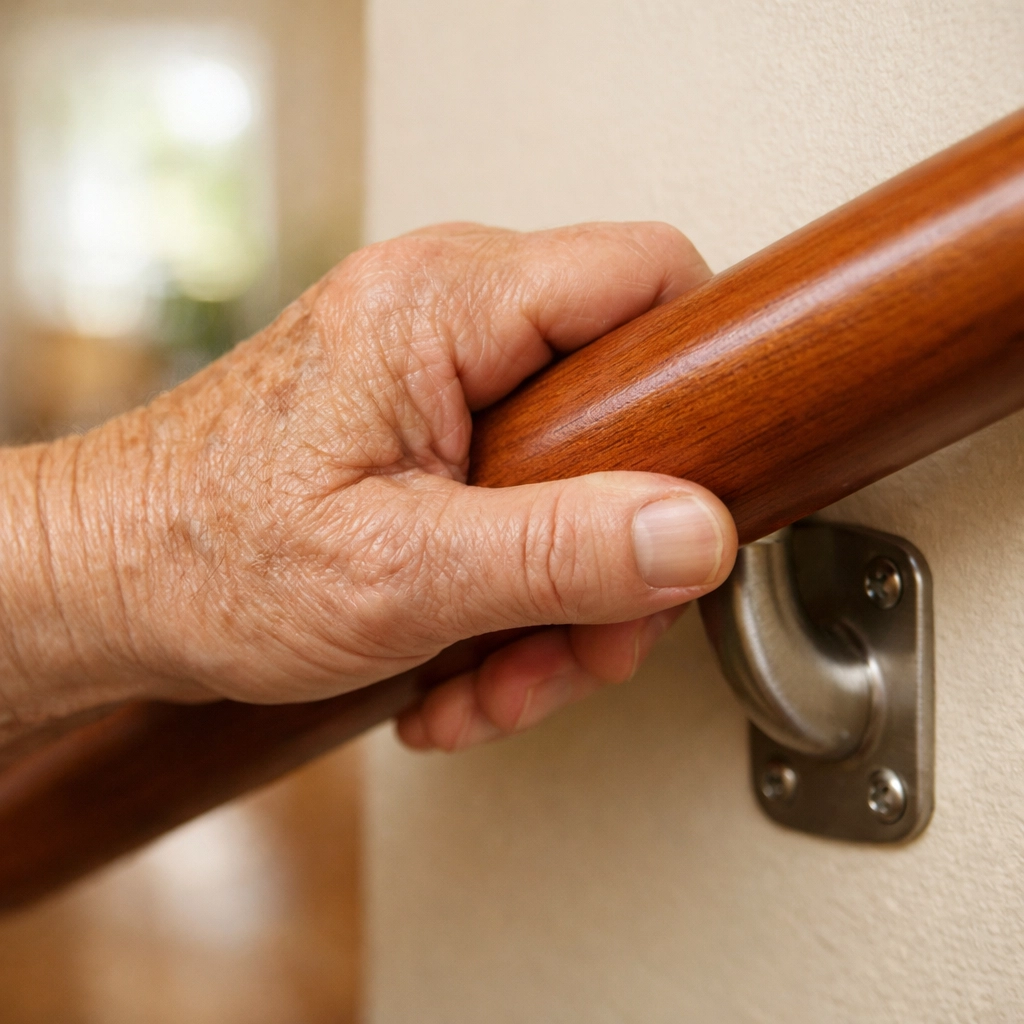
A handrail is not just a guide; it is a safety device. The biggest mistake people make is having a handrail that is too wide or "chunky" to wrap their hand around. If you start to lose your balance, a decorative, rectangular rail doesn't allow for a "power grip": the kind of grip where your fingers and thumb can actually meet.
How to Fix It:
Your handrail should be "round and sound." Ideally, it should be circular or oval with a diameter of about 1.25 to 2 inches. This allows you to firmly encircle the rail.
- Check the length: The rail should extend at least 12 inches beyond the top and bottom steps so you have support before you start climbing and after you finish.
- Double up: If you only have a rail on one side, consider installing a second rail on the opposite wall. Having "two points of contact" (both hands on rails) significantly increases stability.
4. The Hidden Danger of Slippery Surfaces
Polished hardwood stairs are stunning, but they are essentially slides for anyone wearing socks or smooth-soled slippers. Even stone or tile can become treacherous if there is the slightest bit of moisture or dust.
Many people think that as long as they are careful, the surface doesn't matter. But balance is dynamic. A sneeze, a sudden noise, or a momentary dizzy spell can happen to anyone. On a slippery surface, a minor wobble becomes a major fall.
How to Fix It:
You don't have to cover your beautiful wood with ugly carpet if you don't want to. There are several modern solutions:
- Clear anti-slip adhesive strips: These provide a gritty texture but are almost invisible to the eye.
- Non-slip stair treads: These are small mats that sit on each step.
- Proper footwear: This is a behavioral fix. Encourage a "no socks on stairs" rule. Bare feet or shoes with rubber soles are much safer.
5. Neglecting the "Minor" Maintenance Issues
We often get used to the quirks of our homes. We know which floorboard creaks and which step "gives" a little bit when we step on it. However, a loose tread or a wobbly banister is a disaster waiting to happen.
Over time, the nails holding stair treads in place can loosen, or wood can warp. If a tread moves even a fraction of an inch when you put your weight on it, it can shift your center of gravity just enough to cause a stumble.
How to Fix It:
Once every few months, do a "stair audit." Walk up and down slowly, putting weight on different parts of each step.
- If a step squeaks or moves, secure it with wood screws (which hold much better than nails).
- Check the brackets holding your handrails to the wall. If they wiggle, tighten them or move them to a different stud if the wood has become stripped.
6. Living in the Shadows (Poor Lighting)
Lighting is perhaps the most underrated aspect of stair safety. If you can’t see where the edge of the step is, you are guessing: and guessing on stairs is dangerous.
The mistake most people make is having a single, dim overhead light that creates long shadows. These shadows can hide the depth of the step or make the stairs look like a flat ramp. Another common issue is having the light switch only at one end of the stairs, forcing you to walk in the dark to turn it on.
How to Fix It:
You want "even, shadow-free" illumination.
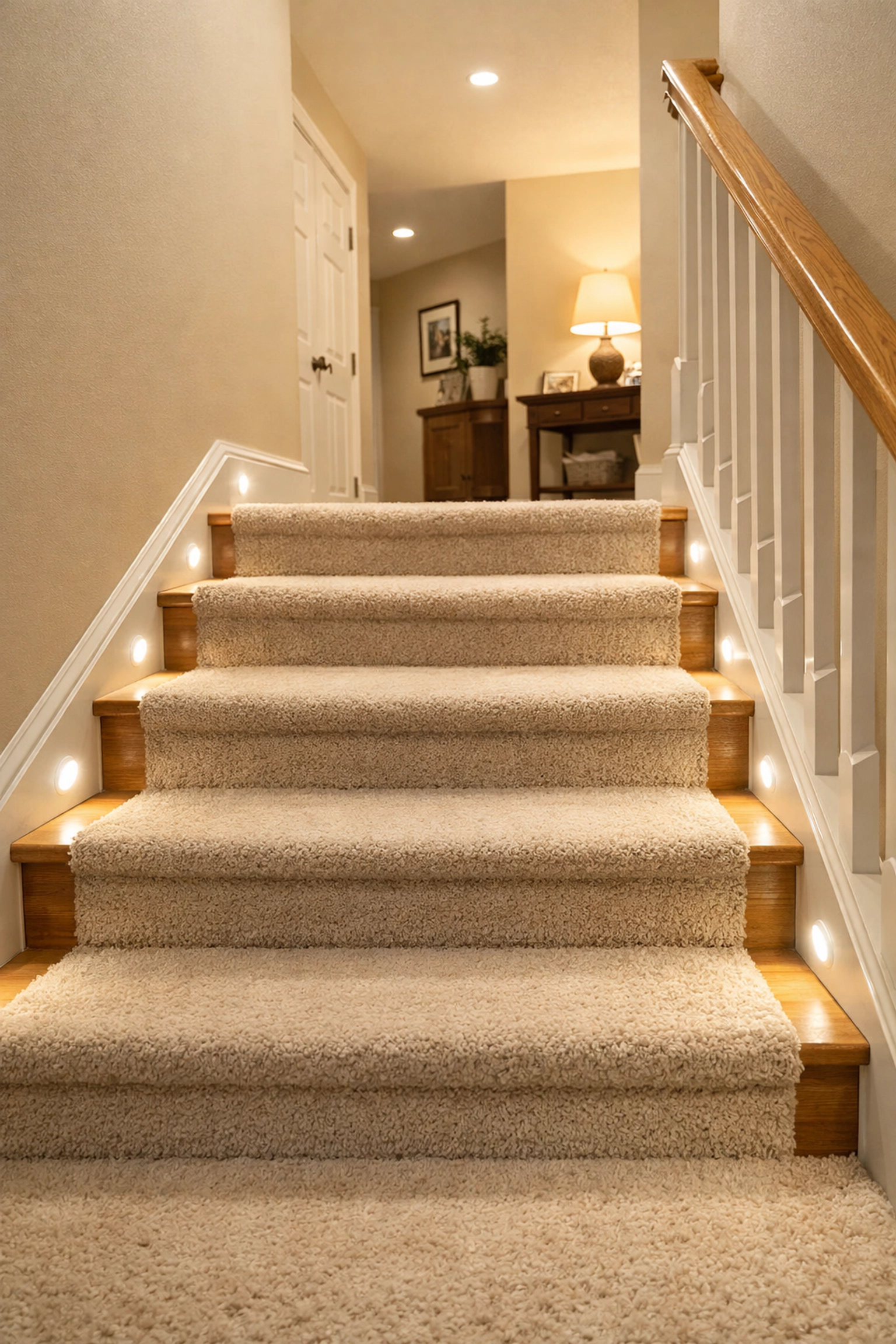
- Motion-sensor lights: These are a game-changer. You can find battery-operated LED lights that stick to the wall or the underside of the railing. They turn on automatically when they sense movement, which is perfect for middle-of-the-night trips.
- Dual switches: Ensure there is a light switch at both the top and the bottom of the flight.
- Reduce glare: Use frosted bulbs or shaded fixtures so the light doesn't blind you as you look down.
7. The "Stair Pile" and Rushing
We’ve all done it: we have a pile of mail, a pair of shoes, or a basket of laundry that needs to go upstairs, so we leave it on the first few steps to remind ourselves to take it up later.
This is a major tripping hazard. Even if you think you’ll remember it’s there, a moment of distraction is all it takes to catch a foot on a stray shoe. Furthermore, carrying large items that block your view of your feet is a recipe for a fall.
How to Fix It:
- The "Clear Path" Rule: Nothing: absolutely nothing: should ever be stored on the steps. If things need to go up or down, use a "stair basket" kept on the floor next to the staircase, not on the steps themselves.
- One Hand Free: Never carry items with both hands while using the stairs. You must always have at least one hand free to use the handrail. If you have a lot to carry, consider making two trips or using a backpack.
- Slow Down: Rushing is a mental mistake. Treat the stairs like a mindful activity. Take one step at a time, plant your foot firmly, and keep your eyes on the path ahead.
Why This Matters
I know that making these changes can feel like a chore. You might think, "I've lived here for thirty years and never fallen." But the reality of aging is that our vision, reaction time, and bone density change. What was a "near miss" at age 50 could be a life-altering event at age 75.
Taking the time to fix these seven mistakes isn't about admitting weakness; it’s about being smart. It's about making your home a sanctuary where you don't have to worry about every trip to the second floor.
At Fall Guys Products, our goal is to empower you with the right information to stay safe. Whether it’s improving your lighting or securing a handrail, every small change adds a layer of protection. If you’re unsure where to start, consider having a professional mobility assessment. Sometimes a fresh pair of eyes can spot the "invisible" dangers we’ve grown accustomed to.
Stay safe, move with confidence, and remember that your home should always be a place of comfort, not a place of risk.

