
Hi there, I’m Brian Kerr. If you’re reading this, it’s likely because you’ve taken on one of the most important roles a person can have: looking after an aging parent or loved one. At Fall Guys Products, we talk to caregivers every single day, and I know that the weight of responsibility can feel heavy. You want your parents to keep their independence, but you also want them to stay safe.
Falls are often the "elephant in the room" when it comes to aging. We know they happen, we worry about them, but sometimes it feels overwhelming to know where to start with prevention. The good news is that falls aren’t just an inevitable part of getting older. Many of them are entirely preventable with the right combination of home modifications, health awareness, and supportive tools.
In this guide, I want to walk you through everything you need to know to create a safer environment and a more confident lifestyle for your loved ones. We aren't here to scare you; we're here to empower you with practical, actionable steps.
Understanding the "Why" Behind Falls
Before we jump into the "how" of prevention, it helps to understand why falls become more common as we age. It’s rarely just one thing. Usually, it’s a combination of physical changes and environmental factors.
As we get older, our muscle mass naturally decreases (a process called sarcopenia), and our balance reflexes slow down. Vision might get a bit blurrier, and depth perception can shift, making it harder to see where a rug ends or a step begins. On top of that, certain medications can cause dizziness or "orthostatic hypotension": that lightheaded feeling you get when you stand up too fast.
When you combine these physical changes with a home that was designed for a younger, more mobile person, the risk increases. Our goal is to bridge that gap by making the home work for them, not against them.
Conducting a Room-by-Room Safety Audit
The best way to start is with a walkthrough. Put yourself in your parent’s shoes. Walk through the house and look for anything that might catch a toe or cause a slip.
The Living Room and Hallways
These are the high-traffic zones. Most people think of falls happening on stairs, but many occur on flat ground in the middle of a room.
- The Rug Problem: Throw rugs are the number one culprit. They look nice, but their edges are trip magnets. If you can’t bear to part with them, use double-sided heavy-duty tape or non-slip backing. Better yet, remove them entirely.
- Clear the Path: Over time, we all accumulate "stuff." Magazines, footstools, and plant stands often migrate into walking paths. Ensure there is a clear, wide path through every room.
- Cord Management: Check for phone chargers, lamp cords, or oxygen tubing stretching across walkways. Tuck these behind furniture or use cord covers that adhere to the floor.
The Bedroom
The bedroom should be a sanctuary, but for many seniors, the most dangerous time is the middle of the night.
- Bed Height: Is the bed too high or too low? When your parent sits on the edge of the bed, their feet should be flat on the floor and their knees should be at a 90-degree angle.
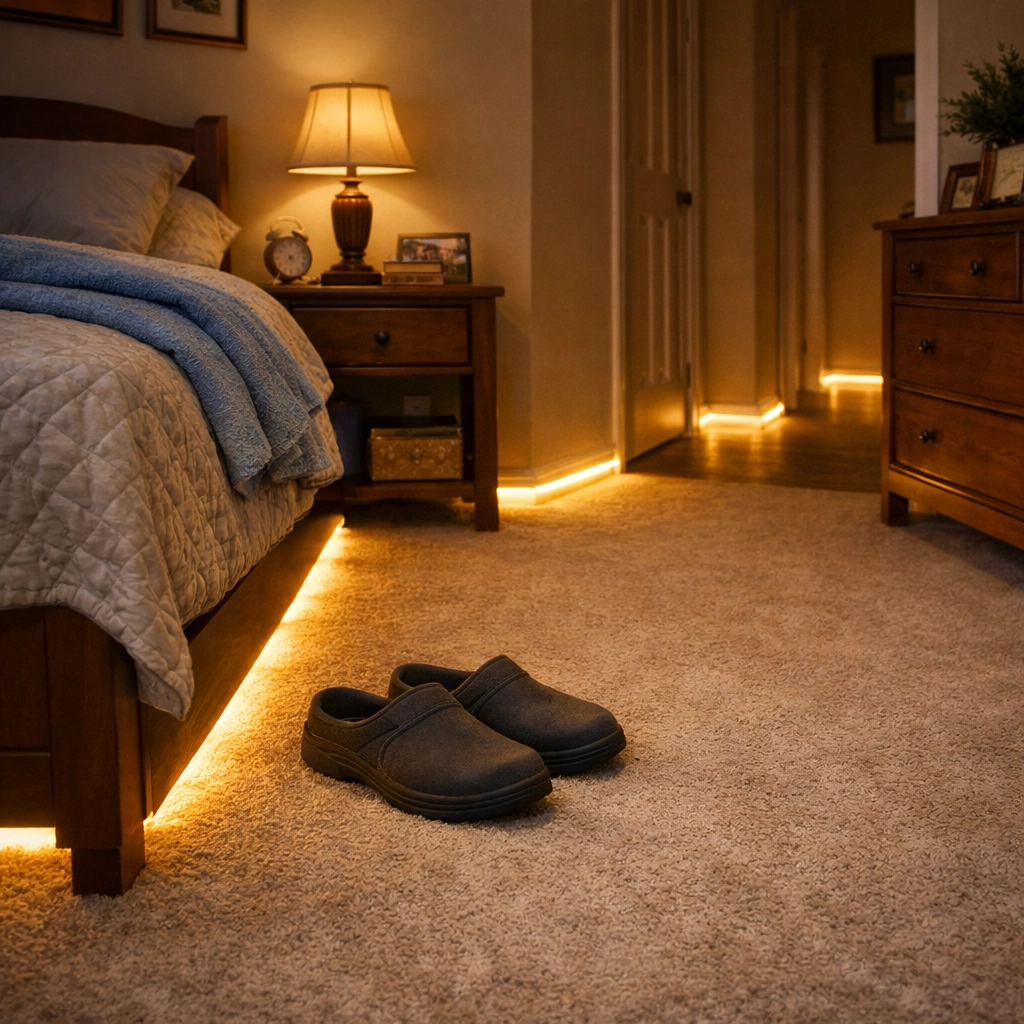
- Nighttime Navigation: Getting up to use the bathroom in the dark is a major risk factor. Motion-activated lights under the bed or along the baseboards can light the way without requiring them to fumbled for a switch.
The Bathroom: The Most Important Room to Modify
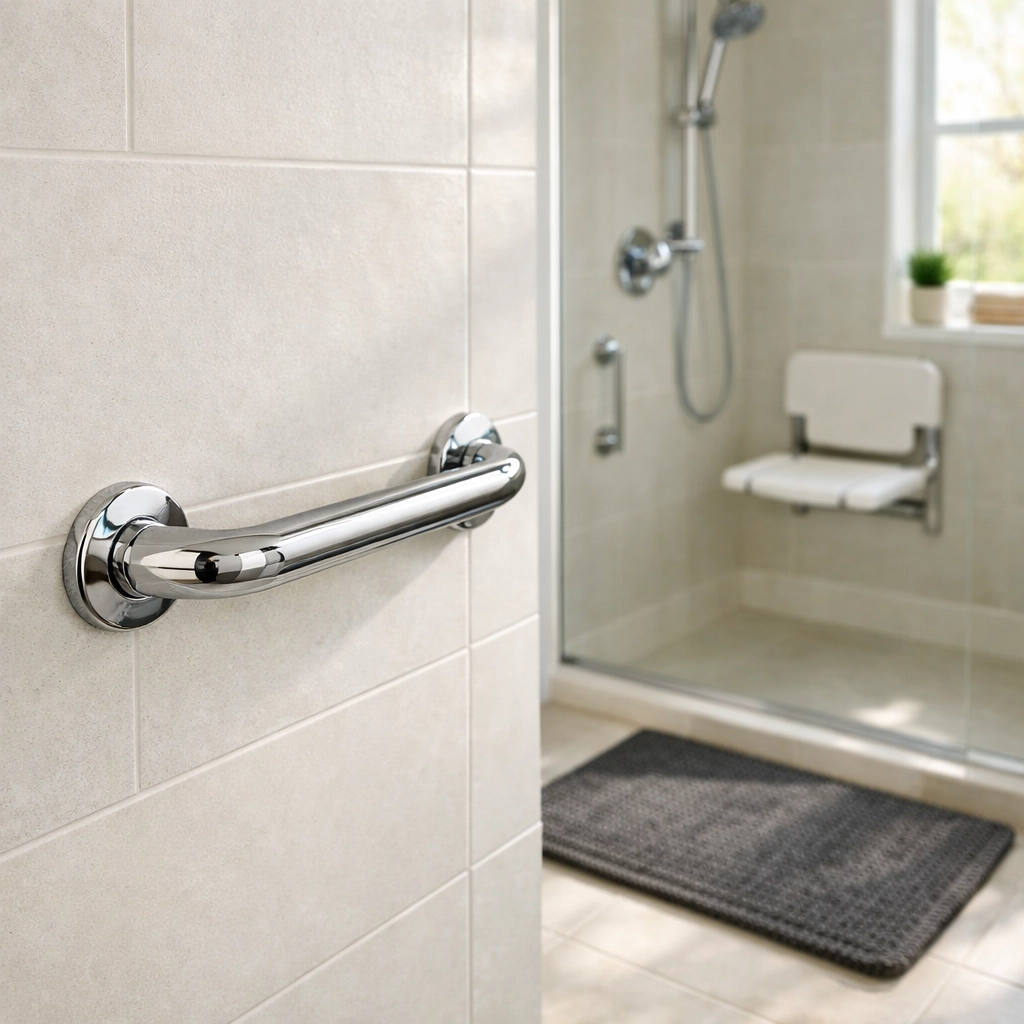
It’s a well-known statistic in the medical world: about 80% of falls in the home happen in the bathroom. It makes sense: water, smooth tiles, and lots of sitting and standing movements create a "perfect storm" for accidents.
Grab Bars Are Essential
If there is only one thing you do after reading this, let it be installing grab bars. And I don’t mean the "suction cup" variety: I mean bars that are securely bolted into the wall studs. A towel rack is not a grab bar; it isn't designed to hold a person’s weight.
Install bars:
- Inside the shower or tub.
- Next to the toilet to help with sitting and standing.
- Near the entry point of the shower.
Non-Slip Surfaces
Tubs and showers get incredibly slippery. Use high-quality non-slip mats or adhesive strips. For the floor outside the tub, look for "low-profile" rugs with a solid rubber backing that won't slide when stepped on.
Elevated Toilet Seats
Lowering oneself onto a standard toilet requires significant leg strength and balance. An elevated toilet seat or a rail system around the toilet can make this transition much easier and safer.
The Power of Lighting
We often underestimate how much our eyes help us stay balanced. As vision declines, we rely more on visual cues to navigate. If a hallway is dim, a senior might not see a slight change in the floor's level.
- Increase Wattage: Switch out old bulbs for brighter, "daylight" LEDs.
- Switches at Both Ends: Ensure hallways and stairs have light switches at both the top and the bottom so nobody ever has to navigate the stairs in the dark to turn a light off.
- Glare Reduction: While you want it bright, you also want to avoid glare on polished floors, which can be disorienting. Using sheer curtains to soften direct sunlight can help.
Physical Activity: The Best Defense
Environmental changes are half the battle. The other half is the body. It’s a bit of a "use it or lose it" situation. The more a person moves, the better their balance remains.
Focus on Balance and Strength
You don't need a gym membership to stay fit for fall prevention. Simple activities can make a world of difference:
- Tai Chi: This is widely considered the gold standard for fall prevention. It focuses on slow, controlled movements and weight shifting.
- Walking: Even 15 minutes a day helps maintain bone density and leg strength.
- Chair Exercises: For those with limited mobility, doing "sit-to-stands" (simply standing up from a chair and sitting back down repeatedly) is an excellent way to build the muscles needed for daily independence.
Always consult with a doctor or a physical therapist before starting a new exercise routine. They can often provide a customized plan that targets specific areas of weakness.
The Role of Footwear and Clothing
What your parent wears can be just as important as where they walk.
- Inside Shoes vs. Socks: Walking in socks on hardwood or tile is like walking on ice. Encourage the use of sturdy, well-fitting slippers or "inside shoes" with rubber soles. Avoid backless "scuff" slippers that can easily fly off.
- Proper Fit: Shoes should have a firm heel and a low, wide sole. High heels or thick, "clunky" sneakers can actually decrease the foot’s ability to feel the ground.
- Pant Length: Ensure trousers aren't too long. It’s incredibly easy for a heel to get caught in a dragging hem.

Managing Medications and Health
Sometimes the cause of a fall isn't a trip hazard: it's a dizzy spell.
Regular Reviews
Schedule a "medication brown bag" review with their primary doctor or pharmacist. Bring all their bottles in. Ask specifically if any of the medications: or the combination of them: could contribute to sleepiness or dizziness. Some blood pressure medications or sleep aids are notorious for this.
Vision and Hearing Checks
If you can’t see where you’re going, you’re going to trip. If you can’t hear what’s around you, your spatial awareness suffers. Annual checkups for both are vital. If your parent uses bifocals, they should be especially careful on stairs, as the bottom lens can distort the view of the steps.
Incorporating Mobility Aids
There comes a point where a little extra support is necessary. There is often a stigma around using canes, walkers, or poles, but I like to frame it differently: these tools aren't a sign of weakness; they are tools for freedom. They allow your parent to keep doing the things they love without the constant fear of hitting the floor.
Independence Poles and Rails
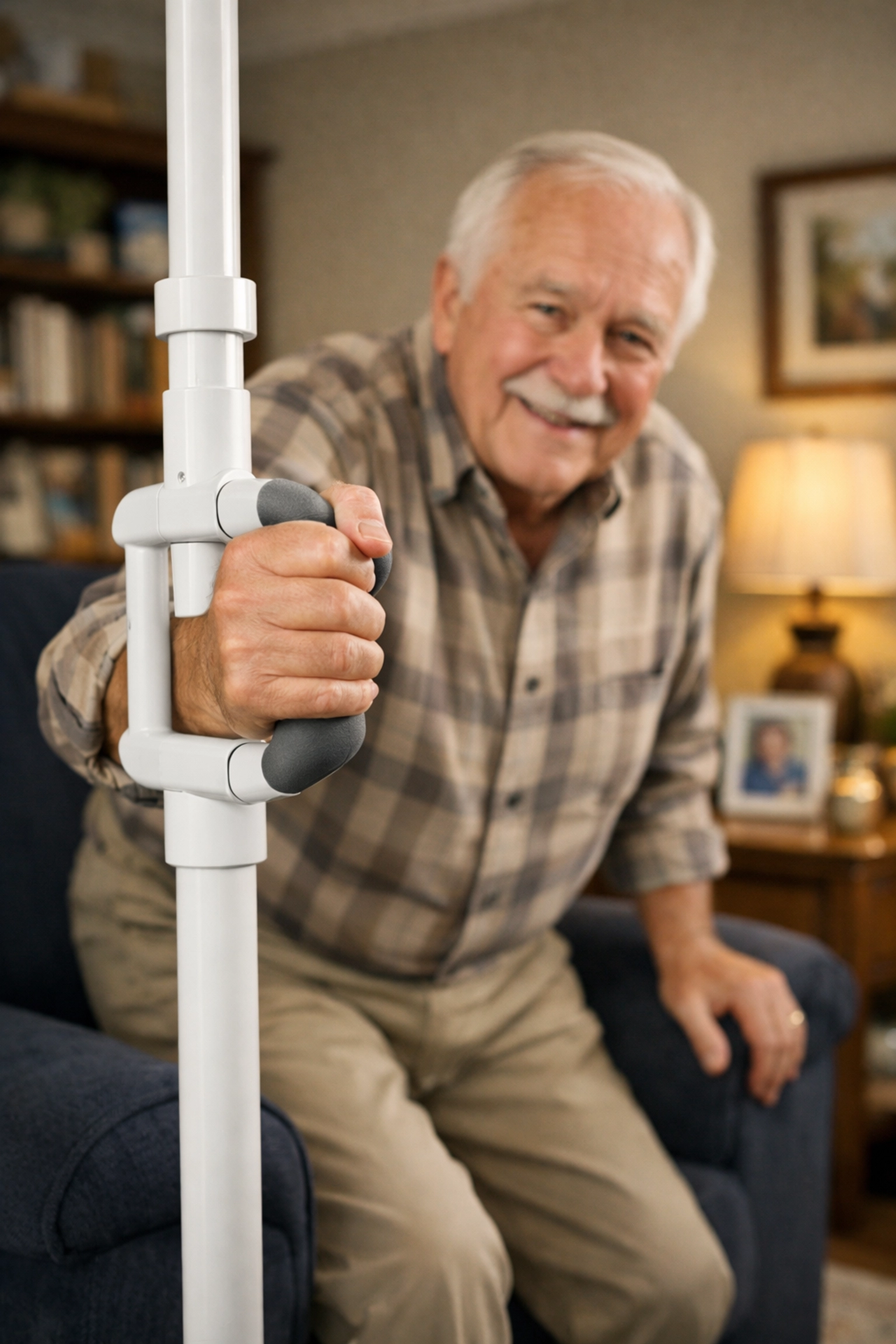
For areas where a grab bar isn't possible: like the middle of a room or next to a favorite recliner: tension-mounted poles (often called independence poles) can be a lifesaver. They provide a sturdy vertical handhold that helps with the transition from sitting to standing.
Parallel Bars and Rails
If a parent is recovering from surgery or just needs a bit more confidence when walking through a hallway, parallel rails can provide that "handrail" feel even in open spaces.
What to Do If a Fall Occurs
Despite our best efforts, accidents can still happen. Preparation for the "after" is just as important as the prevention itself.
- Don't Panic: If they fall, the first instinct is to pull them up. Don't. Check for pain, hitting of the head, or broken bones first.
- The "Roll and Crawl" Method: If they aren't seriously injured, teach them to roll onto their side, get onto their hands and knees, crawl to a sturdy piece of furniture (like a sofa), and use that to slowly pull themselves up.
- Communication Devices: Whether it’s a wearable "help" button or just keeping a cell phone in a pocket at all times, ensure they have a way to call for help if they can’t get up.
The Psychological Impact: Fear of Falling
One thing caregivers often miss is the "fear of falling" cycle. If a senior has a close call or a minor fall, they often become afraid to move. They sit more, which makes their muscles weaker, which actually increases their risk of falling again.
Your job as a caregiver is to provide reassurance. Encourage movement, celebrate small wins, and let them know that the safety measures you're putting in place are there to give them more life, not less.
Moving Forward with Confidence
Preventing falls isn't about wrapping your parents in bubble wrap. It’s about creating an environment where they can thrive. By taking these steps: cleaning up the clutter, installing the right hardware, and staying active: you are giving your loved ones the greatest gift possible: the ability to stay in their own home, safely and with dignity.
Take it one step at a time. Maybe today you just check the lightbulbs. Next week, you look at grab bars. Every small change makes the home a little bit safer than it was yesterday.
You're doing a great job, and remember, you don't have to do it all at once. Safety is a journey, not a destination.

