
When we talk about home safety, the conversation usually turns to the bathroom or the kitchen. But for many people, the most intimidating part of the house is the staircase. I’m Brian Kerr, and over the years, I’ve spoken with countless families who feel like their stairs have become a "no-go zone."
There is a lot of advice out there about stair safety, but much of it is either too technical or surprisingly incomplete. We often hear things like "just be careful" or "hold the rail." While well-intentioned, that advice doesn't address the actual mechanics of why people fall on stairs. There are specific "secrets": or rather, overlooked facts: about stair safety that can make a massive difference in your confidence and your safety.
Let’s pull back the curtain on what the pros know about making stairs safer, without the sales pitch or the jargon.
The Slip vs. Trip Debate
One of the biggest misconceptions about stair falls is that people "trip" over their own feet. While tripping does happen, research into home accidents shows that the majority of falls on stairs actually begin as a slip.
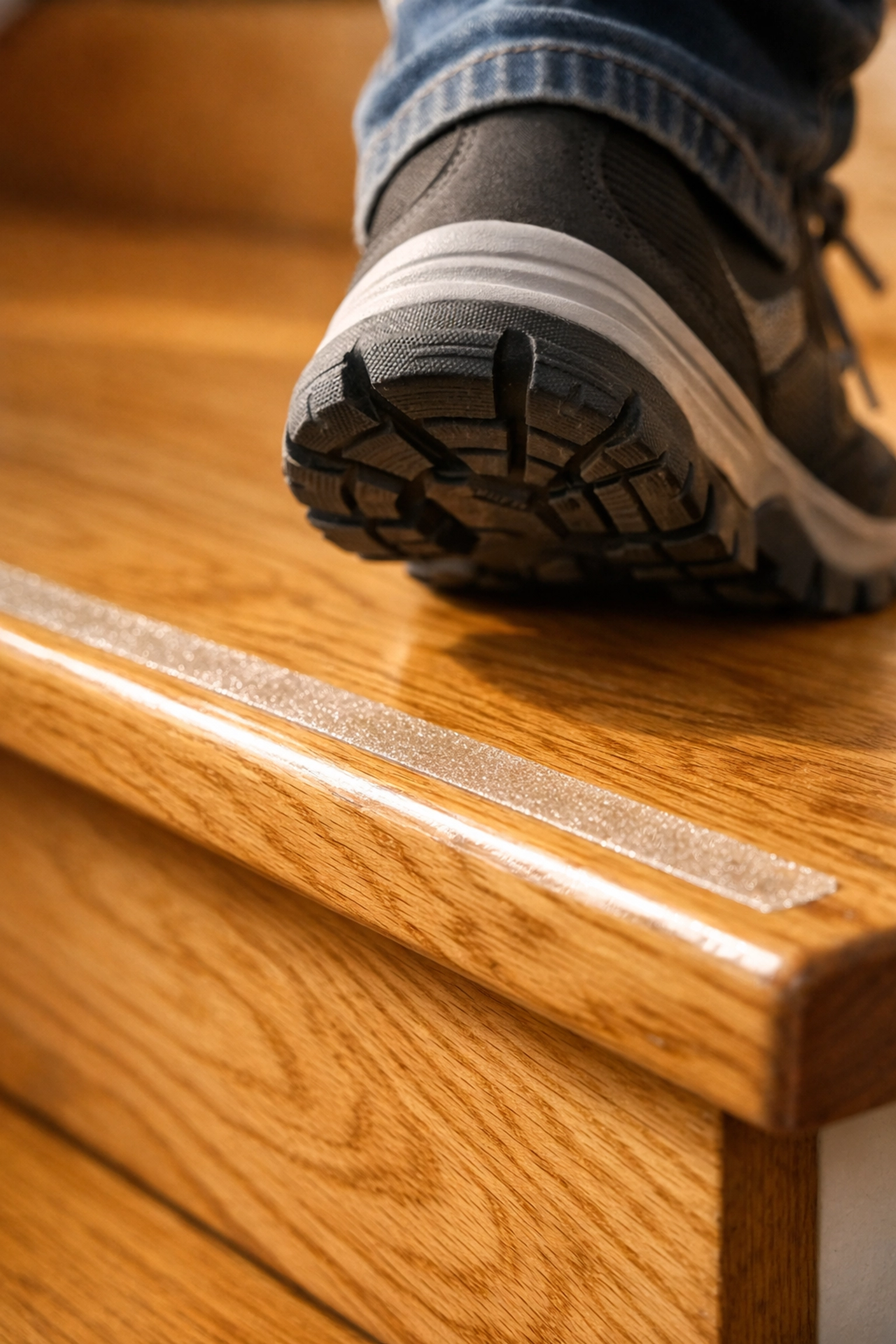
A slip happens when there isn't enough friction between your foot and the stair surface. This usually occurs at the very edge of the step (the "nosing"). If your heel or the ball of your foot slides forward just an inch or two, your center of gravity shifts, and the stairs become a slide.
To combat this, the "secret" isn't just about being more careful; it’s about increasing traction. Many modern homes have beautiful hardwood or polished stone stairs, but these are essentially ice rinks for someone wearing socks or smooth-soled slippers. Adding traction can be done subtly. Clear anti-slip adhesive strips or low-profile rubber treads can provide the grip you need without ruining the aesthetic of your home.
The "Power Grip" and Handrail Geometry
Most people have a handrail, but is it the right handrail? This is where a lot of standard home construction fails.
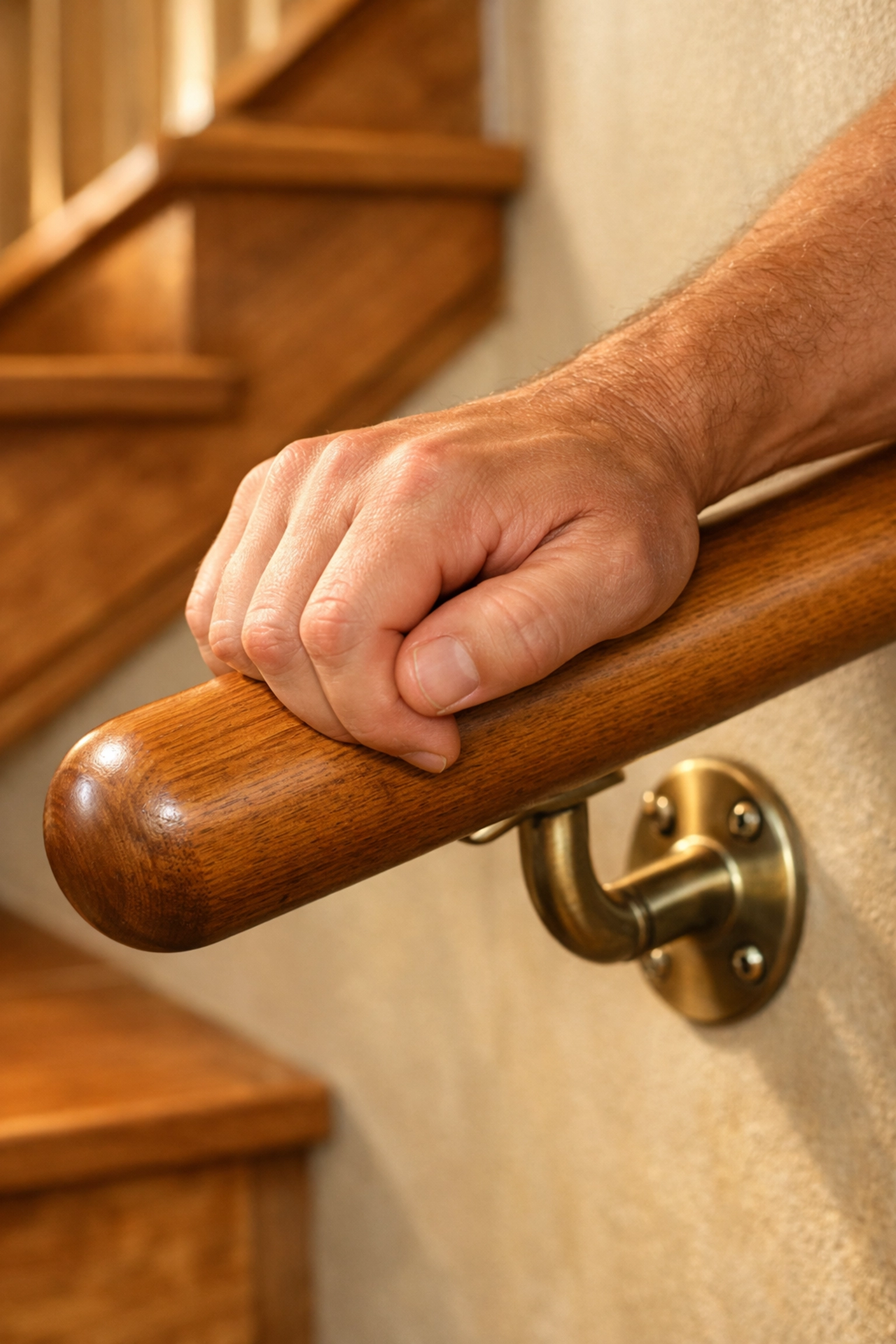
In many houses, the handrail is what we call a "molding" rail. It’s wide, decorative, and flat on top. While it looks nice, it’s actually quite difficult to hold onto if you start to lose your balance. To be truly safe, a handrail needs to allow for a "power grip." This means your hand should be able to wrap almost entirely around the rail so that your thumb and fingers can meet.
If you can only "pinch" the rail or rest your palm on top of it, you won't have the leverage needed to stop a fall once it starts. A rounded rail with a diameter between 1.25 and 2 inches is generally considered the gold standard for safety.
Another secret that experts often overlook is the "double rail" approach. Standard building codes usually only require a rail on one side. However, having rails on both sides of the staircase provides a massive advantage. It allows you to use your strongest side regardless of whether you are going up or down, and it provides a "cage of safety" that keeps you centered.
The Science of Lighting: Beyond the "On" Switch
We all know we shouldn't walk in the dark, but stair lighting is about more than just visibility; it’s about depth perception.
Many staircases are lit by a single overhead bulb at the top or bottom. This creates long shadows that can obscure the edge of the steps. When your brain can't tell exactly where the step ends and the "air" begins, it causes a hesitation in your gait. That hesitation is when many falls occur.
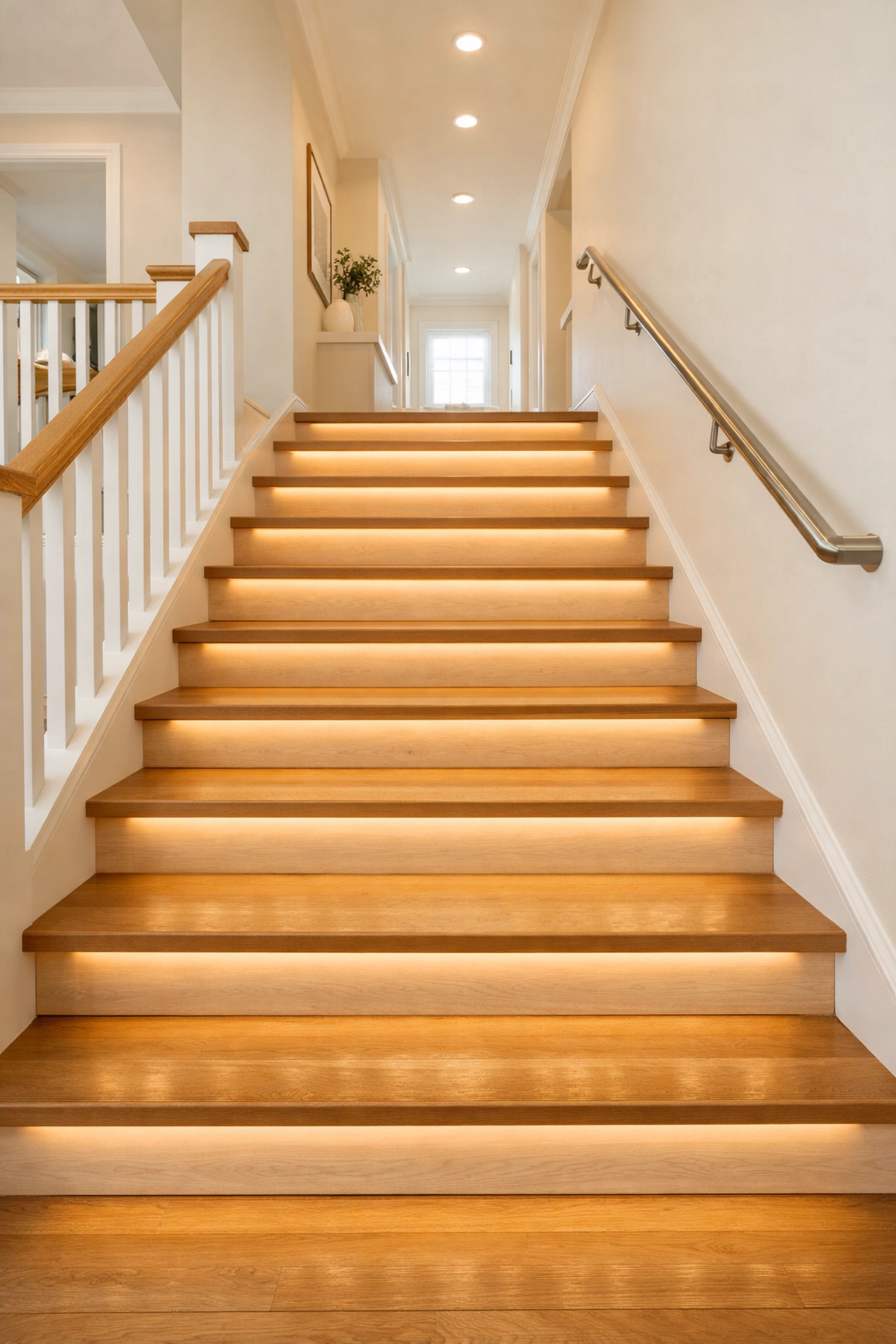
The secret to expert-level stair lighting is "uniformity." You want light that hits every step evenly. Motion-sensor LED strips that run along the baseboard or under the lip of each tread are incredibly effective. They provide a clear visual map of the path ahead without creating a blinding glare.
Also, consider the "color" of your light. Very warm, yellow lights can sometimes make everything blend together. A "daylight" or "cool white" bulb often provides better contrast, making it easier to see the individual edges of the stairs.
Dimensional Consistency: The 1/4 Inch Rule
Your brain is an amazing machine. When you walk up a flight of stairs, your brain "maps" the height of the first two steps and then assumes every other step is exactly the same. This is called "muscle memory."
Here is the secret: even a tiny variation in the height of a step (the "riser") can lead to a fall. If one step is just a quarter-inch taller or shorter than the ones before it, your foot will likely catch the edge or land sooner than expected.
In older homes, stairs often settle, or DIY renovations add thick carpeting to some steps but not others, creating these dangerous inconsistencies. If you feel like you’re always stumbling on one specific part of your staircase, it’s worth getting a ruler out. If there is a variation of more than 1/4 inch between steps, that is a structural hazard that needs to be addressed, often by a professional who can shim or level the treads.
The Bottom Step Illusion
Have you ever reached the bottom of the stairs and thought there was one more step, only to "stomp" onto the flat floor? Or worse, thought you were on the floor when there was actually one more step to go?
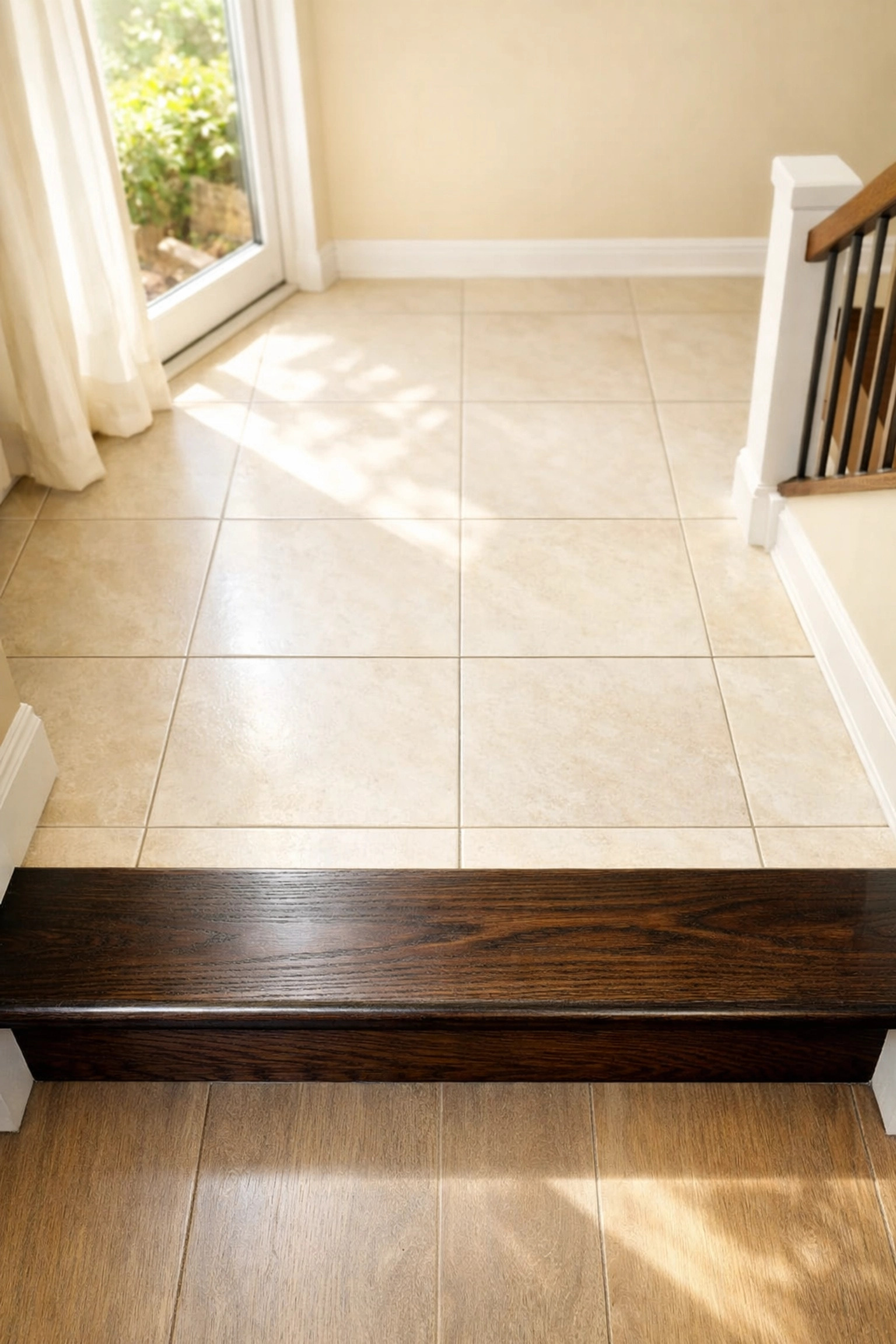
This is the "bottom step illusion." It happens when the flooring on the landing or the hallway matches the color and pattern of the stairs too closely. Your eyes lose the ability to distinguish the change in elevation.
The fix for this is surprisingly simple: visual contrast. By placing a strip of tape in a contrasting color on the edge of the very last step, or by using a rug with a different pattern at the landing, you give your brain a clear signal that the terrain has changed. This "secret" is used in hospitals and public buildings all the time, but we rarely think to do it in our own homes.
Footwear: The Silent Culprit
We’ve talked a lot about the stairs themselves, but the things you put on your feet are just as important.
The biggest "no-no" for stair safety is walking in socks. While it’s comfortable, cotton and wool socks offer zero grip on wood, tile, or even some types of carpet. Slippers can be just as bad if they don't have a backed heel; "slide-on" slippers can easily slip off your foot mid-stride, causing a trip.
The safest way to navigate stairs is in a sturdy shoe with a rubber sole, or even barefoot (if your skin provides enough natural grip on your specific flooring). If you prefer socks, look for "grip socks" that have rubberized patterns on the bottom.
Maintenance: Screws Over Nails
If your stairs creak or feel "spongy," they aren't just old: they might be becoming unsafe.
Most older stairs were built using nails. Over time, as the wood dries out and the house shifts, those nails can pull loose. This causes the treads (the part you step on) to wiggle or tilt.
The professional secret for fixing "noisy" or loose stairs is to use construction adhesive and high-quality wood screws instead of nails. Screws have much better "pull-out" resistance and will keep the tread firmly attached to the stringer (the side support). A solid, silent step is a safe step because it doesn't shift under your weight.
The Human Element: How We Use the Stairs
Finally, we have to talk about how we actually move. As we get older, our "proprioception": our body’s internal sense of where our limbs are: can change.
One expert tip that is rarely discussed is the "staircase pause." Before you start your ascent or descent, take two seconds to stand still at the top or bottom. This allows your blood pressure to stabilize and your eyes to adjust to the lighting of the stairwell.
Also, avoid the "laundry basket lung." Carrying a large, bulky item that blocks your view of your feet is one of the leading causes of stair accidents. If you need to move items between floors, consider a "stair basket" that sits on a single step and can be moved up one-by-one, or better yet, ask someone else to carry the bulky stuff.
Reassurance and Moving Forward
The goal of looking at these "secrets" isn't to make you afraid of your home. It's the opposite. Knowledge is what replaces fear. When you understand that the "bottom step illusion" is a real thing, you stop blaming yourself for "being clumsy" and start looking for a piece of tape to fix the problem.
Stairs are a fundamental part of many homes, and for many of us, they represent the freedom to move throughout our entire living space. By making small, evidence-based adjustments: fixing the lighting, adding a second handrail, or simply wearing the right shoes: you can ensure that your stairs remain a safe pathway rather than a source of worry.
Take a look at your stairs today with fresh eyes. Check the rails, test the lights, and feel the traction. A few small changes can provide years of peace of mind.

