
Stairs are a fundamental part of most homes, but as we age or help our loved ones age in place, they become one of the most significant areas of concern for fall prevention. It is easy to take for granted the simple act of moving between floors, but the mechanics of navigating a staircase require a complex coordination of vision, balance, muscle strength, and spatial awareness.
At Fall Guys Products, we spend a lot of time thinking about how to make the home a sanctuary rather than a source of stress. When it comes to stairs, many homeowners believe they have a safe setup simply because a handrail is present or the carpet looks tidy. However, there are often subtle mistakes in design, maintenance, and habit that can increase the risk of a slip or trip.
My name is Brian Kerr, and I want to walk you through seven common mistakes people make with stair safety and, more importantly, the practical steps you can take to fix them.
1. Relying on "Good Enough" Dimensions
One of the most common issues in older homes is that staircases weren't always built to modern safety codes. You might have steps that are slightly too tall (the riser) or steps that are too shallow (the tread).
When a riser is too high, it requires more exertion from the hip and knee, which can lead to fatigue halfway up the flight. Conversely, when a tread is too narrow, your foot cannot fully plant itself on the surface. If the ball of your foot is hanging off the edge of the step, your balance is compromised before you even take the next step.
The Fix: While you might not be able to rebuild your entire staircase tomorrow, you can measure your steps to understand the risk. A safe standard is usually a 7-inch riser and an 11-inch tread. If your treads are too shallow, consider ensuring that the "nosing" (the edge of the step) is clearly marked with a high-contrast strip. This helps the brain accurately calculate where to place the foot so you aren't over-extending or under-stepping.
2. Neglecting the "Transition Zone" Lighting
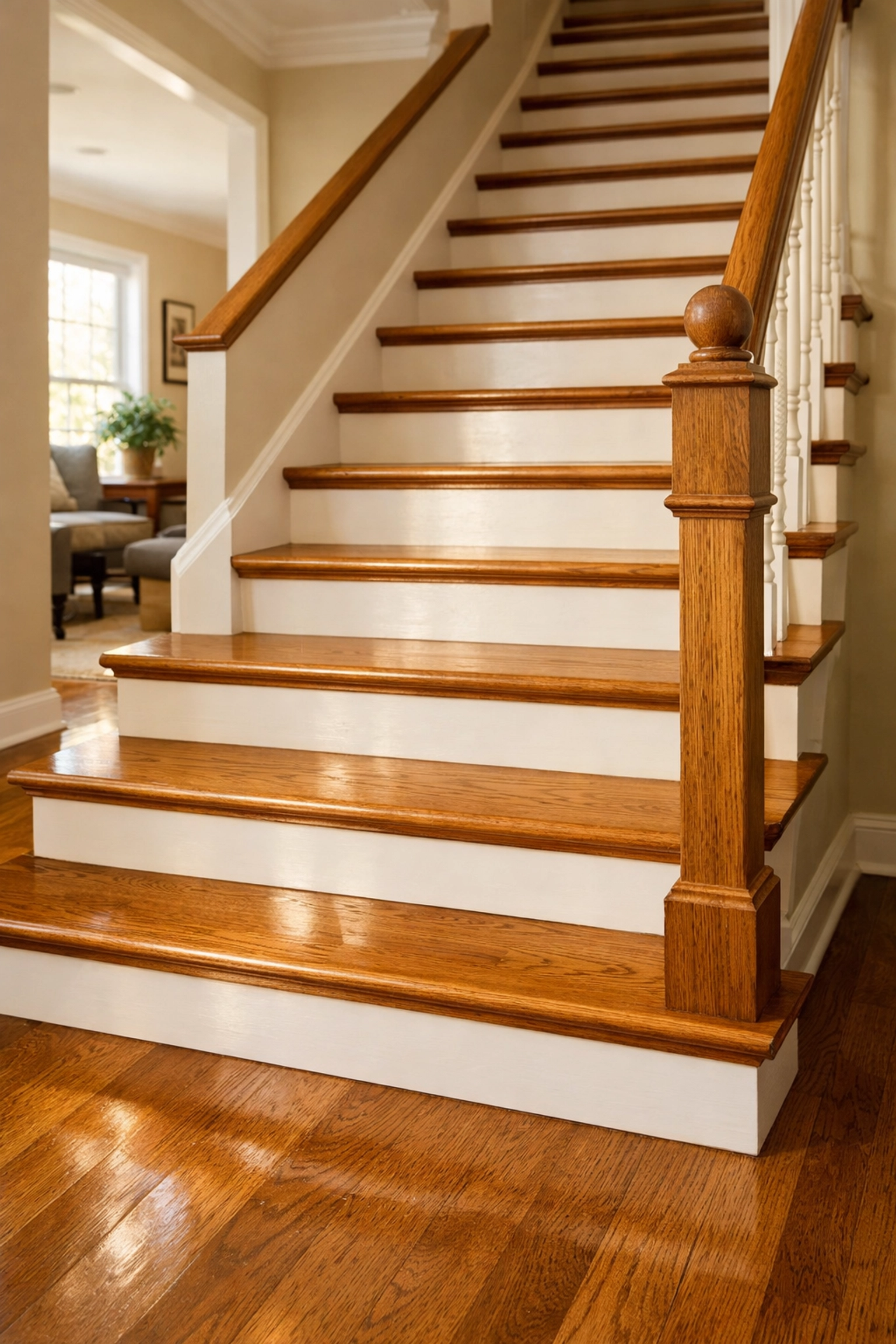
Most people have a light switch at the top and bottom of the stairs, which is a great start. However, the mistake lies in the quality and placement of that light. Many stairwells suffer from "glare" or "harsh shadowing." If a single bright bulb is placed at the top of the stairs, it can cast long shadows over the treads, making it difficult to see exactly where one step ends and the next begins.
Furthermore, as our eyes age, they require more time to adjust to changes in light levels. Moving from a bright hallway into a dimly lit stairwell can cause a moment of "visual brownout" where your depth perception is temporarily impaired.
The Fix: Aim for uniform lighting. Instead of one high-wattage bulb, consider installing several lower-wattage LED fixtures along the length of the stairs. Motion-activated strip lighting under the lip of each tread is an excellent modern solution. It illuminates the exact path of your feet without creating a blinding glare. Also, ensure switches are easy to reach before you start your ascent or descent.
3. Treating the Handrail as an Option, Not a System
A common mistake is having a handrail on only one side of the stairs, or having a rail that is "decorative" rather than "functional." A handrail is not just a place to rest your hand; it is a critical safety device designed to bear your weight if you lose your balance.
Many handrails are too wide for a comfortable "power grip" (where the thumb and fingers can overlap) or they stop a few inches before the last step. That final step is often where the most falls occur because people let go of the rail prematurely, thinking they have reached flat ground.
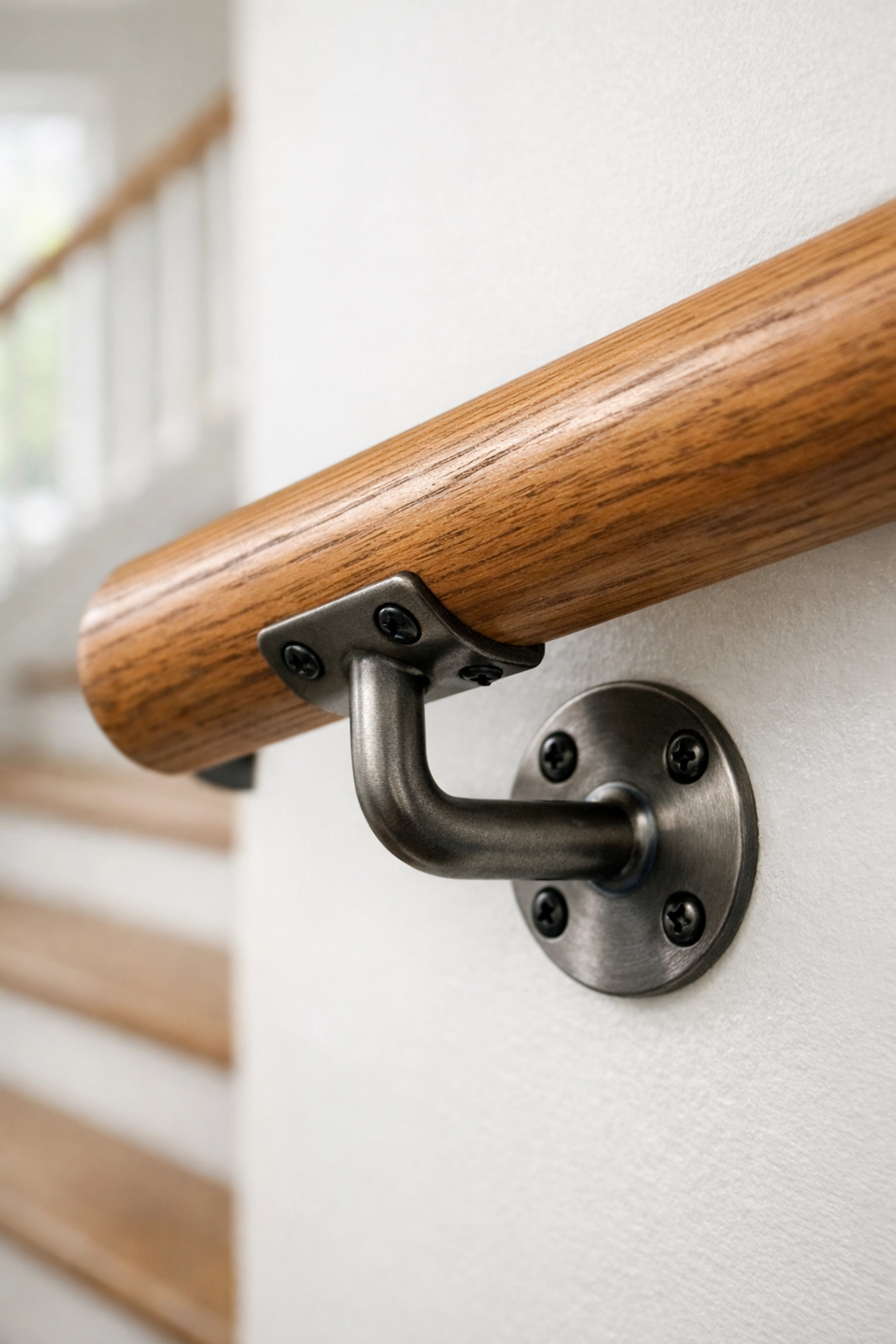
The Fix: If possible, install handrails on both sides of the staircase. This allows for a "three-point contact" system (two feet and at least one hand). Ensure the handrail is "continuous": meaning it doesn't break at a landing: and that it extends at least 12 inches beyond the top and bottom steps. This allows you to maintain a grip until your feet are firmly on a level surface. Check the brackets regularly to ensure there is no "wiggle." If the rail moves when you pull on it, it needs to be reinforced.
4. Overlooking the "Slipperiness" of Surfaces
Aesthetic choices often override safety concerns in home design. Polished hardwood, smooth tile, and even some low-pile carpets can be incredibly slippery, especially if you are wearing socks or slippers without a rubber sole.
Carpet presents its own unique challenge: over time, the padding can wear down at the edge of the step, creating a rounded "nosing." This makes the edge of the step less stable and harder to see, increasing the likelihood of a heel-slip when going down.
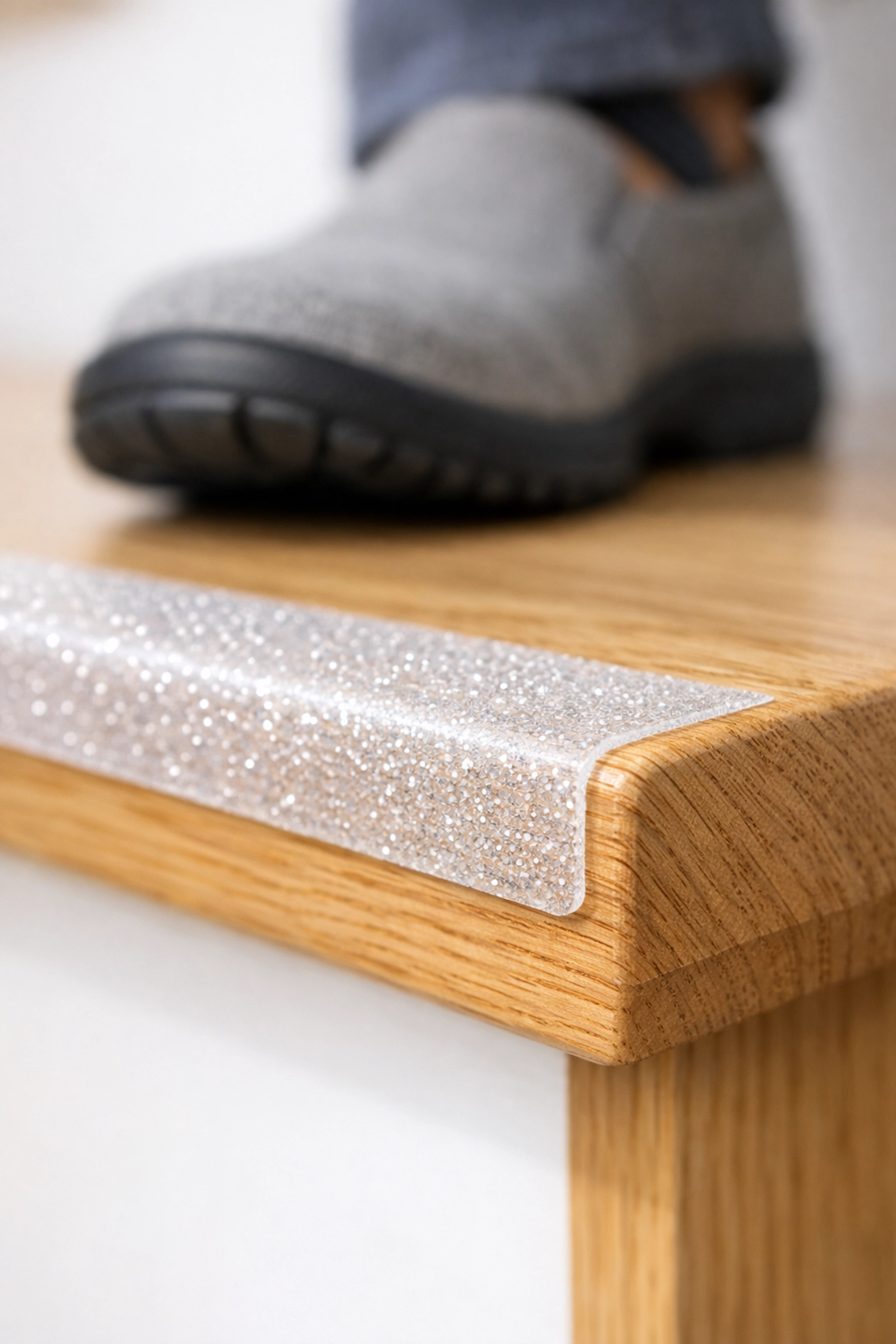
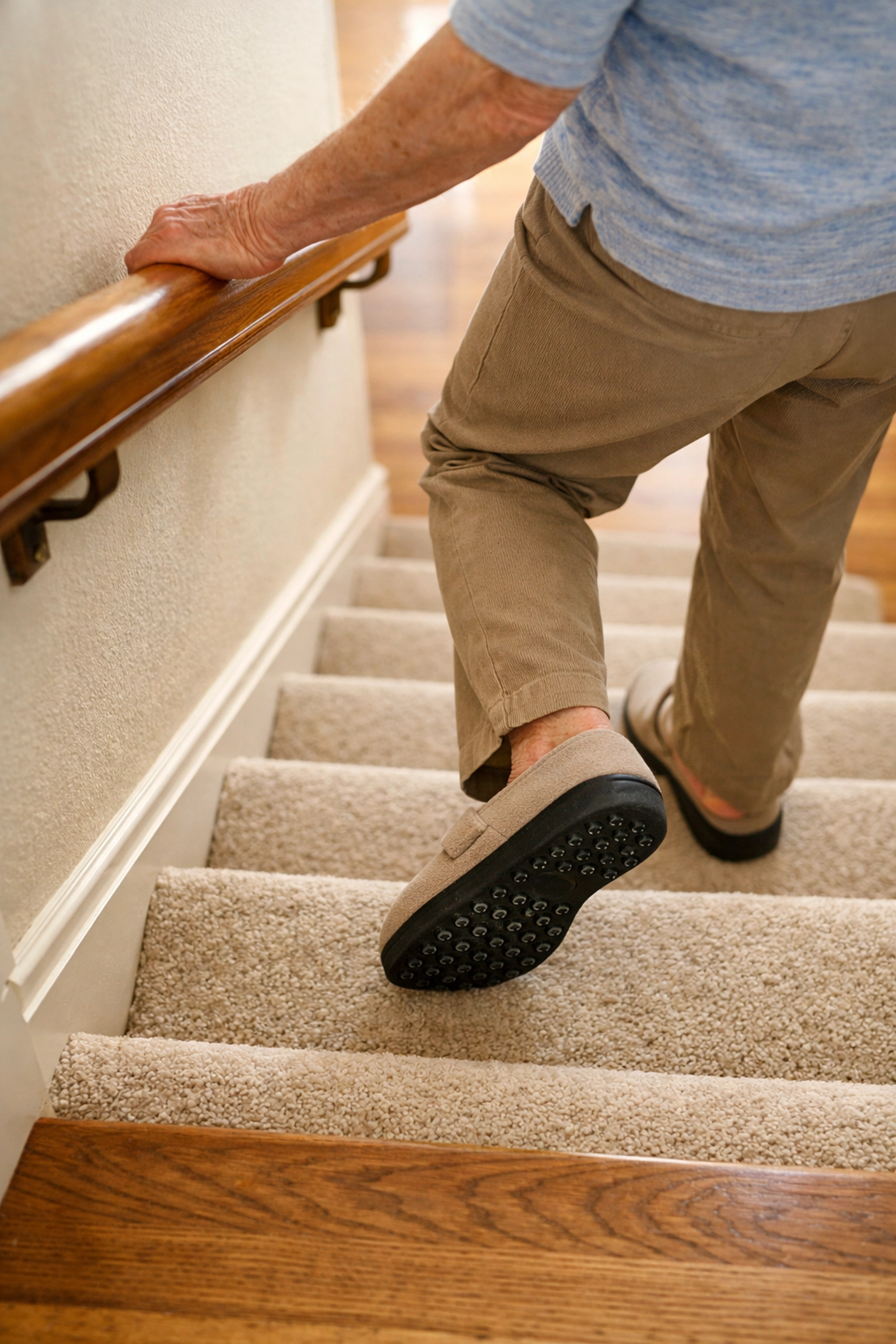
The Fix: For hard surfaces, anti-slip adhesive strips or transparent non-slip coatings can provide much-needed traction without ruining the look of the wood. If you have carpet, ensure it is stretched tight and securely tacked down. If the carpet is old and the edges are rounded, it may be time to replace it or remove it in favor of a high-traction surface. Always encourage the use of "indoor shoes" with non-skid soles rather than walking in socks.
5. Using the Stairs as a Temporary Storage Shelf
We’ve all done it: we place a book, a basket of laundry, or a pair of shoes on the bottom two steps, intending to take them up "on the next trip." This is one of the most dangerous habits a household can have.
Stairs are high-traffic zones where your focus should be entirely on your movement. A small object on a step creates a trip hazard that is often invisible when you are descending, as your own body or the laundry basket you are carrying might block your view of the steps below.
The Fix: Adopt a "nothing on the stairs" rule. If items need to go up or down, place a small table or a designated "upstairs" bin at the base of the stairs: but not on the stairs. This keeps the path clear and ensures that you aren't tempted to step around objects, which shifts your center of gravity and increases the risk of a fall.
6. Ignoring the Impact of Vision and Footwear
While this isn't a physical mistake with the staircase itself, it is a mistake in how we interact with it. Many people use the stairs while wearing bifocals or multifocal lenses. These lenses are designed so that the bottom portion of the glass is for reading. When you look down at your feet to navigate a step, you are looking through the "reading" part of the lens, which can blur the steps and distort your depth perception.
Additionally, rushing is a major factor. We often try to "multitask" on the stairs: carrying a heavy basket with both hands while trying to talk on the phone or check the time.
The Fix: When using the stairs, try to tuck your chin down so you are looking through the "distance" portion of your glasses rather than the reading portion. Better yet, if you have a high risk of falls, talk to your optometrist about a dedicated pair of single-vision glasses for moving around the house. Always keep at least one hand free to use the handrail. If you have to carry something, hold it in one arm and keep the other on the rail.
7. Ignoring Signs of Structural Wear and Tear
Stairs undergo a lot of stress. Over years of use, treads can become loose, nails can pop up, and wooden supports can warp. A "creak" is often more than just a nuisance; it’s a sign that a component of the staircase is moving when it should be stationary. If a tread "gives" even half an inch when you step on it, it can be enough to throw off your proprioception (your body's sense of its position in space) and cause a stumble.
External stairs (those leading to a porch or deck) are even more susceptible to this, as weather causes wood to rot or concrete to crack and settle unevenly.
The Fix: Perform a "stair audit" every six months. Walk up and down slowly, listening for creaks and feeling for any movement underfoot. Check for loose "nosing" or peeling grip tape. On outdoor stairs, look for moss or algae growth, which becomes incredibly slippery when wet. A quick power wash or a few well-placed deck screws can prevent a major accident.
Creating a Culture of Safety
At the end of the day, stair safety is about a combination of the environment and our behavior within it. It’s about recognizing that the stairs are a specialized part of the home that requires a bit more respect and attention than a flat hallway.
If you are a caregiver, take a moment to walk the stairs in your loved one's home. Look at it through their eyes: is the lighting bright enough for someone with changing vision? Is the handrail sturdy enough for someone who might need to lean their full weight on it?
Fixing these seven mistakes doesn't always require a major renovation. Often, it's the small, thoughtful changes: a brighter bulb, a piece of high-contrast tape, or the habit of keeping the steps clear: that make the biggest difference.
Fall prevention is a journey, and at Fall Guys Products, we believe that education is the first step. By taking the time to assess your home and make these adjustments, you are building a foundation for independence and peace of mind. Stay safe, stay observant, and remember that a little bit of preparation goes a long way in keeping you on your feet.

