
Stairs are often the most challenging part of a home for anyone as they age or recover from an injury. While we think of them as simple transitions between floors, they are complex architectural features that require balance, strength, and clear vision. At Fall Guys Products, we believe that the home should be a place of confidence, not a place of worry.
Safety on the stairs isn't about one single fix; it is about layers of protection. By combining structural changes, environmental adjustments, and personal habits, you can significantly reduce the risk of a fall. This guide explores over 50 specific examples and strategies to help you or your loved ones navigate staircases with peace of mind.
The Foundation of Stair Safety: Structural Integrity
Before adding gadgets or accessories, the stairs themselves must be sound. Small defects that a younger person might subconsciously adjust for can become major hazards for a senior.
1. Consistency is Key
One of the most common causes of stumbles is inconsistent step height. Our brains develop a "rhythm" as we climb. If one step is even half an inch higher than the others (known as a "trip step"), it breaks that rhythm and often leads to a fall. Ensure all steps have a uniform "rise" (height) and "run" (depth).
2. Repairing Loose Materials
Wooden stairs can creak and shift over time. A loose floorboard or a wobbly tread can give way under full body weight. Regularly inspect for loose nails, rotting wood in outdoor settings, or floorboards that "give" when stepped on.
3. Securing Carpet Runners
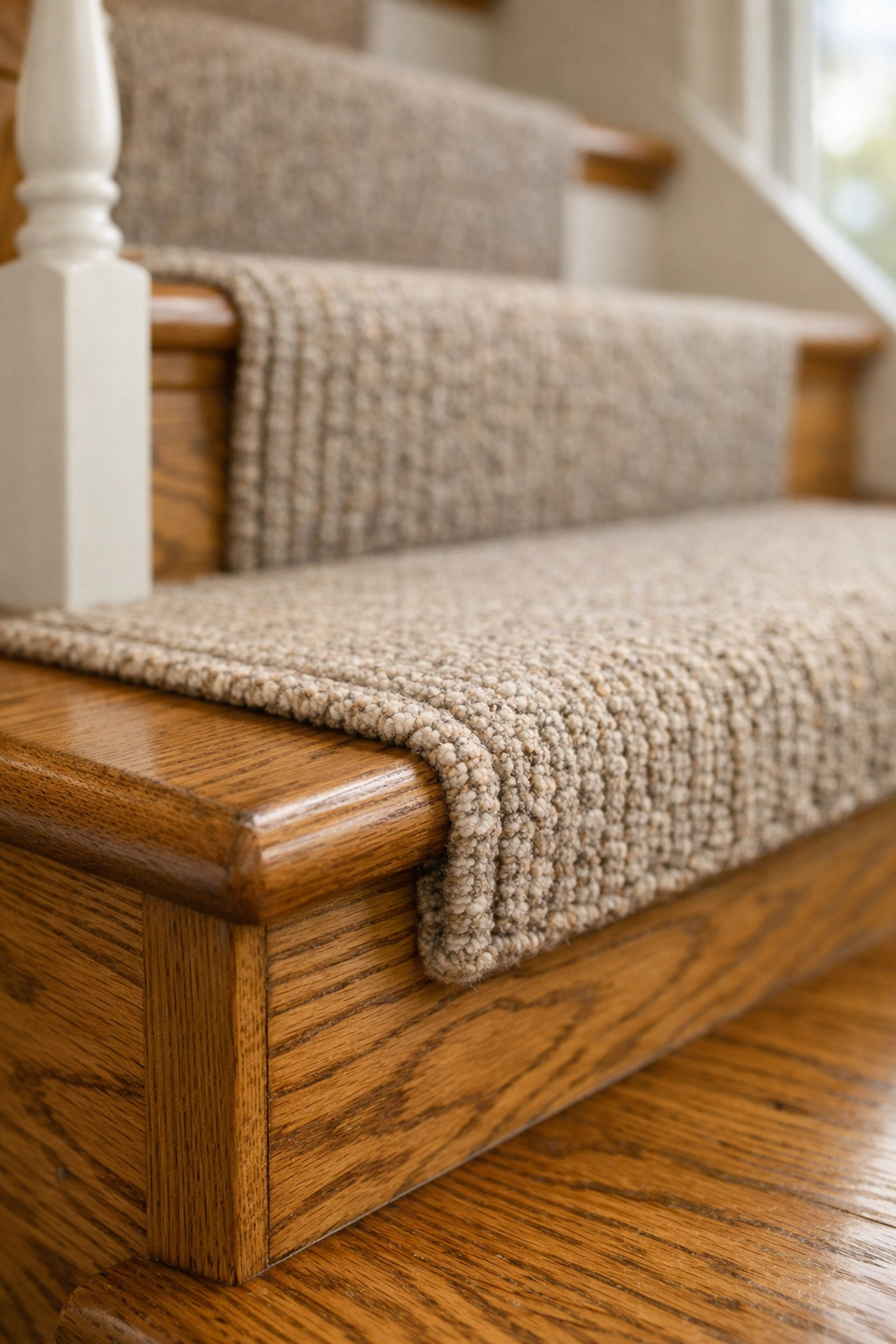
If your stairs are carpeted, the carpet must be stretched tight. Loose or sagging carpet creates a "bubble" that can catch a toe. Furthermore, the "nose" of the step: the edge that sticks out: should be clearly defined and not rounded off by thick, slippery padding.
Lighting: Illuminating the Path
Vision plays a massive role in balance. As we age, our eyes require more light to distinguish depth and contrast. A dimly lit staircase is a recipe for a misstep.
4. Dual-End Switches
You should never have to climb the stairs to turn on the light, or walk down them in the dark after turning the light off. Ensure there are light switches at both the top and the bottom of every staircase.
5. Motion-Sensing Solutions
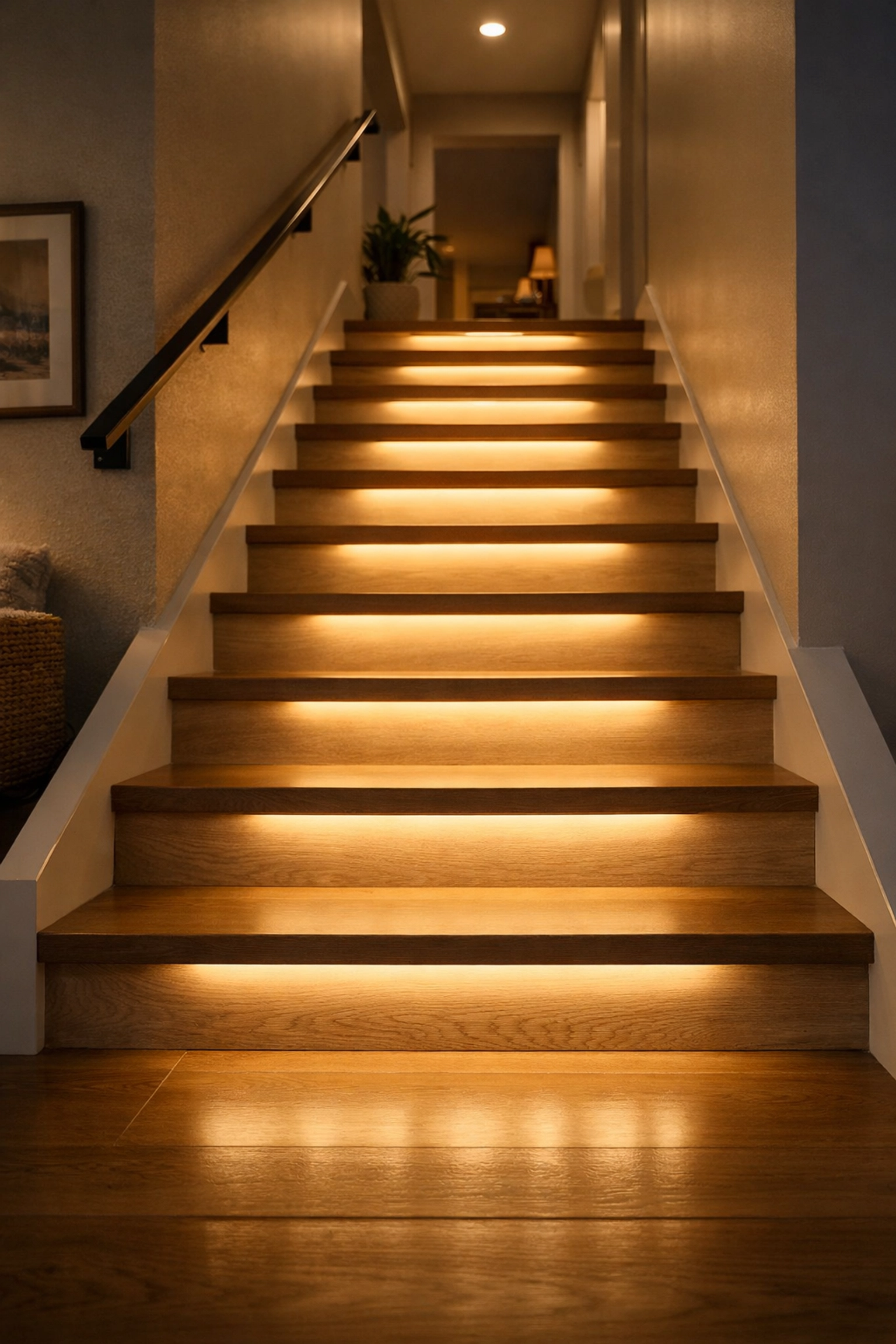
For those who may forget to flip a switch, motion-sensing lights are a game-changer. Battery-operated LED lights can be stuck along the baseboard. They illuminate as soon as they detect movement, providing a clear path without needing to search for a switch in the dark.
6. Reducing Glare
While bright light is good, glare is bad. Highly polished wood or tile stairs can reflect overhead bulbs, creating "blind spots." Use frosted bulbs or shaded fixtures to diffuse the light evenly across the treads.
Traction and Surface Safety
The friction between your foot and the stair determines whether you stay upright or slide. Many decorative stair types, like polished oak or marble, are notoriously slippery.
7. Non-Slip Treads and Tape
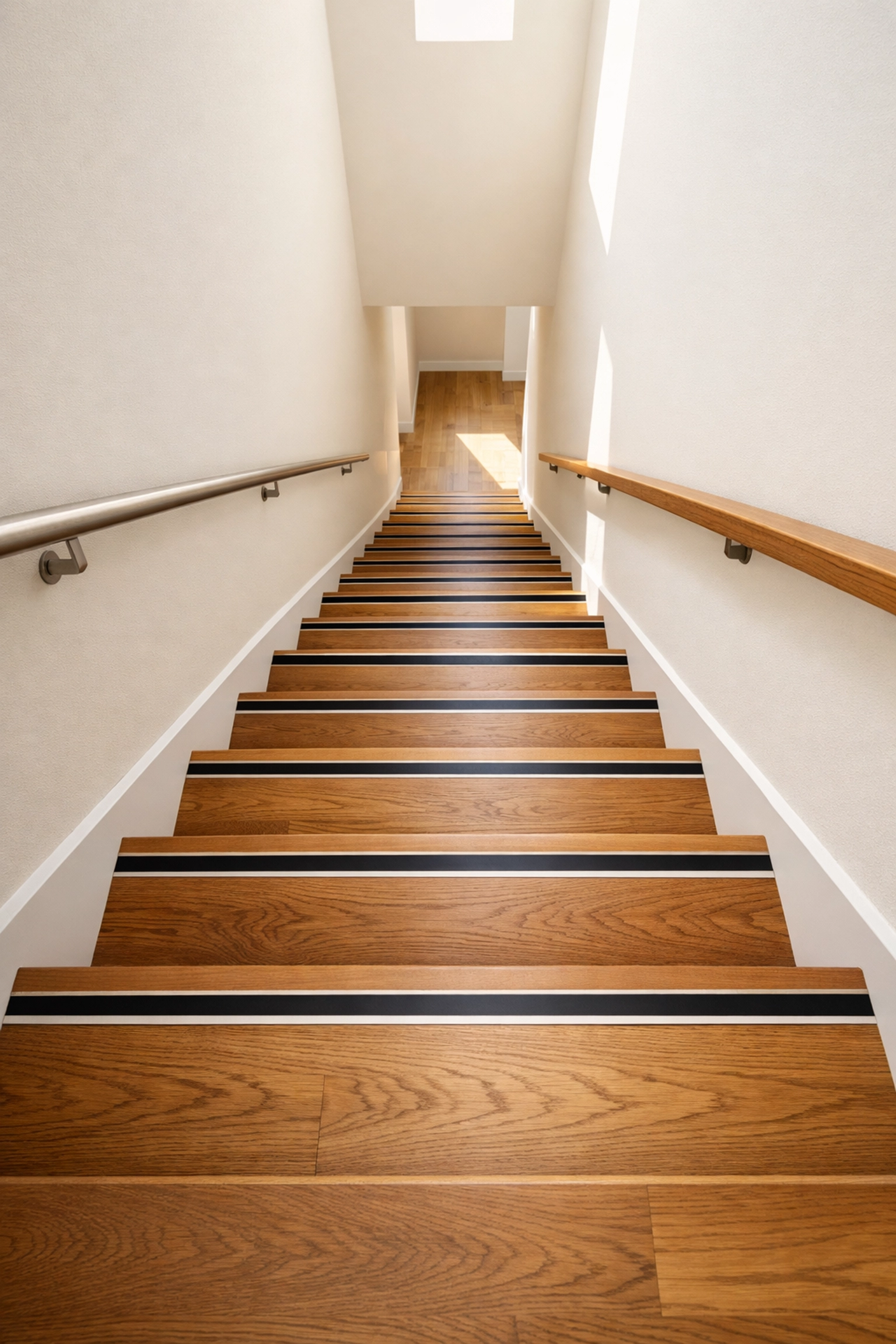
Transparent or high-visibility anti-slip tape can be applied to the edge of each step. This provides a gritty surface that "bites" into the sole of a shoe or slipper, providing much-needed traction.
8. Evaluating Carpet Pile
While thick, plush carpet feels nice, it is often dangerous on stairs. It can hide the actual edge of the step, leading to a "half-step" where the heel slides off. Low-pile, industrial-style carpeting is much safer because it allows the foot to feel the structural edge of the wood underneath.
Handrail Best Practices
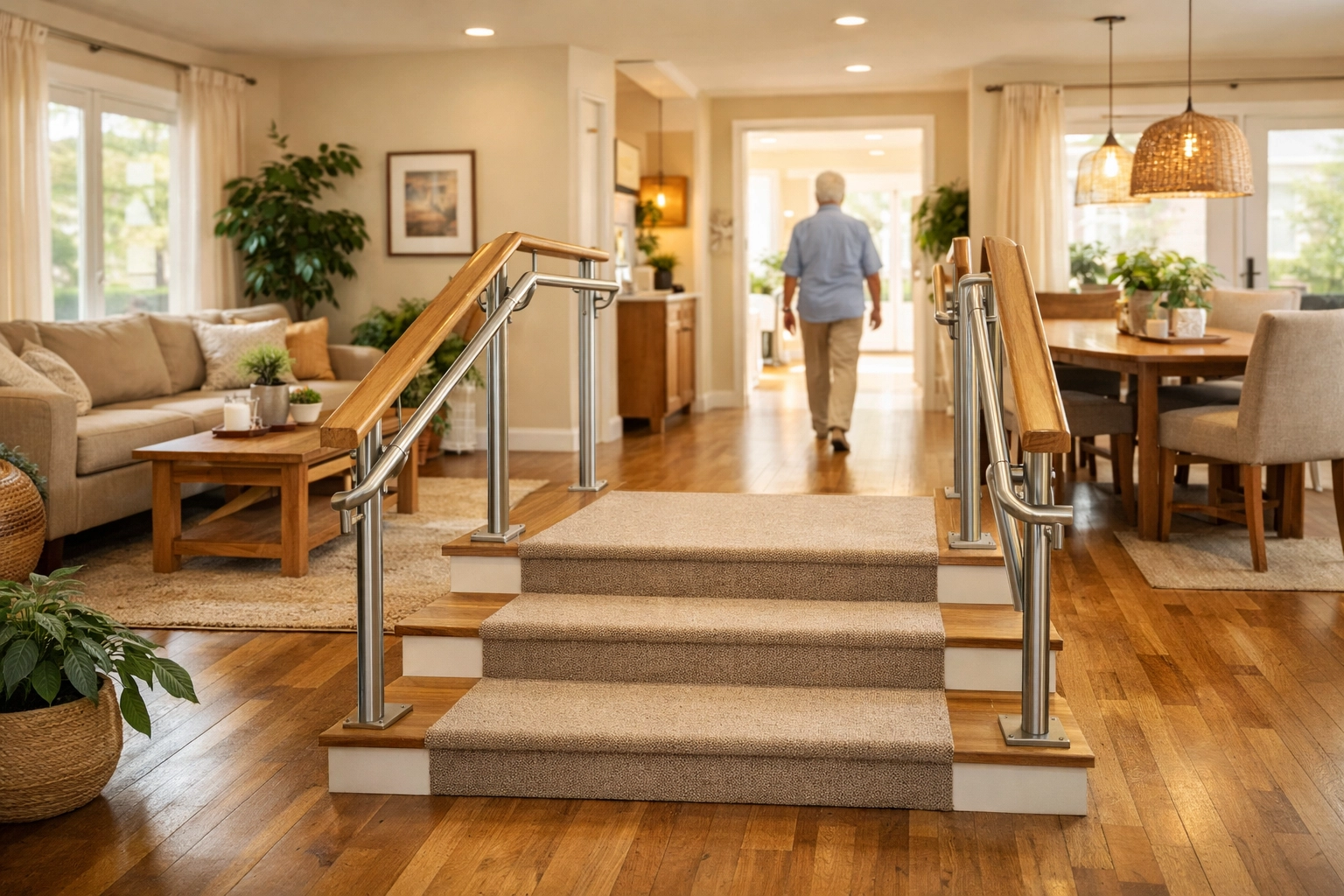
A handrail is not just a suggestion; it is a vital piece of safety equipment. Many homes only have one rail, but for maximum safety, dual rails are recommended.
9. The "Full Wrap" Grip
A handrail should be "graspable." This means you should be able to wrap your fingers and thumb entirely around it. Wide, flat decorative rails might look nice, but they don't allow for a "power grip" if you actually start to slip.
10. Continuous Length
The handrail should extend beyond the top and bottom steps. Many falls occur on the very last step because the handrail ended early, leaving the person without support while they were still technically on the incline.
11. Weight Capacity
A handrail must be able to support the full weight of an adult. If you can wiggle the rail with your hand, it is not safe. It should be bolted into the wall studs, not just the drywall.
Visibility and the "Bottom Step Illusion"
Many stair falls happen at the very bottom. This is because the bottom step often blends into the floor transition, making it look like the floor has already started.
12. High-Contrast Edging
Applying a strip of paint or tape in a contrasting color (like white on dark wood, or yellow on concrete) to the edge of each step helps the eye distinguish where one level ends and the next begins.
13. Visual Clutter
Avoid "busy" patterns on stair carpets. A complex floral or geometric pattern can create an optical illusion that hides the depth of the steps. Solid colors or very simple patterns are always safer.
50+ Fall Prevention Examples for Stairs
To help you perform a comprehensive audit of your home, here is a categorized list of examples and strategies for stair safety:
Structural & Hardware
- Dual Handrails: Install rails on both sides of the staircase.
- Handrail Extensions: Extend rails 12 inches past the top and bottom steps.
- Newel Post Stability: Ensure the heavy post at the bottom is anchored.
- Tread Depth: Ensure steps are deep enough for the entire foot.
- Closed Risers: Avoid "open" stairs where you can see between steps; they cause vertigo.
- Graspable Diameter: Rails should be 1.25 to 2 inches in diameter.
- Wall Clearance: Ensure there is at least 1.5 inches between the rail and the wall.
- Nosing Repair: Fix any rounded or broken step edges.
- Landing Pads: Place a thin, non-slip shock-absorbing mat at the bottom landing.
- Stair Gates: Use gates if dementia or severe balance issues are a factor.
Lighting & Visibility
- Overhead LED Panels: Provide bright, shadow-free light.
- Riser Lights: Small lights built into the face of each step.
- Auto-Dusk Sensors: Lights that turn on automatically when the house gets dark.
- Contrast Strips: Bright tape on the "nose" of every step.
- Consistent Finish: Use matte finishes rather than high-gloss floor wax.
- Task Lighting: A dedicated lamp at the top landing.
- Red-Light Nightlights: Helps preserve night vision for mid-night bathroom trips.
- Eliminate Shadows: Reposition lights that cause long shadows across the steps.
- Light-Reflective Paint: Use light colors on walls near stairs to bounce light.
- Emergency Backup Lights: Plug-in lights that turn on during a power failure.
Surface & Traction
- Anti-Slip Grit: Mix grit into paint for wooden or concrete stairs.
- Transparent Grip Strips: For safety without changing the look of wood.
- Rubber Tread Covers: For heavy-duty traction.
- Low-Pile Runners: Tightly woven carpet that doesn't "roll" under the foot.
- Carpet Tacks: Ensure no metal tacks are protruding.
- Moisture Control: Keep a mat at the door to dry shoes before hitting stairs.
- Wax Removal: Strip old, slippery wax buildup from stairs.
- Outdoor Ice Melt: Keep sand or salt at the top of outdoor stairs in winter.
- Heated Mats: For outdoor stairs to prevent ice formation.
- Textured Concrete: Sandblast or grind smooth concrete steps for grip.
Habits & Behavior
- The "Two-Hand" Rule: Keep both hands free for the railings.
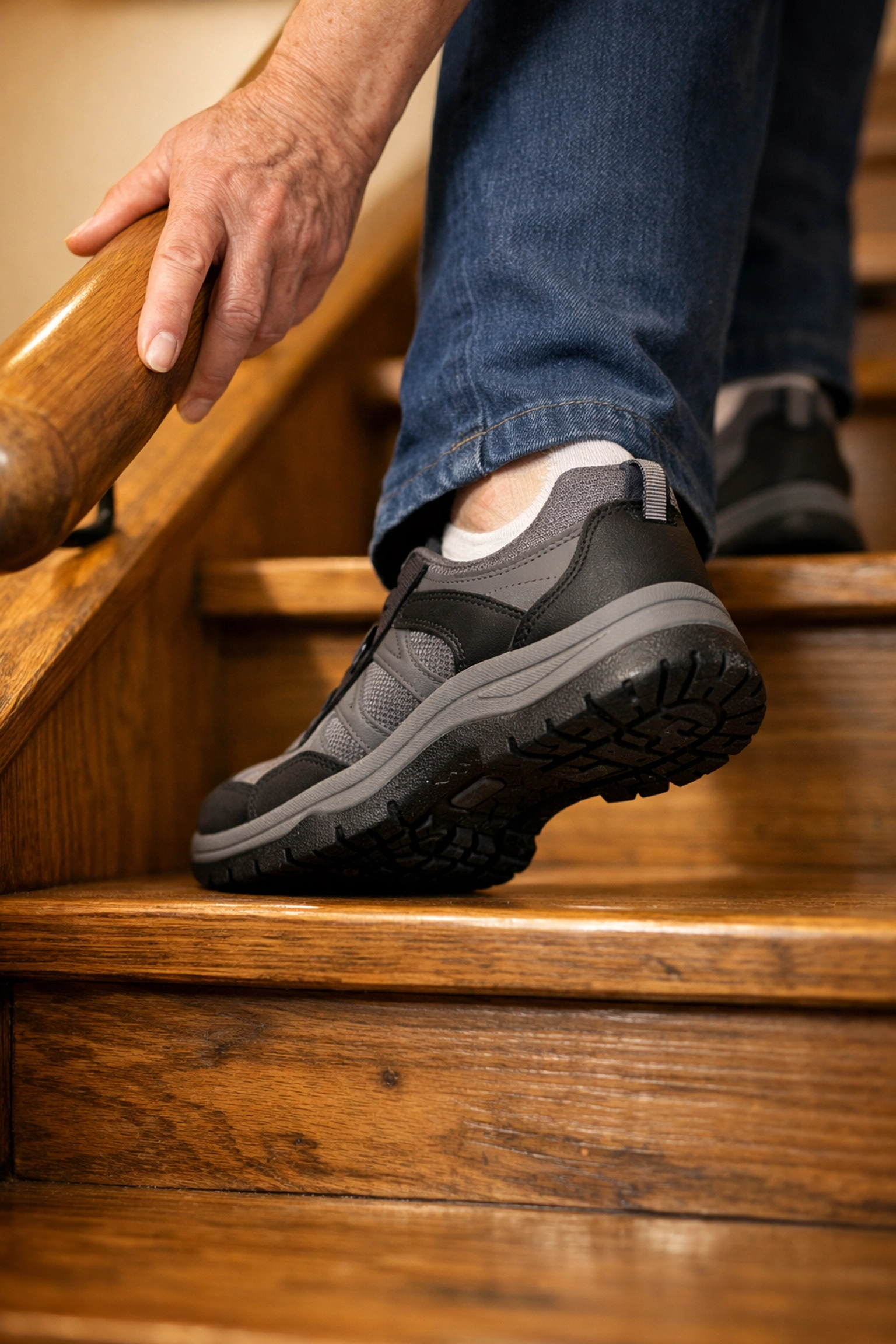
- No Sock Walking: Never walk on stairs in socks; use shoes or grip-socks.
- Proper Footwear: Avoid backless slippers or high heels.
- The "One Step at a Time" Method: Place both feet on a step before moving to the next.
- Paus Stops: If the staircase is long, plan a "breather" halfway.
- Clutter-Free Zones: Never leave shoes or books on the steps "to take up later."
- Pet Safety: Train pets not to run between legs on the stairs.
- Glasses Check: Remove reading glasses (which blur distance) before climbing.
- Vision Correction: Ensure bifocals are adjusted; look through the top part for distance.
- Wait for Dizziness: If standing up causes "head rush," wait 30 seconds before the stairs.
Advanced & External Support
- Stairlifts: A motorized chair for those who cannot safely climb.
- Physical Therapy: Exercises to improve the "quad" strength needed for stairs.
- Occupational Therapy Audit: Have a pro walk through the home.
- Alert Systems: Wear a fall-detection pendant in case a fall occurs on stairs.
- Strategic Rest: Place a sturdy chair at the top and bottom of the flight.
- Phone Accessibility: Carry a mobile phone or have a landline near the stairs.
- Weight Management: Carrying heavy laundry can shift your center of gravity.
- Core Training: Improving balance through Tai Chi or similar movements.
- Hydration: Dehydration leads to dizziness, a major cause of stair falls.
- Medication Review: Check if meds cause side effects like vertigo or weakness.
Outdoor Stair Challenges
Outdoor stairs present a unique set of hazards because they are exposed to the elements. Rain, ice, and moss can turn a safe entrance into a danger zone.
14. Weather-Resistant Traction
Outdoor wood tends to get "slimy" when wet due to algae growth. Regularly pressure wash outdoor steps and apply a sealant mixed with anti-skid additives. For concrete steps, ensure they are pitched slightly so water doesn't pool and freeze into "black ice."
15. Handrails in the Elements
Metal handrails outdoors can become incredibly cold in winter or hot in summer. Consider "grip covers" or vinyl-coated rails that are comfortable to hold regardless of the temperature. A handrail you are afraid to touch because it's too cold is a handrail you won't use.
The Role of Personal Mobility
Sometimes, the best stair safety intervention isn't a modification to the house, but a modification to how we move.
16. Strength and Balance
Descending stairs actually puts more strain on the knees and requires more balance than ascending. Working with a physical therapist to strengthen the calves, hamstrings, and core can make the act of climbing stairs feel much more stable.
17. Safe Carrying Habits
We often try to carry too much. Carrying a large laundry basket blocks your view of your feet and the steps. This is incredibly dangerous. Instead, consider installing a small "stair slide" for laundry or simply dropping items down (if safe) and then walking down empty-handed.
Creating a "Safe Haven" Strategy
If stairs become too much of a struggle despite all modifications, it may be time to rethink the home layout. This is what many professionals call "Single Level Living."
18. Main Floor Essentials
If possible, move the primary bedroom and a full bathroom to the main floor. This doesn't mean you can never use the stairs, but it reduces the frequency of use. The fewer times you have to navigate the stairs: especially when tired or at night: the lower your overall risk.
19. Professional Assessments
If you are unsure where to start, a professional home safety assessment can provide a roadmap. These experts look at the rise, run, lighting, and "human factors" to give you a prioritized list of what needs to be fixed first.
Reclaiming Your Confidence
Struggling with stairs can feel like losing a part of your independence, but it doesn't have to be that way. By implementing these 50+ examples, you are taking proactive steps to stay in the home you love.
Whether it is as simple as adding a roll of high-contrast tape or as significant as installing a second handrail, every small change adds a layer of protection. At Fall Guys Products, our goal is to help you navigate your world safely, one step at a time. Taking action today means preventing a fall tomorrow, allowing you to focus on living your life with the reassurance you deserve.

