
Stairs are often the centerpiece of a home’s architecture, but for many of us as we age, they can start to feel like a challenge rather than a simple transition from one floor to another. While we often think of falls as sudden, unpredictable accidents, the reality is that many stair-related incidents are the result of small, cumulative oversights.
At Fall Guys Products, we believe that staying safe at home isn’t about making massive, expensive renovations; it’s about identifying the subtle risks in our daily routines and environments. Most people are surprised to learn that they are making several common mistakes every time they use their stairs. By recognizing these habits and structural flaws, you can transform your staircase back into a safe, functional part of your home.
Here are the seven most common mistakes people make with stair safety and, more importantly, the practical steps you can take to fix them.
1. Using the "Glide" instead of a Grasp
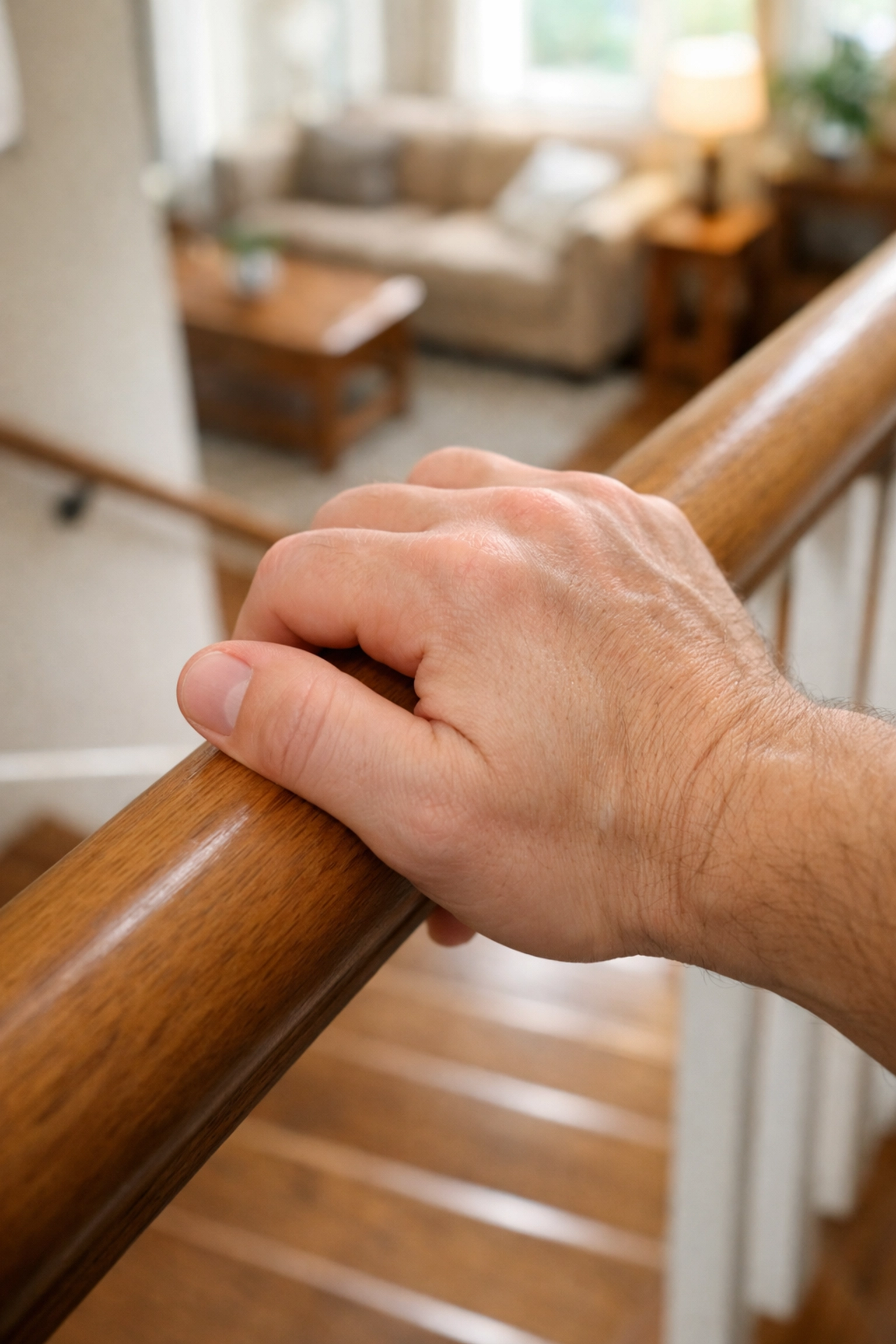
One of the most frequent mistakes is treating a handrail as a guide rather than a safety device. Many people lightly rest their hand on the rail and let it glide alongside them as they walk. While this offers a sense of balance, it provides almost no protection if you actually trip. If your foot slips, a "gliding" hand won't have the grip strength or the positioning to arrest a fall.
The Fix: Prioritize "Encircability" and Double Rails
To fix this, you need to ensure your handrail is "encircable." This means the rail should be shaped in a way that allows your fingers and thumb to meet on the underside. A bulky, wide, or decorative flat-top rail might look nice, but it’s difficult to grip firmly in an emergency.
Ideally, you should have handrails on both sides of the staircase. This allows you to maintain a "three-point contact" system (two feet and at least one hand, or two hands and one foot) at all times. If you currently only have one rail, consider adding a second one to provide support regardless of which hand is dominant or which side feels weaker that day.
2. Navigating in the "Shadow Zone"
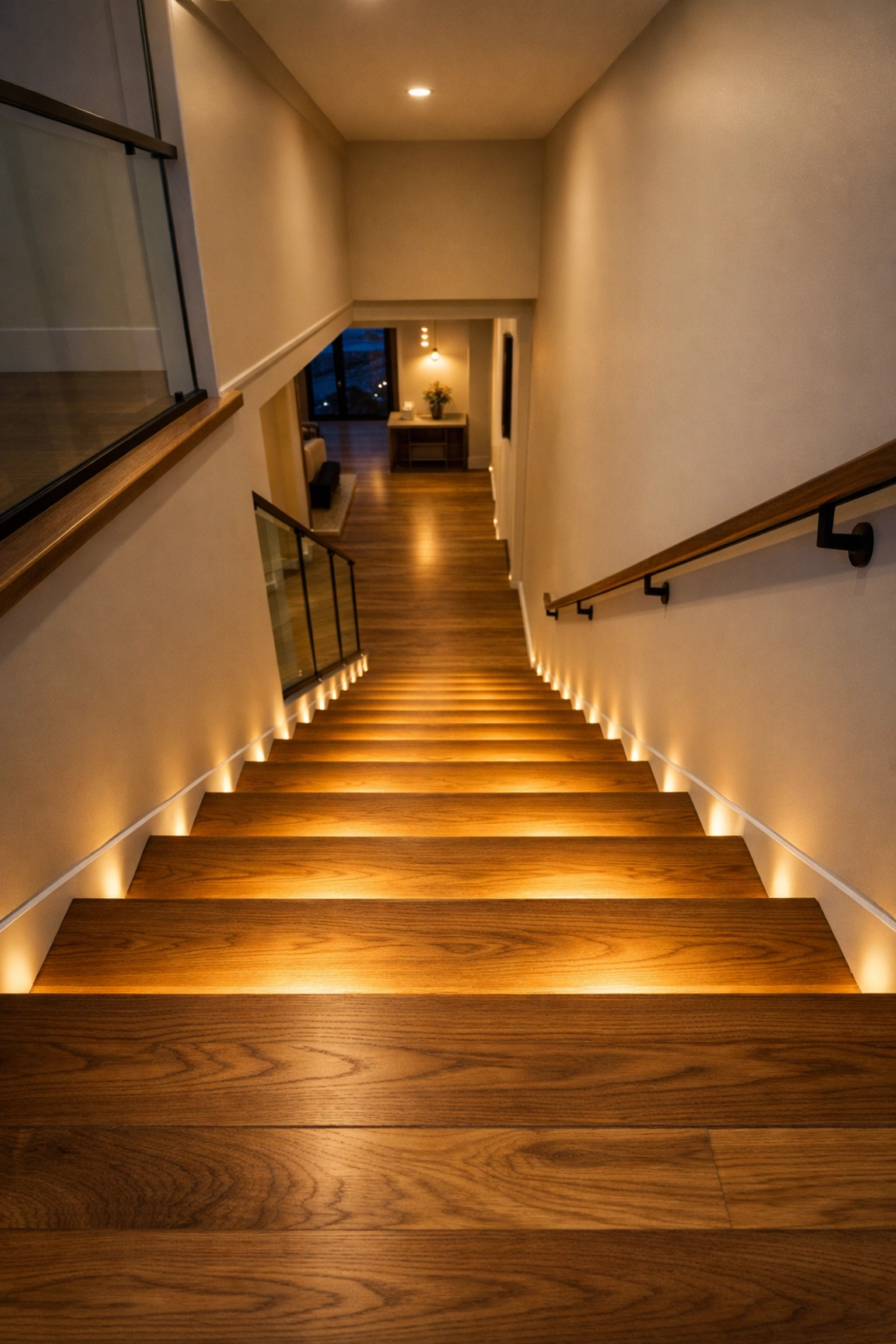
Lighting is often an afterthought on staircases. We might have a light at the top and a light at the bottom, but the middle of the flight often falls into what we call the "Shadow Zone." When light comes from behind you as you descend, your own body casts a shadow over the very steps you are trying to see. This makes it incredibly difficult to judge the depth of the tread or see the edge of the step.
The Fix: Overlapping Light Sources and Motion Sensors
The goal is "uniform illumination." You want light to hit the stairs from multiple angles to eliminate shadows.
- LED Strip Lighting: Installing battery-operated or hardwired LED strips under the lip (nosing) of each step or along the baseboard can illuminate the exact path of your feet.
- Motion Sensors: We often forget to turn on the light for a quick trip. Installing motion-activated lights ensures the path is bright the moment you approach the stairs, which is especially helpful during middle-of-the-night trips to the kitchen or bathroom.
- Contrast: If the stairs are the same color as the floor at the bottom, use a high-contrast tape or a different colored paint on the edge of each step to make the boundaries clear.
3. The "Sock-Only" Hazard
It’s comfortable to walk around the house in socks, but on wooden, tiled, or even some carpeted stairs, socks act like little skis. They offer zero traction. Slipping on a stair tread is one of the most common causes of downward falls, often leading to "stair-striking" injuries where the person hits the edge of the steps on the way down.
The Fix: Firm-Soled Indoor Footwear
The simplest fix is a "no socks on stairs" rule. If you prefer not to wear outdoor shoes inside, invest in a dedicated pair of indoor shoes or slippers that have a firm, non-slip rubber sole. Avoid "floppy" slippers or backless slides, as these can slip off your foot mid-step, creating a secondary tripping hazard. A shoe with a closed heel provides the most stability and ensures the shoe moves with you, not against you.
4. The "Stairway Storage" Habit
We’ve all done it: we place a book, a basket of laundry, or a pair of shoes on the bottom step, intending to take them up "next time we go." This turns your primary transit route into an obstacle course. Even if you think you’ll remember the item is there, a moment of distraction or a dim hallway can lead to a disastrous trip.
The Fix: The "Clear Path" Policy
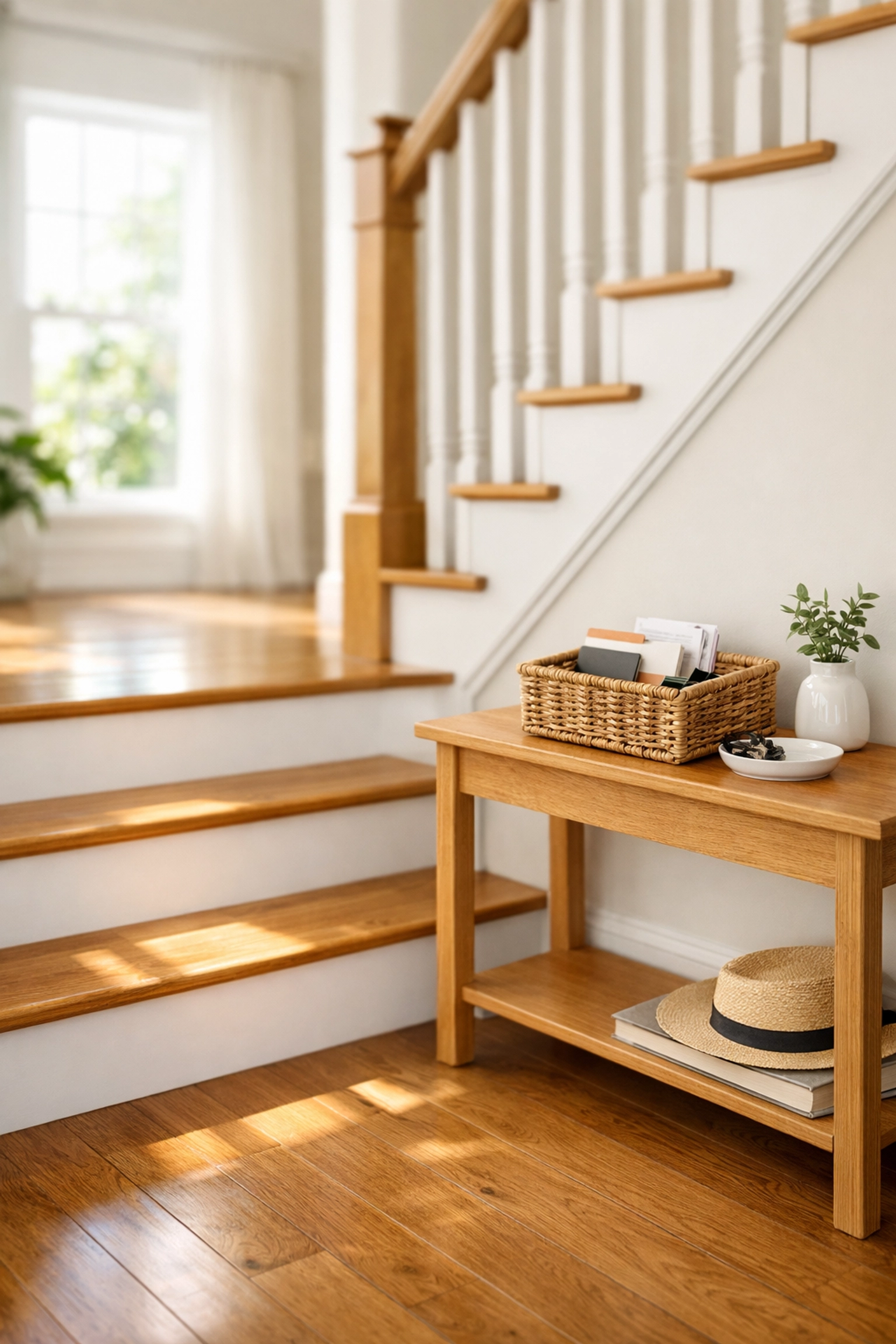
Establish a strict rule that nothing: absolutely nothing: is allowed to sit on the stairs, even for a minute. If you need to move items between floors, use a "landing zone" (a small table or bench near the top and bottom of the stairs). Place items there, and then carry them up only when your hands are free to hold the handrail.
If you find yourself carrying heavy or bulky loads that block your vision of your feet, you are significantly increasing your fall risk. Always keep one hand free for the rail. This might mean making two trips, but those extra steps are a small price to pay for safety.
5. Ignoring "Tread Creep" and Loose Carpeting
Over years of use, staircases change. Wood can warp, nails can loosen, and carpeting can stretch. "Tread creep" refers to the subtle loosening of the horizontal part of the step. If a tread wiggles even slightly when you put weight on it, your brain has to subconsciously adjust your balance, which increases the likelihood of a misstep. Similarly, loose or bulging carpet can catch the toe of a shoe or the heel of a slipper.
The Fix: The Monthly Stair Audit
Once a month, do a "safety walk." Walk up and down slowly, intentionally stepping on different parts of each tread. Listen for squeaks and feel for movement.
- Secure the Wood: If a tread is loose, it should be secured with wood screws (which hold better than nails over time).
- Tighten the Carpet: If the carpet is loose or has "bubbles," it needs to be re-stretched and tacked down by a professional.
- Check the Nosing: Ensure the front edge of the step (the nosing) isn't rounded off or slippery. If it is, you can apply anti-slip adhesive strips to provide extra "bite" for your shoes.
6. Rushing and "Cognitive Loading"
Falling isn't just a physical event; it's often a mental one. We fall when our "attentional resources" are divided. If you are talking on the phone, looking at a mobile device, or worrying about a boiling pot on the stove while using the stairs, you are "cognitively loaded." Your brain isn't fully focused on the complex motor task of climbing or descending.
The Fix: The "Staircase Mindfulness" Rule
Treat the stairs like a transition zone that requires your full attention.
- Stop the Conversation: If you’re talking to someone in another room, wait until you are off the stairs to continue.
- Eyes on the Prize: Keep your eyes on the steps, specifically looking two steps ahead of where you are.
- Pause at the Top: Before you start your descent, take one intentional breath and place your hand firmly on the rail. This simple "reset" tells your brain to focus on the task at hand.
7. The "Bottom Step Illusion"
Many falls happen at the very bottom of the stairs. This occurs because of a visual phenomenon where the last step "blends" into the floor of the landing, especially if they are the same material or color. People often think they have reached the floor when they actually have one more step to go, leading to a jarring "drop" that can cause a fall or a twisted ankle.
The Fix: Visual Cues and Contrast
You need to make that final transition obvious to your eyes.
- Color Contrast: You can use a different colored rug at the base of the stairs (ensure it is secured with a non-slip pad or tape) to signal the change in level.
- Highlight the Edge: Applying a single strip of high-visibility tape only to the edge of the very last step can break the illusion and tell your brain exactly where the stairs end.
- Lighting: Ensure the landing is just as well-lit as the stairs themselves. A bright landing helps your depth perception recognize the flat surface versus the vertical step.
Building Strength Beyond the Environment
While fixing the environment is crucial, stair safety is also about the person using them. Stairs require significant lower-body strength and "proprioception" (your body's ability to sense its position in space).
As part of your fall prevention strategy, consider gentle exercises that focus on calf and quad strength. Simple heel raises or "sit-to-stand" exercises from a sturdy chair can improve the muscle groups you use most on the stairs. Always consult with a healthcare professional or a physical therapist before starting a new exercise routine; they can provide a tailored plan that matches your specific mobility level.

A Reassuring Step Forward
Making these changes doesn't mean your home has to look like a clinical facility. Most of these fixes: better lighting, clearer paths, and better footwear: are subtle improvements that make the home more comfortable for everyone, not just those worried about falls.
Stairs don't have to be a source of anxiety. By addressing these seven common mistakes, you’re taking proactive control of your environment. Safety isn't about restriction; it's about empowerment. It’s about ensuring that you can continue to enjoy every level of your home with confidence and peace of mind.
Take a look at your stairs today. Which of these seven mistakes can you fix this afternoon? Sometimes, the smallest adjustment makes the biggest difference in staying upright and independent.

