
Hi, I’m Brian Kerr, the founder here at Fall Guys Products. If you or a loved one are starting to use a mobility aid: whether it’s a cane, a walker, or a rollator: I want to start by saying that’s a great step. Choosing to use an aid isn't a sign of "giving up" or getting old; it’s actually a move toward keeping your independence. It’s about staying mobile, staying active, and, most importantly, staying safe.
However, just having the equipment isn’t enough. Over the years, I’ve seen many folks unintentionally increase their risk of a fall because of how they choose, use, or maintain their devices. It’s easily done: sometimes we just don't know what we don't know.
In this guide, I’m going to walk you through seven of the most common mistakes I see and, more importantly, give you clear, simple ways to fix them. Let’s make sure your mobility aid is working for you, not against you.
1. Choosing the Wrong Device for Your Needs
One of the biggest hurdles is simply picking the wrong tool for the job. Often, people choose a cane because it feels less "obvious" than a walker, or they buy a rollator because it has a seat, even if they lack the balance to control wheels.
If you have significant balance issues or weakness on both sides of your body, a cane might not provide enough support. Conversely, if you only need a little help with "unloading" a painful hip or knee, a heavy walker might be overkill and actually make you more tired.
How to Fix It:
The best way to avoid this is to get a professional evaluation. A physical therapist (PT) is the gold standard here. They can assess your gait, strength, and balance to recommend exactly what level of support you need. If you’re doing this on your own, remember: canes are for minor balance issues or single-leg pain; walkers are for significant stability needs; and rollators are best for those who have the balance to manage a rolling device but need frequent rests.

2. Setting the Height Based on "Feel"
I see this all the time: a walker that’s so high the person’s shoulders are up by their ears, or a cane so low they’re hunched over like a question mark. If the height isn't right, you’re putting unnecessary strain on your back, neck, and wrists. Even worse, an incorrectly sized aid won’t support your weight properly when you actually need it to catch a stumble.
How to Fix It:
There is a "sweet spot" for almost every mobility aid. Here is the standard way to measure:
- Stand up as straight as possible with your regular walking shoes on.
- Let your arms hang naturally at your sides.
- The handle of the cane or walker should line up with the crease on the inside of your wrist.
- When you grip the handle, your elbow should have a slight bend: usually about 15 to 20 degrees.
If you find yourself leaning forward or reaching up, your aid needs an adjustment.
3. Using the Aid on the Wrong Side (The Cane Trap)
This is specifically for cane users, and it’s perhaps the most common mistake of all. Naturally, most people want to put the cane in the hand on the same side as their "bad" or weak leg. It feels intuitive, right? You want to support the leg that hurts. However, walking that way actually shifts your center of gravity in a way that makes you less stable.
How to Fix It:
Always use your cane in the hand opposite your weak or painful leg. As you step forward with your "bad" leg, the cane moves forward at the same time on the opposite side. This mimics the natural swing of your arms and provides a wider, more stable base of support. It takes a little practice to get the rhythm down, but it’s much safer for your joints and your balance.

4. Pushing the Walker Too Far Ahead
When people use a standard walker (the kind without wheels or with just two wheels in front), there’s a tendency to "park" the walker far out in front and then "catch up" to it. When the walker is too far ahead of your body, you lose the stability it’s supposed to provide. If you trip while the walker is two feet in front of you, you won't be able to use it to stabilize yourself.
How to Fix It:
Think of yourself as walking inside the walker, not behind it.
- Move the walker forward about one step’s length.
- Step into the center of the walker frame with your weaker leg first.
- Follow with your stronger leg.
- Your feet should never go past the front bar of the walker. Keeping your body centered within the four posts ensures that your weight is always supported by the device.
5. Forgetting to Maintain the "Tires" (Rubber Tips)
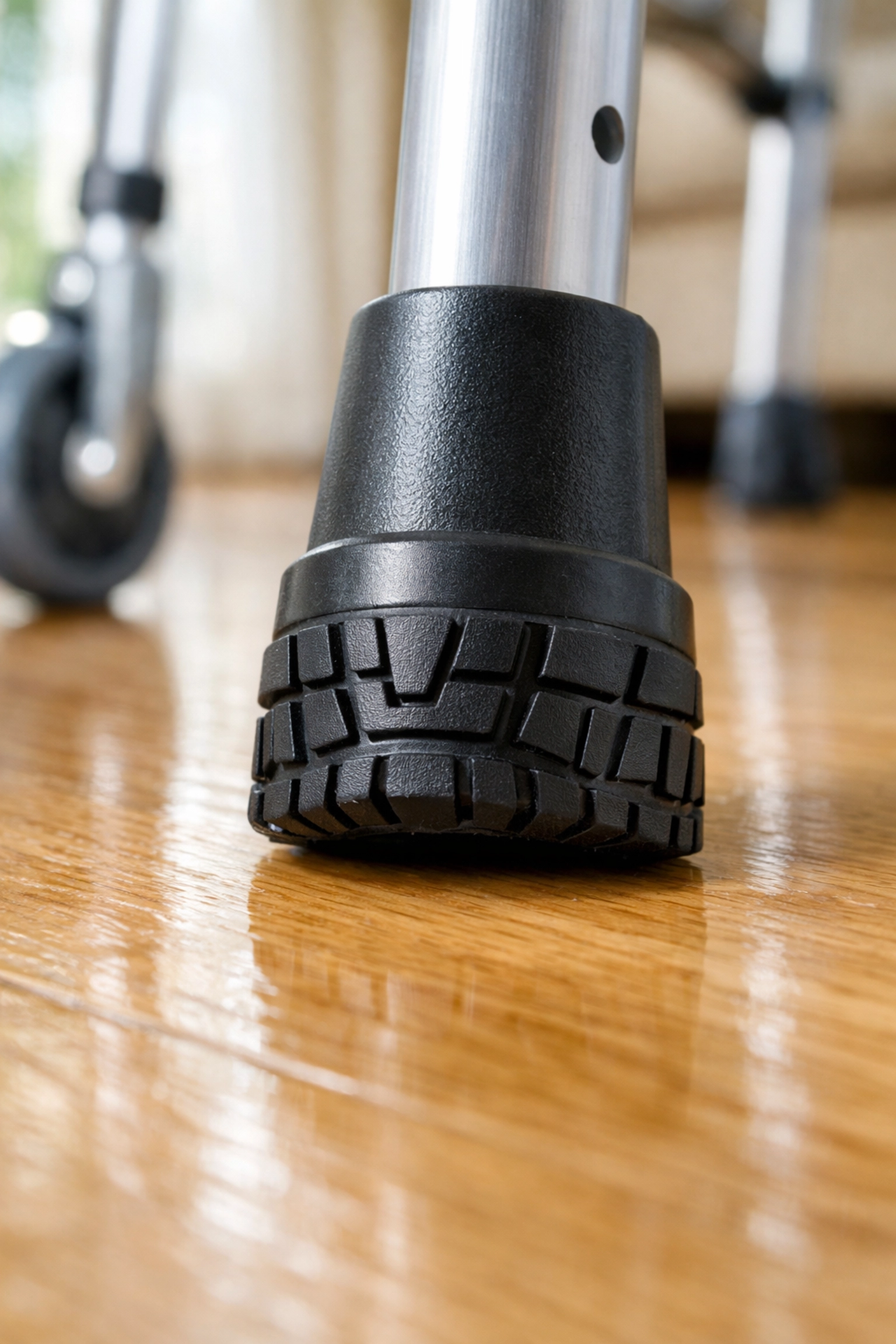
The rubber tips at the bottom of canes and walkers: often called ferrules: are the only thing between you and a slippery floor. Over time, these tips wear down, lose their tread, or become hard and brittle. A worn-out tip is like driving a car with bald tires; it won't grip the ground, especially on tile or hardwood floors.
How to Fix It:
Check your mobility aid once a month. Look at the bottom of the tips. If the tread is smooth, or if you can see the metal of the cane/walker poking through the rubber, replace them immediately. You can find replacement tips at most hardware stores or pharmacies. While you're at it, check the brakes on your rollator to make sure they lock tightly and don't "creep" when you apply pressure.
6. Wearing Inappropriate Footwear
A mobility aid is only half of the safety equation; your shoes are the other half. I’ve seen folks use a state-of-the-art walker while wearing loose-fitting slippers or flip-flops. These types of shoes provide no heel support and can easily slide off or catch on the edge of a rug, causing a trip that even the best walker can't prevent.
How to Fix It:
When using a mobility aid, your shoes should be:
- Secure: Use shoes with laces or sturdy Velcro straps that stay firmly on your feet.
- Non-slip: Rubber soles with good grip are essential.
- Closed-back: Avoid "mules" or "slides." Your heel needs to be locked into the shoe.
Think of your shoes and your mobility aid as a single safety system. They have to work together to keep you upright.
7. The "I'm Just Going to the Kitchen" Mindset
This is the hardest mistake to fix because it’s psychological. Many falls happen indoors during short trips: going from the recliner to the bathroom or the bed to the kitchen. Often, people think, "It’s only a few steps, I don't need my walker for this." This "furniture surfing" (grabbing onto chairs, tables, or walls for balance) is incredibly dangerous because furniture isn't designed to support your weight and can slide or tip.
How to Fix It:
Consistency is key. If you have been advised to use a mobility aid, use it for every trip, no matter how short. Keep your aid within arm’s reach of your favorite chair and your bed. If you find it cumbersome to navigate tight corners in your home, it might be a sign that you need to rearrange some furniture to create "clear paths" or consider a different type of aid (like a narrow walker) for indoor use.

Looking Beyond the Device: The Home Environment
While correcting these seven mistakes will go a long way, it’s also important to remember that your mobility aid is operating within your home environment. Even the best technique won't help if you're navigating a "minefield" of hazards.
Take a look around your living space. Are there throw rugs that your walker could catch on? Is there enough light in the hallway for you to see where you're placing your cane at night? Is the path to the bathroom clear of clutter?
Making small adjustments to your home: like removing rugs, adding brighter LED bulbs, and ensuring your walkways are at least 32 inches wide: will make using your mobility aid much easier and safer.
A Note on Professional Guidance
I always tell people: don't be afraid to ask for help. If you feel like your walker is "clunky" or you’re feeling more tired than usual after walking, talk to your doctor or a physical therapist. Sometimes a very small adjustment to the height or a slight change in how you're stepping can make a world of difference.
Our goal is to keep you moving safely so you can keep doing the things you love. By avoiding these common pitfalls and staying mindful of your technique, you’re taking a huge step toward a safer, more independent lifestyle. Stay safe out there!

