
For many of us, the stairs are just a functional part of our homes: a way to get from the kitchen to the bedroom. But as we age, or as we care for someone who is aging, that simple set of steps can start to feel like a mountain. We often think we’ve made the stairs "safe enough" by putting up a handrail or reminding a loved one to "be careful." Unfortunately, many home safety plans for stairways overlook subtle but critical flaws that can lead to a slip or fall.
When a safety plan isn't working, it’s rarely because of a lack of effort. Usually, it’s because the plan doesn't account for the way our bodies and eyes interact with the environment. Let’s walk through the ten most common reasons stairway safety plans fail and, more importantly, how we can fix them to create a truly secure home environment.
1. Step Dimensions Are Inconsistent
Human beings rely heavily on "muscle memory." When you walk up a flight of stairs, your brain calculates the height of the first two steps and then essentially goes on autopilot. If every step is exactly seven inches high, your feet know exactly where to land. However, if one step is a quarter-inch taller or shorter than the others, that rhythm is broken. This "irregularity" is one of the leading causes of trips.
The Fix:
Conduct a "stair audit." Use a measuring tape to check the height (riser) and the depth (tread) of every single step. Ideally, risers should be between 4 and 7¾ inches, and tread depth should be at least 10 inches. If you find significant variations, you may need a contractor to shim the treads or rebuild the section to ensure uniformity. Even a small correction can prevent a stumble.
2. Handrails Are Decorative, Not Functional
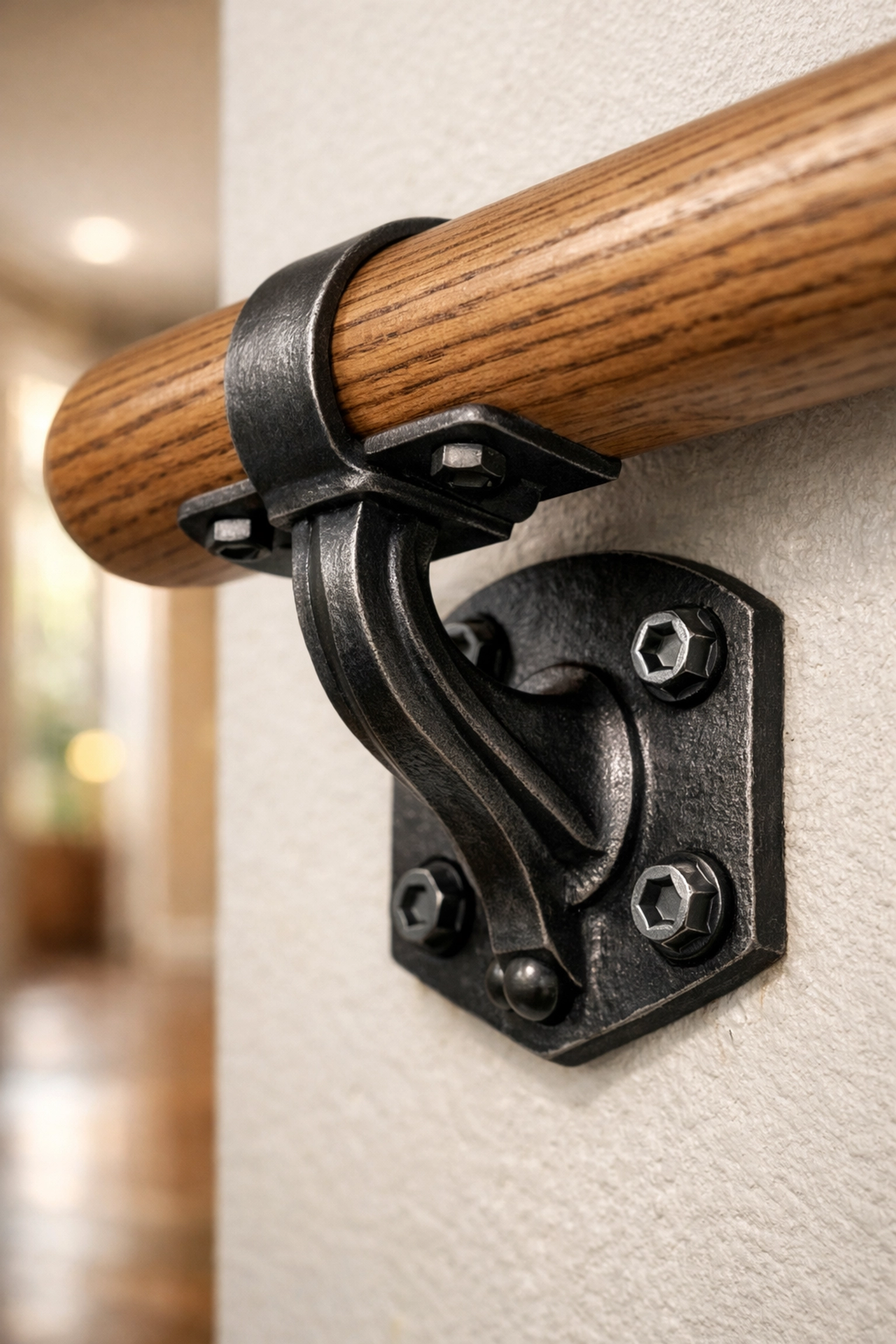
A common mistake in home design is installing handrails that look beautiful but are difficult to actually hold. If a handrail is too wide to wrap your fingers around, or if it’s placed too close to the wall, it won't provide the "power grip" needed to stabilize yourself during a slip. Furthermore, many handrails only run along one side of the stairs, leaving the other side open to a fall.
The Fix:
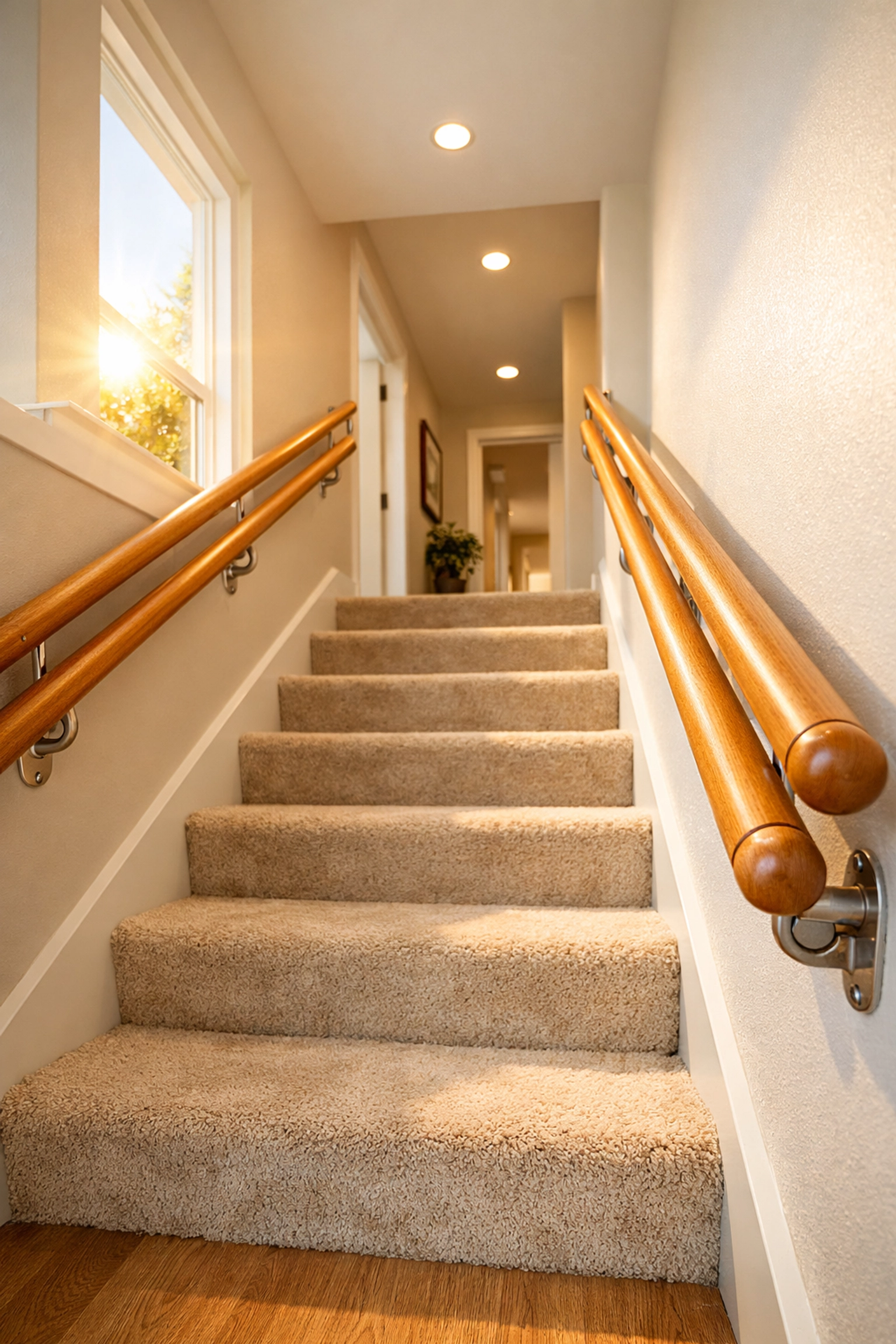
Ensure your handrails are "graspable." This means they should have a circular or oval cross-section that a hand can comfortably encircle. They should be mounted 34 to 38 inches above the stair nosing. Most importantly, install handrails on both sides of the stairway. Having two points of contact allows for much greater balance and significantly reduces the physical strain on the knees and hips.
3. The "Shadow Zone" Lighting Problem
You might have a light at the top of the stairs and a light at the bottom, but if they aren't positioned correctly, they can create "hot spots" and deep shadows. Shadows can hide the edge of a step, making it look like the floor is flat when it isn't. Conversely, overly bright bulbs can cause glare on polished wood or tile, which is just as disorienting for someone with changing vision.
The Fix:
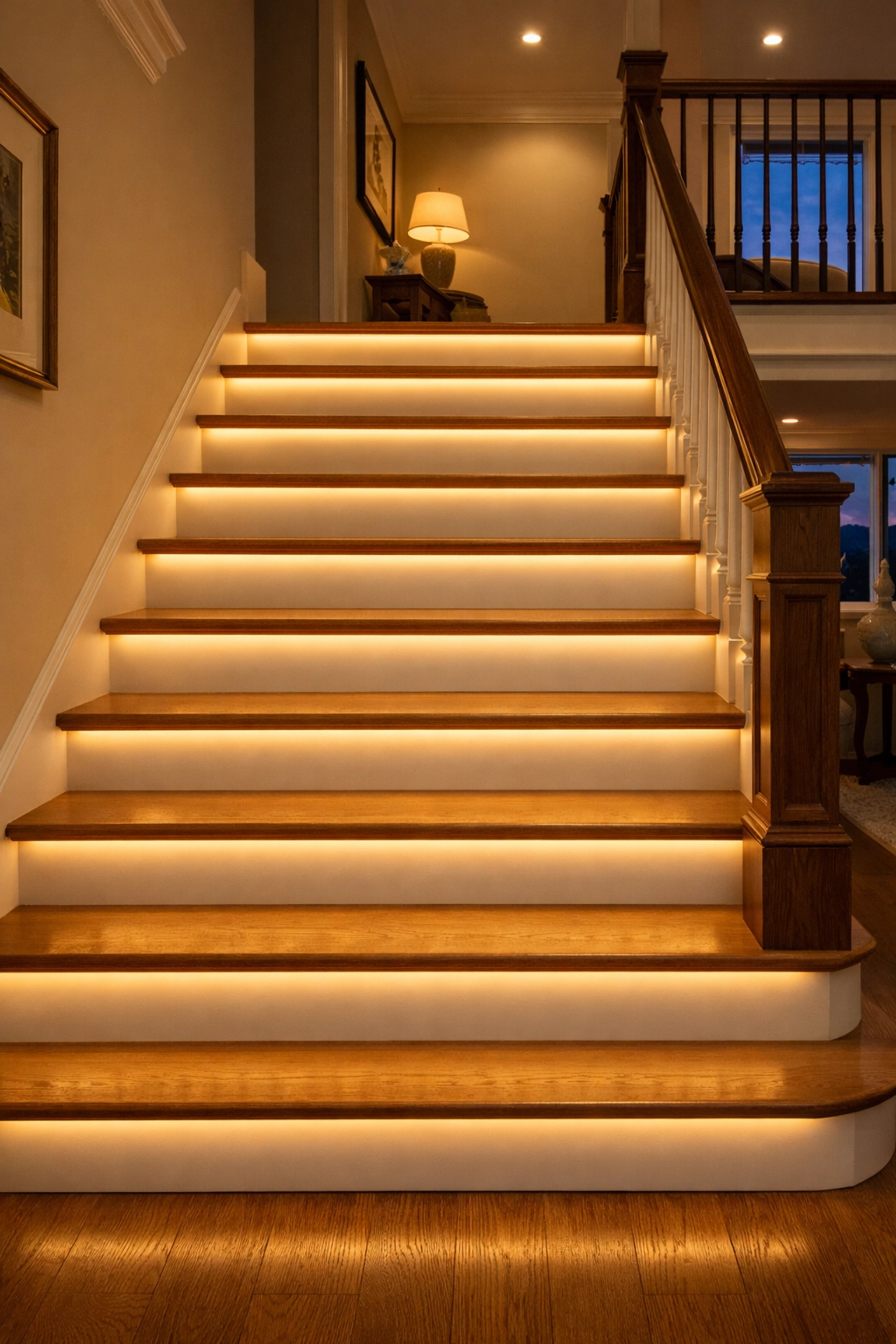
Aim for even, diffused lighting across the entire flight. Motion-activated LED strips under the lip of each tread are an excellent way to illuminate the path without creating glare. Ensure there are light switches at both the top and bottom of the stairs. If you’re dealing with older electrical systems, plug-in motion sensors or battery-operated "puck" lights can be a quick and effective bridge.
4. The "Temporary" Storage Habit
We’ve all done it: we place a basket of laundry, a stack of mail, or a pair of shoes on the bottom step to take up "later." In a safety plan, "later" is often when the accident happens. Objects left on stairs effectively narrow the walking path and create a direct tripping hazard. Even if you know the object is there, a moment of distraction or poor lighting can lead to a foot catching on a strap or a box.
The Fix:
Adopt a "Zero Tolerance" policy for stair storage. Nothing should ever sit on a step, even for a minute. If you need to move items between floors, use a dedicated landing table near the stairs where items can be staged safely. This keeps the walkway clear and ensures that the person using the stairs can focus entirely on their footing.
5. Slippery Surfaces and Worn Treads
Hardwood and tile stairs are popular for their aesthetic and ease of cleaning, but they are notoriously slippery, especially if you are wearing socks or smooth-soled slippers. Over time, the "nosing" (the front edge) of wooden steps can become rounded and smooth, reducing the amount of surface area your foot has to grip.
The Fix:
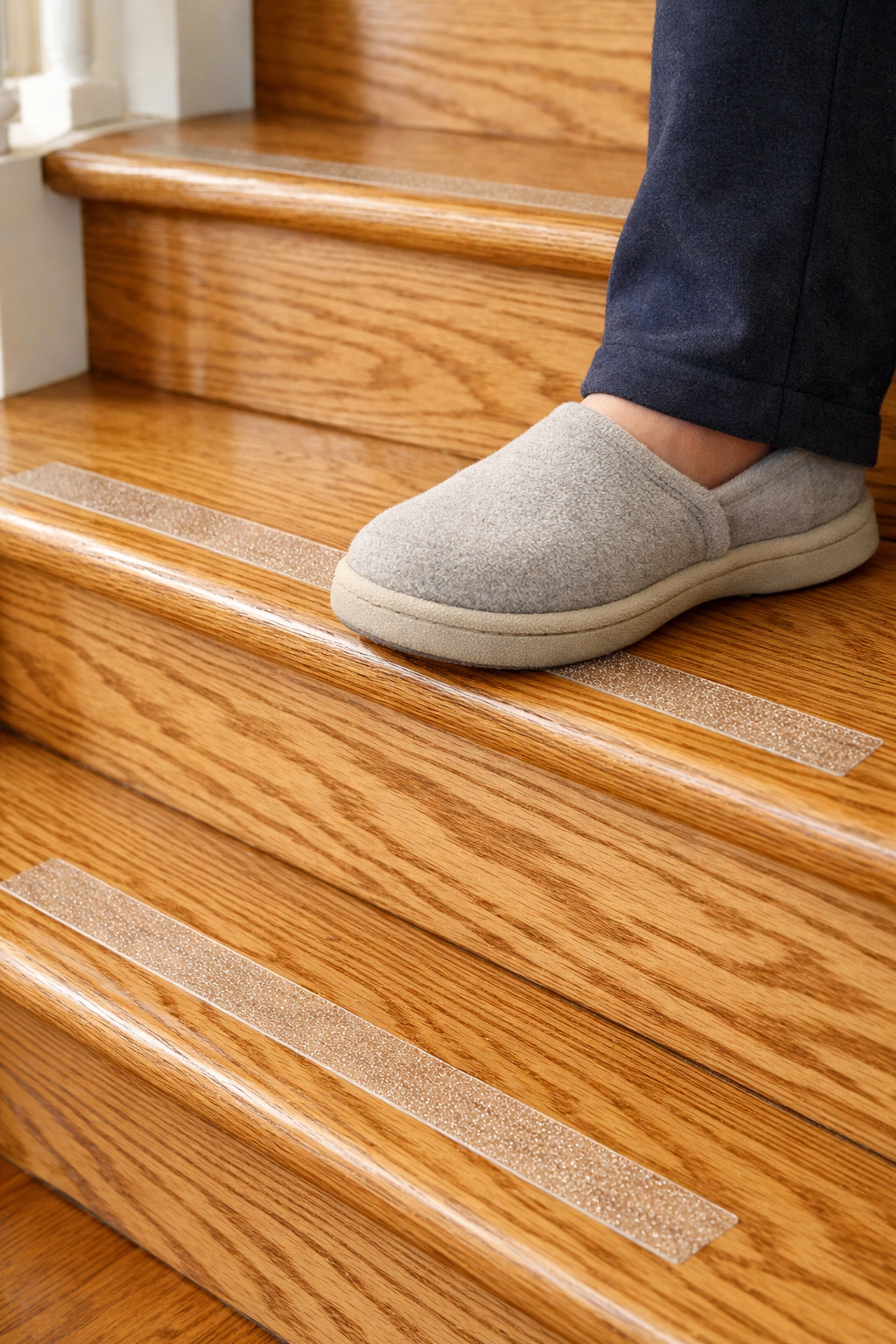
If your stairs are bare wood or tile, consider adding non-slip features. This could be high-friction adhesive strips, rubber stair treads, or a firmly anchored carpet runner. If you choose carpet, ensure it is a low-pile variety; deep, plush carpet can actually hide the edge of the step and make it harder to feel where your foot should land. Regularly inspect the edges of the steps for wear and replace any damaged sections immediately.
6. Ignoring the "Open Riser" Danger
Modern "open-concept" stairs often omit the vertical back part of the step (the riser). While this looks airy and modern, it can be very disorienting for seniors or those with depth perception issues. It also presents a risk where a foot can slip through the gap, or a cane/walker tip can get caught, leading to a forward fall.
The Fix:
The safest stairway is a closed stairway. If you have open risers, consider having a carpenter "close" them with wood panels. If that isn't possible, you can install "toe kicks" or back-plates that limit the opening to less than four inches. This provides a visual backstop for the foot and helps the eye better define the depth of each step.
7. Structural Integrity Is Waning
Stairs take a lot of abuse over the decades. Wood can rot (especially on basement or outdoor stairs), fasteners can rust, and the "stringers" (the side supports) can pull away from the wall. A safety plan that focuses only on the surface will fail if the underlying structure is shaky. A handrail that wobbles when you put weight on it is sometimes more dangerous than no handrail at all, as it provides a false sense of security.
The Fix:
Perform a structural check twice a year. Stand on each step and shift your weight; do you hear creaking or feel any movement? Grab the handrail and give it a firm shake; does it feel anchored into the studs? If you find any movement, it’s time to tighten bolts or call in a professional to reinforce the structure. Outdoor stairs should be checked even more frequently for signs of weathering or pest damage.
8. Misunderstanding Building Codes
Many homeowners assume that because their house passed an inspection 20 or 30 years ago, their stairs are "safe." However, building codes for stairway safety have evolved significantly as we've learned more about ergonomics and fall prevention. Older homes often have steeper pitches and narrower treads than what is currently considered safe by modern standards.
The Fix:
You don't necessarily have to remodel your entire home to meet current codes, but you should use modern codes (like the International Residential Code) as a benchmark. If your stairs are significantly steeper than current recommendations, you need to be extra diligent with other safety features like double handrails and high-visibility lighting to compensate for the structural challenge.
9. Lack of "Visual Contrast"
As we age, our ability to distinguish between similar colors and textures decreases. If your stairs are the same color as the floor at the top and bottom, it becomes very difficult to see where the first step begins or the last step ends. This loss of "edge definition" is a major contributor to falls during the transition onto or off of the stairs.
The Fix:
Create visual contrast. You can do this by painting the nosing of each step a slightly different color or by using high-contrast anti-slip tape. For example, if you have dark wood stairs, a light-colored strip on the edge of each tread can help the eye quickly identify the boundaries of each step. Ensure the flooring at the top and bottom of the stairs is also a different color or texture than the stairs themselves.
10. Neglecting the Transition Zones
Research shows that most stairway accidents happen on the first three or last three steps. This is where people are either "gearing up" to climb or "winding down" as they reach their destination. Often, people will let go of the handrail a step or two early, or they start looking away from the stairs before they are actually on level ground.
The Fix:
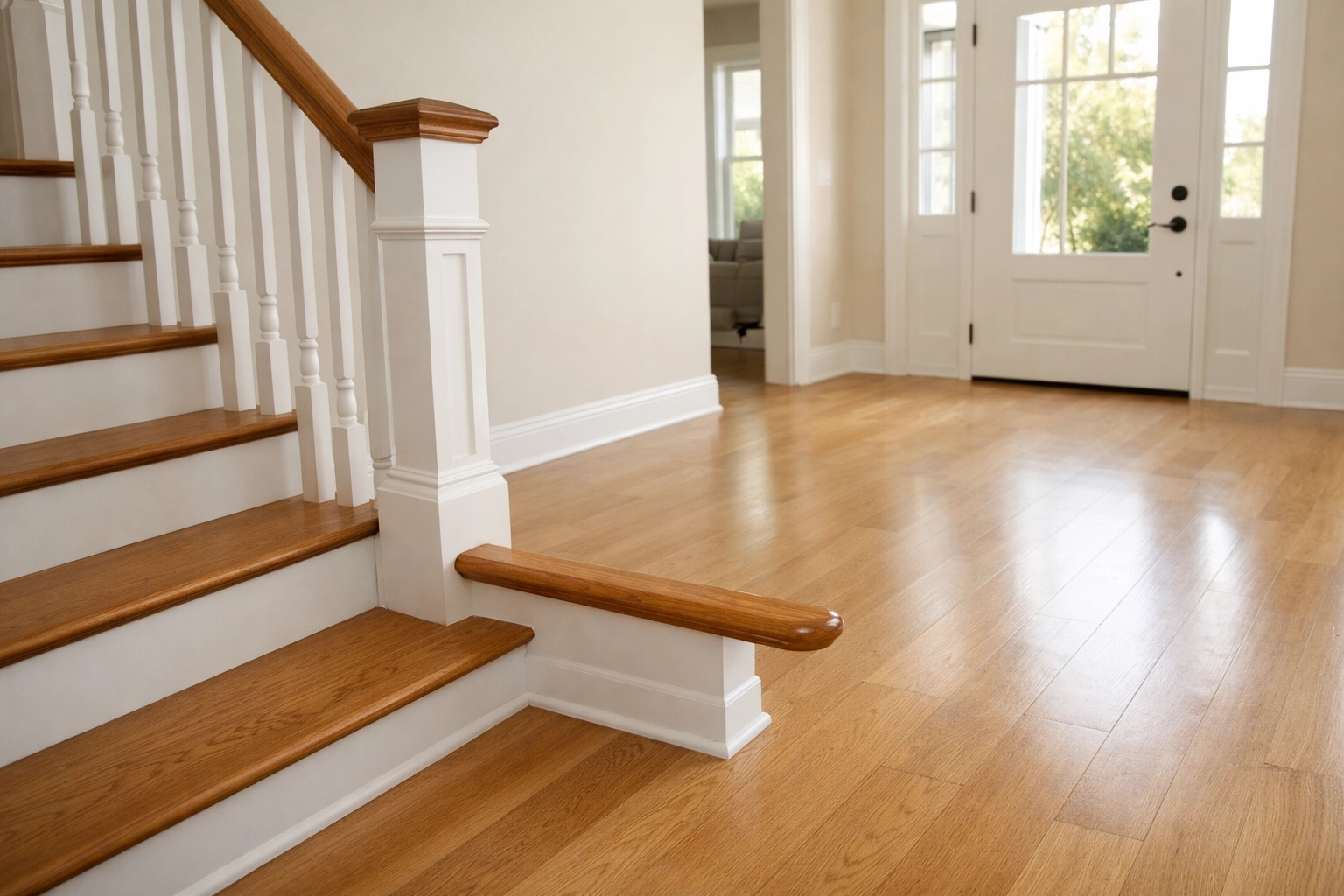
Extend your safety plan beyond the stairs themselves. Make sure the handrails extend at least 12 inches past the top and bottom steps (this is called a "handrail extension"). This allows the user to maintain a grip until they are fully and safely on a flat surface. Additionally, ensure the "landing pads" at the top and bottom are completely clear of rugs or clutter that could cause a trip just as the person is finishing their climb.
Taking the First Step Toward Safety
A stairway safety plan isn't a "set it and forget it" project. It requires ongoing observation and a willingness to look at your home through a critical lens. By addressing these ten common pitfalls, you aren't just making the stairs easier to climb; you’re providing peace of mind for everyone who uses them.
Start by checking your lighting and clearing the clutter today. Then, move on to more permanent fixes like secondary handrails or structural inspections. Safe stairs are the backbone of an independent home, and with a few thoughtful adjustments, they can remain a safe passage for years to come.

