
For many of us, our homes are our sanctuaries: the places where we feel most comfortable and secure. However, as we age or care for loved ones who are aging in place, certain areas of the home that we once navigated without a second thought can begin to present new challenges. The staircase is often at the top of that list.
According to various health organizations, falls are one of the leading causes of injury among older adults, and stairs are a common site for these incidents. The good news is that securing your stairs doesn't always require a major renovation or a massive budget. Often, it is a combination of small structural tweaks, better habits, and a bit of consistent maintenance.
At Fall Guys Products, we believe in a proactive, reassuring approach to home safety. Our goal is to help you maintain your independence by creating an environment that supports your mobility. Here are 15 simple, effective ways to secure your stairs and prevent falls.
Structural Improvements for Maximum Support
The physical structure of your staircase is the foundation of your safety. By making a few key adjustments to the stairs themselves, you can significantly reduce the risk of a slip or a misstep.
1. Install Sturdy Handrails on Both Sides
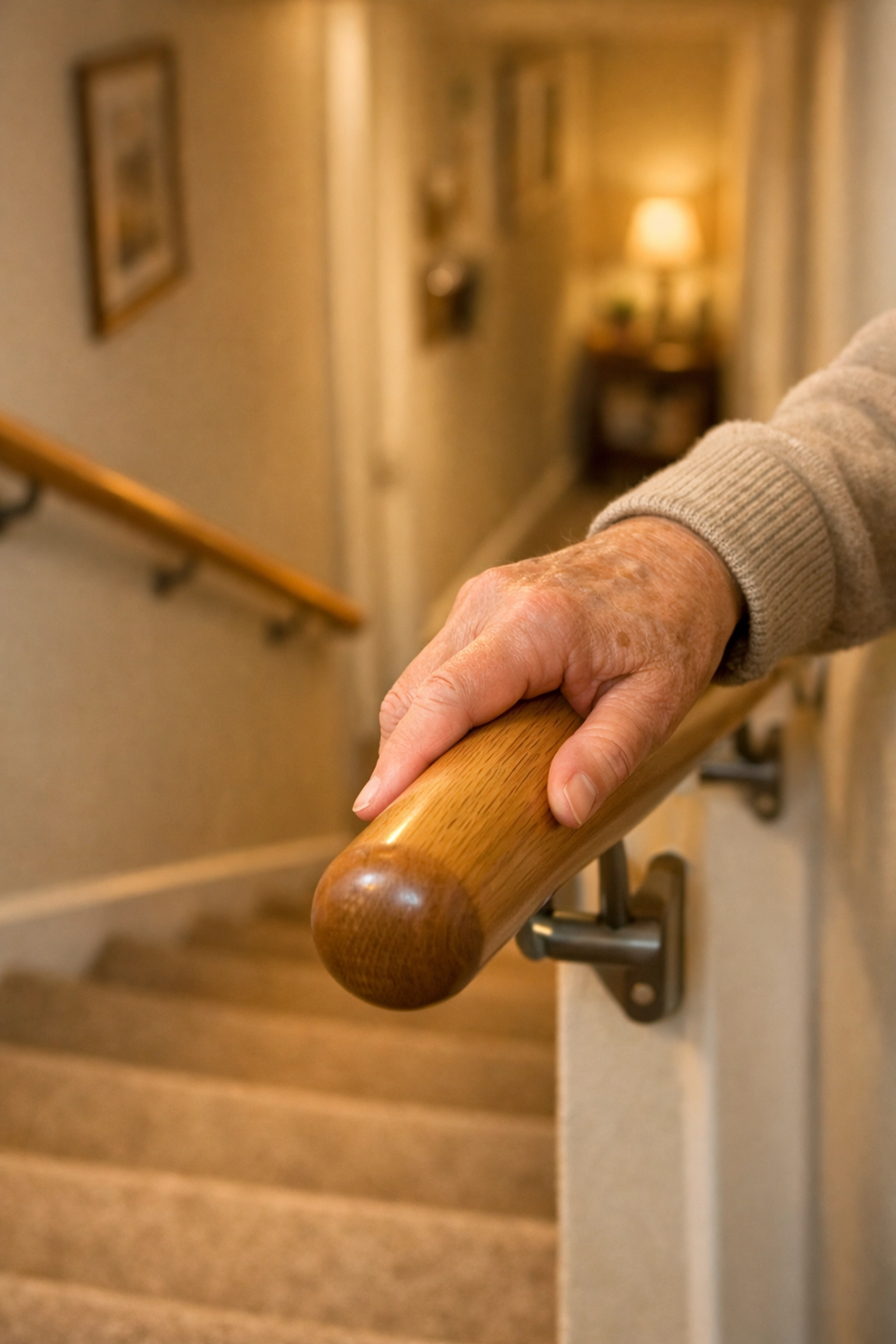
While most building codes require at least one handrail, having rails on both sides of the staircase provides double the support. This is particularly important if you have a side of the body that is weaker than the other. Ensure the rails run the full length of the stairs and even extend slightly beyond the top and bottom steps. They should be positioned about 30 to 36 inches above the floor and have a rounded shape that allows for a full, firm grip.
2. Add Non-Slip Treads
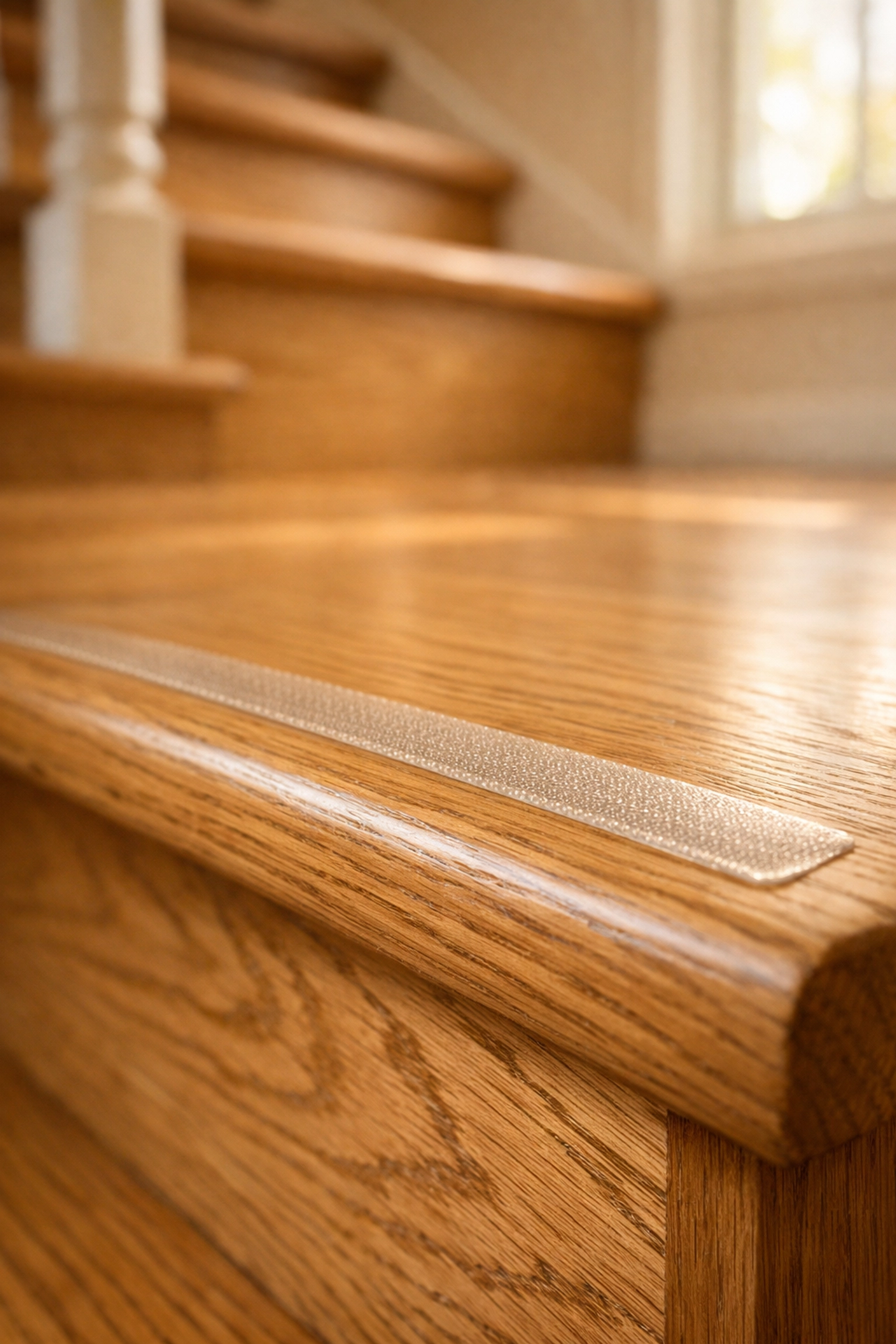
Polished wood, tile, or laminate stairs can be incredibly slippery, especially if you are wearing socks. Adding non-slip treads is one of the quickest ways to increase traction. These can be clear adhesive strips that blend in with the wood or rubberized mats that provide a tactile grip. If you prefer carpet, ensure it is a low-pile variety that is tightly fitted to the stairs so it doesn't bunch up and create a trip hazard.
3. Mark Step Edges for Better Visibility
As we age, our depth perception and ability to distinguish between similar colors can decline. This makes it difficult to see where one step ends and the next begins, especially in dim light. You can improve visual contrast by applying a strip of contrasting or reflective tape to the edge (the "nosing") of each step. For example, if you have dark wood stairs, a light-colored or glow-in-the-dark strip can help your eyes track the change in elevation.
4. Ensure Steps are Even and Secure
A staircase with "variable" step heights is a recipe for a fall. Our brains quickly calibrate to the height of the first few steps; if one step is even half an inch higher or lower than the others, it can cause a trip. Regularly inspect your stairs for loose floorboards, protruding nails, or sagging treads. If you notice any wobbling or unevenness, it’s worth having a carpenter or a handy family member secure them immediately.
5. Brighten the Path with Better Lighting
Shadows are a major enemy of stair safety. You should have bright, glare-free lighting at both the top and bottom of the staircase, with switches in both locations so you never have to navigate in the dark. Consider installing motion-sensing night-lights along the baseboards. These light up automatically as you approach, providing a clear path for those late-night trips to the kitchen or bathroom without the need to fumbling for a switch.
6. Fix Loose Handrails Immediately
A handrail is only helpful if it can support your weight. Over time, the brackets holding a rail to the wall can loosen due to regular use. Give your handrails a "tug test" once a month. If there is any "give" or wobbling, the screws should be tightened or the rail should be remounted into a wall stud.
Removing Hazards and Clutter
Sometimes, the danger isn't the stairs themselves, but the things we put on them. Maintaining a "clear path" philosophy is essential for long-term safety.
7. Clear the "Landing Zone" and Steps
It is a common habit to leave items at the bottom of the stairs to be taken up "on the next trip." Shoes, books, laundry baskets, and mail quickly turn into obstacles. Make it a strict rule that nothing is ever stored on the stairs, not even for a few minutes. If you find it hard to carry items while using the stairs, consider installing a small basket at the top and bottom that stays on the floor, well away from the walking path.
8. Remove Area Rugs at Transitions
Small rugs or "runners" at the very top or bottom of a staircase are notorious for sliding out from underfoot. Even if they have a non-slip backing, the edge of the rug can flip up and cause a trip. The safest approach is to remove these rugs entirely. If you must have them, ensure they are professionally installed or secured with heavy-duty carpet tape around all edges.
9. Manage Electrical Cords
In many older homes, outlets are sparse, leading people to run extension cords across hallways or near the base of the stairs. This is a significant tripping hazard. Use cord covers that adhere to the floor, or better yet, work with an electrician to add an outlet where you need it so that cords never cross a walking path.
10. Don't Forget Exterior Stairs
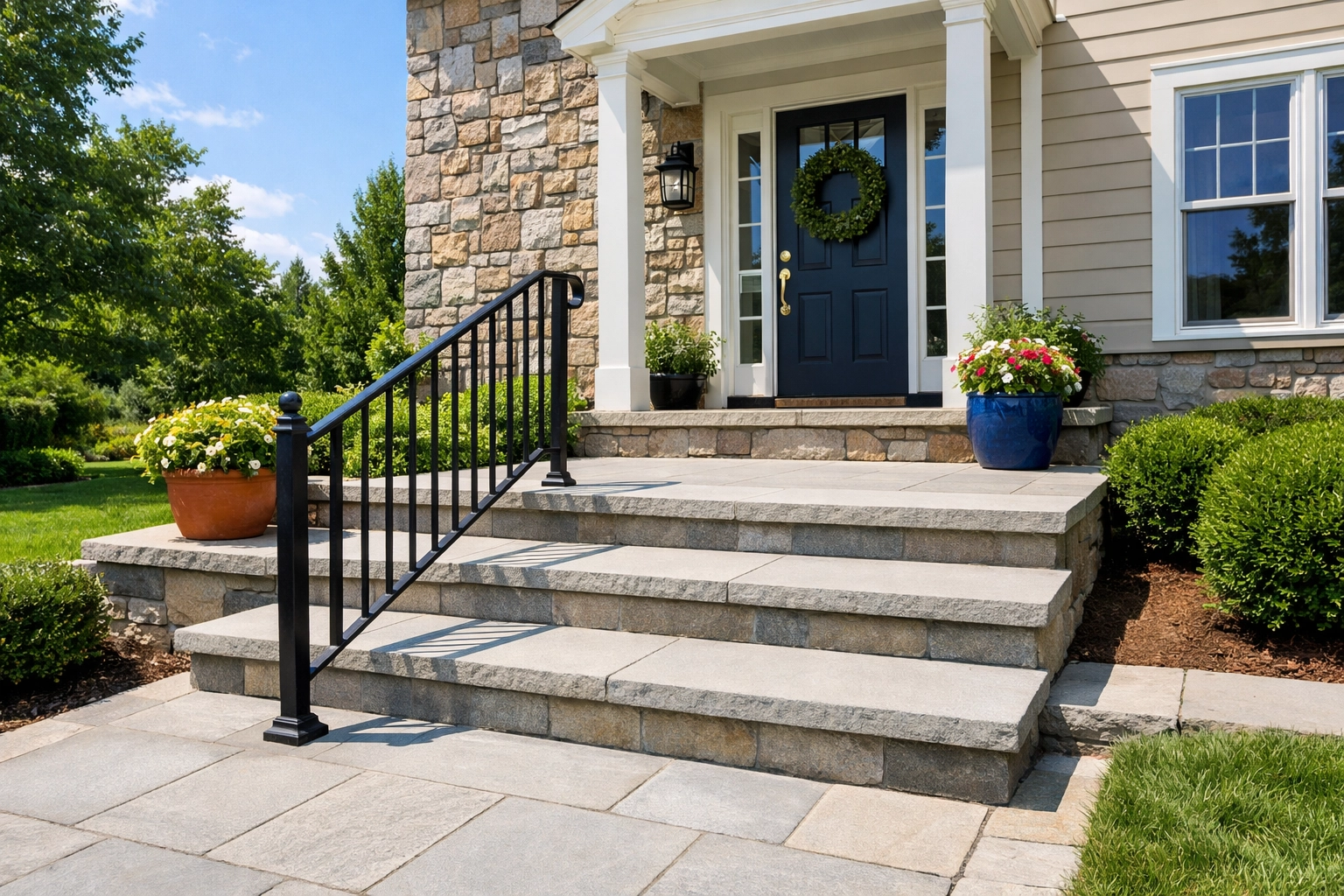
The stairs leading to your front door or into your garden need just as much attention as your indoor ones. Keep them clear of wet leaves, which can be as slippery as ice. During winter months, ensure they are promptly cleared of snow and treated with sand or salt. Exterior stairs often benefit from "anti-slip" paint, which has a gritty texture built right in.
Personal Habits for Safer Navigation
The way we move and the choices we make regarding our clothing and equipment play a massive role in fall prevention.
11. Choose Supportive Footwear
While it’s tempting to walk around the house in bare feet, socks, or loose slippers, these are not ideal for stairs. Socks offer no traction on hard surfaces, and "scuff" slippers can easily fall off your heel mid-step. Opt for a supportive shoe with a non-skid rubber sole and a closed back. If you prefer being comfortable at home, look for "house shoes" that provide the same structure as an outdoor sneaker.
12. Use the Handrail Every Single Time
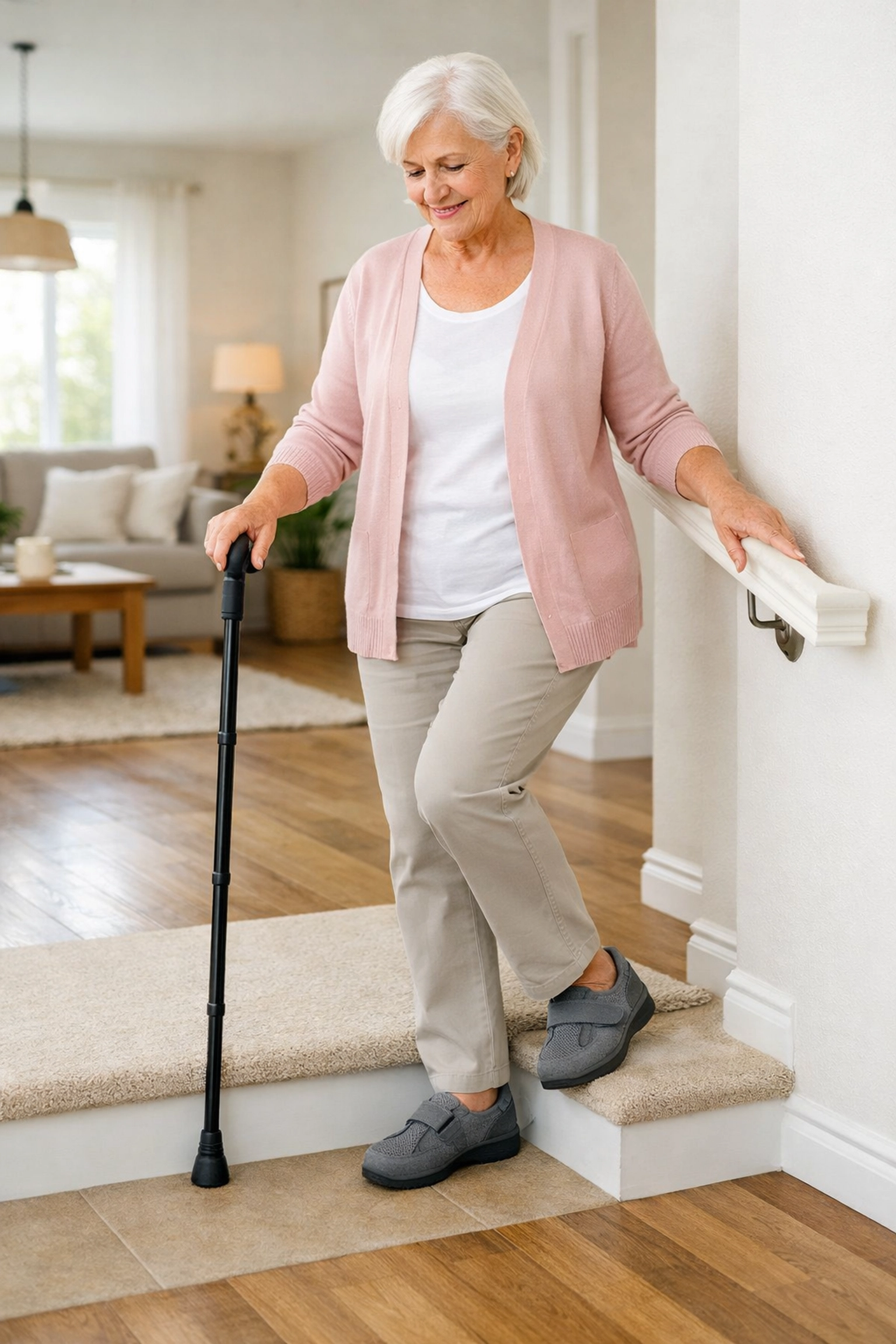
Many falls happen because we feel confident and think we don't "need" the rail for a quick trip. However, a sudden dizzy spell or a momentary distraction can happen to anyone. Make it a habit to keep at least one hand on the rail at all times. This provides an immediate anchor point if you lose your balance.
13. Focus and Take Your Time
Multi-tasking on the stairs is a major risk factor. Avoid carrying large loads that block your view of your feet. Never use your phone or read mail while descending. Walk at a measured pace, placing your entire foot on each step. If you find yourself getting short of breath or feeling tired, stop at the landing and rest before continuing.
14. Use Assistive Devices Correctly
If you use a cane or a walker, it’s important to know the safe technique for stairs. For a cane, the general rule is "Up with the good, down with the bad." When going up, lead with your stronger leg, then follow with the cane and your weaker leg. When going down, lead with the cane and the weaker leg, then bring the stronger leg down. If you use a walker, you may need a second walker: one for each floor: or a specialized model designed for stair use, though many therapists recommend using the handrails instead of a walker on the stairs whenever possible.
15. Prioritize Balance and Strength Exercises
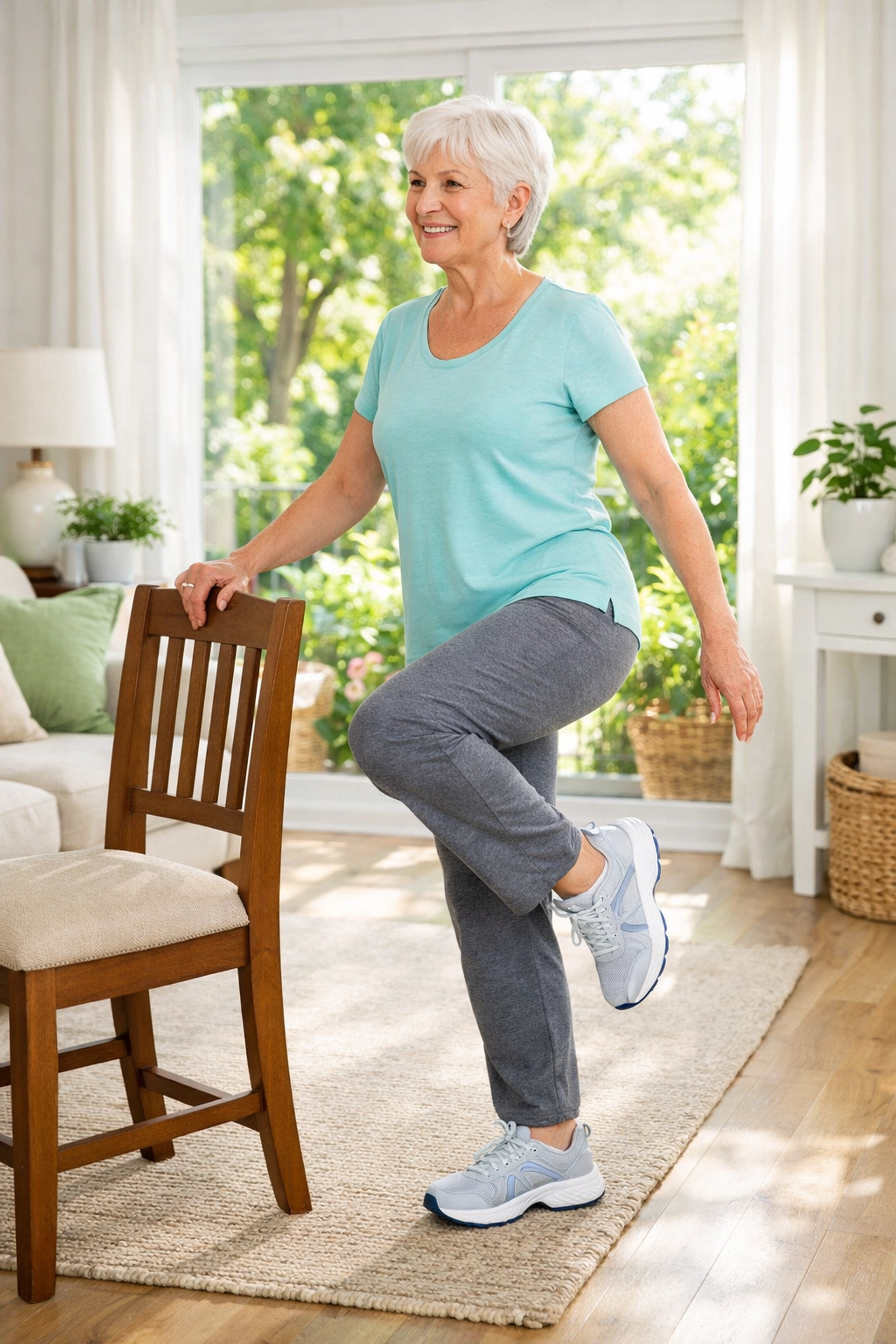
A safe environment is only half the battle; a strong body is the other half. Simple exercises can improve the leg strength and coordination needed for stairs. Activities like Tai Chi are excellent for balance. Even simple "sit-to-stand" exercises from a sturdy chair can build the quadriceps strength required to lift your body weight from one step to the next. Always consult with a doctor or physical therapist before starting a new exercise routine.
Creating a Culture of Safety
Securing your stairs isn't about admitting defeat or losing your independence. Quite the opposite: it's about taking control of your environment so you can continue to enjoy every floor of your home for years to come.
If you are a caregiver, approach these changes with a spirit of collaboration. Explain that these modifications are meant to provide peace of mind for everyone. Sometimes, a simple walk-through of the home together can reveal hazards that have become "invisible" over time.
By implementing these 15 steps, you are building a layer of protection around yourself and your family. Start with the easiest changes: like clearing clutter and checking your light bulbs: and then move toward the structural improvements like handrails and non-slip treads. Each small change is a step toward a safer, more confident life at home.

