
Stairs are a fundamental part of many homes, yet they are often the most overlooked area when it comes to proactive safety. For many of us, navigating a flight of stairs is a routine action we perform dozens of times a day without a second thought. However, as we age or as our mobility needs change, those same stairs can start to feel a bit more daunting.
At Fall Guys Products, we believe that your home should be a place where you feel completely at ease. My name is Brian Kerr, and I’ve spent years looking at how small, simple adjustments can make a world of difference in maintaining independence and confidence at home. Stair safety isn't about redesigning your entire house; it’s about identifying common oversights and applying practical, common-sense solutions.
In this guide, we’ll explore seven common mistakes people make with their staircases and, more importantly, the straightforward steps you can take to fix them today.
1. The "One-Sided" Handrail Oversight
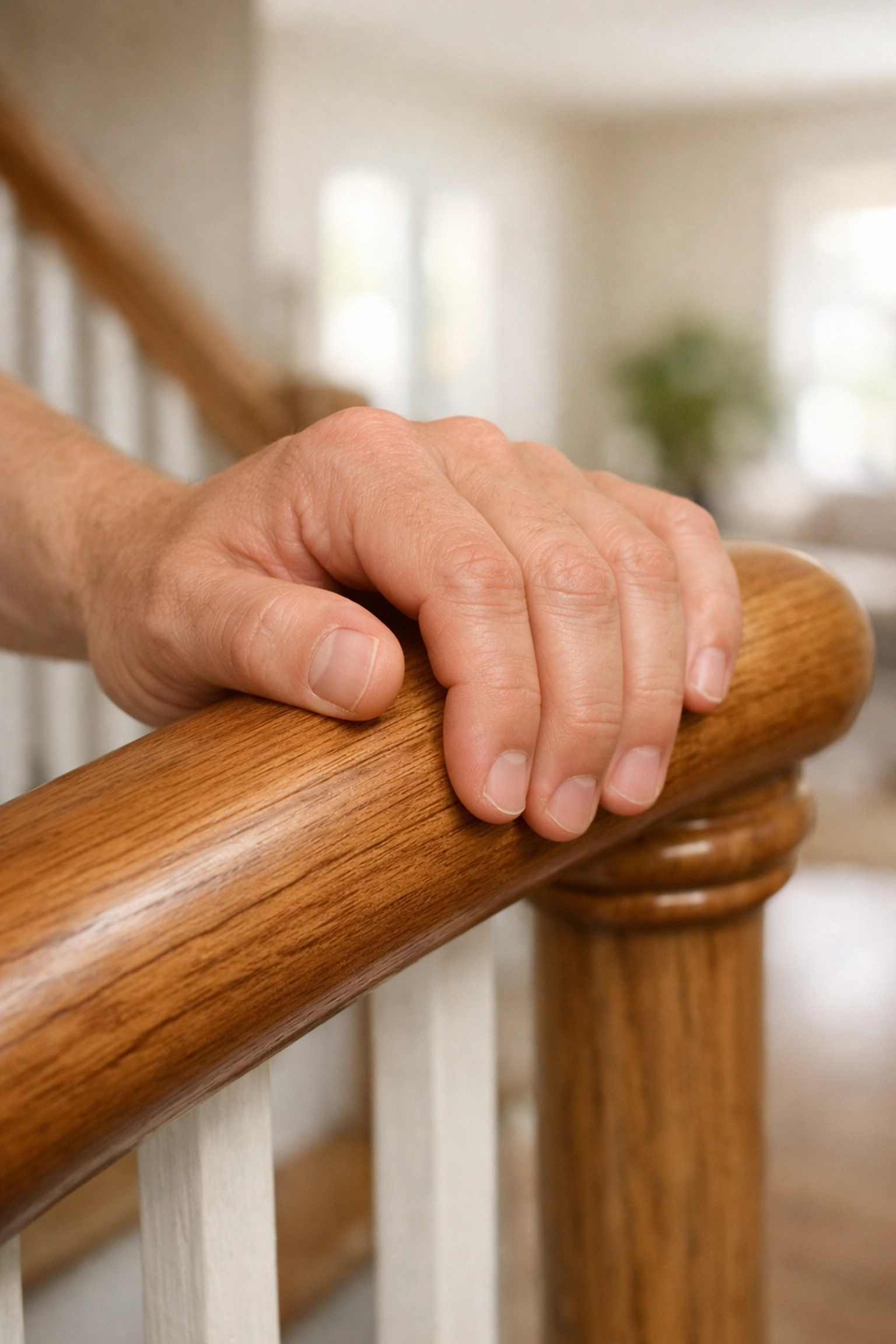
One of the most frequent mistakes in home design: especially in older houses: is having a handrail on only one side of the staircase. While this might meet basic building codes in some areas, it doesn't provide the comprehensive support needed for maximum safety.
The Mistake
Relying on a single handrail forces you to prioritize one side of your body. If your "strong" side is away from the rail while descending, you may feel off-balance. Furthermore, a single rail offers no redundancy if you happen to lose your grip or experience a momentary dizzy spell.
The Fix
The gold standard for stair safety is having handrails on both sides of the stairway. This allows for "bilateral support," meaning you can use both arms to stabilize yourself.
When installing or updating rails, ensure they are mounted at a consistent height: usually between 30 and 38 inches from the leading edge of the steps. They should also be "continuous," meaning you don’t have to let go of the rail to navigate a landing or a turn. Finally, make sure the rail is easy to "grasp": a round or oval shape that your hand can fully encircle is much safer than a wide, decorative flat board that you can only rest your palm on.
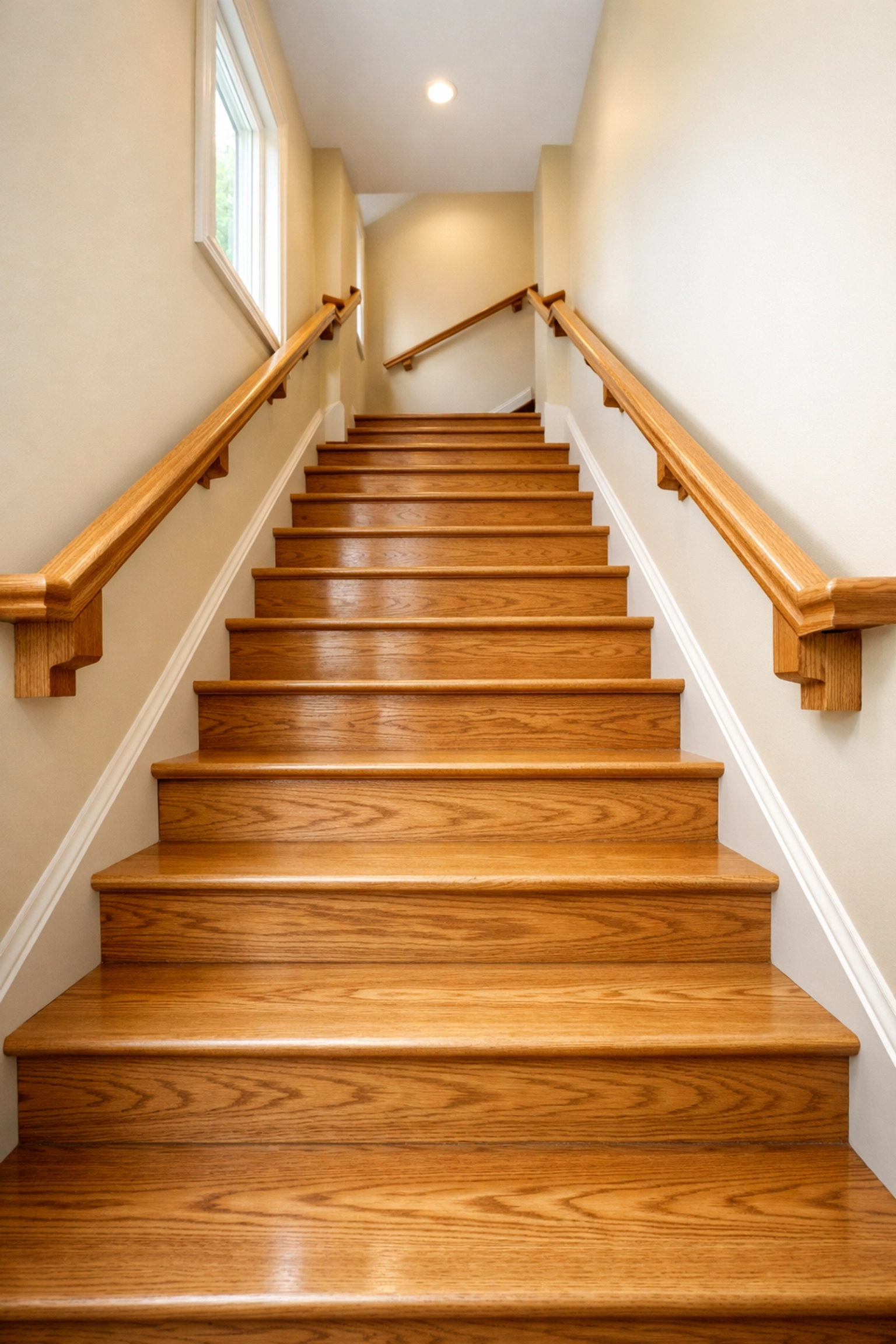
2. Ignoring the "Slipperiness" of Style
We all love the look of polished hardwood or elegant tile. However, these materials can be incredibly unforgiving when it comes to traction, particularly if you are wearing socks or smooth-soled slippers.
The Mistake
Leaving stair treads as bare, polished wood or stone is a significant slip hazard. Even a small amount of moisture from a rainy day or a spilled drink can turn a beautiful staircase into a dangerous slide.
The Fix
You don't have to cover up your beautiful stairs with thick, wall-to-wall carpeting to make them safe. There are several discreet ways to increase traction:
- Non-slip transparent strips: These adhesive strips provide a grit-like texture but remain almost invisible, allowing the wood grain to show through.
- Carpet treads: Small, individual pieces of carpet can be adhered to the center of each step. This provides grip and comfort without the expense of a full runner.
- Anti-slip coatings: Certain clear-coat finishes are designed specifically to add friction to floor surfaces without changing their appearance.
Regardless of the method you choose, the goal is to ensure that your foot stays exactly where you plant it.
3. The Shadow Trap: Poor Lighting
Lighting is perhaps the most underrated element of home safety. If you cannot clearly see the edge of a step, your brain has to "guess" where to place your foot. This creates a high risk for missteps and "air-steps" (when you think there is another step, but you’ve actually reached the floor).
The Mistake
Many staircases have a single light fixture at the top or bottom, which creates long, deceptive shadows. Dim bulbs or "mood lighting" in hallways can also mask the transition from the floor to the first step.
The Fix
Ensure that the entire length of the staircase is flooded with consistent, shadow-free light.
- High-Lumen Bulbs: Use bright, LED bulbs that mimic daylight.
- Dual Switches: Ensure there are light switches at both the top and bottom of the stairs so you never have to navigate them in the dark to reach a switch.
- Motion Sensors: Battery-operated LED motion lights are a fantastic, no-drill solution. You can place them along the baseboards; they will light up automatically as you approach the stairs at night.
- Contrast is Key: If your steps and the floor are the same color, it’s hard to see where one ends. Consider adding a strip of contrasting colored tape or paint to the edge (the "nosing") of each step to make the boundaries clear.
4. Neglecting Routine Maintenance
Stairs endure a lot of weight and vibration over the years. Over time, wood can warp, nails can loosen, and carpet can become un-tucked.
The Mistake
Ignoring a "creaky" board or a slightly loose banister is a mistake. These aren't just annoying sounds; they are early warning signs that the structural integrity of the walking surface is changing. A loose tread can shift under your weight, causing a sudden loss of balance.
The Fix
Perform a "stair audit" once every few months.
- Check the Treads: Walk slowly up and down, feeling for any movement in the steps. If a board is loose, secure it with screws rather than nails (screws hold better over time).
- Inspect the Railing: Give your handrails a firm shake. They should feel like they are part of the wall. If there is any "give," tighten the mounting brackets or add more support.
- Look for Wear: If you have carpet, check for fraying or areas where the carpet has pulled away from the riser. These loops can easily catch a heel or a toe.
5. Using the Stairs as a Temporary Shelf
We’ve all done it: we have a pile of mail or a basket of laundry that needs to go upstairs, so we set it on the bottom two steps to remind ourselves to take it up later.
The Mistake
Using stairs as a storage area is one of the leading causes of preventable trips. Even if you think you’ll remember the item is there, it’s easy to get distracted: especially if you’re carrying something else or rushing to answer the phone.
The Fix
Adopt a "Zero Tolerance" policy for clutter on the stairs.
If you find yourself frequently leaving items on the steps, place a dedicated "upstairs basket" on a sturdy table near the stairs, but never on the stairs. This keeps the walking path 100% clear at all times. Encourage every member of the household to follow this rule; safety is a team effort.
6. Overlooking the "Short" Stairways
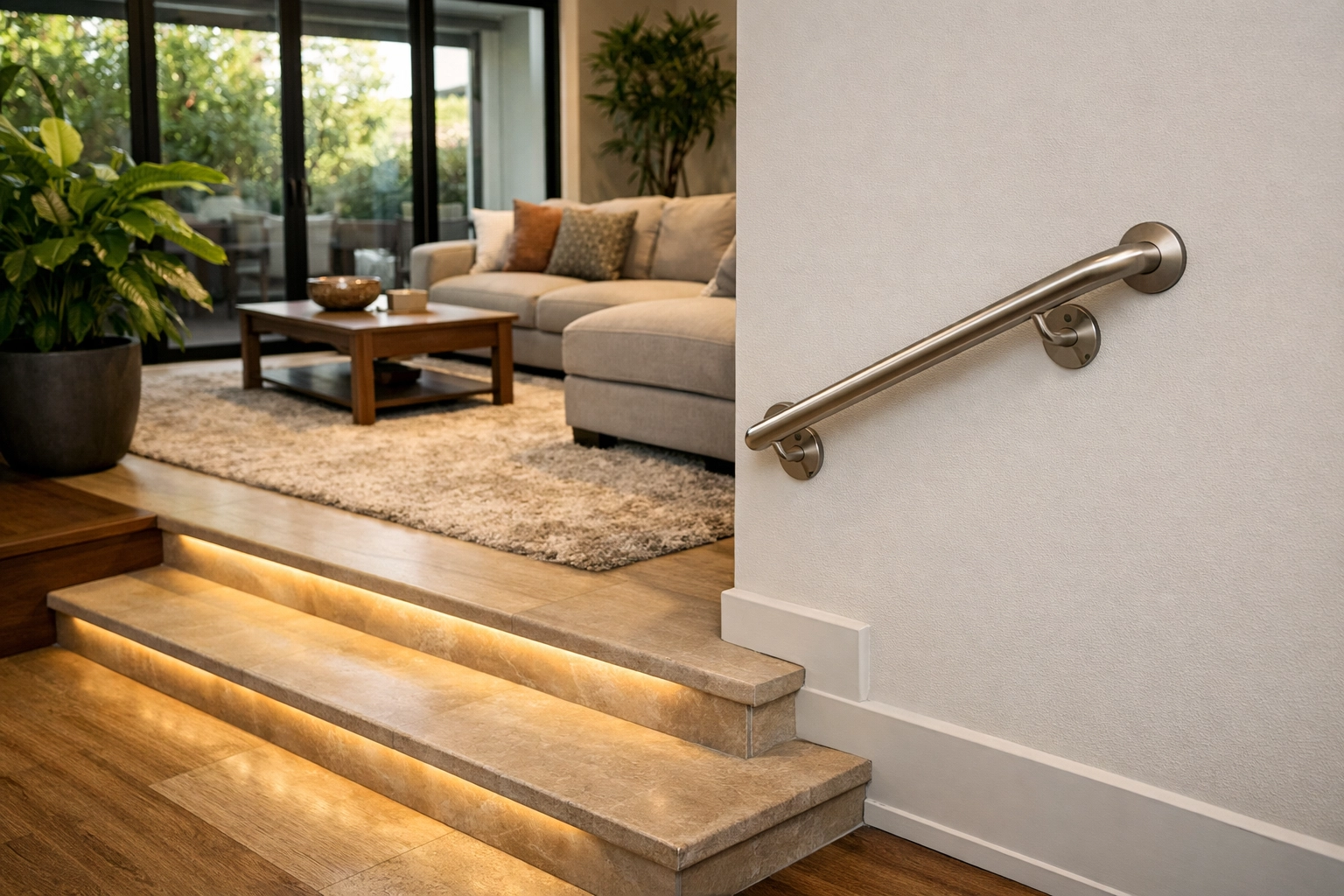
When we think of stair safety, we usually think of the long flight leading to the second floor. However, the most frequent falls often occur on short "transitional" stairs: the two or three steps leading into a sunken living room, a garage, or a porch.
The Mistake
Because these stairs are short, people often feel they don't need a handrail or extra lighting. These "mini-stairs" are also the easiest to miss visually, leading to a stumble when a person doesn't realize the floor level has changed.
The Fix
Treat every change in elevation with the same respect as a full flight of stairs.
- Install a Grab Bar or Short Rail: Even for just two steps, having something to hold onto provides essential stability.
- Visual Warnings: Use a different flooring material or a bright, contrasting strip on the edge of transitional steps to alert the eyes to the change in height.
- Garage Stairs: Often, the steps into the garage are steep and narrow. Ensure these are well-lit and have a sturdy rail, as this is a high-traffic area often navigated while carrying groceries or heavy items.
7. Rushing and Behavioral Habits
Sometimes, the "mistake" isn't with the house at all, but with how we use it. Our habits play a massive role in our safety.
The Mistake
Rushing to catch a ringing phone, carrying heavy loads that block your vision, or wearing loose-fitting slippers with no backs are all high-risk behaviors. Additionally, using a smartphone while walking down stairs is a growing cause of accidents across all age groups.
The Fix
Slow down and focus.
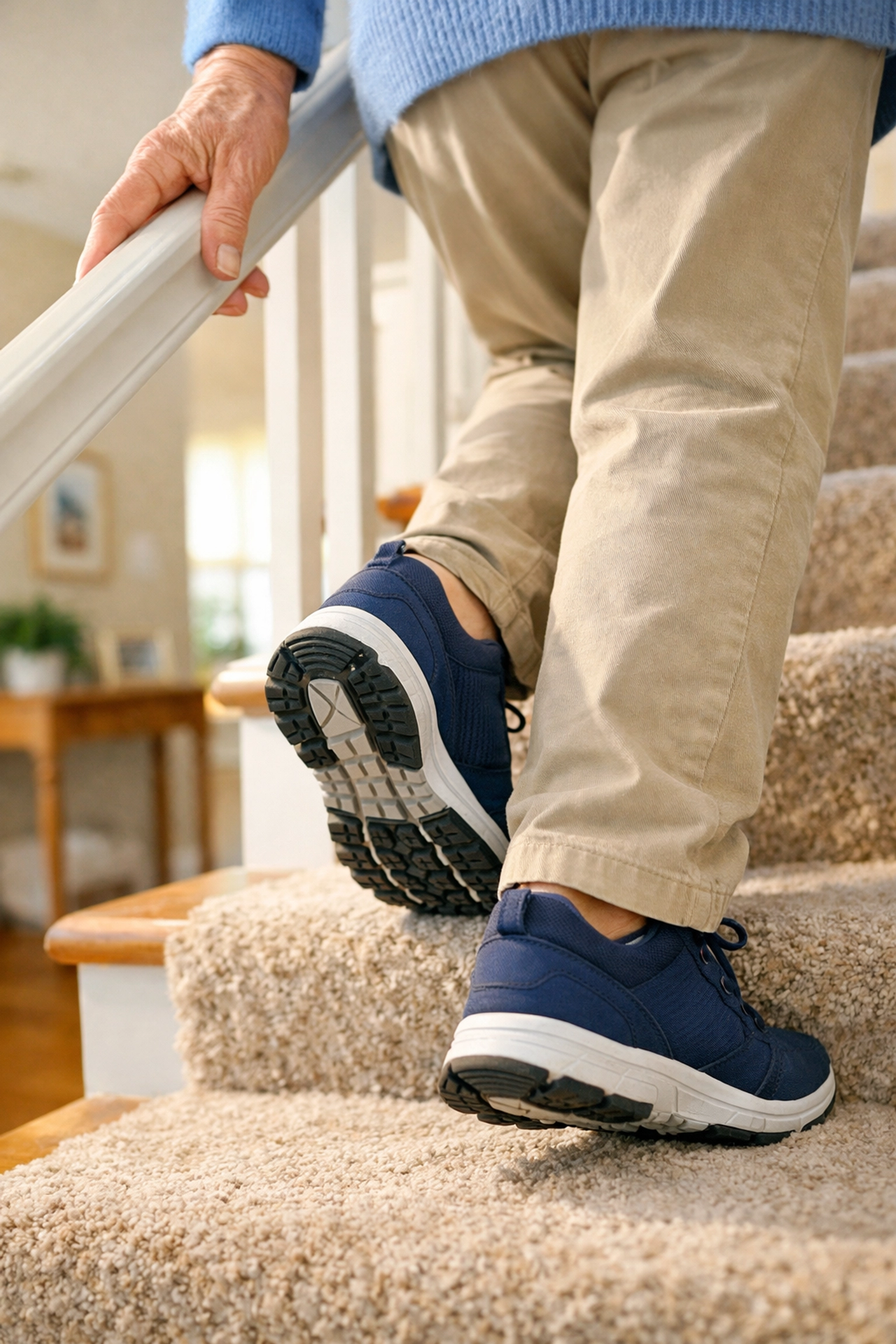
- The Rule of Two: Always keep at least one hand on the rail. If you have to carry something, carry it in one arm so the other hand is free. If the item is too heavy for one arm, ask for help or move it in smaller loads.
- Footwear Matters: Wear shoes with a rubber sole and a closed back. Avoid walking on stairs in just socks, as they provide almost zero traction on wood or tile.
- Pause and Look: Before you take that first step, take a breath and look down. Ensure your path is clear and you are ready for the transition.
Conclusion: Confidence in Every Step
Stair safety is about creating a "system" of support. When you combine sturdy, dual handrails with great lighting, clear pathways, and mindful habits, you significantly reduce the risk of a fall.
Your home should be a place of comfort, not a place of worry. By taking an afternoon to check your treads, tighten a few screws, and perhaps add a motion-sensing light, you are investing in your long-term independence.
At Fall Guys Products, our goal is to empower you with the knowledge to stay safe and active. Stairs are just one part of the home, but mastering their safety is a giant leap toward a more secure and reassuring lifestyle. Take it one step at a time, and don't hesitate to reach out to a professional or a physical therapist if you feel you need a more personalized assessment of your mobility needs. Stay safe out there.

