
Using a walker can transform your mobility and independence, but only if you're using it correctly. The truth is, many people make simple mistakes with their walkers that can actually increase their fall risk rather than reduce it.
Don't worry, these aren't difficult problems to solve. Once you know what to look for, you can make quick adjustments that will help you move more safely and confidently. Let's walk through the seven most common walker mistakes and exactly how to fix them.
Mistake #1: Forgetting to Lock the Brakes Before Sitting
This is probably the most dangerous mistake on this list. When you're tired and ready to sit down, it's tempting to just lower yourself onto a chair or bed without thinking about your walker's brakes. But if those brakes aren't locked, the walker can slide right out from under you as you transfer your weight.
The fix: Make locking your brakes a non-negotiable habit. Before you sit down anywhere, pull both brake handles fully back until you hear or feel them click into place. Give the walker a gentle shake to confirm it's secure. Only then should you begin to sit.
Think of it like putting your car in park, you wouldn't leave it running in drive, right? Apply that same mindset to your walker brakes.

Mistake #2: Moving Too Quickly
We get it. You've got places to be, and using a walker can feel slower than you'd like. But rushing with a walker is a recipe for disaster, especially on uneven surfaces, tile floors, or outdoor paths.
When you move too fast, you don't give yourself enough time to adjust to changes in the surface beneath you. A small bump, a threshold between rooms, or even a slightly uneven sidewalk can catch your wheel and throw you off balance.
The fix: Slow down deliberately. Take smaller, measured steps and maintain a controlled pace throughout your movements. Think "steady" rather than "speedy."
Here's a helpful rhythm: Move the walker forward, step with your weaker leg, then bring your stronger leg to meet it. Pause briefly between each sequence. Yes, it takes a bit longer, but you'll actually get where you're going more safely, and that's what matters.
Mistake #3: Using the Wrong Height Setting
If your walker is too high or too low, you're setting yourself up for balance problems, back strain, and unnecessary fatigue. Surprisingly, many people never properly adjust their walker height after they first get it, or they adjust it once and never check it again.
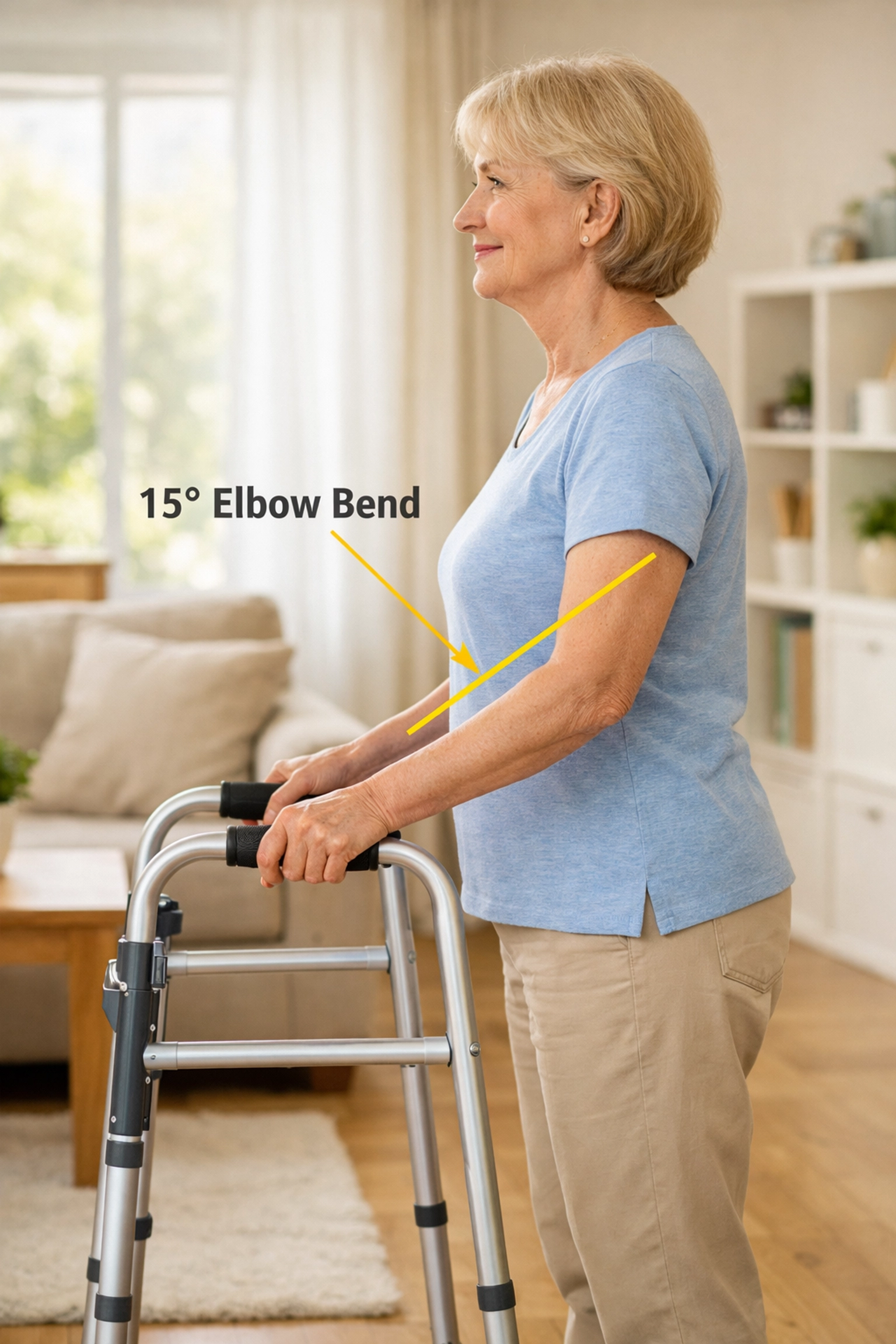
The fix: Stand naturally with your arms relaxed at your sides. The walker handles should align with the crease of your wrists. When you grip the handles, your elbows should have a slight bend, about 15 degrees.
If the handles are too low, you'll find yourself hunching over, which strains your back and neck. If they're too high, your shoulders will be uncomfortably raised, and you won't have proper control.
Check your walker height every few months or after any changes in your footwear. Those orthopedic shoes versus your slippers can make a noticeable difference.

Mistake #4: Leaning Too Heavily on the Handles
Your walker is designed to help with balance, not to bear your full body weight. When you lean heavily on the handles, you're actually making the walker less stable, particularly on slopes or uneven ground.
The fix: Walk as upright as possible, using the walker primarily for balance and light support. Your legs should be doing most of the work, with the walker providing security and stability.
If you find yourself needing to lean significantly on your walker, it might be time to:
- Talk to a physical therapist about strength exercises for your legs and core
- Have your walker assessed to ensure it's the right style for your needs
- Consider whether you need a different mobility aid
Think of your walker as a safety net, not a crutch. It's there to catch you if you stumble, not to hold you up continuously.
Mistake #5: Attempting Stairs or High Curbs
Walkers are wonderfully helpful tools, but they have their limitations. Stairs are one of them. No matter how confident you feel, your walker is not designed for stair navigation, and trying to use it on stairs significantly increases your fall risk.
The fix: Always use an elevator, ramp, or ask for assistance when you encounter stairs. If there's a handrail available, it's safer to leave your walker at the top or bottom and use the rail for support instead.
For small curbs, proceed very carefully. Roll both front wheels completely over the curb before shifting your weight forward. Never try to "hop" the walker over the curb, take it slowly, one step at a time.
Some people find it helpful to scout out accessible routes before going to new places. Most public buildings have ramps or elevators, even if they're not immediately obvious.
Mistake #6: Overloading Your Walker with Bags and Items
Yes, many walkers come with baskets or pouches, and they're incredibly convenient. But your walker isn't a shopping cart, and overloading it with heavy bags throws off its center of gravity, making it prone to tipping.
The fix: Keep your walker basket light. Only carry essentials like your phone, keys, or a water bottle. If you need to transport groceries or other items, consider these alternatives:
- Make multiple trips
- Ask a family member or friend to help
- Use a delivery service for groceries
- Get a small rolling cart designed for carrying heavier loads
If you regularly need to carry more items, talk to a mobility specialist about walker accessories designed for heavier loads: but remember, even these have limits.
Mistake #7: Not Paying Attention to Your Surroundings
It's easy to zone out, especially on familiar routes around your home. But obstacles appear quickly: a pet crossing your path, a rug edge, an electrical cord, or even a toy left by grandchildren.
The fix: Stay mentally present while using your walker. Look ahead rather than down at your feet, scanning for potential hazards. Keep your home environment walker-friendly by:
- Removing or securing throw rugs
- Taping down electrical cords along baseboards
- Maintaining clear, wide pathways through rooms
- Installing adequate lighting, including night lights
- Training pets to stay clear when you're moving
Consider doing a "hazard walk-through" of your home once a month. You'll be surprised what you find when you're actively looking for obstacles.
Bonus Safety Tips for Walker Users
Beyond these seven main mistakes, here are a few additional safety points worth mentioning:
Wear Proper Footwear
Your shoes matter more than you might think. Wear shoes with non-slip soles and a secure fit. Avoid flip-flops, high heels, worn-out shoes with smooth bottoms, or anything that's too loose. Slippers might feel comfortable, but many don't provide adequate support or traction.
Don't Pull Yourself Up with Your Walker
When standing from a seated position, never use your walker to pull yourself up. The walker can tip toward you or roll away. Instead, push up from the chair or bed armrests until you're standing, then reach for your walker handles.
Maintain Your Walker
Check your walker regularly for:
- Worn-out rubber tips that need replacing
- Loose screws or bolts that need tightening
- Wheels that need cleaning or aren't rolling smoothly
- Brake pads that are wearing thin
A well-maintained walker is a safer walker. Most of these checks take just a minute or two but can prevent serious problems.
Practice in Safe Spaces
If you're new to using a walker or recovering from an injury, practice in safe, open areas before venturing into more challenging environments. Your physical therapist can help you build confidence and proper technique.
Making Walker Use Second Nature
The good news is that once you correct these mistakes, proper walker use becomes automatic. You won't have to think about each step: your body will remember the right way to move.
Give yourself grace during the learning process. If you catch yourself making one of these mistakes, simply pause, reset, and try again. Every time you practice the correct technique, you're building safer habits.
Remember, your walker is a tool that supports your independence and mobility. By using it correctly, you're not just preventing falls: you're maintaining the freedom to move through your life with confidence. Take these corrections seriously, but don't let them intimidate you. You've got this.

