
Every year, over one million Americans are injured in stair-related accidents. That's not just a number: it represents real people dealing with broken bones, concussions, and life-changing injuries. The surprising part? Most of these accidents are completely preventable.
Whether you're navigating stairs daily or occasionally, understanding what makes them dangerous can help you stay upright and injury-free. Let's walk through ten essential things you need to know about stair safety.
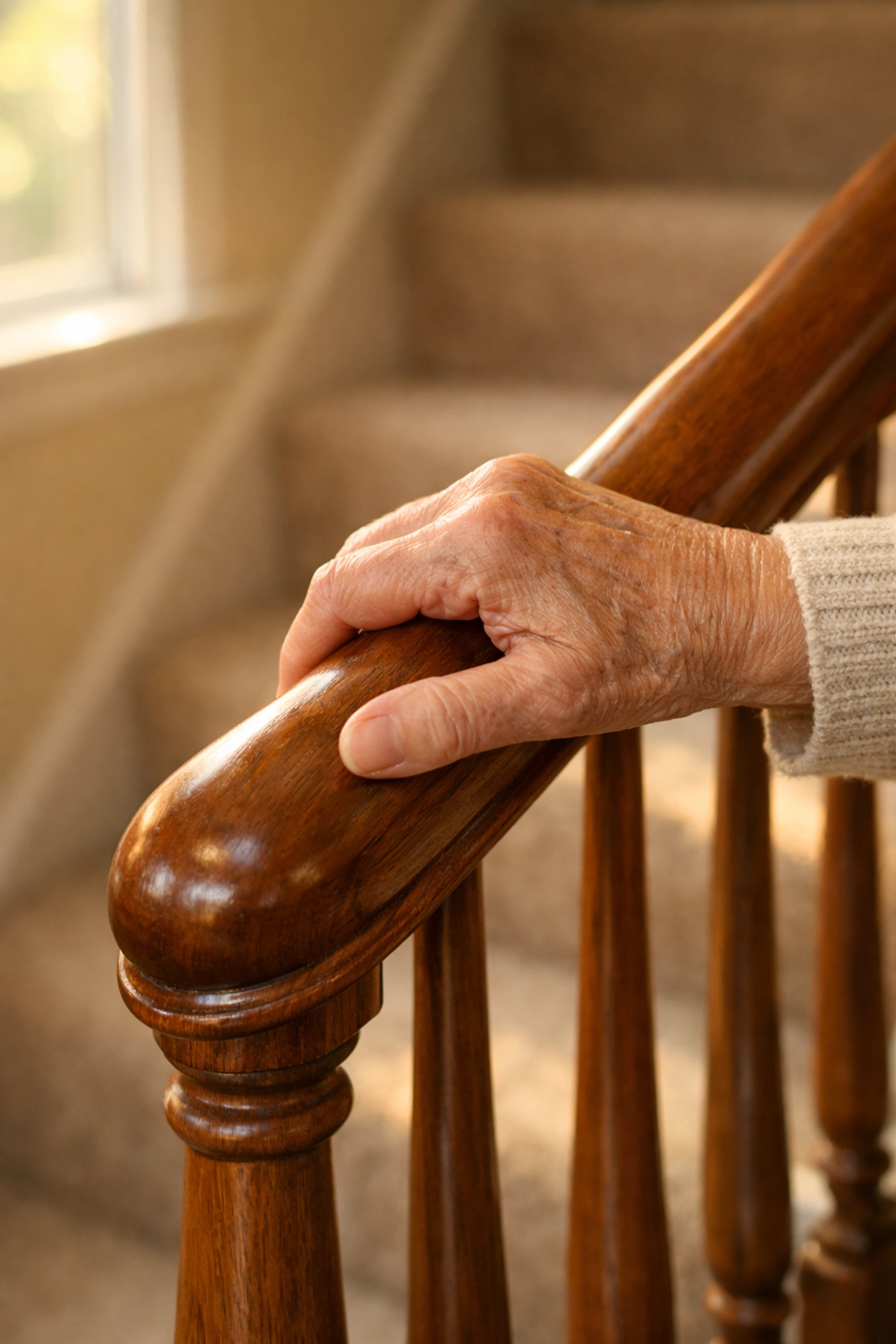
1. Handrails Aren't Optional: They're Essential
You might think handrails are just there for people who need extra help, but that's not the case. Handrails are your first line of defense against falls, and using them should be automatic every single time you use stairs.
Here's what makes them so important:
- They provide stability when you lose your balance
- They help control your speed and momentum
- They're especially crucial when descending (when most falls happen)
- They compensate for visibility issues in low light
The golden rule is simple: keep at least one hand on the railing at all times. If you're carrying something, make it small enough that you can still grip the rail. No grocery bag or laundry basket is worth a tumble down the stairs.
2. Speed Kills: Take It One Step at a Time
We've all done it: rushed down the stairs because we're running late or heard something concerning. But hurrying on stairs is like playing Russian roulette with your safety.
When you take stairs quickly:
- Your foot placement becomes less precise
- Your reaction time to obstacles decreases
- Your balance becomes more precarious
- You have less time to correct missteps
Slow down. Always. Even when you think you're in a hurry, taking an extra five seconds to navigate stairs carefully is infinitely better than spending five weeks recovering from an injury.
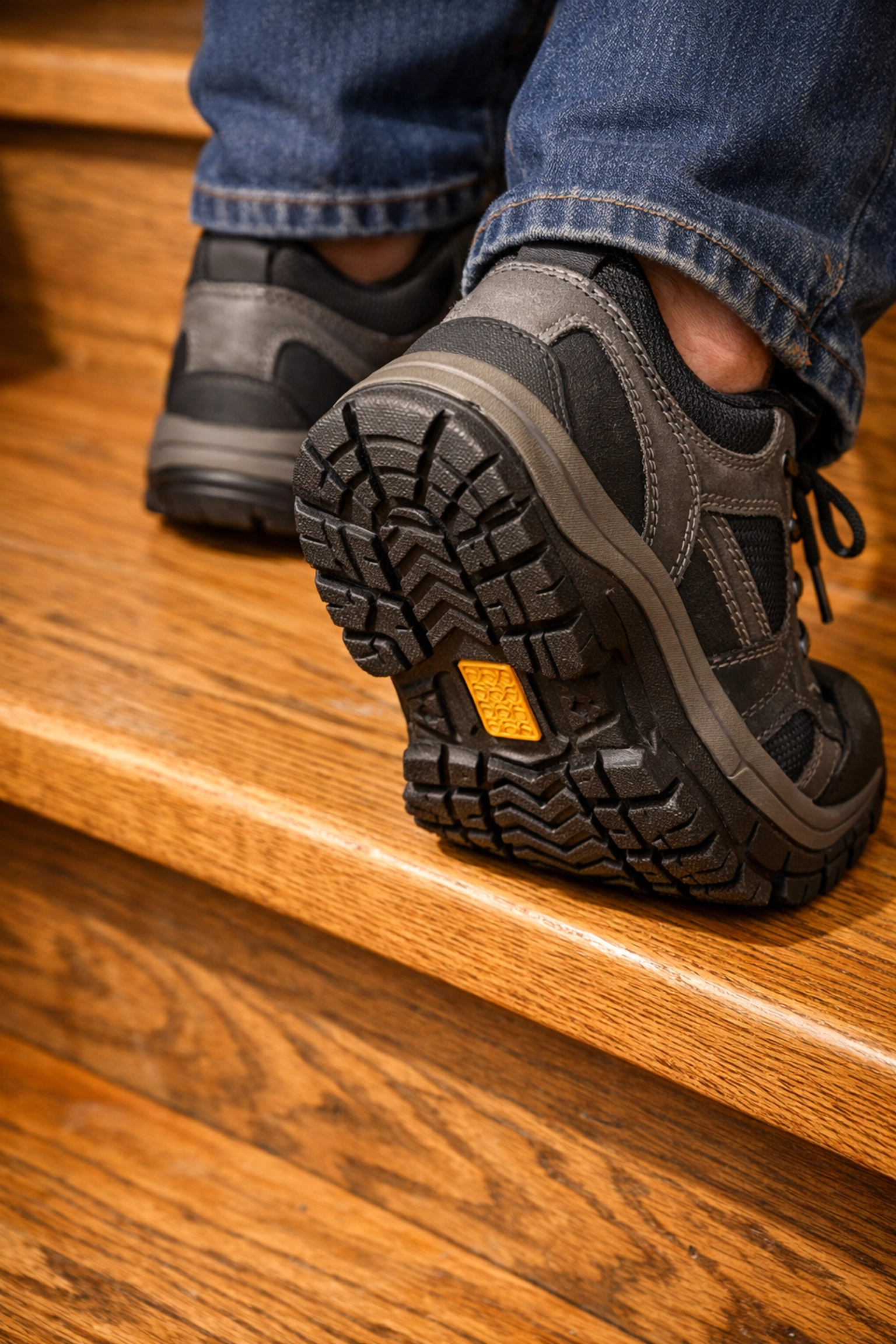
3. Your Footwear Makes or Breaks Your Safety
Ever wondered why hospitals and nursing homes are so particular about footwear? Because what you wear on your feet can be the difference between safe passage and a dangerous fall.
The worst offenders include:
- Flip-flops and sandals with no back support
- Slippers that slide off easily
- Shoes with worn-out, smooth soles
- High heels or platforms
- Socks without shoes (surprisingly slippery)
Instead, opt for closed-toe shoes with non-slip soles, good arch support, and a secure fit. Your shoes should feel like they're part of your feet, not like they're along for the ride.
4. Clutter Is a Four-Letter Word on Stairs
Stairs are not storage spaces. They're not temporary parking spots for items you'll "move later." Every object on your stairs is a potential hazard waiting to cause a fall.
Common stairway clutter includes:
- Shoes and bags left "just for now"
- Toys that rolled to an unfortunate resting place
- Electrical cords running across steps
- Books, magazines, or mail stacks
- Pet toys and accessories
Make it a household rule: stairs stay clear, always. If something needs to go upstairs or downstairs, carry it there immediately or designate a specific staging area at the top or bottom: never on the steps themselves.
5. Lighting Isn't Negotiable
You can't avoid what you can't see. Inadequate lighting on stairs is responsible for countless falls, particularly during nighttime bathroom trips or early morning routines.
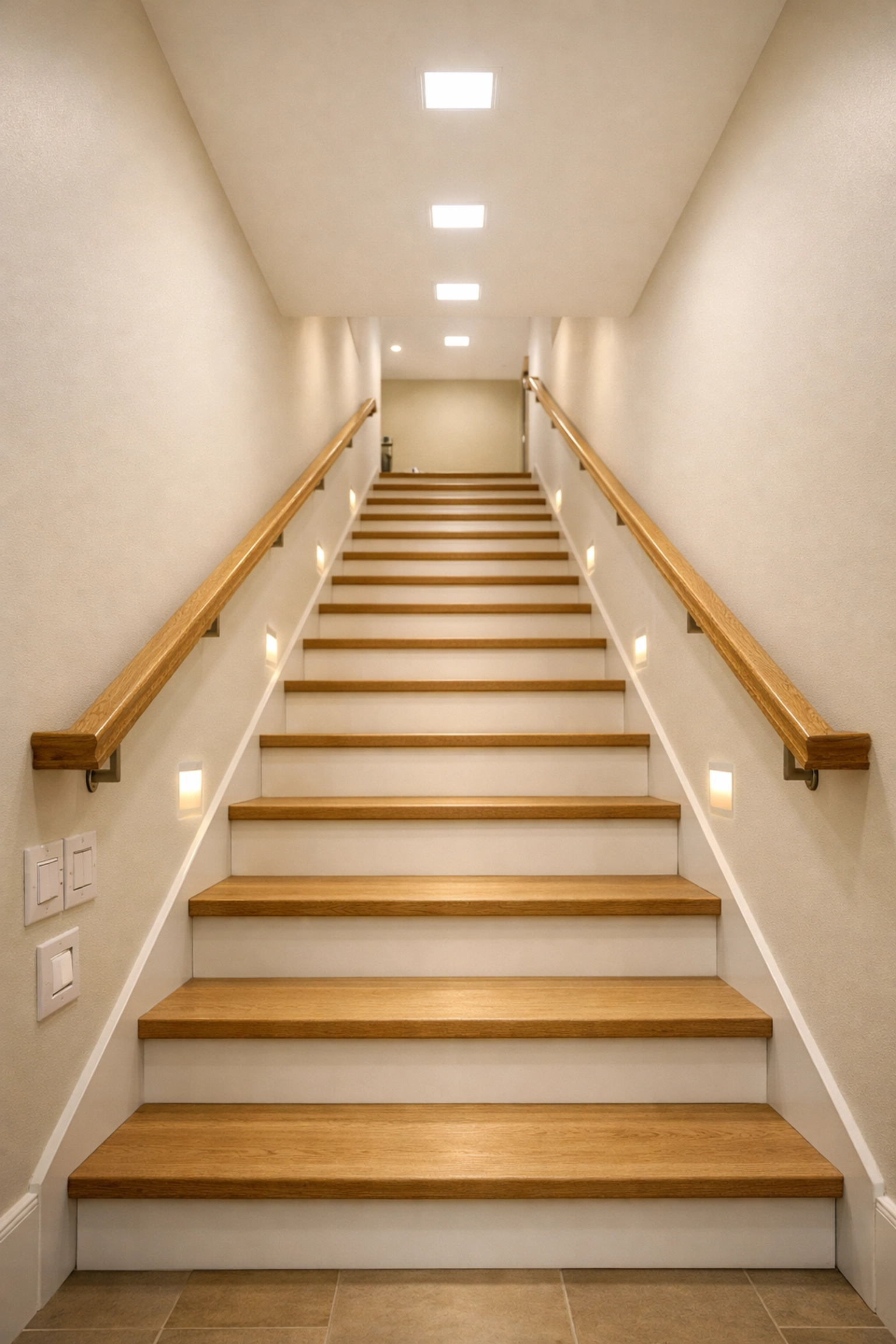
Proper stair lighting means:
- Bright overhead fixtures that illuminate every step
- Light switches at both the top and bottom of stairs
- Night lights for 24-hour visibility
- No shadows or dark spots on any tread
- Emergency lighting for power outages
Consider motion-activated lights if you frequently use stairs at night. The automatic illumination means you'll never stumble in the dark looking for a light switch.
6. Distractions Are More Dangerous Than You Think
Multitasking has become a way of life, but stairs demand your full attention. When your mind is elsewhere, your body can't react quickly enough to prevent a fall.
Common distractions to avoid:
- Texting or scrolling on your phone
- Reading books or documents
- Intense conversations that require focus
- Listening to music or podcasts at high volume
- Thinking about complex problems
Make stairs a phone-free zone. Whatever message you're reading can wait the ten seconds it takes to safely navigate the staircase. Your texts won't matter much if you're laid up with a broken hip.
7. Traction Saves Lives
Here's something most people don't realize: the majority of stair falls result from slipping, not tripping. That makes surface traction absolutely critical for stair safety.
Ways to improve traction:
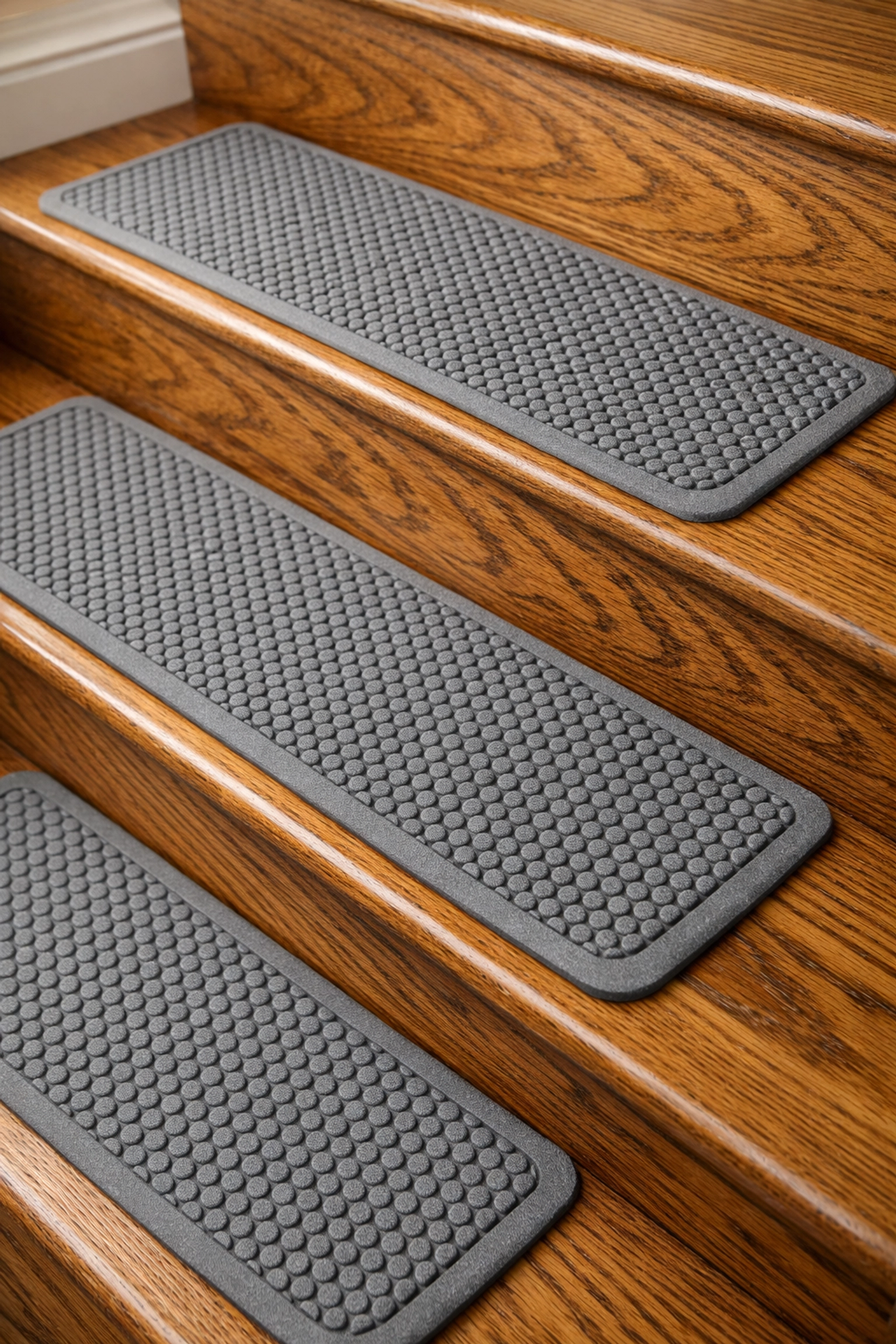
- Apply non-slip tape to each tread edge
- Install rubber stair treads with textured surfaces
- Use high-visibility strips that also provide grip
- Place non-slip mats on landing areas
- Treat wooden stairs with anti-slip coatings
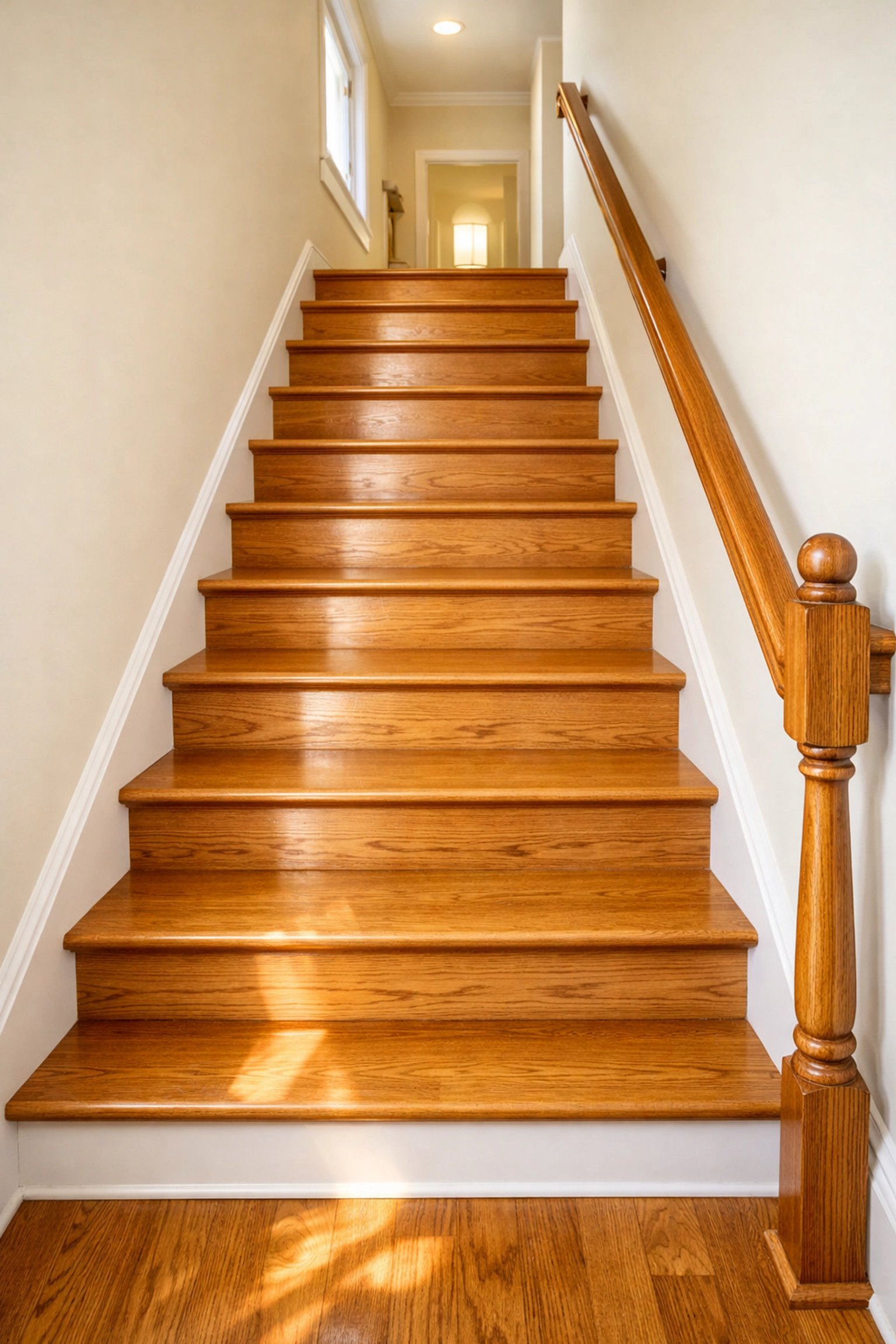
This is especially important if you have polished wood or tile stairs, which can be incredibly slippery even when dry. A small investment in traction aids can prevent major injuries.
8. Direction Matters: Always Face Forward
It might seem obvious, but people walk backwards on stairs more often than you'd think: usually while carrying large items or trying to navigate tight spaces with furniture.
Walking backwards on stairs is dangerous because:
- You can't see where you're stepping
- Your balance shifts unnaturally
- You can't judge distances accurately
- You can't see obstacles in your path
If you're carrying something large that blocks your view, get help. Two people carrying an item while both facing forward is infinitely safer than one person attempting a backwards descent.
9. Maintenance Isn't Optional
Stairs don't stay in perfect condition forever. Regular wear and tear can create hazards that gradually worsen over time until they cause an accident.
Watch for these warning signs:
- Loose or frayed carpeting on treads
- Wobbly or unstable handrails
- Cracked or broken steps
- Uneven tread heights
- Missing or damaged treads
- Peeling paint or coatings
Inspect your stairs monthly. What seems like a minor issue today could be the cause of a serious fall tomorrow. Address problems immediately rather than putting them on an endless "to-do" list.
10. Environmental Hazards Require Immediate Action
Environmental conditions can turn safe stairs into danger zones in seconds. Water, ice, snow, and spills don't announce themselves: they just wait for an unsuspecting person to come along.
Stay alert for:
- Ice and snow accumulation on outdoor stairs
- Rain making surfaces slippery
- Spilled liquids of any kind
- Tracked-in water from wet shoes
- Condensation in high-humidity areas
When you spot a hazard, address it immediately. Clean up spills right away, salt icy steps before using them, and place warning signs if a hazard can't be fixed instantly. Don't assume everyone else will see what you see.
Making Stair Safety Automatic
The key to stair safety isn't just knowing these ten points: it's making them automatic habits. Every time you approach a staircase, your brain should run through a quick safety check without conscious thought.
Start by focusing on one habit at a time. Maybe this week you concentrate on always using the handrail. Next week, you work on slowing down and taking one step at a time. Within a few months, these safety practices become second nature.
Remember, stair accidents don't happen because people don't know better: they happen because people get complacent. The moment you think "I'll be fine just this once" is the moment you're most at risk.
The Bottom Line
Stairs don't have to be dangerous. With awareness, proper maintenance, and consistent safe practices, you can navigate them confidently for years to come. The ten points we've covered aren't suggestions: they're essential practices that can prevent serious injuries.
Take a moment today to evaluate the staircases in your home or workplace. Check the lighting, inspect the treads, test the handrails, and clear away any clutter. These simple actions could prevent the next trip or fall.
Your safety on stairs isn't about luck; it's about choices. Make the right ones, every single time.

