
Stairs account for more than one million injuries every year, and the scary part is that most of these accidents are completely preventable. Whether you're navigating the stairs in your own home or helping a loved one stay safe, the little habits we develop around stairways can make all the difference between a safe trip and a dangerous fall.
The truth is, we all get a bit too comfortable with our daily routines. We rush, we multitask, we skip the "obvious" safety measures because we've climbed those same stairs a thousand times before. But stairs don't forgive complacency, and the consequences of a fall can be life-changing.
Let's look at the seven most common stair safety mistakes people make every day and, more importantly, how to fix them before they lead to an injury.
Mistake #1: Rushing Down the Stairs
We've all done it. You're running late, the phone is ringing, or you just want to get downstairs quickly. But rushing down stairs is one of the leading causes of stairway falls, and it's a habit that needs to stop today.
When you hurry, your brain doesn't have enough time to properly coordinate your movements. Your foot might not land squarely on a step, or you might misjudge the depth of a tread. The momentum of rushing downward also makes it much harder to catch yourself if you do slip.
How to Fix It:
- Take stairs one step at a time, placing your full foot on each tread
- Give yourself extra time when you need to use the stairs so you're not tempted to rush
- If you feel hurried, pause at the top of the stairs, take a breath, and remind yourself that getting there safely is more important than getting there fast
- Practice the "two points of contact" rule: always have two body parts touching the stairs or handrail (two feet and one hand, or both hands and one foot if needed)
The extra 30 seconds it takes to descend stairs carefully could save you months of recovery from a fall injury.
Mistake #2: Ignoring or Not Using Handrails
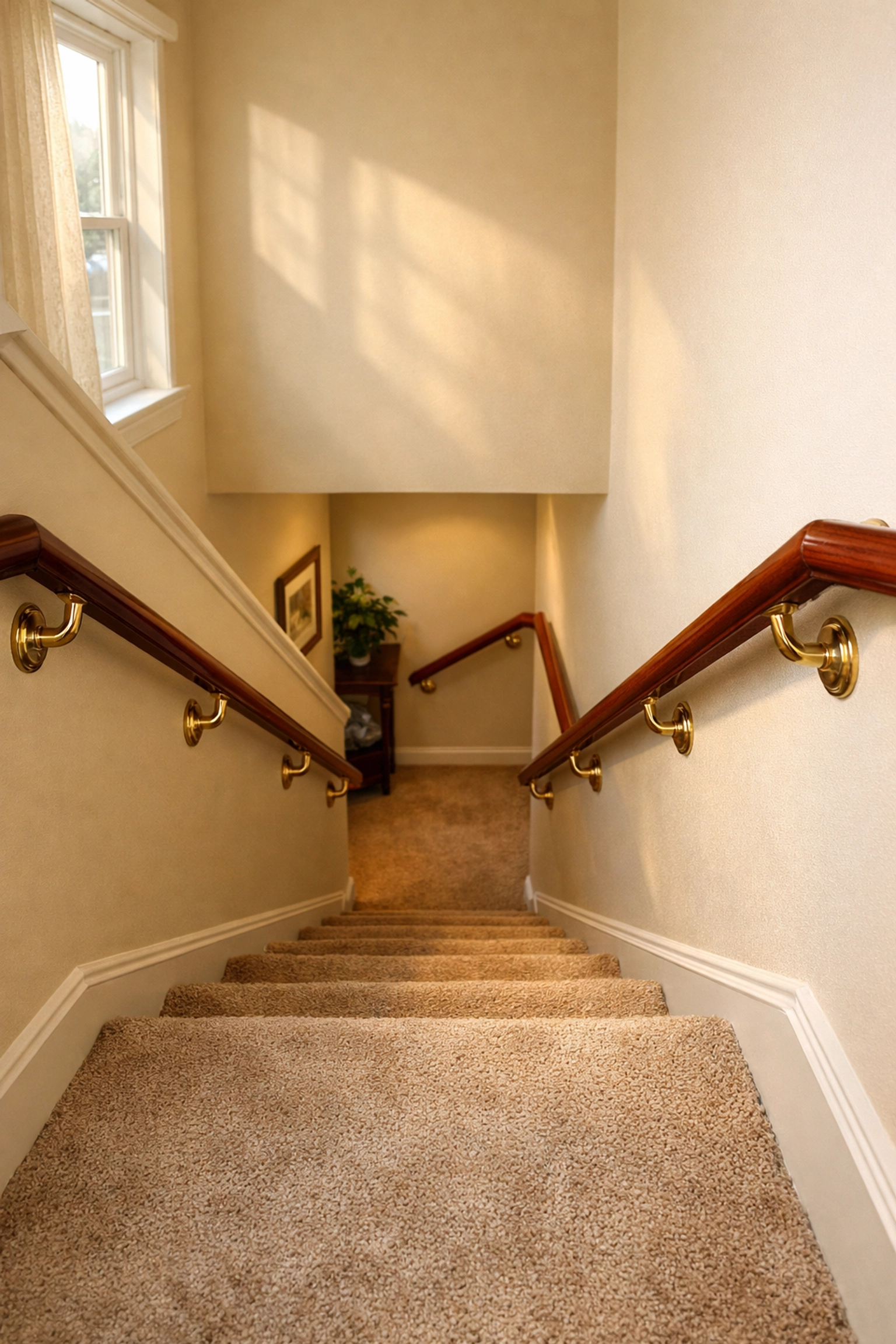
Many people treat handrails as optional decorations rather than essential safety features. Maybe you're carrying groceries, holding a phone, or you've just gotten into the habit of not using them. This is a critical mistake.
Handrails exist for one primary reason: to catch you when you slip or lose your balance. Even if you feel steady and confident, unexpected things happen. A sock can slide on a wooden step, your knee might suddenly give way, or you could simply misjudge a step in a moment of distraction.
How to Fix It:
- Make it a non-negotiable rule: always keep at least one hand on the handrail
- If you need to carry items upstairs or downstairs, make multiple trips so your hand stays free for the handrail
- If your home doesn't have handrails on both sides of the stairway, consider adding them (especially important if balance is already a concern)
- Teach children and remind family members about handrail use so it becomes a household habit
For those with balance issues or mobility concerns, using the handrail isn't just helpful: it's essential. Don't let pride or convenience override your safety.
Mistake #3: Living with Poor Lighting
Dim stairways are accidents waiting to happen. When you can't clearly see each step, it's easy to miss the edge of a tread, fail to notice a spill or obstacle, or misjudge the distance between steps.
Poor lighting is particularly dangerous during nighttime trips to the bathroom or kitchen. Your eyes haven't fully adjusted to the darkness, and that familiar staircase suddenly becomes treacherous terrain.
How to Fix It:
- Install bright overhead lighting that illuminates the entire stairway
- Place light switches at both the top and bottom of the stairs so you never have to navigate in the dark
- Consider motion-activated lights that turn on automatically when you approach
- Add step lighting or LED strips along the edges of stairs for better visibility of each individual step
- Use nightlights in hallways leading to stairs
- Replace burnt-out bulbs immediately: don't put it off
- If glare is an issue, use frosted bulbs or fixtures that direct light appropriately
Good lighting isn't an aesthetic choice: it's a safety necessity. If you can't clearly see every detail of every step, your lighting needs improvement.
Mistake #4: Treating Stairs Like a Storage Area
Shoes left on the steps. A backpack set down "just for a moment." Electrical cords running across a stairway. Mail piled on a step. A toy waiting to be carried upstairs "later."
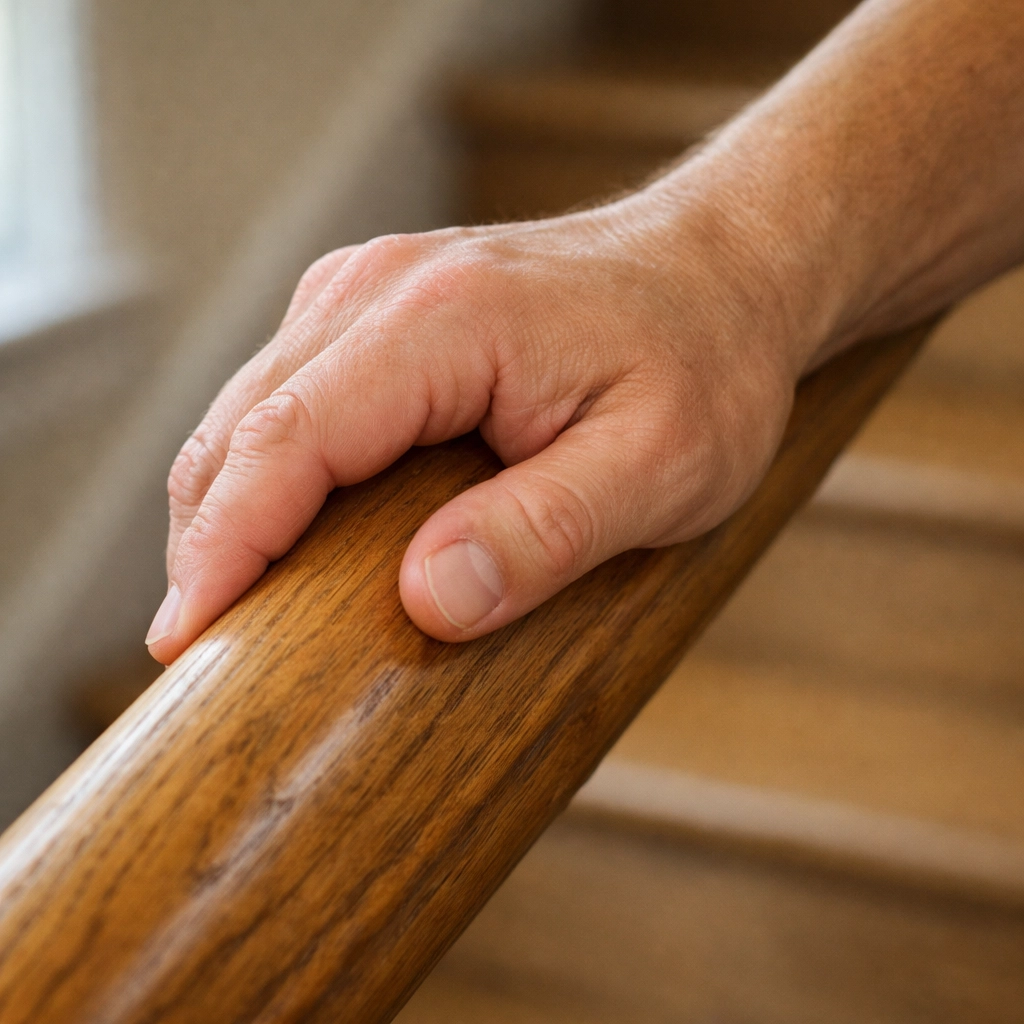
Every single one of these items is a serious tripping hazard. Clutter on stairs creates obstacles that can catch your foot, cause you to stumble, or force you to navigate around them in unsafe ways.
How to Fix It:
- Implement a strict "nothing on the stairs" policy in your household
- Use a basket system: place items that need to go upstairs in a basket at the bottom, then carry the basket up all at once
- Address cords immediately: never run them across or alongside stairs; find alternative routing
- Do a daily stair check to ensure nothing has accumulated
- If children live in or visit your home, teach them that stairs are not play areas or storage spaces
Think of your stairway as a clear path that should always be ready for safe passage. If something is on the stairs, it needs to be removed immediately, not later.
Mistake #5: Wearing Risky Footwear on Stairs
Socks. Slippers without backs. High heels. Shoes with smooth, worn soles. Flip-flops. All of these footwear choices significantly increase your risk of slipping or tripping on stairs.
Socks are particularly deceiving because they feel comfortable, and we wear them inside our homes where we feel safest. But socks on hardwood, tile, or even carpeted stairs offer almost no traction. One wrong step and your foot can slide right out from under you.
How to Fix It:
- Wear well-fitting shoes with non-slip rubber soles when using stairs, even inside your home
- If you prefer to be barefoot indoors, go barefoot rather than wearing socks on stairs
- Choose slippers with backs that stay securely on your feet and have textured, non-slip soles
- Replace worn footwear where the tread has smoothed out
- Always tie shoelaces before using stairs: loose laces are tripping hazards
- Keep a pair of safe footwear near your stairs for quick access
For older adults or anyone with balance concerns, this is especially important. The right footwear provides the traction and stability you need to navigate stairs safely.
Mistake #6: Neglecting Stair Maintenance
Worn carpet edges. Loose boards. Cracked treads. A wobbly handrail. Peeling paint or worn finish. These aren't just cosmetic issues: they're safety hazards that increase fall risk every single day.
The problem with maintenance issues is that they develop gradually. You get used to that slightly loose board or learn to avoid that one worn spot. But familiarity doesn't make these issues safe, and guests or family members might not know about them.
How to Fix It:
- Conduct regular stair inspections at least every three months
- Check for loose carpet, worn treads, cracks, splinters, or any surface deterioration
- Test the stability of handrails and balusters monthly
- Repair issues immediately: don't wait until it's convenient
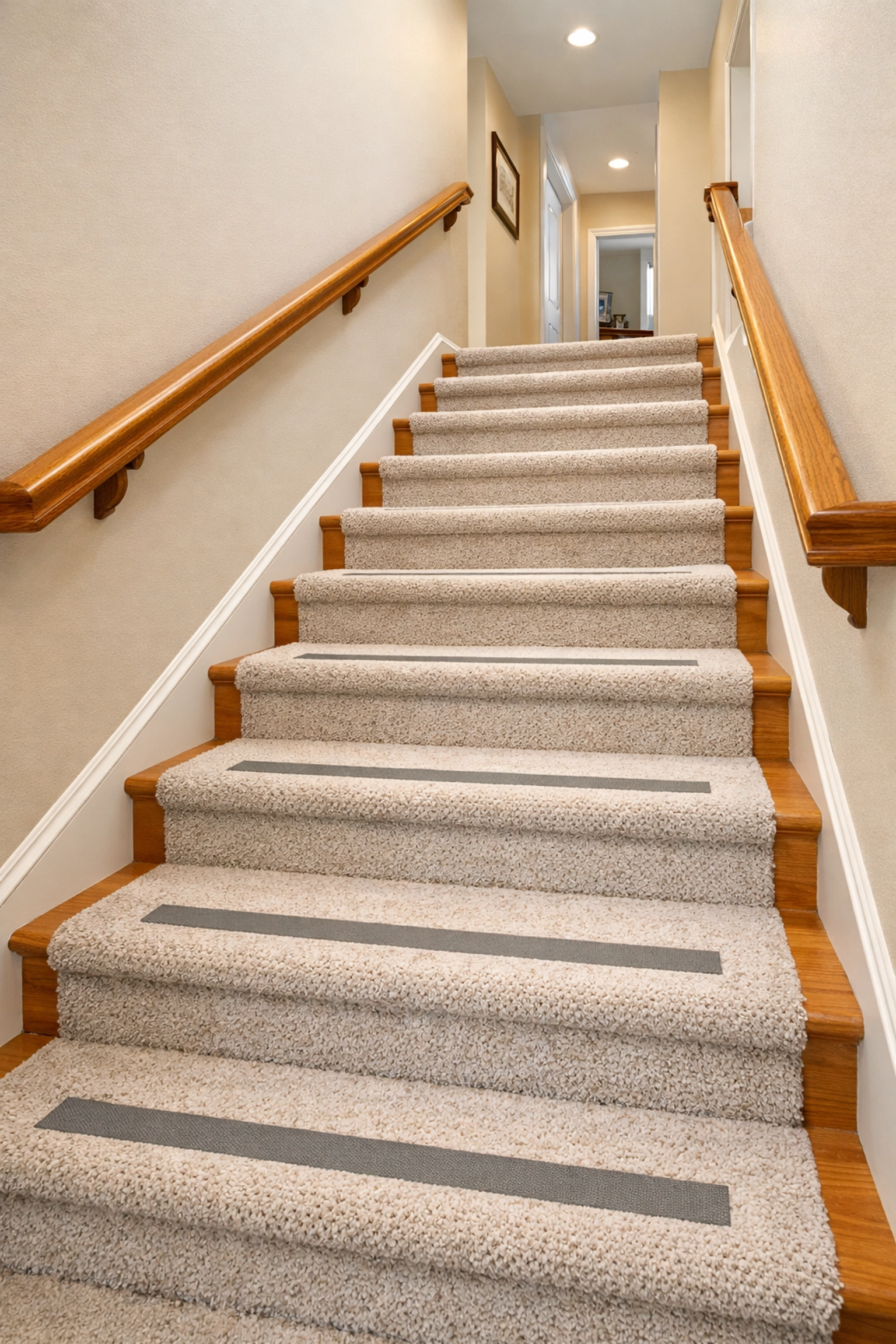
- If stairs are wooden, consider adding non-slip treads or strips
- Ensure carpet is securely fastened with no lifting edges or worn spots
- For outdoor stairs, check for weather damage, rot, rust, or deterioration after each season
- Keep stairs clean: sticky residues, dirt buildup, or moisture can all affect traction
If you're not comfortable making repairs yourself, hire a professional. The cost of repair is far less than the cost of treating a fall injury.
Mistake #7: Multitasking and Distraction on Stairs
Texting while walking downstairs. Carrying on a conversation as you ascend. Reading something on your way up. Turning around to talk to someone behind you. Every single one of these distractions pulls your attention away from the critical task at hand: safely navigating the stairs.
Our brains can't effectively multitask, despite what we like to believe. When you're looking at a phone screen, your visual attention isn't on the steps. When you're engaged in conversation, your mental focus isn't on foot placement. And that momentary lapse in attention is all it takes for a misstep to occur.
How to Fix It:
- Put your phone away before using stairs: messages can wait
- If you're in conversation while approaching stairs, pause the discussion until you've completed your transit
- Carry items close to your body so they don't obstruct your view of the steps
- Don't turn around while on stairs to talk to someone: wait until you reach the top or bottom
- If you need to read something or check your phone, stop on a landing or wait until you're off the stairs entirely
- Teach children that stairs require full attention
Think of using stairs the same way you think of driving: it requires your complete focus. Everything else can wait.
Creating a Safer Tomorrow
Stair safety isn't complicated, but it does require awareness and consistent habits. These seven mistakes are common precisely because we underestimate the risks and overestimate our ability to handle them.
Take a moment today to walk through your home and honestly assess your stair safety. Do you have adequate lighting? Are your handrails secure? Is anything sitting on your stairs right now? Are you guilty of rushing or multitasking?
The good news is that fixing these mistakes doesn't require major renovations or expensive equipment. Most of these solutions involve changing habits and making simple adjustments. Start with the easiest fixes and work your way through the list.
Remember, stairs are a necessary part of daily life for most people, but they don't have to be dangerous. With the right approach, you can continue to navigate them safely for years to come. Your future self will thank you for the care you take today.

