
If your parent is aging at home, stairs might be the biggest hazard you're not thinking about. We worry about bathroom falls, bedroom mobility, and getting in and out of cars, but stairs deserve just as much attention, if not more. Let's walk through what you need to know to keep your parent safe on every step.
1. The Statistics Are More Serious Than You Think
Here's a number that should get your attention: people over 60 are six times more likely than younger adults to be hospitalized after a stair-related injury. Six times. That's not a small difference.
Falls on stairs are actually the leading cause of injury for seniors. And the consequences go beyond broken bones. If your parent has osteoporosis, a fall on stairs significantly increases fracture risk. If they're taking blood thinners (anticoagulants), even a minor head bump on the stairs can lead to dangerous intracranial bleeding.
The takeaway? Stairs aren't just an inconvenience for aging parents, they're a legitimate safety concern that requires proactive planning.
2. Most Falls Happen From Slipping, Not Tripping
You might assume that people trip going up or down stairs, catching their foot on a step edge. But research shows that most stair falls among older adults are actually caused by slipping.
This is a crucial distinction because it changes how you should approach stair safety. Yes, you want clear stairs free of objects to trip over. But the bigger priority is making sure each step has adequate traction so feet don't slip out from under your parent.
Think about it: when you slip on stairs, you lose control instantly. There's no chance to catch yourself. That sudden loss of footing is what leads to the most serious injuries.
3. Both Sides Need Handrails (And Here's Why)
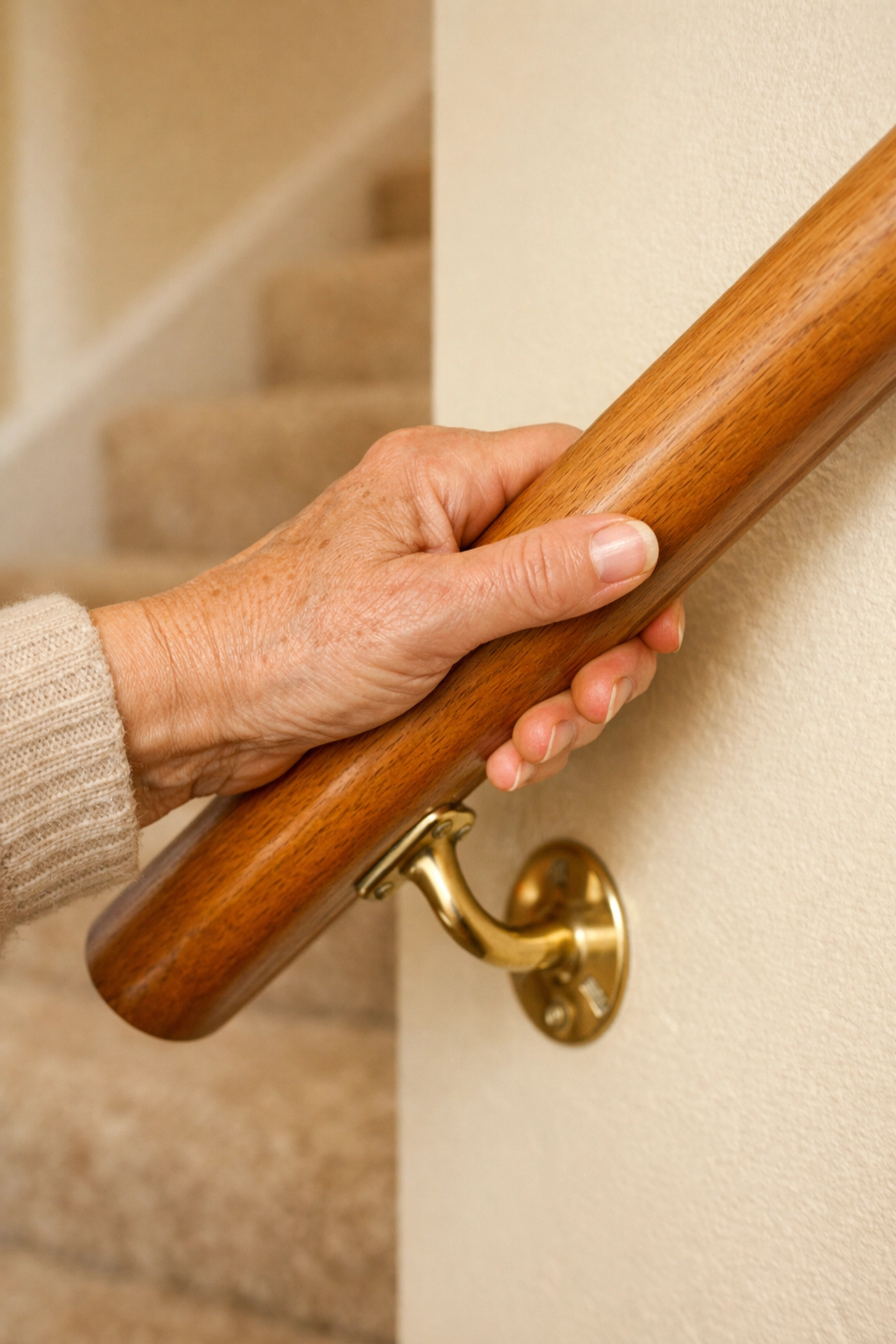
If your parent's stairs only have a handrail on one side, that's a problem. Both sides should have secure, properly installed handrails.
Here's what proper handrails look like:
- Positioned at adult elbow height (generally 34-38 inches from the stair nosing)
- Securely attached to the wall or posts, not wobbly
- Extending the full length of the staircase, including beyond the top and bottom steps
- Designed so an adult can wrap their entire hand completely around them
- Strong enough that someone can put their full weight on them without damage
That last point is critical. Handrails aren't decorative, they're support structures. Your parent should be able to grip the rail firmly and use it to bear weight while navigating stairs.
Why both sides? If your parent has weakness on one side of their body (common after a stroke, for example), they need to be able to use their stronger side whether they're going up or down. Also, having both hands on rails provides maximum stability.
4. Lighting Makes or Breaks Stair Safety
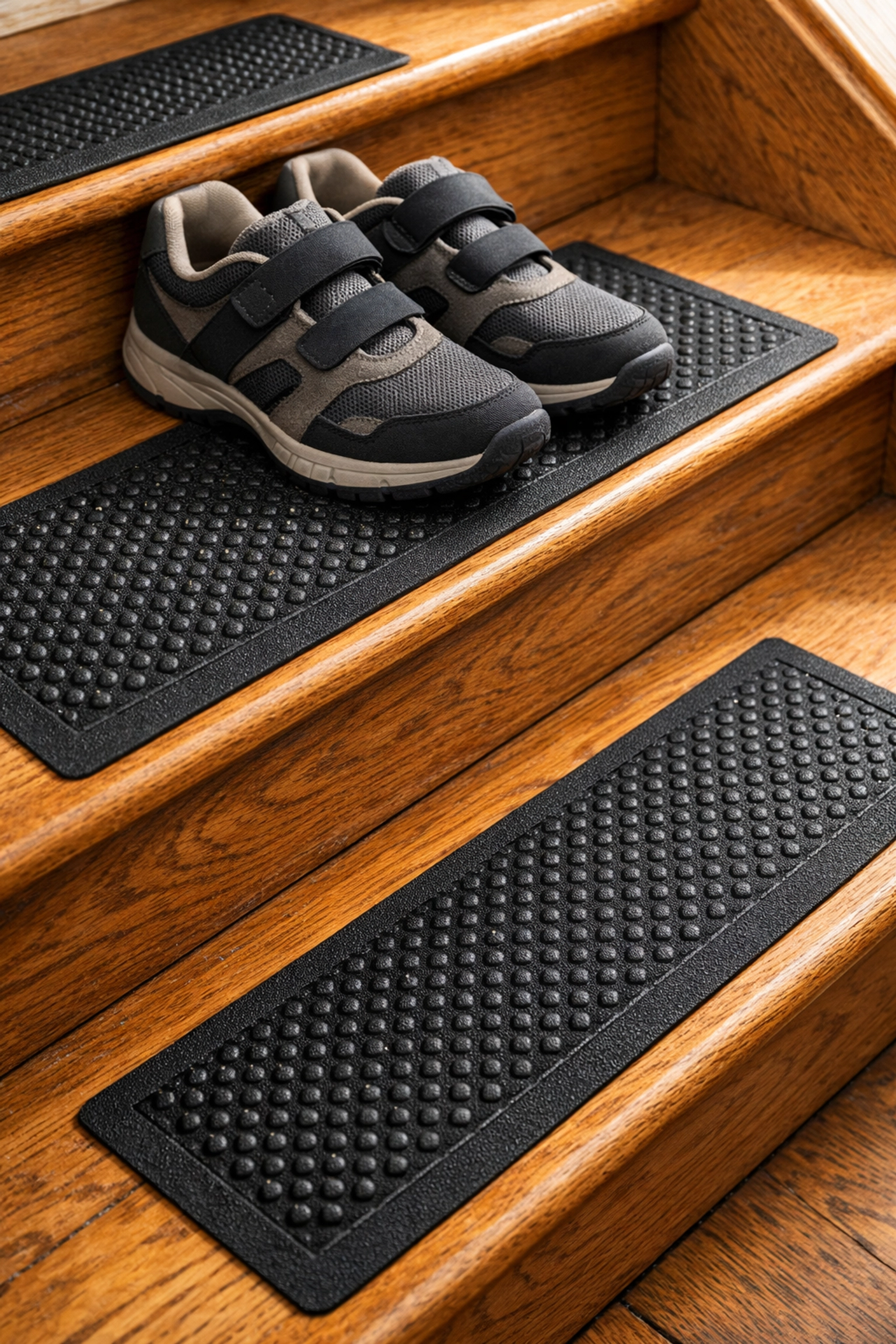
Poor lighting is one of the most common environmental factors in stair falls. If your parent can't clearly see each step edge, they're at serious risk.
Walk through your parent's home and really look at stairway lighting. Stand at the top and bottom of stairs at different times of day. Is there enough light to clearly see where one step ends and the next begins? What about at night?
Consider:
- Installing brighter bulbs in existing fixtures
- Adding additional light fixtures if needed
- Placing nightlights at the top and bottom of stairs
- Installing motion-sensor lights that automatically illuminate when someone approaches
- Ensuring light switches are accessible at both ends of the staircase
Don't forget about walkways leading to stairs. If your parent has to walk through a dark hallway before reaching stairs, that's part of the safety equation too.
5. Traction Is Non-Negotiable
Remember that slipping causes most stair falls? This is where you address that risk.
The solution depends on what type of stairs your parent has:
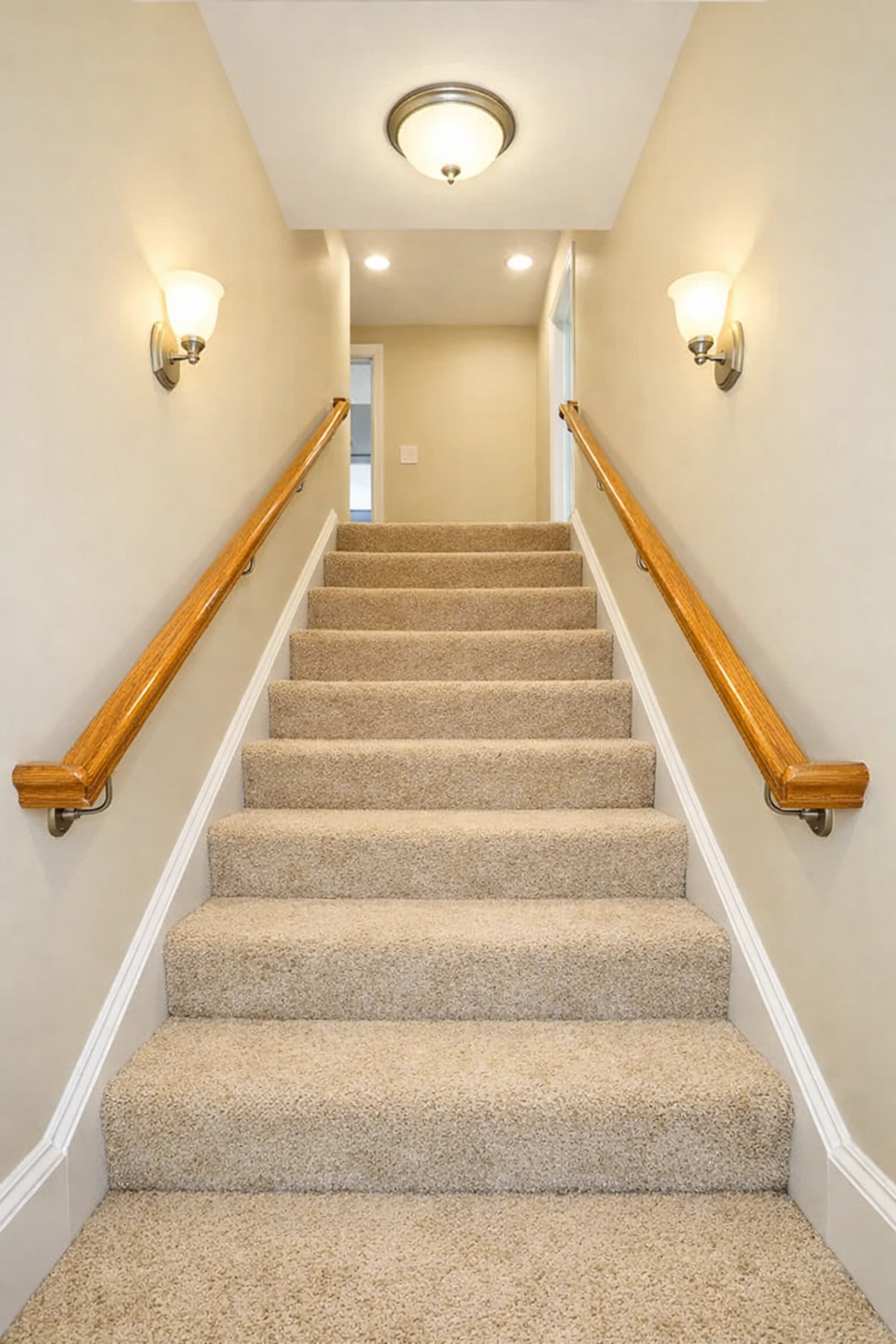
For bare wood, tile, or painted stairs: Install slip-resistant treads, rubber treads, or anti-slip tape on each step. The surface should feel slightly rough or textured, not slick.
For carpeted stairs: Make absolutely sure the carpet is securely installed, not loose, bunched up, or sagging. The carpet should be tight against the nosing (edge) of each step with no gaps or wrinkles. If the carpet is old and loose, it's time to replace or reattach it properly.
For outdoor stairs: Consider textured paint, grip tape, or rubber treads that can withstand weather. Ice and rain make outdoor stairs especially treacherous.
Test the traction yourself. Walk up and down in socks (not recommended for your parent, but useful for testing). If you feel any slipperiness, add more traction.
6. Clutter Is a Silent Danger
This one seems obvious, but it's often overlooked because it happens gradually. A pair of shoes left on the third step. A stack of books on the landing. A bag set down temporarily that becomes permanent.
Stairs should be completely clear. Always. Every single step and landing.
Common culprits include:
- Shoes and slippers
- Books and magazines
- Boxes being moved between floors
- Laundry baskets
- Pet toys
- Mail and packages
Also watch out for area rugs at the top and bottom of stairs. These are major tripping hazards. If there are rugs in these locations, remove them or secure them extremely well with non-slip backing.
Make it a rule: nothing gets stored on stairs, even temporarily. If your parent has trouble following this rule, it might indicate a larger issue with mobility or household management that needs addressing.
7. Medications Can Be the Hidden Culprit
Sometimes the stairs aren't the problem, the problem is how medications affect your parent's balance, vision, or alertness.
Many common medications can cause:
- Dizziness or lightheadedness
- Drowsiness
- Blurred vision
- Unsteadiness
- Confusion
Blood pressure medications, sleep aids, anxiety medications, antihistamines, and pain relievers are common offenders. Even over-the-counter medications can affect balance and coordination.
Talk to your parent's doctor or pharmacist about side effects. Ask specifically about fall risk. Sometimes a medication adjustment or timing change can make a significant difference. For example, taking a medication that causes drowsiness right before bed instead of in the evening means your parent won't be navigating stairs while impaired.
If your parent feels dizzy, faint, or unsteady, for any reason, they should avoid stairs until the feeling passes. Period.
8. Footwear Matters More Than You'd Think
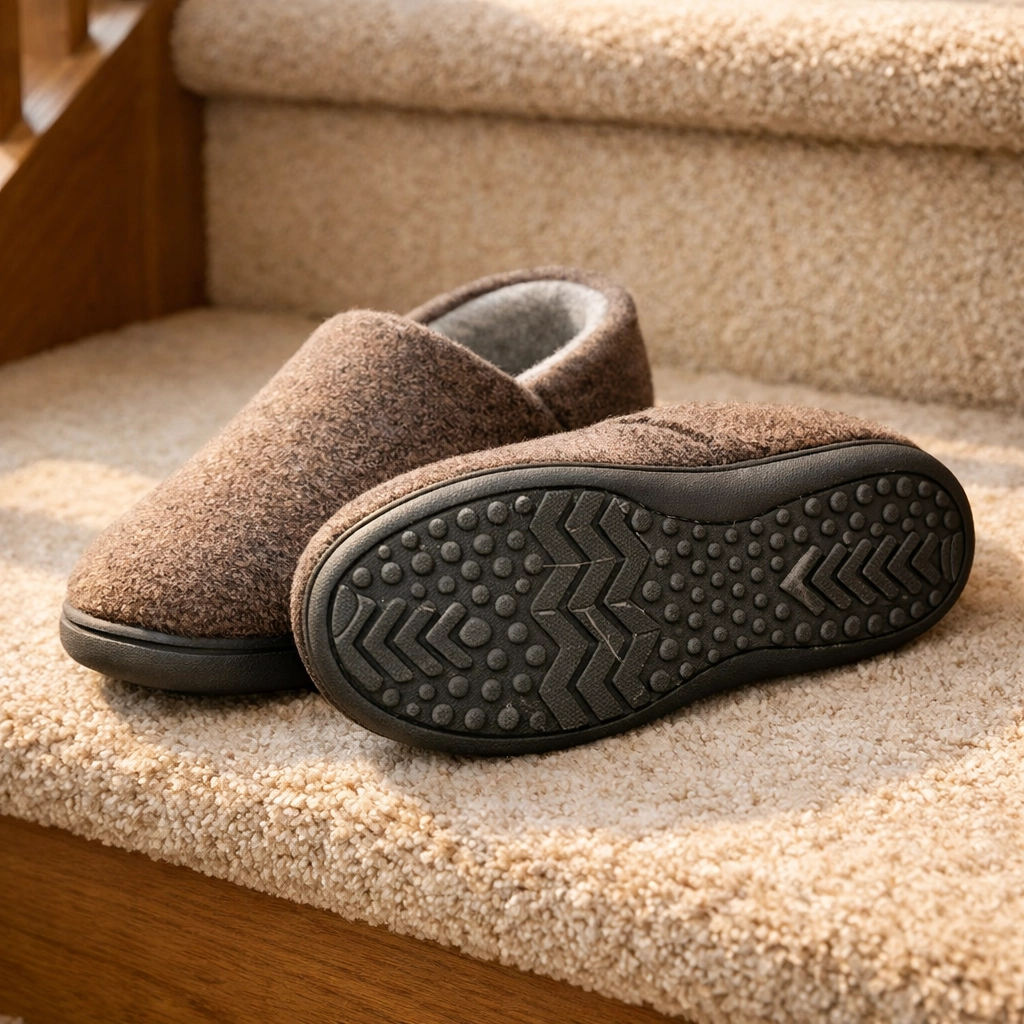
Bare feet, socks, worn-out slippers with smooth bottoms, these are all recipes for slipping on stairs.
Your parent should wear proper footwear every time they use stairs:
- Shoes or slippers with non-slip soles
- Properly fitted (not too loose or too tight)
- Supportive around the heel
- Without long laces that could cause tripping
This might mean keeping appropriate footwear at both the top and bottom of stairs so your parent doesn't try to navigate them barefoot or in socks. Yes, it's less convenient. But convenience matters less than safety.
If your parent resists wearing shoes in the house, compromise with high-quality non-slip slipper socks or indoor shoes with grippy soles.
9. Rushing Is Riskier Than the Stairs Themselves
Many stair falls happen when someone is hurrying. The phone is ringing. The stove timer is beeping. They need to use the bathroom urgently.
Speed and stairs don't mix well for older adults. Your parent needs to move deliberately, holding the handrails, watching their feet, and taking their time on every single step.
This might mean some practical adjustments:
- Keep a phone on both floors so they don't rush up or down to answer it
- Set up bathrooms on both levels if possible
- Plan ahead so they're not rushing to get somewhere
- Place frequently needed items where they don't require multiple stair trips per day
Encourage your parent to pause if they feel rushed. Whatever is calling for their attention can wait the extra thirty seconds it takes to navigate stairs safely.
10. Long-Term Solutions Exist When Stairs Become Too Difficult
Eventually, even with all safety measures in place, stairs might become too challenging or risky for your parent. That doesn't mean they have to move immediately. Several options exist:
Stairlifts allow your parent to ride up and down while seated. Modern stairlifts are reliable, can be installed on curved or straight stairs, and don't require major home modifications.
Floor lifts work like elevators, moving between levels without using stairs at all. These are more expensive but useful for wheelchair users.
Stair climbers are electrical devices designed to help move someone in a wheelchair or scooter up and down stairs.
Downstairs living spaces can be created by converting a main-floor room into a bedroom and ensuring a bathroom is accessible on that level.
Relocating to single-level housing: whether a ranch-style home, condo, or apartment: eliminates stair concerns entirely.
Research shows that seniors are most likely to accept and use safety interventions when they're low-cost, backed by evidence, and recommended by trusted professionals. Start with simple, inexpensive changes before jumping to major modifications or relocation.
Building Strength Also Builds Safety
Here's something that works alongside all these safety measures: physical activity. When your parent maintains muscle strength and practices balance exercises, navigating stairs becomes easier and safer.
This doesn't mean they need to become athletes. Simple activities like:
- Walking regularly
- Standing on one foot while brushing teeth
- Leg raises while sitting
- Gentle stretching
These activities build the strength and balance that make every step safer. Talk to your parent's doctor about appropriate exercises for their fitness level.
The Bottom Line
Stair safety isn't about one big fix: it's about multiple small measures that add up to significant risk reduction. You don't need to implement everything overnight. Start with the quick wins: clear the clutter, check the lighting, test the handrails. Then work your way through the bigger changes.
The goal isn't to make your parent afraid of stairs. It's to make stairs as safe as possible so your parent can continue navigating their home confidently. Because independence matters, and preventing a fall is always better than recovering from one.

