
Experiencing a fall can be frightening and disorienting, regardless of your age or physical condition. The moments immediately following a fall are critical: not just for your physical safety, but for your emotional recovery and confidence moving forward. As a physical therapist, I've worked with countless individuals who've fallen, and I can tell you that knowing what to do in those first few minutes makes all the difference.
This guide walks you through exactly what to do after a fall, from the immediate moments on the floor to the structured recovery process that follows. Whether you're reading this to prepare yourself or to help a loved one, understanding these steps can transform a scary experience into a manageable situation with a clear path to recovery.
The First Moments: Stay Calm and Assess
When you first hit the ground, your natural instinct might be to jump up quickly out of embarrassment or fear. Resist this urge. The most important thing you can do is take a breath and remain where you are for at least a few moments.
Check yourself systematically:
- Can you move your fingers and toes?
- Do you feel sharp pain anywhere?
- Is anything numb or tingling?
- Can you turn your head without pain?
- Are you bleeding or do you see visible injuries?
Take your time with this assessment. Your adrenaline is likely pumping, which can mask pain initially. Move slowly and gently test each body part before attempting to get up. If you experience severe pain, cannot move a limb, or suspect you've hit your head hard, do not attempt to rise on your own.

When to Call for Help
Not every fall requires emergency services, but some situations absolutely do. Call 911 or emergency services immediately if you experience:
- Severe pain that prevents movement
- Inability to move your legs or arms
- Loss of consciousness, even briefly
- Confusion or difficulty speaking
- Heavy bleeding
- Suspected broken bones
- Chest pain or difficulty breathing
- Neck or back pain after the fall
Even if your injuries seem minor, it's wise to contact your doctor or healthcare provider within 24 hours to discuss the fall. They can determine whether you need to be evaluated in person and help identify any underlying causes that led to the fall.
Remember, there's no shame in asking for help. Many people lie on the floor for hours because they're too embarrassed to call for assistance. Your safety is more important than your pride.
The Safe Way to Get Up From the Floor
If you've assessed yourself and feel confident you can get up without injury, follow this physical therapist-approved method. This step-by-step process minimizes strain on your body and reduces the risk of falling again during the process.
Step One: Roll to Your Side
Start by bending your knees and keeping your feet flat on the floor. Look in the direction you plan to roll: this helps your body follow your head's movement. Use your arms to gently push and roll your body onto your side. Choose the side that feels strongest and most comfortable.
Step Two: Push Up to Hands and Knees
From your side position, use your arms to push your upper body up while bringing your knees underneath you. You'll end up in a crawling position with your hands and knees on the floor. Place your hands shoulder-width apart and make sure you feel stable before moving to the next step.
Step Three: Crawl to Sturdy Furniture
Look around for the nearest piece of stable furniture: a chair, couch, table, or bed. Slowly crawl toward it, keeping your movements controlled and deliberate. Don't rush. If you start to feel dizzy or weak, pause and rest in this position until you feel ready to continue.
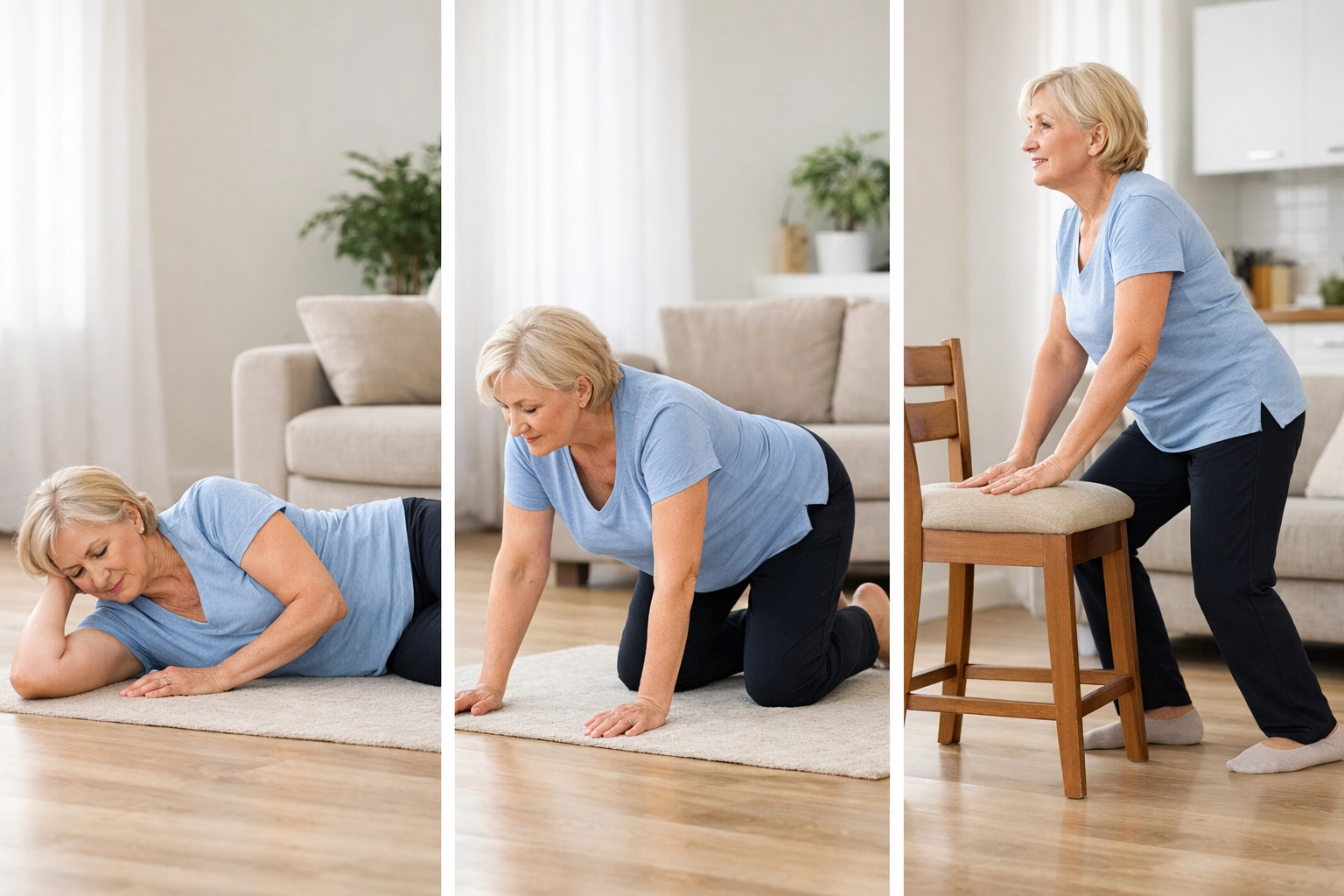
Step Four: Position Your Stronger Leg Forward
Once you reach the furniture, place both hands firmly on it, shoulder-width apart. Bring your stronger leg forward and place that foot flat on the floor, creating a half-kneeling position. Your other knee should still be on the ground behind you.
Step Five: Push Up to Standing
Push down through your hands and front foot simultaneously, using the furniture for support. Rise into a lunge position, then bring your back leg forward to stand fully upright. Keep holding onto the furniture as you stand.
Step Six: Test Your Balance
Don't let go of the support immediately. Stand still for 15 to 30 seconds while holding on. Gently shift your weight side to side and forward and back. This tests whether you're steady enough to walk. If you feel dizzy, weak, or unsteady, sit down in a chair and rest before attempting to walk.
Adaptations for Different Situations
Not everyone can follow the standard floor-to-standing method. Here's how to modify the technique based on your specific needs:
If you have knee pain or weakness: Use a higher piece of furniture like a dining table or countertop. Instead of crawling, you can scoot on your bottom toward the support. This reduces the amount of knee bending required.
If you have limited upper body strength: Focus on using your leg strength more. Choose the highest stable surface available and position yourself so your legs do most of the lifting work. A sturdy coffee table or ottoman works better than a low couch.
If you use a walker or cane: Before getting up, position your assistive device within arm's reach but not in your path of movement. Once you're standing and stable, reach for it while still holding the furniture with one hand. Never try to use your walker to pull yourself up: it's not designed for that.
If you've recently had surgery or have significant balance problems: This technique should be practiced with a physical therapist present before you attempt it alone. Consider practicing the movements regularly when you're not actually fallen, so your body knows what to do if a real fall happens.
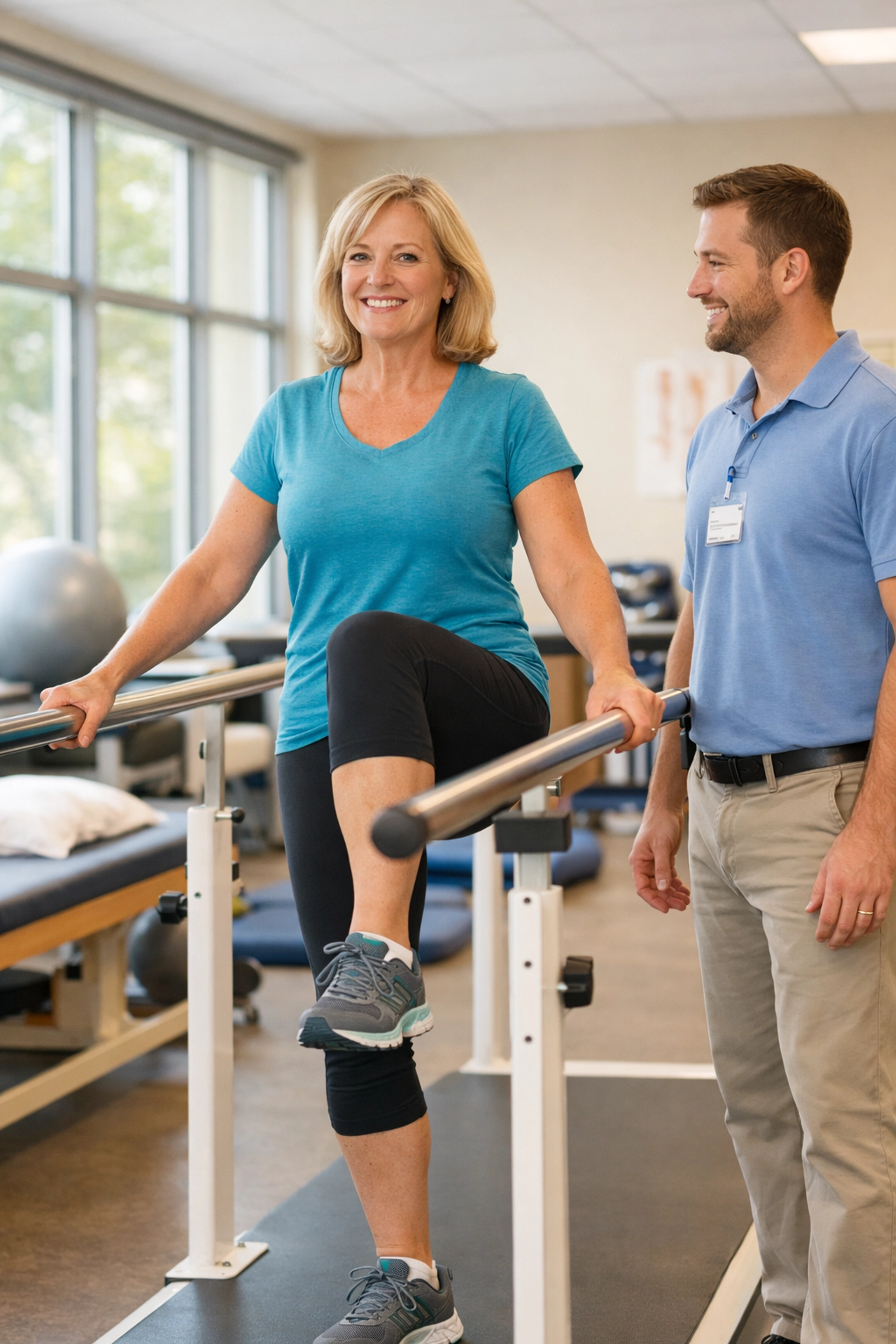
The Physical Therapy Recovery Process
Getting up from the floor is just the beginning. A proper recovery after a fall involves rebuilding strength, confidence, and addressing whatever caused the fall in the first place. This is where working with a physical therapist becomes invaluable.
Comprehensive Fall Assessment
Your physical therapist will conduct a thorough evaluation that goes beyond just checking for injuries. They'll assess your balance, gait pattern, muscle strength, flexibility, and reaction time. They'll also review your medications with you, as some can increase fall risk through dizziness or drowsiness.
This assessment often reveals surprising findings. Many people discover they have significant strength imbalances, vision changes they hadn't noticed, or footwear that's contributing to instability.
Targeted Strengthening Exercises
After a fall, your muscles often tighten up: partly from the trauma of impact and partly from fear of movement. Your physical therapist will design exercises specifically targeting your legs, hips, core, and any weak areas identified in your assessment.
Research shows that targeted leg and hip strengthening can improve walking speed and reduce repeat fall risk by more than 25 percent. These exercises might include:
- Sit-to-stand repetitions from different chair heights
- Step-ups on progressively higher surfaces
- Hip abduction and extension exercises
- Calf raises for ankle strength
- Core stability work including planks and bridges
The key is gradual progression. You'll start with exercises you can do safely and comfortably, then slowly increase difficulty as your strength improves.
Balance Retraining
Falls disrupt your body's natural sense of where it is in space. Balance training helps rebuild this awareness and improves your reaction time if you start to lose balance again.
Your therapist might have you practice:
- Standing on one leg with various arm positions
- Tandem walking (heel-to-toe like a tightrope)
- Weight shifts in different directions
- Dual-task activities like walking while counting backward
- Standing on unstable surfaces with proper support
These exercises retrain your brain and body to work together more effectively, helping you catch yourself before a fall happens.
Flexibility and Range of Motion Work
Stiff joints and tight muscles make it harder to react quickly when you lose balance. Your physical therapist will include stretching and range of motion exercises to improve your flexibility, particularly in your ankles, hips, and spine.
This might involve:
- Gentle stretching routines
- Foam roller exercises to release muscle tension
- Joint mobilization techniques
- Tai chi or yoga-based movements adapted for your abilities
Vestibular Therapy When Needed
If you experienced dizziness, spinning sensations, or blurred vision during or after your fall, you might benefit from vestibular therapy. This specialized type of physical therapy focuses on your inner ear and balance system.
Vestibular exercises can feel strange at first: they're designed to provoke mild symptoms in a controlled way so your brain learns to compensate. But they're highly effective for reducing dizziness-related fall risk.

Rebuilding Confidence After a Fall
The psychological impact of a fall often lasts longer than the physical injuries. Many people develop a fear of falling that limits their activities and actually increases their fall risk by making movements more hesitant and unstable.
Your physical therapist understands this fear is real and valid. Part of your recovery involves gradually rebuilding confidence through:
Practicing in Safe Environments: You'll rehearse movements and activities in controlled settings with proper support before doing them independently at home.
Progressive Difficulty: Starting with easier tasks and advancing only when you feel ready helps build confidence without overwhelming you.
Regular Floor-to-Standing Practice: Practicing the technique of getting up from the floor when you haven't actually fallen helps your body remember the movements. It also proves to yourself that you can do it, which reduces anxiety about future falls.
Functional Training: Your therapist will help you practice real-life activities like getting in and out of the car, navigating stairs with confidence, and reaching for items safely.
Prevention Moving Forward
Recovery isn't complete until you've addressed the factors that led to your fall. This means looking at both your physical condition and your environment.
Home Safety Modifications:
- Remove tripping hazards like loose rugs and clutter
- Improve lighting, especially in hallways and bathrooms
- Consider grab bars in strategic locations
- Ensure stairs have sturdy handrails on both sides
- Keep frequently used items within easy reach
Lifestyle Adjustments:
- Review your medications with your doctor
- Have your vision checked regularly
- Choose supportive, non-slip footwear
- Stay hydrated and maintain good nutrition
- Continue your exercise program long-term
Ongoing Monitoring:
- Schedule regular follow-ups with your physical therapist
- Report new symptoms or near-falls to your healthcare team
- Continue balance and strength exercises at home
- Stay socially active and engaged in activities you enjoy
The Path Forward
Recovering from a fall takes time, patience, and consistent effort. But with the right approach and professional guidance, most people not only recover fully but become stronger and more stable than they were before the fall.
Remember that everyone's recovery timeline is different. Don't compare yourself to others or feel rushed to progress faster than your body is ready for. Your physical therapist will work with you to create a personalized plan that matches your specific needs, goals, and abilities.
The fall happened, but it doesn't have to define your future. With proper recovery and prevention strategies, you can move forward with confidence, knowing you have the tools and knowledge to stay safe and active. Take it one day at a time, celebrate small victories, and trust the process. Your body has an remarkable ability to heal and adapt when given the proper support and care.

