
The bedroom should be the safest room in your home: a place for rest and recovery, not worry. Yet for many seniors, it's one of the most dangerous spaces. Over half of home falls happen in the bedroom, often during transitions like getting in and out of bed or navigating to the bathroom in low light.
The good news? Most bedroom falls are preventable with some simple adjustments. Whether you're caring for an aging parent, spouse, or client, these five straightforward steps will help you create a safer sleeping environment without major renovations or expensive equipment.
Step 1: Set Up Strategic Lighting Throughout the Bedroom
Poor lighting is the silent culprit behind countless nighttime falls. When your loved one wakes up disoriented at 2 a.m. needing to use the bathroom, fumbling for a light switch in the dark creates unnecessary risk.
Start by installing motion-activated night lights along the path from the bed to the bathroom. Position them low on the wall or along the floor so they don't shine directly into eyes and cause temporary blindness. These lights should provide enough illumination to see clearly without being jarring.
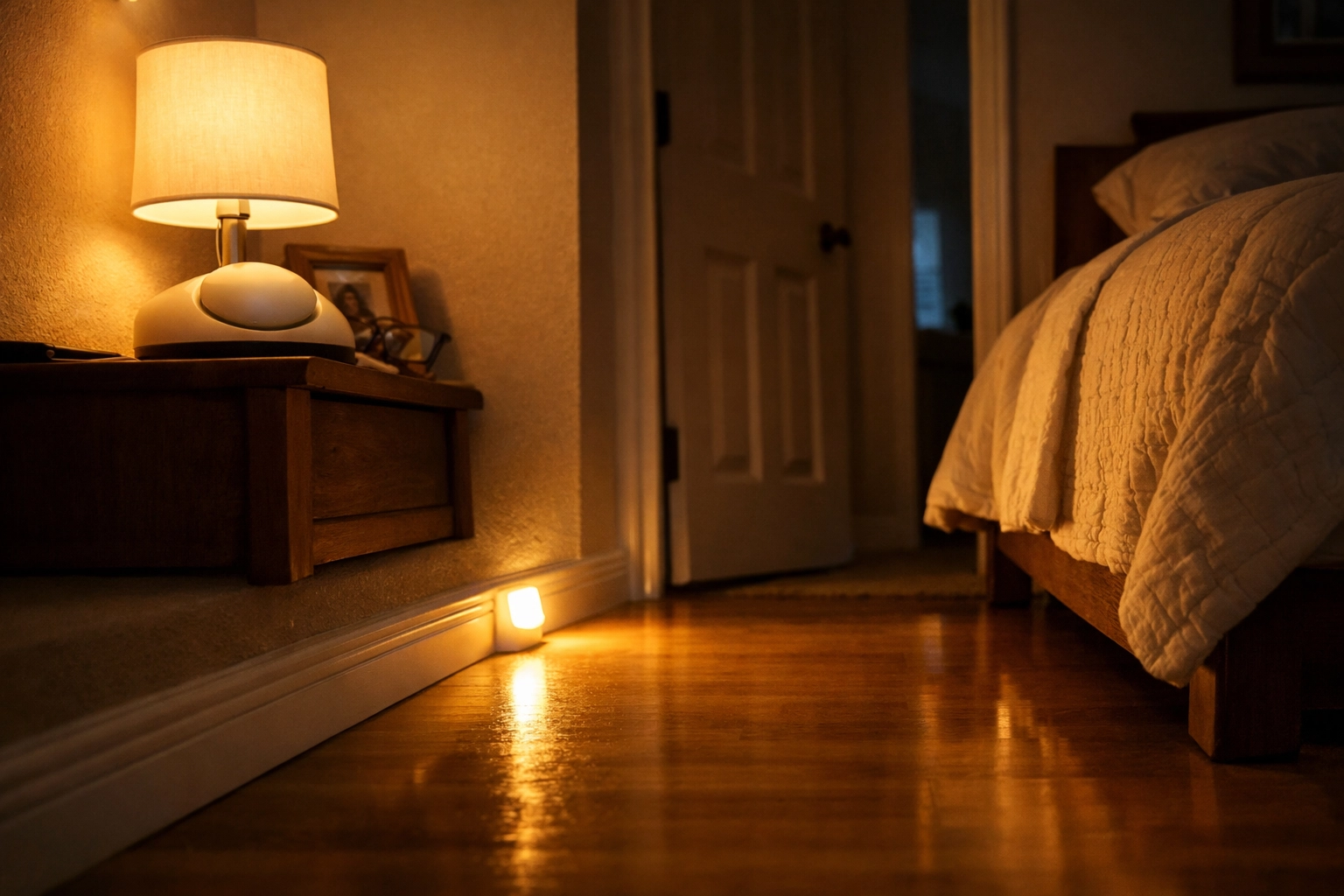
Next to the bed itself, place a lamp with a large, easy-to-find switch. Those tiny toggle switches are hard to locate in the dark, especially for someone with arthritis or limited dexterity. Look for touch-activated lamps or ones with switches the size of a hockey puck: anything that eliminates fumbling.
Make sure every bulb in the bedroom is bright enough. As we age, we need more light to see clearly. What seems bright to you at 40 might seem dim to someone at 75. Replace any burnt-out bulbs immediately and consider upgrading to brighter options if the room feels dingy.
Keep a charged flashlight or headlamp on the nightstand as a backup. Power outages happen, and batteries die. This redundancy could prevent a fall during those unexpected moments when the regular lighting fails.
Quick Lighting Checklist:
- Motion-sensor night lights from bed to bathroom
- Bedside lamp with large, accessible switch
- Bright bulbs throughout (60-watt equivalent or higher)
- Backup flashlight within arm's reach
- Light switch accessible from doorway
Step 2: Clear All Pathways and Eliminate Trip Hazards
Take a hard look at the bedroom floor. Everything on it is a potential trip hazard, and many falls happen simply because someone's foot caught on something unexpected.
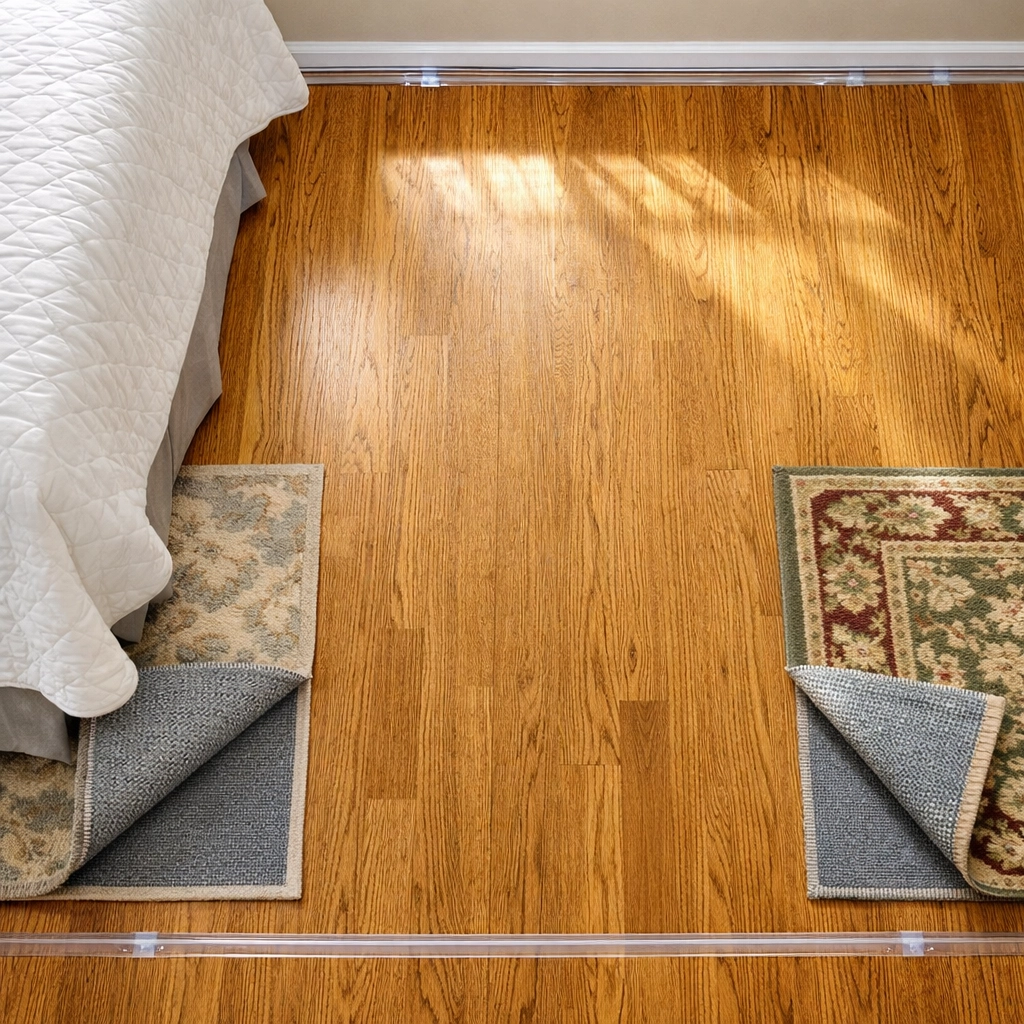
Start with throw rugs. They're decorative, but they're dangerous. Either remove them entirely or secure them with heavy-duty non-slip backing that won't budge. Those thin rubber pads from the dollar store won't cut it: you need something substantial. Better yet, if the floor underneath is safe, just get rid of the rugs altogether.
Electrical cords are another major culprit. That charging cable snaking across the floor? The lamp cord stretching from the outlet? Tape them down flat with wide painter's tape or cord covers, or better yet, reroute them along the walls using cord clips. If you can't eliminate the cord crossing, make it as flat and visible as possible.
The area immediately around the bed: what we call the landing zone: needs to be completely clear. No piles of books, no stacks of magazines, no shoes kicked off at bedtime. If your loved one gets up in the night, their feet need to land on clear, flat floor. Period.
Check for other sneaky hazards:
- Pet toys or pet beds near walkways
- Laundry baskets in pathways
- Shoes or slippers left scattered
- Medical equipment stored awkwardly
- Furniture that juts out unexpectedly
Walk the route your loved one takes from bed to bathroom at night, in dim light if possible. You'll spot hazards you'd never notice during the day.
Step 3: Optimize the Bed Height and Add Support
The bed itself plays a crucial role in fall prevention. If it's too high, your loved one has to jump down, creating impact on knees and ankles. Too low, and getting up becomes a major strain that throws off balance.
The ideal bed height allows someone to sit on the edge with their feet flat on the floor, knees bent at roughly 90 degrees. For most people, this means the top of the mattress sits about 20 to 23 inches from the floor. If your current bed doesn't meet this standard, you have options.
For beds that are too low, add risers under the legs or switch to a thicker mattress. For beds that are too high, remove the box spring or switch to a low-profile foundation. Some adjustable bed frames make this easier by letting you dial in the perfect height.
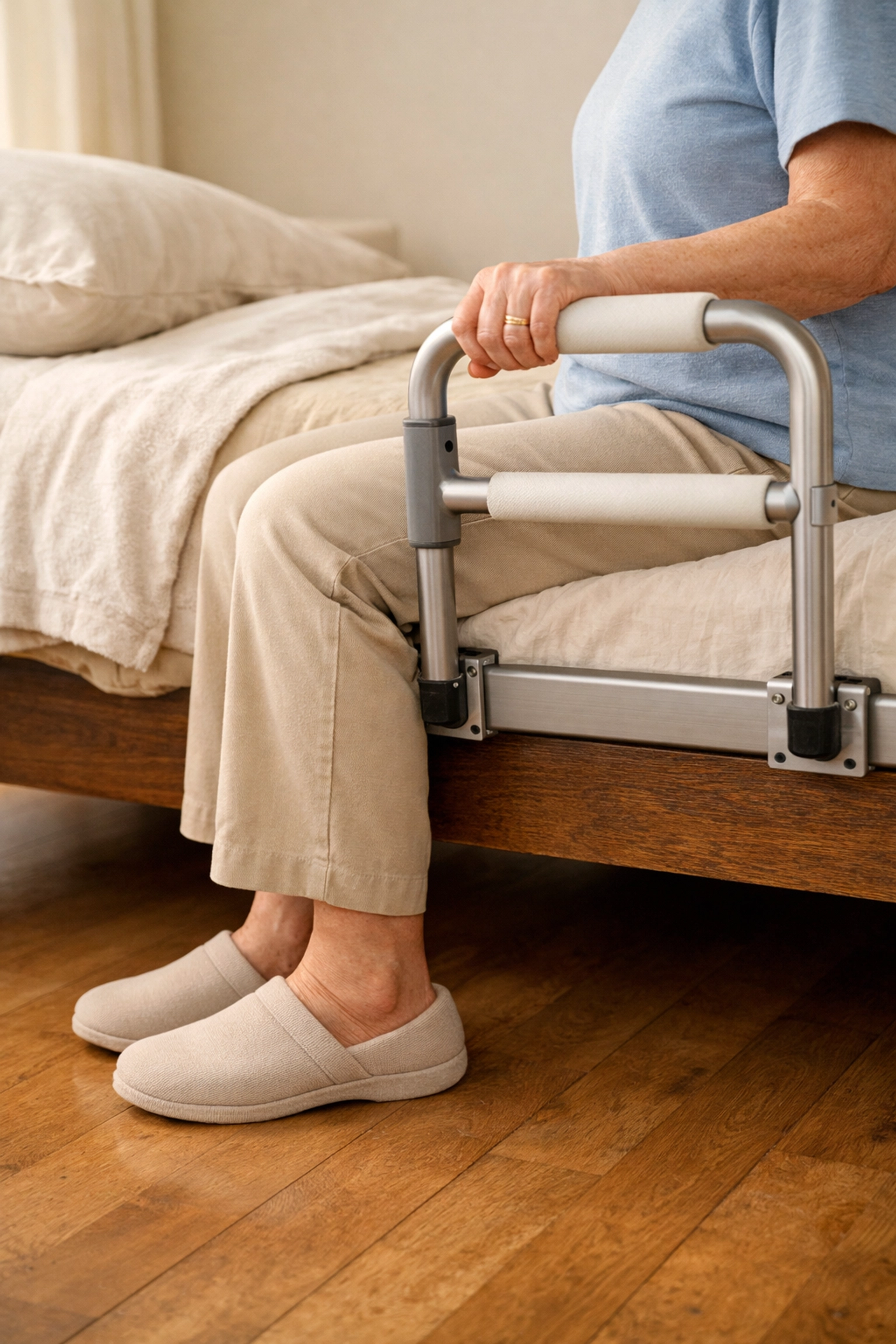
Support during the transition in and out of bed makes an enormous difference. Many people use the nightstand for leverage, but nightstands aren't designed for that: they can tip or slide. A proper support device attached to the bed or floor provides stable assistance without the risk.
Some caregivers find that bed rails help, though they're not right for everyone. Traditional hospital-style rails can pose entrapment risks, so if you go this route, choose carefully and follow installation instructions precisely. The goal is assistance with position changes, not restraint.
For those concerned about rolling out of bed during sleep, simple solutions like a pool noodle tucked under the fitted sheet along one edge or foam wedges placed alongside the mattress can provide gentle boundaries without the risks associated with full bed rails.
Bed Safety Essentials:
- Proper height for easy sit-to-stand transitions
- Sturdy support for getting in and out
- Firm mattress that doesn't sink excessively
- No gaps between mattress and frame
- Stable frame without wheels
Step 4: Keep Daily Essentials Within Easy Reach
One of the main reasons people get out of bed at night is to retrieve something they need. Every unnecessary trip to the dresser or closet is a fall risk you can eliminate.
Set up the nightstand as command central. Everything your loved one might need during the night should be within arm's reach from a sitting position on the bed:
Essential items to keep bedside:
- Water in a spill-proof cup or bottle
- Glasses or hearing aids in a consistent spot
- Phone (landline or fully charged cell)
- Medications taken at night or as needed
- Tissues
- TV remote or book
- Emergency call button if applicable
Arrange items logically. The phone should be closest to the edge where your loved one sits, making it grabbable even in an emergency. Glasses should always return to the same spot: consistency reduces fumbling.
Make sure the nightstand itself is sturdy and won't tip if leaned on. It should sit flush against the bed without a gap. The surface should be large enough that items won't get knocked off easily.
For items needed during the day, organize the room so your loved one doesn't have to reach high shelves or bend down to low drawers. The most-used clothing should be at mid-level in the closet or dresser. Remove the need to use step stools or bend deeply.
If your loved one uses a walker or cane, create a dedicated parking spot for it right next to the bed. Some people use a special holder that keeps it upright and prevents it from falling: because a mobility aid on the floor isn't helping anyone.
Step 5: Add Protective Equipment and Monitoring Systems
Even with all the prevention strategies in place, it's wise to add a few protective layers for those unexpected moments.
Non-slip mats or padded rugs next to the bed provide cushioning if a fall does occur. These aren't the slippery throw rugs we warned against earlier: these are specifically designed mats with grippy bottoms that won't move. They can soften the impact and reduce injury severity.
Protective padding on sharp furniture edges in the bedroom prevents injury from falls or unsteady movements. Corner guards designed for babyproofing work just as well for fall-proofing. Pay special attention to metal bed frames, nightstand corners, dresser edges, and windowsills.
For those caring for someone with dementia, confusion, or a history of wandering at night, monitoring becomes important. Bed alarm systems alert caregivers when someone gets up unexpectedly. These typically use pressure sensors under the mattress or on a mat beside the bed, triggering an alert when pressure is removed.
These systems aren't about restraint or invasion of privacy: they're about early awareness so you can assist during those high-risk nighttime transitions. Many families find they sleep better knowing they'll be alerted if their loved one gets up alone.
Personal emergency response systems with fall detection have become more sophisticated and less intrusive. Some are watches or pendants that automatically alert emergency services if a fall is detected. While these are helpful throughout the home, having one on at night provides additional peace of mind.
Safety Equipment to Consider:
- Cushioned non-slip mats beside the bed
- Furniture corner protectors
- Bed alarm or monitoring system
- Personal emergency device with fall detection
- Bell or call button to summon help
Creating Lasting Safety Habits
Making physical changes to the bedroom is only half the equation. The other half is creating habits that maintain this safety.
Do a monthly safety check. Walk through the bedroom looking specifically for new hazards: that cord that's worked loose, the rug that's bunching up, the nightlight that burned out. Small issues become big problems if ignored.
Involve your loved one in the process if possible. When people understand why these changes matter and feel ownership over their safety, they're more likely to maintain the systems you've put in place.
Keep the room consistent. Major furniture rearrangements require new mental maps, which increases confusion and fall risk, especially at night. Once you've created a safe layout, stick with it.
The bedroom should be a sanctuary, not a source of stress. By following these five steps: optimizing lighting, clearing hazards, adjusting the bed setup, organizing essentials, and adding protective equipment: you're creating an environment where your loved one can rest safely and maintain their independence.
These changes don't require contractors or thousands of dollars. They require attention, some basic supplies, and a commitment to ongoing safety. The few hours you invest now could prevent a life-changing fall down the road. That's time well spent.

