
As a physical therapist who has worked with hundreds of patients recovering from nighttime falls, I can tell you that most bedroom falls happen between midnight and 6 AM. The bedroom transforms from a safe haven during daylight into a minefield of hazards when darkness falls. The good news? Most nighttime bedroom falls are completely preventable with the right setup and awareness.
Let me walk you through creating a bedroom environment that protects you during those vulnerable nighttime hours when your balance, vision, and reaction time are naturally compromised.
Understanding Why Nighttime Falls Happen
Before we dive into solutions, it's worth understanding what makes nighttime so risky. When you wake up to use the bathroom or get a drink of water, your body isn't operating at full capacity. Your blood pressure drops when you've been lying down, which can cause dizziness when you stand. Your eyes need time to adjust to darkness or sudden light. And if you're groggy from sleep or medication, your coordination and judgment are impaired.
Most people also experience decreased muscle tone during sleep, meaning your legs aren't immediately ready to support your full weight when you first stand up. Add darkness to this equation, and you've got a perfect storm for falls.
The bedroom is particularly dangerous because we become complacent. We know the layout so well during the day that we assume we can navigate it safely at night. That overconfidence leads to rushing, taking shortcuts, and skipping safety measures.
Strategic Lighting: Your First Line of Defense
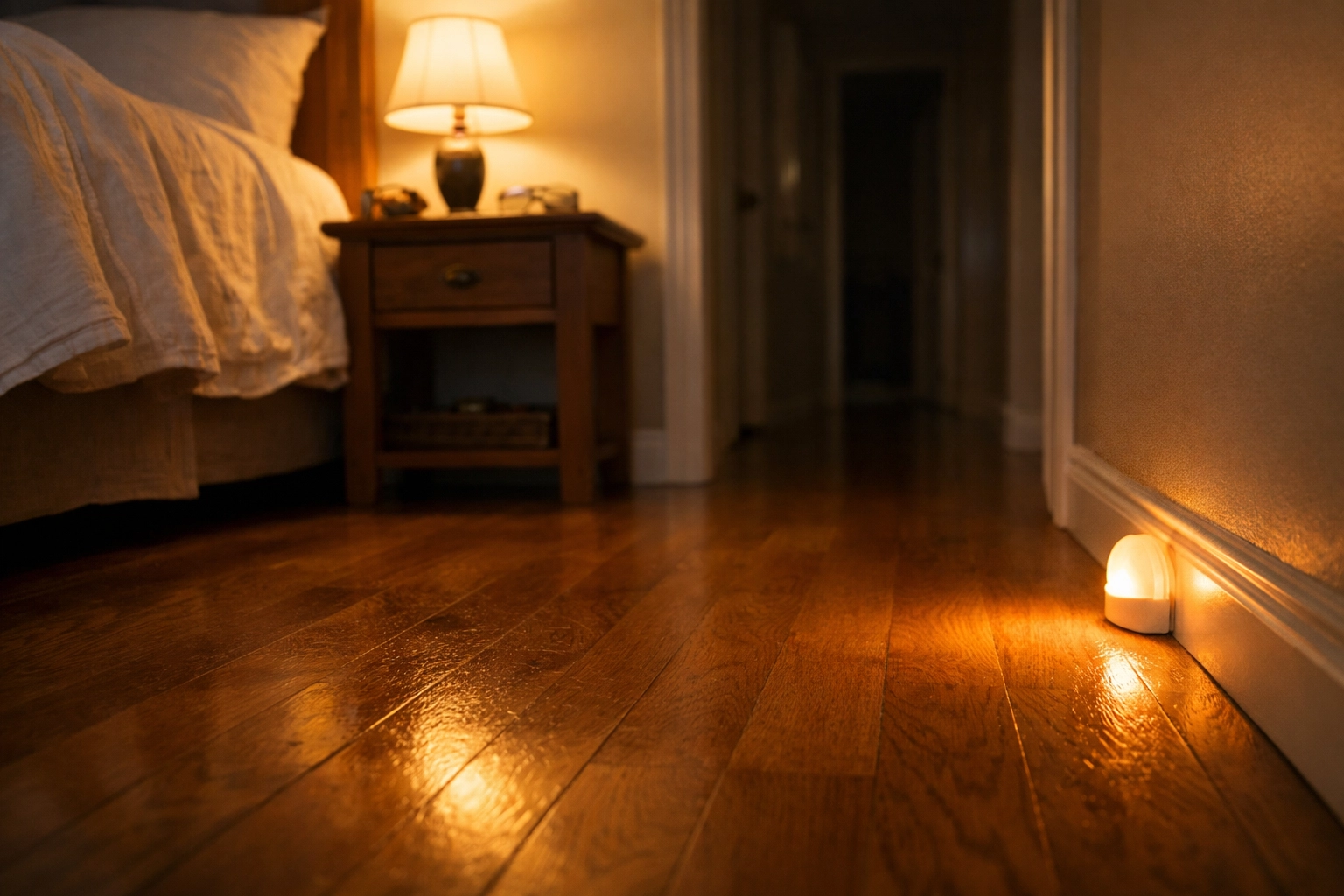
Lighting is absolutely critical for nighttime bedroom safety, but it needs to be thoughtfully planned. You want enough light to see clearly without being so bright that it disrupts your sleep or causes temporary blindness when you first wake up.
Install motion-activated nightlights along the path from your bed to the bathroom. Position them low to the ground so they illuminate the floor without shining in your eyes. Place one in your bedroom, one in the hallway, and one in the bathroom. These automatic lights eliminate the need to find switches in the dark.
Keep a touch-activated lamp on your nightstand that you can reach without sitting up or leaning over. Choose one with a dimmer function or multiple brightness settings. The lowest setting should provide just enough light to orient yourself, while brighter settings give you full visibility when needed.
Consider installing a bedside lamp with a gooseneck or adjustable arm that you can direct toward the floor or specific areas without creating glare. This gives you control over where the light goes.
For emergency backup, keep a high-quality flashlight on your nightstand. Choose one that's easy to grip and operate with one hand. Some people prefer headlamps because they keep both hands free, though they can be disorienting at first.
If your bedroom has overhead lighting, make sure the switch is within reach of your bed. If it's not, consider having an electrician install a bedside switch or using a smart bulb system that you can control from your phone.
Creating Clear, Safe Pathways
The path from your bed to the bathroom should be completely clear and wide enough to accommodate any mobility aids you use. Walk this route during the day and identify every potential obstacle.
Remove all throw rugs from your bedroom and bathroom. Even rugs with non-slip backing can catch toes or walker legs, especially when you're not fully alert. If you have wall-to-wall carpeting, make sure it's securely tacked down with no loose edges or worn spots that could trip you.
Electrical cords are a major tripping hazard. Run them along baseboards and secure them with cord covers or tape. Better yet, move furniture so cords don't cross walking paths at all. If you use a CPAP machine, extension cords, or phone chargers, route these carefully and consider using cord shorteners to eliminate slack.
Furniture arrangement matters more than you might think. Your nightstand should be beside your bed, not in front of it where you might bump into it when standing. Leave at least three feet of clearance between furniture pieces along your walking path. If you use a walker or wheelchair, you need even more space.
Remove or relocate any low-sitting furniture like ottomans, footstools, or storage boxes. These become invisible obstacles in low light. The same goes for shoes, books, magazines, or anything else that tends to accumulate on the floor.
Bed Height and Positioning
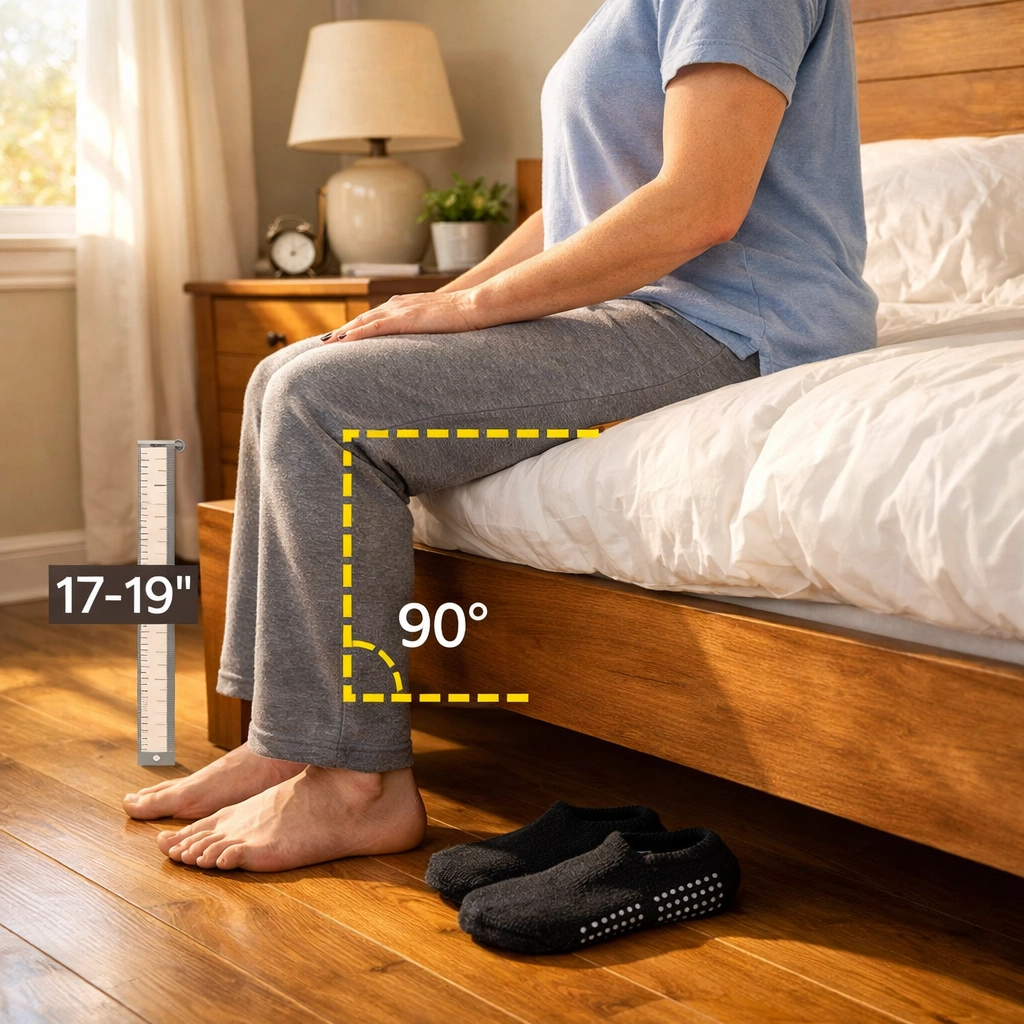
Your bed height significantly impacts your fall risk. When you sit on the edge of your bed with your feet flat on the floor, your knees should be at roughly a 90-degree angle or slightly higher. If your bed is too low, you have to work harder to stand, which challenges your balance. If it's too high, you may have trouble getting in and out safely.
You can adjust bed height using bed risers to raise it or removing the box spring to lower it. Hospital beds and adjustable beds offer even more control, allowing you to raise the head section for easier transitions from lying to sitting.
Position your bed so you can exit on both sides if possible. This gives you options if one side becomes blocked or if you have different mobility needs throughout the night. The side you exit most frequently should have the clearest path to the bathroom.
Keep the area directly beside your bed completely clear. This is where you'll place your feet when you sit up, and any obstacles here increase your fall risk significantly.
Emergency Communication Setup
Place a phone within easy reach of your bed. It should be close enough that you can grab it while lying down if you fall or experience a medical emergency. Keep it charged at all times.
A landline phone is more reliable during power outages, but if you only have a mobile phone, consider keeping a backup charger or power bank nearby. Program emergency contacts into speed dial so you can call for help even if you're disoriented.
If you live alone or have significant fall risk, consider a personal emergency response system. These wearable devices let you call for help at the push of a button, even if you can't reach a phone.
Keep a list of emergency contacts, medications, and medical conditions on your nightstand. If you do need to call for help, this information should be immediately accessible.
Footwear for Nighttime Safety
What you wear on your feet matters tremendously. Walking barefoot or in regular socks offers almost no traction on smooth floors. Slippers can be equally dangerous if they're loose-fitting or have slick soles.
Keep a pair of well-fitting shoes or grip socks beside your bed. Put them on before you stand up, every single time. This non-negotiable habit prevents countless falls.
Look for footwear with non-slip soles that provide good traction on all your floor surfaces. The shoes should have backs or straps that keep them securely on your feet. Avoid anything that flops, slides, or requires you to shuffle.
Some people benefit from shoes with small lights built into them or reflective strips that make feet more visible in low light. While this might seem excessive, anything that increases your visibility and awareness in the dark helps prevent falls.
Mobility Aids Within Reach
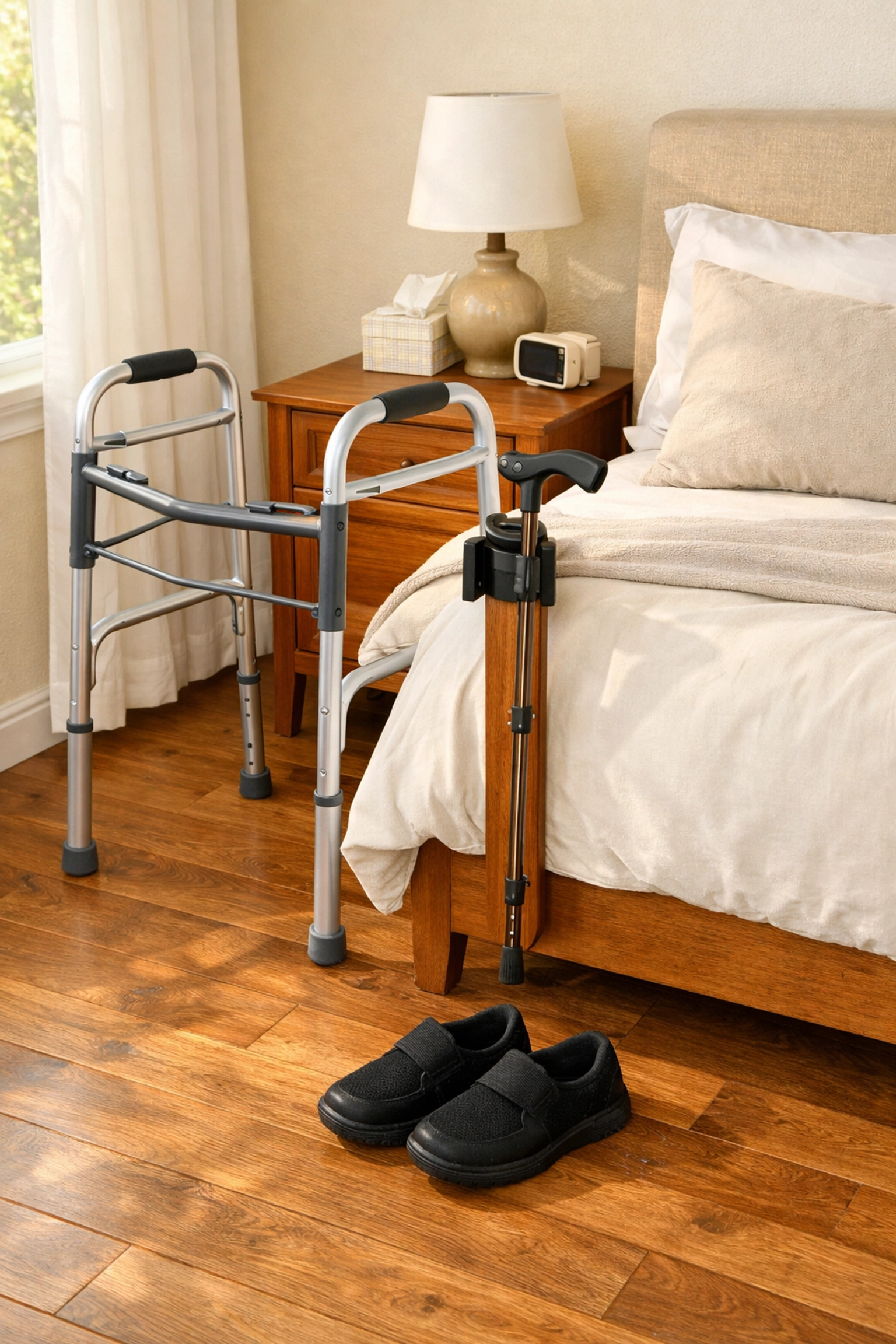
If you use a cane, walker, or wheelchair, it should be positioned where you can reach it before you stand. A cane can lean against your nightstand or hang from a cane holder attached to the bed frame. Walkers should be positioned directly beside the bed, within arm's reach.
Never stand up first and then reach for your mobility aid. Always secure the aid while sitting, then use it to help you stand. This sequence should become automatic.
For people who use walkers, consider keeping one in the bedroom and another in the bathroom. This eliminates the need to maneuver the walker through doorways multiple times per night.
Physical Preparation for Nighttime Mobility
Even with perfect environmental setup, your physical capabilities matter. As a physical therapist, I always emphasize exercises that prepare your body for safe nighttime transitions.
Practice the sit-to-stand transition during the day when you're alert. Before standing, always sit on the edge of your bed for 30 seconds to let your blood pressure stabilize. Place your feet flat on the floor, hip-width apart. Use your leg muscles to stand rather than pulling yourself up with your arms.
Work on balance exercises during the day to improve your stability at night. Simple exercises like standing on one foot, heel-to-toe walking, and weight shifting can significantly reduce your fall risk. Your physical therapist can design a program specific to your needs.
Strength matters too, especially in your legs and core. Exercises like chair squats, leg raises, and gentle abdominal exercises improve your ability to stand safely and maintain balance when you're tired.
Temperature and Environmental Comfort
Maintain a comfortable bedroom temperature. If you're too hot or too cold, you're more likely to wake frequently or get up to adjust the thermostat. These unnecessary trips increase fall risk.
Use adequate bedding so you're not kicking off covers repeatedly. Consider a small fan or space heater that you can control from bed, eliminating the need to get up for temperature adjustments.
Keep water on your nightstand so you don't need to walk to the bathroom every time you're thirsty. Use a spill-proof container or bottle with a lid to prevent accidents.
Regular Assessment and Adjustment
Your fall risk changes over time due to medication adjustments, health changes, or declining vision. Reassess your bedroom setup regularly and after any health changes.
Have someone else walk through your bedroom at night and identify hazards you might have missed. A fresh perspective often catches problems you've become blind to.
If you experience a near-fall or actual fall, investigate what happened and address that specific hazard immediately. Every near-miss is valuable information about weaknesses in your setup.
The Power of Routine
Establish a consistent nighttime routine that includes safety checks. Before bed, clear your path, position your mobility aids, turn on nightlights, and place your phone within reach. This routine becomes automatic and ensures you never skip critical safety steps.
The bedroom should be your safest space, day or night. With thoughtful setup, appropriate lighting, clear pathways, and good habits, you can dramatically reduce your nighttime fall risk. These modifications require some initial effort and perhaps minor investment, but they provide peace of mind and protection during your most vulnerable hours.
Remember that creating a fall-safe bedroom isn't about living in fear: it's about maintaining your independence and safety so you can rest easy, literally and figuratively.

