
Falls happen. Even with all the precautions in the world, there might come a moment when you or a loved one ends up on the floor unexpectedly. The good news? Knowing how to safely get back up can make all the difference between a minor incident and a serious injury.
Many seniors find themselves lying on the floor after a fall, unsure of the safest way to stand. Some wait hours for help to arrive, which can lead to additional complications like dehydration, pressure sores, or a condition called "long lie syndrome." Others rush to get up too quickly and risk reinjury or another fall.
The truth is, getting up safely after a fall is a skill you can learn and practice. Physical therapists teach this method to their patients every day, and it's designed to work even if you're feeling shaken, weak, or unsure of yourself.
First Things First: Stay Calm and Assess
Before you even think about getting up, take a few deep breaths. Your heart is probably racing, and you might feel embarrassed or scared. That's completely normal. Give yourself permission to pause for a moment.

Now, do a quick self-check:
- Can you wiggle your fingers and toes?
- Do you have sharp pain anywhere, especially in your hip, back, or head?
- Are you bleeding significantly?
- Do you feel dizzy or disoriented?
- Did you hit your head during the fall?
If you're experiencing severe pain, bleeding that won't stop, inability to move a limb, or you hit your head, don't attempt to get up on your own. Call for help using your medical alert system, phone, or by calling out to someone nearby. It's better to wait for assistance than to risk making an injury worse.
If you feel okay and nothing seems seriously injured, you can proceed with getting up. Take your time. There's no rush here.
The Five-Step Method Explained
This method is designed to gradually build your body from lying flat to standing upright, using momentum and support strategically along the way. Physical therapists prefer this approach because it minimizes strain on your joints and reduces the risk of getting dizzy or falling again.
Step One: Roll to Your Side
Starting from your back, bend one knee so your foot is flat on the floor. Use that leg to help you roll onto your side. As you roll, extend the arm you're rolling toward out in front of you. This arm becomes your anchor point for the next step.
Think of it like rolling out of bed in the morning. You're creating a stable side-lying position where you can catch your breath and prepare for the next movement.

Step Two: Push to Sitting
Now comes the part where you'll sit up. Using your top arm (the one that's not extended on the floor), push down on the floor to lift your upper body. At the same time, let your legs swing naturally downward. You'll end up in a side-sitting position with both legs pointing in the same direction and your knees bent.
This position might feel a bit awkward at first, and that's okay. You're essentially sitting sideways on your hip. Take a moment here if you need to. If you feel dizzy, stay in this position until it passes.
Step Three: Get on Hands and Knees
From your side-sitting position, lean forward and place both hands on the floor in front of you. Shift your weight onto your hands and knees, creating what's often called a "crawling position" or "all-fours position."
Here's an important point: if you're not already near something sturdy like a chair, bed, or wall, this is the time to crawl toward it. Don't be embarrassed about crawling, it's the safest way to move across the floor when you're this low to the ground.
Look for furniture that won't roll or tip over. Avoid anything on wheels, lightweight chairs, or unstable surfaces. A heavy couch, bed frame, sturdy coffee table, or wall are all good options.
Step Four: Rise to Kneeling
Once you're positioned next to your sturdy support, place both hands on the surface. Now push yourself up so you're kneeling upright on both knees, with your hands still on the support for balance. Your shins should be flat on the floor, and your body should be vertical.
This is called a "high kneeling" position. Your hands are no longer on the floor: they're on whatever piece of furniture you've chosen for support. Take another breather here. Make sure you feel steady before moving on.
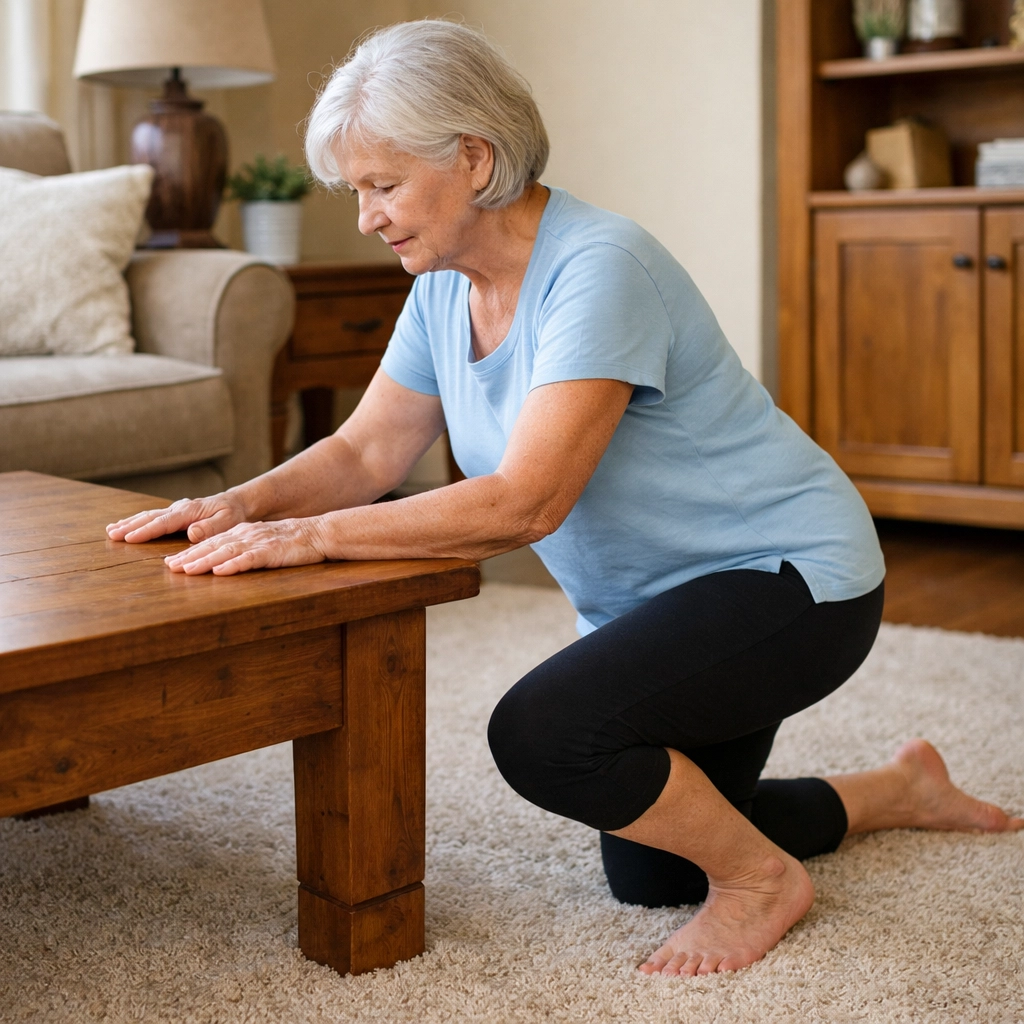
Step Five: Stand Up
This final step requires the most strength and balance, so go slowly. Bring one foot forward so it's flat on the floor in front of you, keeping the other knee on the ground. This creates a "half-kneeling" position, similar to a deep lunge.
Keep both hands firmly on your support surface. When you're ready, push down through your front foot and use your hands to help press yourself up to standing. Once you're up, take a moment to steady yourself before you try to walk.
Don't rush away from your support right away. Stand there for a few seconds to make sure you're not dizzy and your legs feel solid underneath you.
Common Mistakes to Avoid
Even when you know the method, there are a few pitfalls that can turn a safe recovery into another fall:
Rushing the process. Each step builds on the last one. Skipping ahead or moving too quickly can throw off your balance or strain your muscles.
Using unstable support. Grabbing a chair with wheels, a wobbly table, or a lightweight ottoman can lead to that support sliding out from under you. Always test that your support is truly sturdy before you put weight on it.
Trying to stand up directly from lying down. Some people try to sit up quickly and stand in one motion. This approach requires significant core strength and balance that many seniors don't have, and it's a common way to fall again.
Ignoring pain or dizziness. If something hurts or you feel lightheaded at any point, stop and rest. Pushing through pain or dizziness can lead to injury or passing out.
Attempting the method when injured. This technique is for uninjured falls. If you suspect a fracture, sprain, or head injury, stay where you are and get help.
When to Call for Help Instead
Some situations require professional assistance, and there's no shame in that. You should call for help if:
- You've tried the method and can't complete it due to weakness or pain
- You fall more than once while trying to get up
- You're alone and don't have a clear path to sturdy furniture
- You feel confused or very dizzy
- You're in significant pain anywhere
- You have a history of osteoporosis and hit your hip or back
- You take blood thinners and hit your head
If you have a medical alert system, use it. If you have a phone nearby, call a family member, neighbor, or emergency services. It's better to wait for help than to risk another injury.
Practicing the Method When You Haven't Fallen
Here's something physical therapists recommend: practice this method when you're feeling good, not after an actual fall. By rehearsing the steps in a controlled way, you'll build the muscle memory and confidence you need if a real fall happens.
Choose a time when someone else is home with you, and practice on a carpeted area if possible. Go through each step slowly. Notice which parts feel difficult and which feel manageable. This practice can also show you which rooms in your home might need better furniture placement for support.
You might discover that getting from hands and knees to high kneeling is harder than you expected, which could prompt you to work on leg strength exercises with your doctor's approval. Or you might realize your bedroom doesn't have any sturdy furniture within crawling distance of your bed, prompting you to rearrange things.
Building Strength and Confidence
The ability to get up from the floor isn't just about technique: it's also about having adequate strength and flexibility. If you struggle with any part of this method during practice, mention it to your healthcare provider.
A physical therapist can create exercises specifically designed to improve:
- Core strength for the sitting-up motion
- Leg strength for the final standing push
- Balance for maintaining stability throughout
- Flexibility for comfortable movement through each position
Many seniors benefit from exercises that mimic parts of this sequence. Getting down to and up from the floor regularly (with supervision) can be one of the best ways to maintain the functional strength needed for independence.
Preparing Your Home
While you're learning this method, take a look around your living spaces. Are there clear paths to sturdy furniture in every room? Could someone on the floor reach something solid to pull up on?
Consider the height of your furniture too. Very low couches or beds can make the final standing step more difficult. Furniture that's roughly knee-height or slightly higher often provides the best support for this method.
Keep a charged phone accessible in rooms where you spend time alone. Some people keep a small cushion or folded blanket near their bed to place under their knees if they need to get up from the floor, making the kneeling positions more comfortable.
The Bottom Line
Learning how to safely get up after a fall is an essential skill for aging independently. While the best approach is always preventing falls in the first place, accidents happen even in the safest environments.
The five-step method: roll to your side, push to sitting, get on hands and knees, rise to kneeling, then stand: gives you a systematic approach that works with your body's natural movements and balance capabilities.
Remember that this technique is for uninjured falls. If you're hurt, stay put and call for help. If you're uninjured but unable to get up using this method, that's also a sign to seek assistance rather than struggling and potentially falling again.
Consider practicing this method regularly so it becomes second nature. Talk to your healthcare provider about any difficulties you experience and whether physical therapy might help you build the strength and confidence needed to maintain your independence.
Falls don't have to mean the end of living at home. With the right knowledge, practice, and preparation, you can handle these moments safely and get back on your feet with confidence.

