
When we think about preventing falls, we usually picture grab bars, clear pathways, and sturdy shoes. But there's another factor that deserves just as much attention: your vision. The connection between what we see and how well we stay upright is stronger than most people realize. Let's explore ten essential things everyone should know about vision, balance, and fall prevention.
1. Vision Problems Double Your Fall Risk
Here's a sobering statistic: if you have any level of vision impairment, your risk of falling doubles compared to someone with normal vision. That's not a small increase: it's a complete doubling of risk.
Even more concerning, more than one in four seniors with vision impairment experience recurrent falls. This means they're not just falling once, but multiple times. Each fall increases the risk of injury and can lead to a fear of falling that restricts activity and independence.
The relationship between vision and falls isn't always obvious because vision changes often happen gradually. You might not realize how much your sight has declined until you're already at increased risk.
2. Poor Vision Can Compromise Balance by Up to 80%
This number might surprise you: when seniors experience poor vision, they can lose up to 80% of their sense of balance. That's a staggering amount of stability lost to a single factor.
Think about how you navigate your home in the dark versus during the day. Without visual input, even familiar spaces become challenging. For someone with compromised vision, every environment presents similar challenges, even in good lighting.
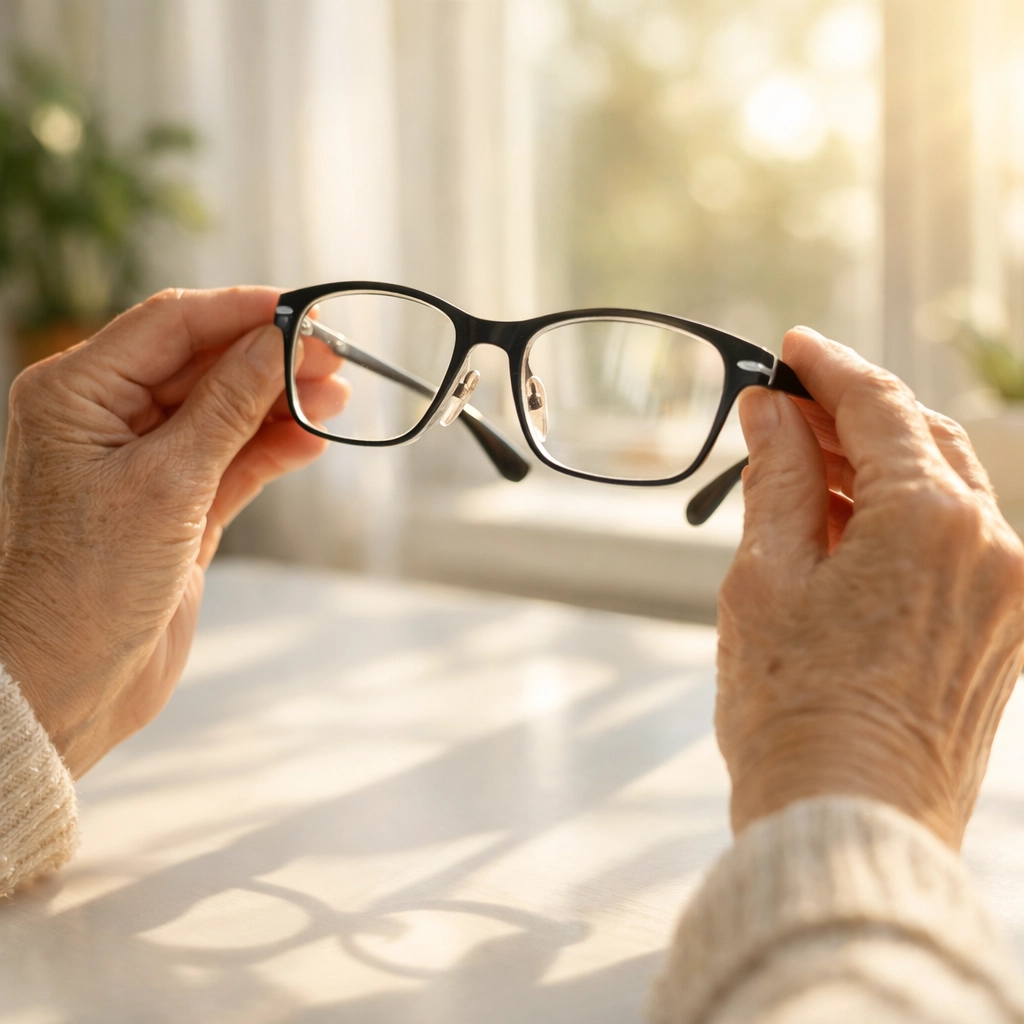
Your eyes provide constant feedback about your position in space, the distance to objects around you, and whether surfaces are level or uneven. When that visual information is unreliable or missing, your brain struggles to keep you balanced.
3. Balance Depends on Three Interconnected Systems
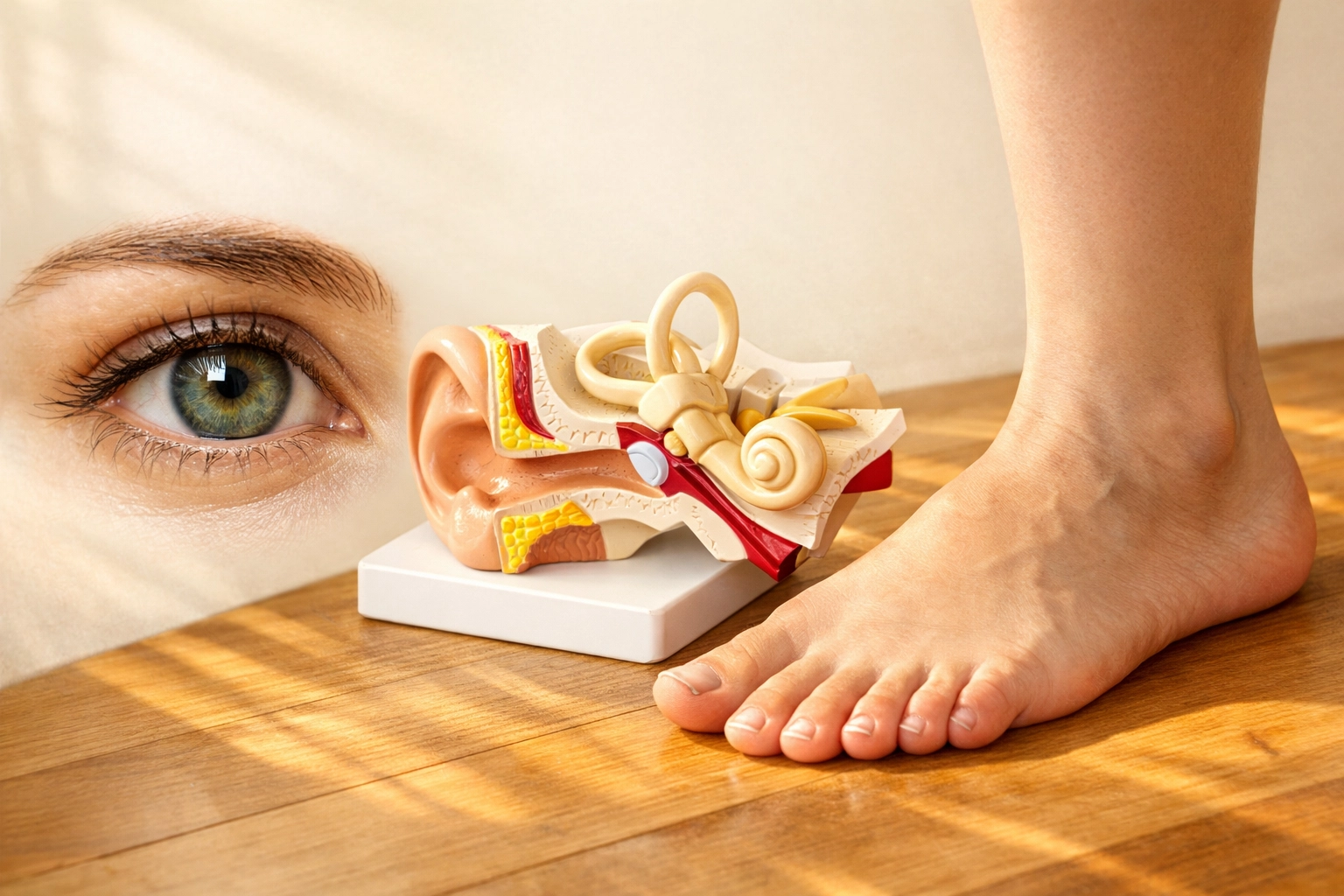
Understanding how balance works helps explain why vision is so crucial. Your body maintains balance through three different systems working together:
Vision provides information about your environment and your position in it. Your eyes tell you whether you're upright, how far away objects are, and whether surfaces are stable.
Proprioception is your sense of body position. Receptors in your muscles, tendons, and joints send signals to your brain about where your body parts are in relation to each other.
The vestibular system in your inner ear detects movement and changes in head position, helping you maintain equilibrium.
These three systems constantly communicate with your brain, creating a complete picture of your balance status. When one system is compromised, the others must work harder to compensate. If vision deteriorates, your proprioception and vestibular system bear more responsibility: but they can't always fully compensate for the loss.
4. Specific Eye Conditions Significantly Increase Fall Risk
Not all vision problems affect fall risk equally. Four conditions particularly increase the likelihood of falling:
Macular degeneration affects central vision, making it difficult to see fine details and recognize faces. It also reduces contrast sensitivity, making it harder to distinguish between similar colors or detect changes in surface levels.
Cataracts cloud the lens of the eye, creating blurry, hazy vision. They also cause glare problems and reduce depth perception, making stairs and curbs particularly dangerous.
Diabetic retinopathy damages blood vessels in the retina, potentially causing blind spots, blurred vision, and difficulty seeing in low light. These changes can make navigating familiar spaces unpredictable.
Glaucoma damages the optic nerve and typically affects peripheral vision first. You might not notice objects or obstacles to the side, increasing the risk of tripping or bumping into things.
Each of these conditions creates specific challenges for balance and navigation. Understanding which condition you're dealing with helps you and your healthcare providers develop targeted prevention strategies.
5. Uncorrected Refractive Errors Are a Modifiable Risk Factor
Here's some good news: one of the most common causes of vision impairment leading to falls is also one of the most preventable. Uncorrected refractive errors: meaning you need glasses or an updated prescription but aren't wearing them: significantly increase fall risk.
Many people continue wearing old glasses long after their prescription has changed. Others might have glasses but don't wear them consistently, especially at home. Some people only wear reading glasses but need distance correction too.
The solution is straightforward: regular eye exams and wearing the correct prescription. This simple step can dramatically reduce your fall risk without any complex interventions.
6. Multifactorial Programs Are Most Effective
While correcting vision problems helps, the most effective fall prevention approach addresses multiple risk factors simultaneously. Integrated programs that combine several elements show the best results:
Education about fall risks and prevention strategies increases awareness and motivation to make changes.
Medical assessment identifies specific health conditions and medications that contribute to fall risk.
Exercise and physical activity build strength, flexibility, and balance skills.
Environmental modification makes homes safer by removing hazards and adding supportive equipment.
Vision care fits into this comprehensive approach as one crucial element. An eye exam might reveal correctable vision problems, while physical therapy can help you adapt to vision changes you can't correct. Home modifications can compensate for reduced visual input by improving lighting and contrast.
7. Exercise Significantly Reduces Falls
Physical activity plays a vital role in fall prevention, even when vision problems exist. General exercise programs reduce falls by approximately 10%, while balance-specific exercises reduce falls by 17%.
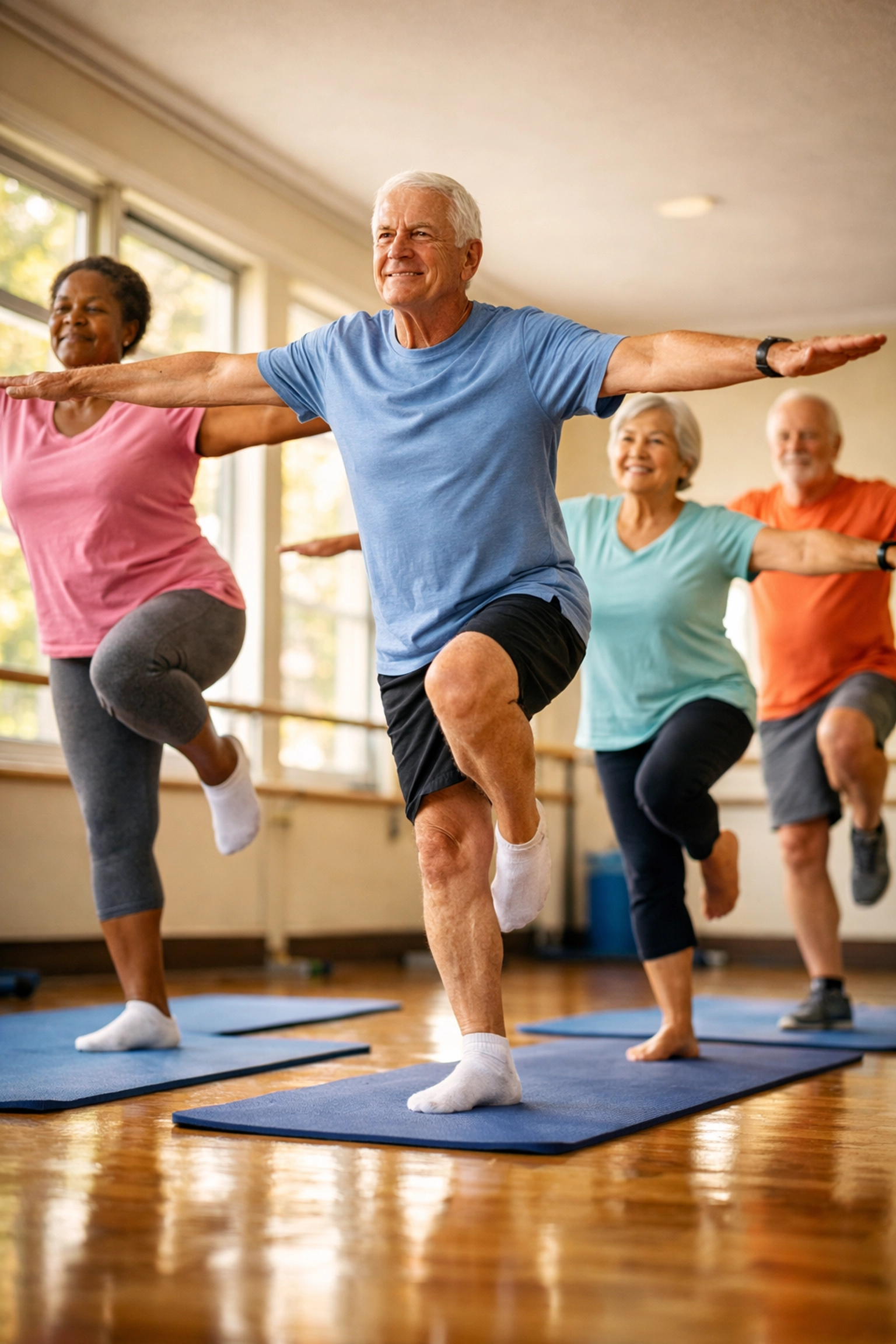
These exercises work by strengthening the non-visual systems that contribute to balance. When your proprioception and vestibular function improve through targeted exercise, they can better compensate for vision limitations.
Balance exercises might include:
- Standing on one foot
- Heel-to-toe walking
- Tai chi movements
- Weight shifting activities
- Exercises on unstable surfaces (with appropriate support)
The key is consistency. Regular practice strengthens these systems and builds confidence in your ability to maintain balance even with vision challenges.
8. Lens Choice Matters for High-Risk Individuals
If you're at high risk of falling, the type of glasses you wear matters more than you might think. Research shows that single-vision lenses are preferable to progressive or bifocal lenses for older adults at high risk.
Progressive and bifocal lenses require you to adjust your head position to see clearly at different distances. When looking down through the lower portion of these lenses (designed for reading), you're looking through a different prescription. This can distort your view of the ground, stairs, and obstacles, increasing fall risk.
For people who need both distance and reading correction, consider:
- Separate pairs of glasses for different activities
- Single-vision distance glasses for walking and navigating
- Reading glasses only when sitting and reading
Discuss your lifestyle and fall risk with your eye doctor. They can help you choose the safest option for your situation.
9. Strategic Lighting Enhances Visual Information
Lighting is one of the most overlooked aspects of fall prevention. Strategic lighting can significantly reduce fall risk by providing better visual cues, especially in areas where falls commonly occur.
Effective lighting strategies include:
Adequate brightness throughout your home, particularly in hallways, stairways, and bathrooms. Dim lighting forces your eyes to work harder and reduces contrast.
Night lights in bedrooms, bathrooms, and hallways provide orientation during nighttime trips without disrupting sleep with bright overhead lights.
Contrast lighting at the edges of stairs, highlighting the first and last steps so they're clearly visible.
Elimination of glare by using lampshades, positioning lights away from reflective surfaces, and choosing non-glare bulbs.
Motion-activated lights in frequently traveled areas so you're never navigating in the dark.
The goal is lighting that provides visual information without causing glare or harsh shadows that can be confusing or disorienting.
10. Regular Eye Examinations Are Cornerstone Prevention
Comprehensive eye examinations represent one of the chief ways to prevent falls in adults 65 years and older. These exams do more than just update your prescription: they detect eye diseases early when they're most treatable.
How often should you have your eyes examined? General recommendations include:
- Annually for adults over 60
- More frequently if you have diabetes, glaucoma, or other eye conditions
- Immediately if you notice sudden vision changes
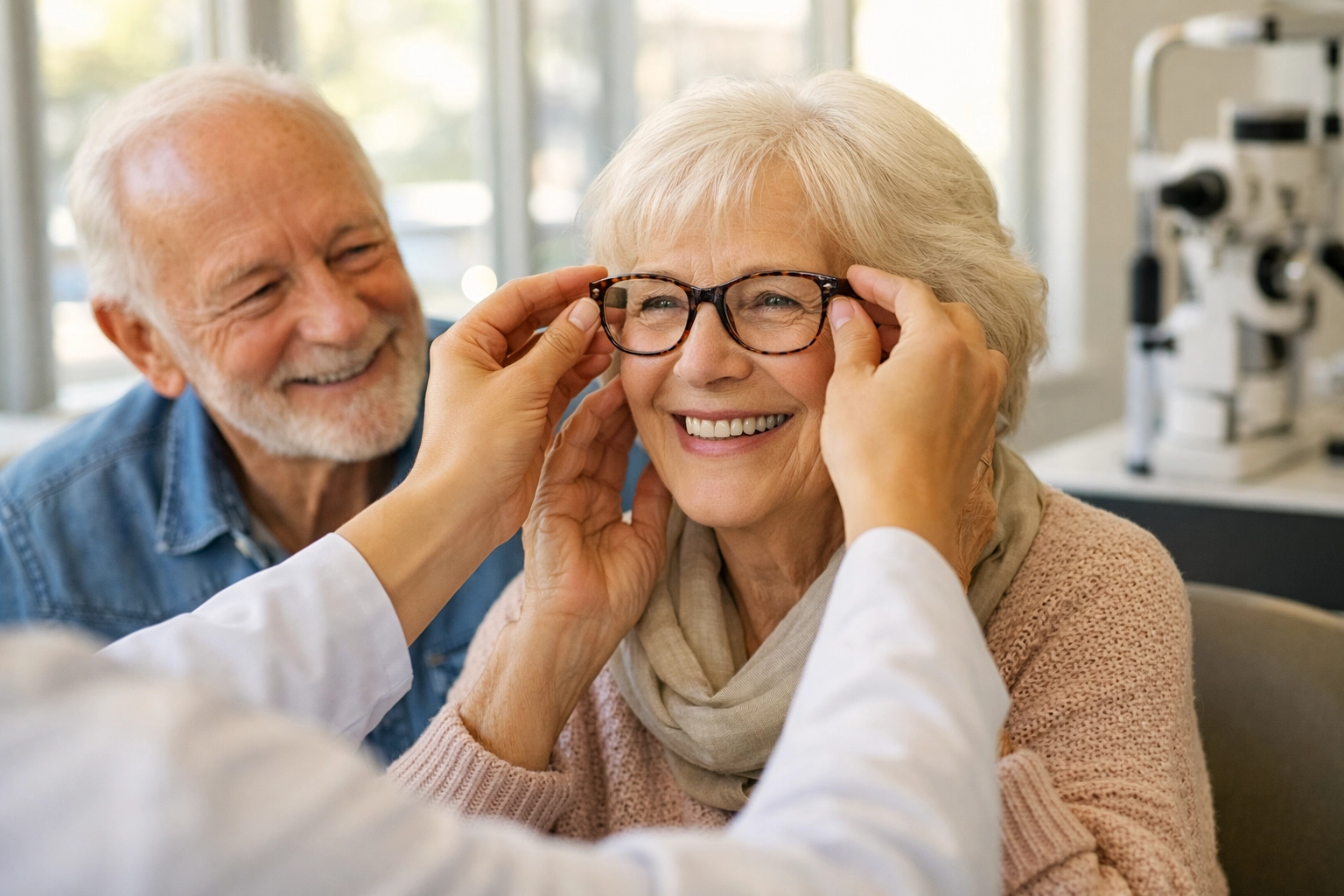
During a comprehensive exam, your eye doctor checks:
- Visual acuity (sharpness of vision)
- Peripheral vision
- Eye pressure (for glaucoma)
- Lens clarity (for cataracts)
- Retinal health (for macular degeneration and diabetic retinopathy)
- Appropriate prescription correction
The economic impact of addressing vision problems is significant too. Research suggests that attending to vision problems could save $237 to $423 million in falls-related costs. But beyond the numbers, regular eye care preserves independence, confidence, and quality of life.
Moving Forward with Confidence
Understanding the connection between vision and balance empowers you to take meaningful action. Whether it's scheduling that overdue eye exam, updating your prescription, improving your home lighting, or starting a balance exercise program, each step reduces your fall risk.
Remember that vision changes are often gradual. You might not realize how much your sight has declined or how it's affecting your balance. That's why regular checkups matter, even if you think your vision is fine.
Falls aren't an inevitable part of aging. By addressing vision problems as part of a comprehensive fall prevention strategy, you can maintain your independence, stay active, and navigate your world with confidence.

