
You probably don't think much about your bathroom until someone you love falls in it.
Then suddenly, every detail matters. The slippery floor by the tub. The distance between the toilet and the nearest support. The awkward step over the shower threshold. All these everyday features become potential hazards when your parent's balance isn't what it used to be.
If your parent has fallen in the bathroom: or you're worried they might: you're not alone. Bathroom falls are among the most common and most serious falls that older adults experience. But here's what matters: most of these falls are preventable with the right changes.
This article walks through why bathrooms are so dangerous for older adults and gives you ten specific modifications that actually reduce fall risk. No complicated renovations required.
Why Bathrooms Are Fall Central
Bathrooms present a perfect storm of fall risks. They combine slippery surfaces with movements that require balance and coordination: stepping over tub edges, standing up from the toilet, reaching for towels, turning around in tight spaces.
The numbers tell the story. Falls that happen in bathrooms are more than twice as likely to cause injury compared to falls elsewhere in the home. For people over 85, bathroom-related injuries lead to hospitalization at significantly higher rates than other home injuries.
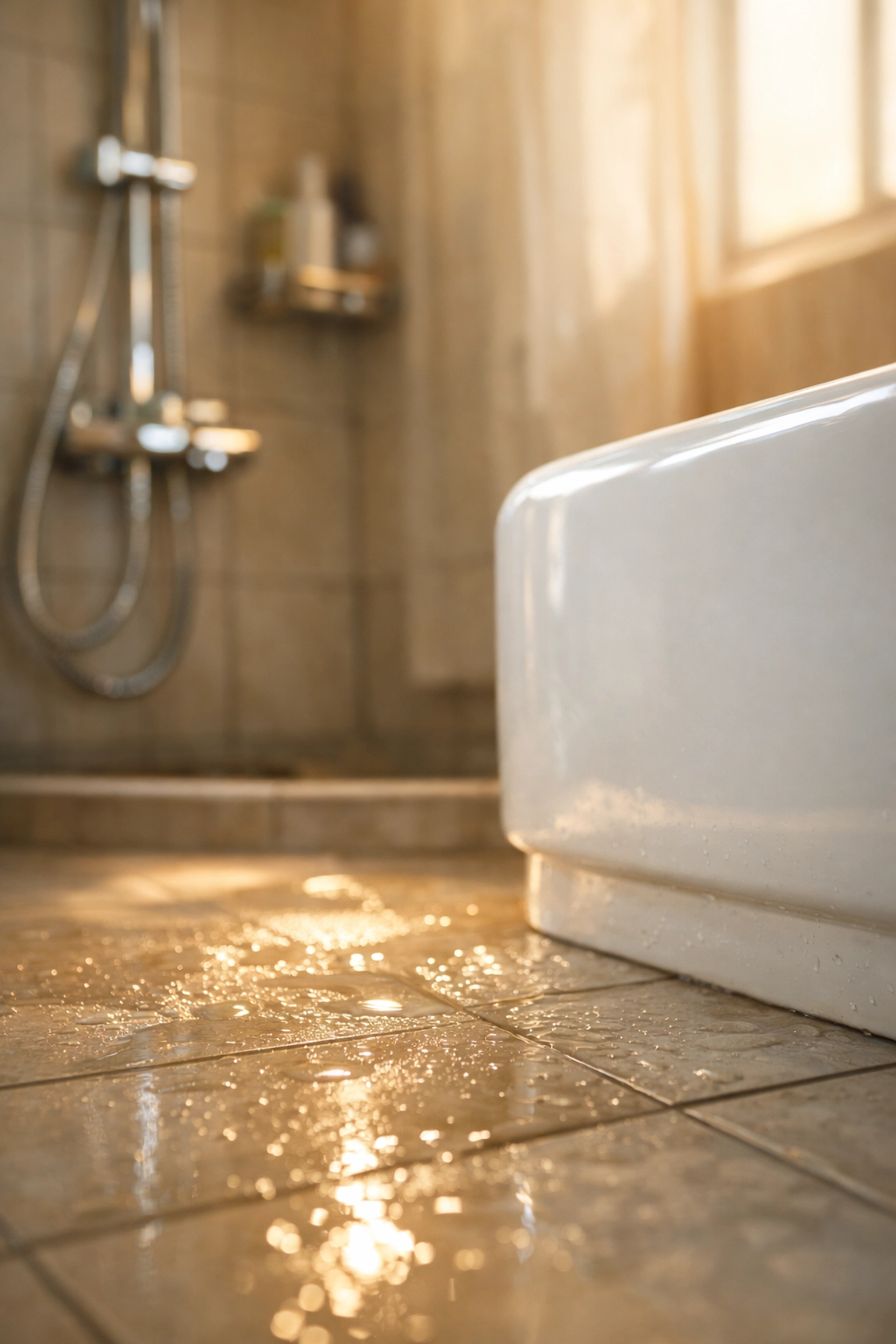
What makes bathrooms particularly treacherous? Water. When you mix wet floors, wet feet, and smooth surfaces like tile or porcelain, you eliminate the traction that helps us stay upright. Add in the fact that people are often partially undressed (making them less likely to wear proper footwear), and you've created an environment where even small balance issues become dangerous.
Understanding Why Your Parent Keeps Falling
Before jumping to solutions, it helps to understand what's actually causing the falls. The bathroom doesn't suddenly become dangerous: your parent's ability to navigate it safely changes over time.
Physical Changes That Affect Balance
As we age, several physical changes happen gradually:
- Muscles weaken, especially in the legs and core
- Balance systems become less reliable
- Reflexes slow down, making it harder to catch yourself during a stumble
- Coordination declines, making complex movements (like stepping over a tub edge while wet) more difficult
- Blood pressure can drop when standing up quickly, causing dizziness or lightheadedness
These aren't signs of failure: they're normal parts of aging. But they do increase fall risk, especially in environments that demand good balance.
Medical Conditions and Medications
Certain health conditions make falls more likely:
- Diabetes can affect sensation in the feet, making it harder to feel when you're losing balance
- Heart conditions may cause dizziness or weakness
- Arthritis and foot pain change how people walk and stand
- Neurological conditions like Parkinson's affect movement and coordination
- Thyroid problems can impact muscle strength and balance
Medications add another layer of complexity. Blood pressure medications, sedatives, sleep aids, and certain antidepressants can all cause dizziness, confusion, or affect balance. The more medications someone takes, the higher their fall risk becomes.
The Rush Factor
Urinary urgency: needing to get to the bathroom quickly: is a major contributor to bathroom falls. When your parent feels they need to hurry, they're more likely to move quickly without proper support, skip turning on lights, or try to navigate in the dark.
This urgency is particularly dangerous at night when it's combined with grogginess, darkness, and medications that may affect alertness.
The 10 Changes That Actually Prevent Falls
Now for the practical part. These modifications address the specific risk factors that lead to bathroom falls. You don't need to implement all ten at once: even a few changes can significantly reduce risk.
1. Install Professionally Mounted Grab Bars
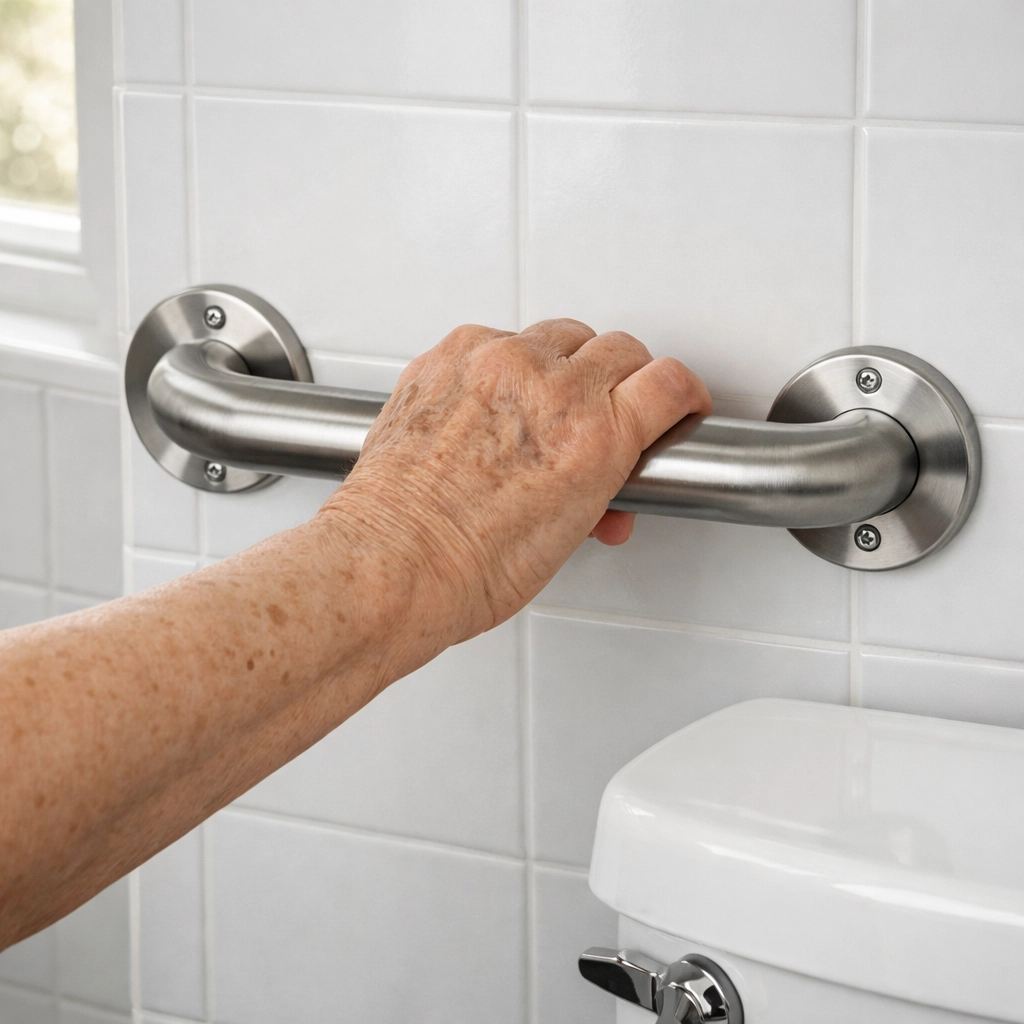
This is the single most important change you can make. Grab bars provide stable support exactly where your parent needs it most: next to the toilet and inside the shower or tub.
The key word here is "professionally mounted." Suction-cup grab bars might seem convenient, but they can fail during a fall when your parent's full weight pulls on them. Proper grab bars should be securely fastened into wall studs or blocking, capable of supporting at least 250 pounds.
Place them strategically: beside the toilet at a height that allows your parent to push themselves up, and inside the shower at multiple points for support while standing, turning, and stepping out.
2. Add Non-Slip Mats in Strategic Locations
Place textured, non-slip mats inside the shower or tub and immediately outside where your parent steps out with wet feet. These mats provide crucial traction when surfaces are slippery.
Choose mats that lie completely flat and won't bunch up or create tripping hazards themselves. Rubber-backed mats with a textured surface work well and can be washed regularly to maintain their grip.
3. Upgrade the Lighting
Poor visibility contributes to many bathroom falls. Your parent needs to clearly see where they're stepping, identify potential hazards, and feel confident moving around the space.
Install brighter overhead lights or add task lighting near the toilet and shower. Consider motion-sensor nightlights that automatically illuminate the path from the bedroom to the bathroom and inside the bathroom itself. This eliminates the need to fumble for switches in the dark.
4. Remove All Loose Rugs and Carpets
Those decorative bathroom rugs are tripping hazards. Even rugs with rubber backing can shift or catch on feet, especially when your parent is moving carefully with a walker or cane.
Remove them entirely. If you're concerned about cold floors, consider bathroom slippers with non-slip soles instead.
5. Keep Floors Consistently Dry
This sounds obvious, but it requires vigilance. Water splashes out of the shower, drips from towels, and can pool around the sink. Each puddle is a potential slip hazard.
Use absorbent bath mats that can be thrown in the wash. Wipe up spills immediately. If possible, choose matte-finish flooring rather than glossy tile, which becomes dangerously slippery when wet.
6. Ensure Proper Footwear
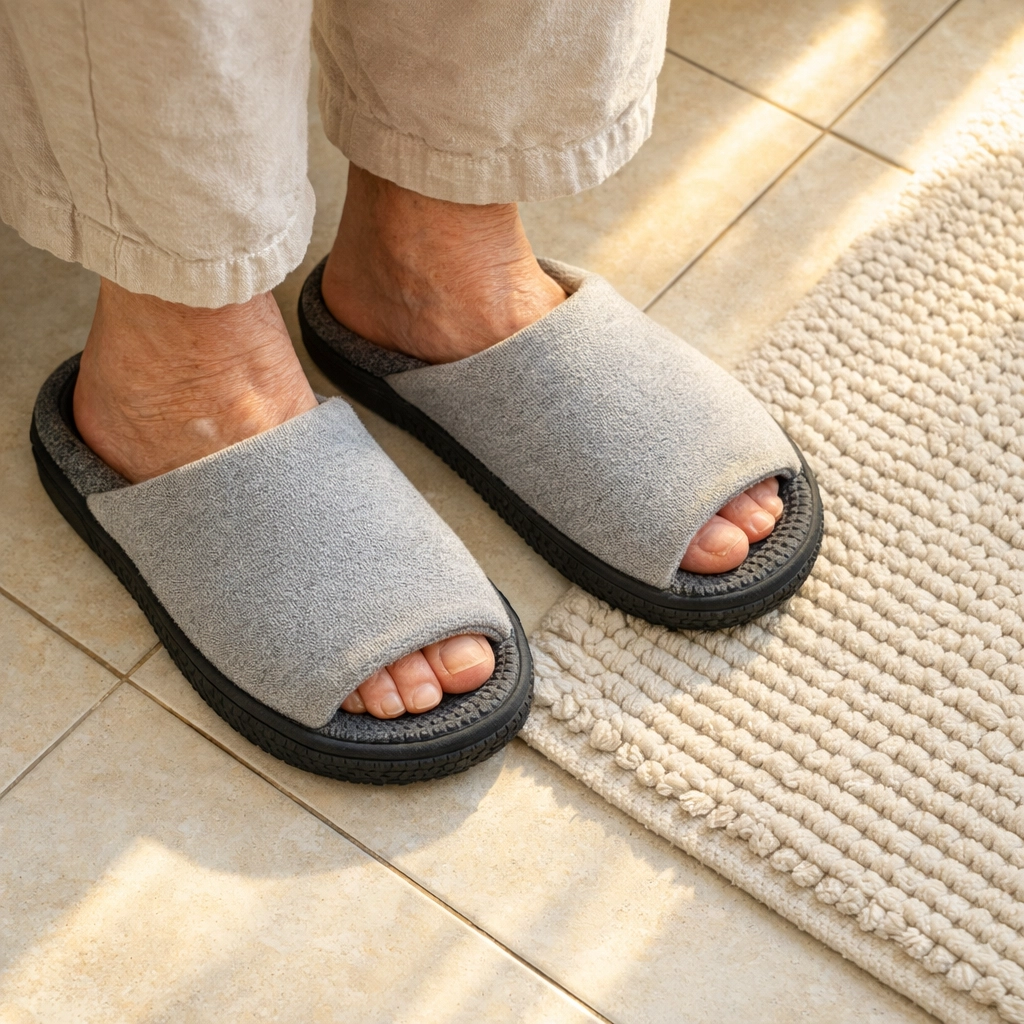
Your parent should never walk in the bathroom in socks, stockings, or bare feet. Non-slip footwear: slippers or shoes with textured rubber soles: provides essential traction.
Keep a pair of bathroom-specific slippers near the door as a reminder. Some people find slide-on styles easier to manage than shoes with backs.
7. Install a Handheld Shower Head
A handheld shower nozzle allows your parent to bathe while seated on a shower chair or tub bench. This eliminates the need to stand for extended periods on wet surfaces while reaching overhead or bending down.
Look for models with easy-to-grip handles and simple controls. The shower head should reach all areas without requiring awkward positions or excessive reaching.
8. Replace Glass Enclosures with Safer Materials
If a fall does occur, glass shower doors and enclosures can shatter and cause severe cuts. Consider replacing standard glass with safety glass, acrylic panels, or shower curtains.
This change is particularly important if your parent has already fallen once or has significant balance issues.
9. Consider Structural Modifications
For more significant mobility challenges, larger changes may help:
- A walk-in shower with a built-in bench eliminates the need to step over a tub edge
- A raised toilet seat with armrests makes sitting down and standing up much easier
- A comfort-height toilet (taller than standard) requires less knee bend and strength to use
These modifications require more investment, but they can dramatically reduce fall risk for parents with substantial mobility limitations.
10. Address the Getting-Up-Slowly Problem
Many bathroom falls happen when people stand up too quickly from the toilet, causing a sudden drop in blood pressure that leads to dizziness or fainting.
Encourage your parent to sit for a moment after finishing, take a few deep breaths, then stand up slowly while holding onto a grab bar or other support. This simple behavior change costs nothing but can prevent serious falls.
When Supervision Becomes Necessary
For parents with significant cognitive impairment or severe mobility issues, these environmental modifications might not be enough. In these situations, supervision during bathroom use may be necessary to prevent falls and related injuries.
This is a difficult transition for many families, as it involves a loss of privacy for your parent. Approach it with sensitivity, focusing on maintaining their safety and dignity while acknowledging the emotional difficulty of needing assistance with personal care.
Moving Forward
Bathroom falls aren't inevitable, even as your parent ages. The right combination of environmental changes, proper equipment, and thoughtful habits can dramatically reduce the risk.
Start with the changes that address your parent's specific situation. If they've already fallen, think about what contributed to that fall. If you're being proactive, focus on the areas where they seem unsteady or hesitant.
The goal isn't to create a clinical, hospital-like bathroom. It's to make small, practical changes that let your parent maintain independence while staying safe. Most of these modifications blend into the space and benefit everyone who uses the bathroom: not just older adults.
Your parent's safety matters. So does their dignity and independence. With the right approach, you can protect all three.

