
Finding someone on the floor after a fall can be frightening for both of you. Your first instinct might be to rush over and immediately lift them up, but that's not always the safest approach. Knowing the right way to help someone up after a fall can prevent additional injuries, to both the person who fell and to you as the caregiver.
This guide walks you through the proper techniques for assisting someone after a fall, from initial assessment to getting them safely back on their feet. Whether you're caring for a parent, spouse, or client, these steps will help you respond confidently and safely.
When NOT to Move Someone
Before we dive into the helping process, let's be clear about when you should absolutely not attempt to help someone up.
Call 911 immediately if the person:
- Hit their head during the fall
- Lost consciousness, even briefly
- Experiences severe pain
- Cannot move a limb
- Has visible deformities or swelling
- Complains of neck or back pain
- Shows signs of confusion or disorientation
- Has twisted or awkward positioning of any body part
In these situations, moving them could cause serious harm. Keep them still, keep them warm with a blanket if possible, and wait for emergency medical professionals.

The Initial Assessment: Stay Calm and Check In
Your emotional state sets the tone for the entire situation. Take a deep breath, approach calmly, and speak in a reassuring voice. Panic is contagious, and the person on the floor is likely already anxious.
Kneel down next to them and make eye contact. Ask these questions:
- "Are you hurt anywhere?"
- "Did you hit your head?"
- "Can you move your arms and legs?"
- "Where does it hurt?"
Give them time to answer. Sometimes the adrenaline from a fall masks pain initially. Watch their facial expressions and body language as they respond.
Check for obvious signs of injury: bleeding, swelling, or limbs positioned unnaturally. Look around the area to understand what caused the fall, was there a rug, a spill, or an obstacle?
If they seem disoriented or can't remember what happened, that's a red flag. Don't move them. Call for medical help.
Proper Body Mechanics: Protecting Yourself
Here's something many caregivers forget: you can't help anyone if you injure yourself in the process. Caregiver injuries are incredibly common during lifting situations, and most are entirely preventable with proper technique.
Before you begin helping, position yourself correctly:
Get low. Kneel down rather than bending at the waist. This keeps your center of gravity stable and protects your lower back.
Keep your back straight. Never bend from your back or waist. When you need to provide support, engage your core muscles and use your legs to lift.
Stay close. The further away you are, the more strain on your back. Position yourself as close as comfortable to the person you're helping.
Use your legs, not your back. Your leg muscles are much stronger and better designed for lifting than your back muscles. When you need to provide upward force, push through your legs.
If you have any doubt about your ability to help safely, don't try to do it alone. Wait for additional help, whether that's a family member, neighbor, or emergency services.

Step-by-Step: Helping Someone Up Safely
Now let's walk through the actual process. This technique allows the person to do most of the work themselves, with you providing guidance and support. It's much safer than trying to lift them directly.
Step 1: Get to a Sitting Position
First, help them sit up. This is the foundation for everything else.
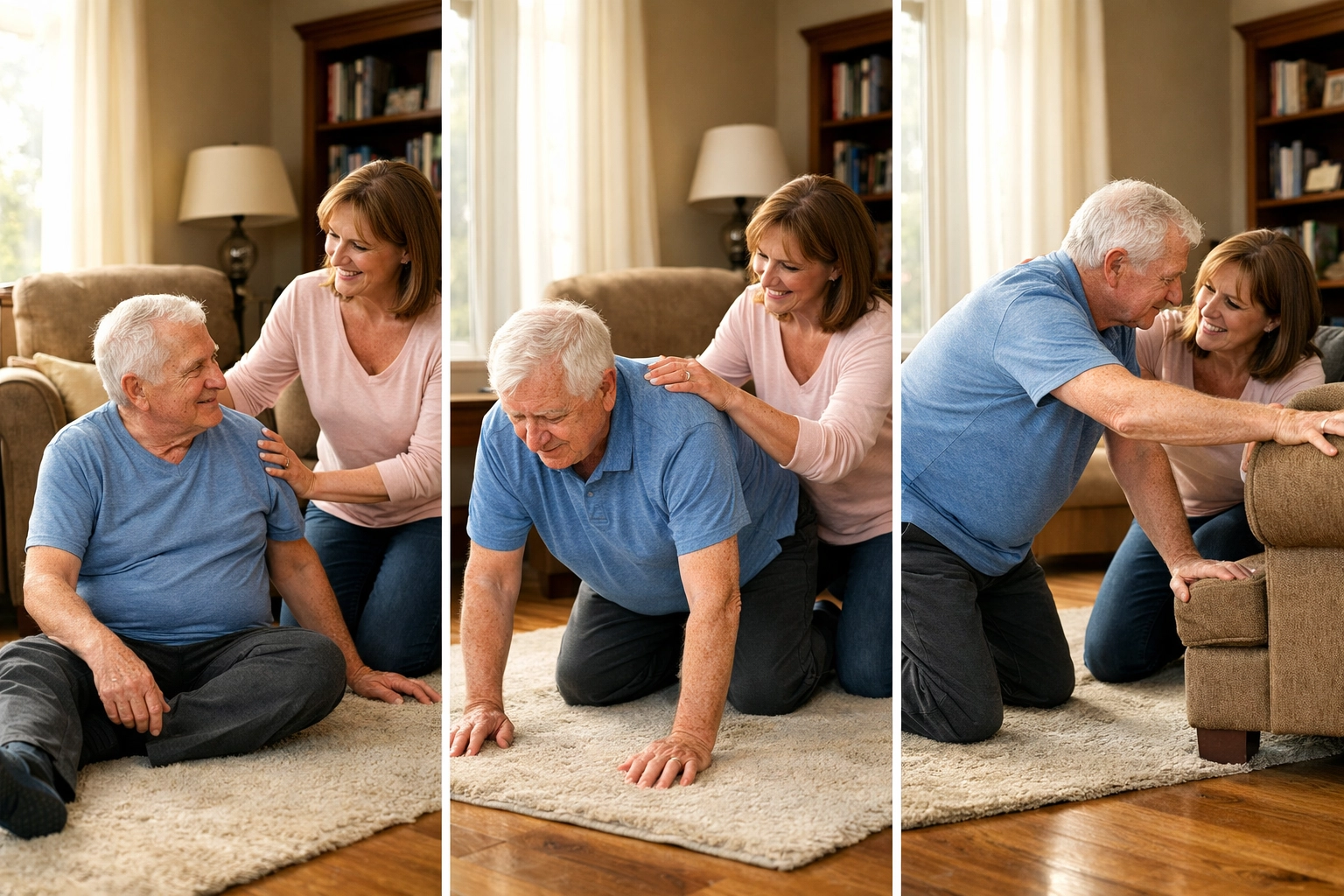
If they're on their back, place one arm behind their shoulders and help them roll onto their side. From there, use your other hand to support their hip as they push themselves into a sitting position.
Let them rest here for a moment. Sitting up after being horizontal can cause dizziness. Ask how they feel. Give them 30 seconds to adjust.
Step 2: Roll to Hands and Knees
From sitting, guide them to roll onto their side again, then onto their stomach. Help them position themselves on their hands and knees: like a crawling position.
This might feel undignified to them, but reassure them that this is the safest way. You're not lifting their full body weight, and they maintain better control.
If they can't support themselves on hands and knees, or if it causes pain, stop here and call for medical assistance.
Step 3: Crawl to Sturdy Furniture
While they're on hands and knees, have them crawl toward a sturdy piece of furniture: a heavy chair, a couch, or a bed. This furniture will be their support for standing up.
Stay close beside them as they crawl. Keep your hand on their back or shoulder for reassurance and stability, but let them move at their own pace.
Step 4: Create a Kneeling Position
Once they reach the furniture, have them place both hands on the seat of the chair or edge of the couch.
Now comes the key move: bringing one leg up. They should bring their stronger leg forward, planting that foot flat on the ground while the other knee stays down. This creates a position similar to a low lunge.
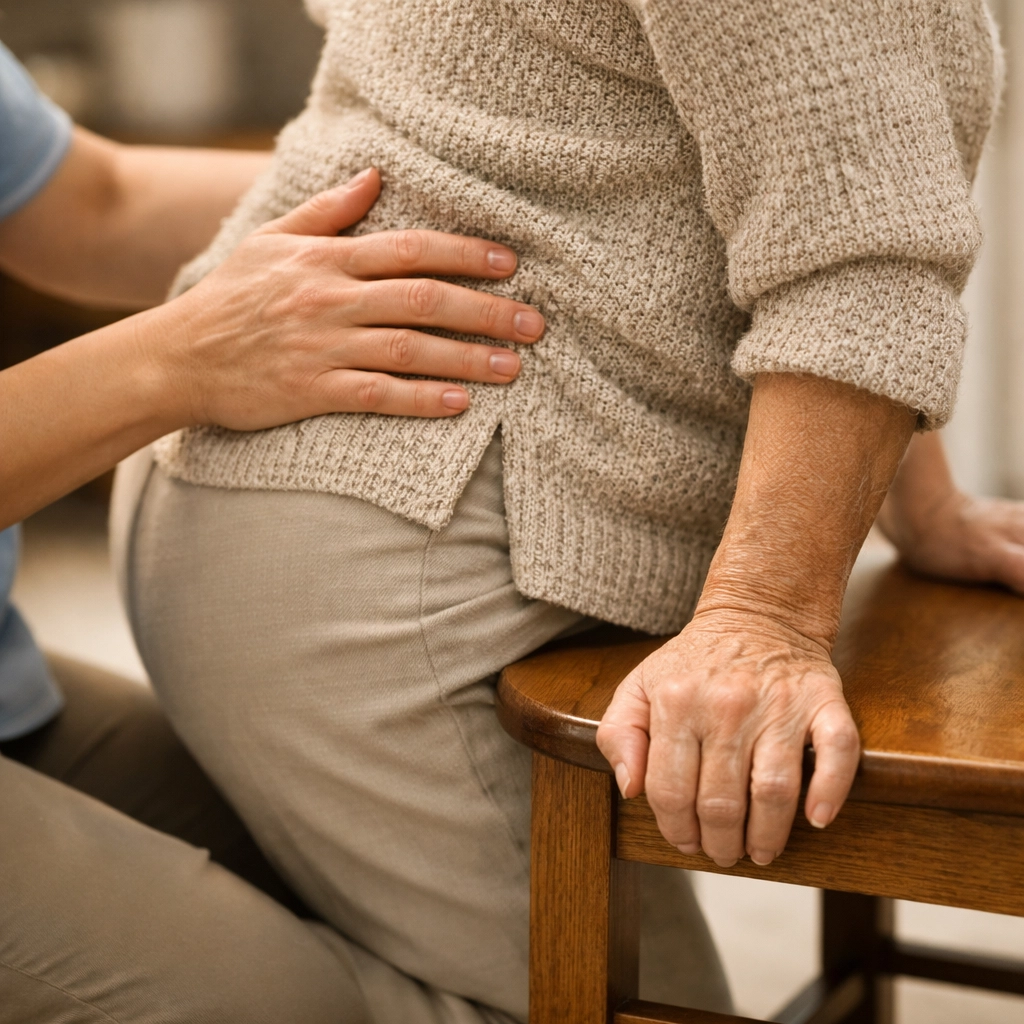
Stand beside them and place one hand on their back and one near their hip: not to lift, but to provide stability if they wobble.
Step 5: Push to Standing
This is where they do the work. Instruct them to:
- Push down firmly through their front foot
- Use their hands on the furniture to help pull themselves up
- Push through their back leg as they rise
You're there for balance and moral support. Keep your hands positioned to catch them if they start to fall backward, but resist the urge to pull them up.
Count to three together and coach them through it: "One, two, three: push!"
Step 6: Pivot to Sitting
Once they're standing, don't let them start walking immediately. Even if they insist they're fine, dizziness can hit a few seconds after standing.
Keep them facing the furniture and help them turn around. Guide them to sit down on the chair or couch. Keep your hands ready in case their legs give out.
After They're Up: Recovery and Monitoring
Congratulations: you both made it through the hard part. But you're not quite done yet.
Have them sit for at least five to ten minutes. Get them a glass of water. Watch for these warning signs:
- Dizziness or lightheadedness
- Confusion or disorientation
- Difficulty speaking
- Numbness or tingling
- Increased pain anywhere
Even if they seem completely fine, monitor them closely for the next 24 hours. Some injuries don't show symptoms immediately.
Document what happened. Write down:
- The time of the fall
- What they were doing
- Where it happened
- How they fell (forward, backward, sideways)
- Any injuries observed
- How long it took to get up
This information can be valuable for doctors and physical therapists, especially if falls become a pattern.
If You Can't Help Them Up Alone
Sometimes, despite your best efforts and technique, you simply cannot help someone up by yourself. This isn't a failure: it's reality. Size differences, mobility limitations, or your own physical constraints might make it impossible.
In these situations, you have options:
Call a neighbor or family member. Two people can often accomplish what one cannot, and the technique above works even better with an extra set of hands.
Call non-emergency services. Many fire departments will send personnel to help someone up after a fall if there's no medical emergency. Look up your local non-emergency number and keep it handy.
Use a transfer belt. If falls are happening regularly, consider investing in a gait belt or transfer belt. These tools give you better grip points and leverage without putting strain on either person's body.
Never risk injuring yourself trying to be a hero. A fall that results in two injured people is far worse than calling for help.

Prevention: The Best Strategy
Of course, the best way to handle falls is to prevent them in the first place. After helping someone up, take time to identify and address why the fall happened.
Look at the immediate environment. Was there poor lighting? A throw rug? Clutter on the floor? Fix these hazards right away.
Consider their footwear. Were they wearing socks on a slippery floor? Shoes with worn soles? Proper footwear with good traction makes a significant difference.
Think about their physical condition. Are they dizzy when standing? Do they have enough strength in their legs? Has their balance gotten worse? These issues might need evaluation from a doctor or physical therapist.
Falls are often the result of multiple factors combining at the wrong moment. Addressing each factor individually reduces the overall risk.
Building Confidence After a Fall
The psychological impact of a fall can be just as challenging as the physical one. Many people develop a fear of falling again, which can lead to reduced activity and mobility: which paradoxically increases fall risk.
Be patient and supportive. Encourage them to stay active while being smart about safety. Celebrate small victories, like walking to the kitchen or going outside with support.
If fear of falling is significantly limiting their life, consider talking to their doctor about physical therapy or occupational therapy. These professionals can help rebuild strength, balance, and confidence.
You're Doing Important Work
Caring for someone who's at risk of falling requires patience, preparation, and presence. By learning proper techniques for helping someone up after a fall, you're protecting both of you from injury while maintaining their dignity and independence.
Remember: stay calm, assess the situation, use proper body mechanics, let them do the work, and never hesitate to call for backup. With these principles in mind, you're well-equipped to handle this challenging situation safely.
Keep emergency numbers handy, practice good fall prevention, and trust your instincts. If something doesn't feel right or safe, it probably isn't. Your caution isn't cowardice( it's wisdom that keeps both of you safe.)

