
As a caregiver, few situations feel more urgent than witnessing someone you care for take a fall. Your instinct might be to rush in and lift them immediately, but taking a moment to assess the situation properly can make the difference between a safe recovery and additional injuries. This guide walks you through the correct process for helping someone get up after a fall, protecting both them and yourself.
Before You Lift: The Critical First Assessment
The minutes immediately following a fall are crucial for determining the right course of action. Never rush to lift someone without first understanding their condition.
Start by staying calm. Your demeanor sets the tone for the entire situation. Speak in a reassuring voice and let the person know you're there to help. Panic can lead to hasty decisions that increase the risk of injury.
Check for alertness and orientation. Ask simple, direct questions: "Are you okay? Can you tell me what happened? Do you know where you are?" If the person seems confused, disoriented, or lost consciousness at any point, this is a medical emergency. Call 911 before attempting to move them.
Assess for pain and injuries. Ask where they feel pain. Look for obvious signs of injury like bleeding, swelling, or limbs positioned at unusual angles. Pay particular attention to complaints about hip, back, or neck pain. These could indicate serious injuries that require professional medical intervention.
Look for head trauma. If the person hit their head during the fall, even if they seem fine, monitor them closely for signs of concussion. Symptoms like nausea, severe headache, vision changes, or increasing confusion warrant immediate medical attention.

When to Call for Emergency Help
Some falls require professional medical assistance before any movement occurs. Call 911 if:
- The person cannot move or get up on their own
- They experience severe pain, particularly in the hip, back, or neck
- There's visible bleeding that doesn't stop with gentle pressure
- A limb appears broken or deformed
- They hit their head and show signs of confusion or loss of consciousness
- They have difficulty breathing
- The person is taking blood thinners (increased risk of internal bleeding)
When in doubt, err on the side of caution. It's always better to have emergency services assess the situation than to risk causing further injury through improper movement.
Preparing for the Lift
Once you've determined it's safe to help the person up, take time to prepare properly. Rushing this stage leads to mistakes.
Get help if possible. Lifting another person, even with proper technique, places significant strain on your body. If another adult is available, enlist their assistance. Two people can distribute the weight and provide more stable support.
Clear the area. Remove any obstacles that might cause tripping, including throw rugs, furniture, or items that fell during the incident. Create a clear path to where the person will sit or stand.
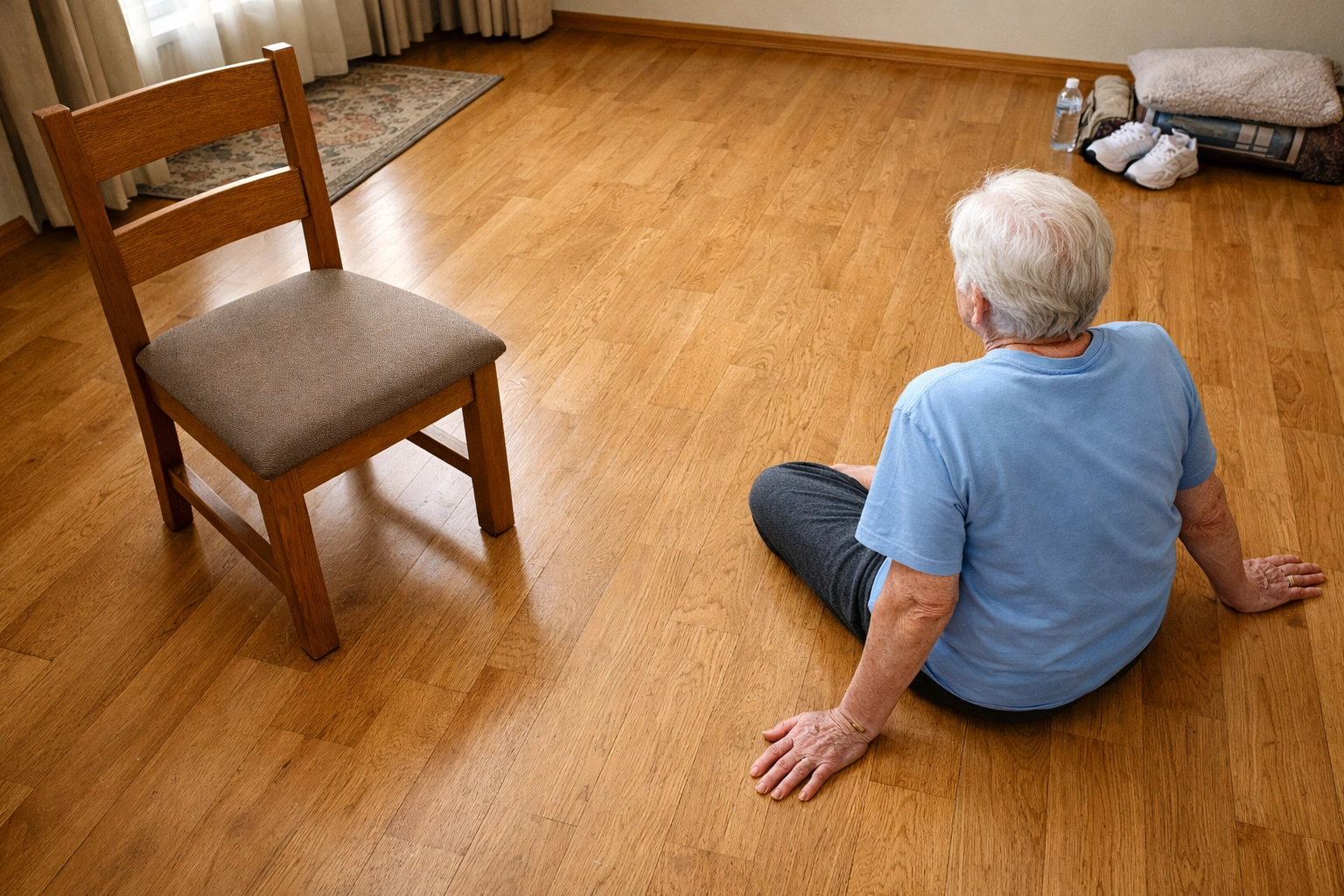
Bring supportive items nearby. Position a sturdy chair, bed edge, or other stable furniture within reach. The person will need something solid to push against when rising. Avoid using items with wheels or anything that could slide.
Check your own positioning. Wear non-slip shoes if possible. Remove anything from your pockets that might fall out. If you have a history of back problems, consider whether you're physically able to assist, or if you should wait for additional help.
The Step-by-Step Lifting Process
With preparation complete and safety confirmed, you can begin helping the person up. Move slowly and deliberately through each stage.
Step One: Establish Communication
Talk the person through what you're about to do. Explain each movement before it happens. This helps them prepare mentally and physically, and allows them to communicate if something causes pain.
Use clear, simple language: "I'm going to help you roll onto your side now" or "Let's get you into a sitting position." Wait for acknowledgment before proceeding.
Step Two: Move to a Sitting Position
If the person is lying flat, help them roll onto their side first. Place one arm behind their shoulders and help guide them into a side-lying position. From here, it's easier to transition to sitting.
Support their upper body as you help them push up into a seated position. They can use their arms to push off the floor if able. Keep your back straight and use your leg muscles, not your back, to provide support.
Once sitting, give them a moment to adjust. Ask how they're feeling. Dizziness at this stage is common, especially after lying down for several minutes. Don't rush to the next step.
Step Three: Get into Proper Caregiver Position
Kneel beside the person, keeping your back straight. Bend your knees rather than your waist. This protects your lower back from strain.
If you're on a hard floor and concerned about your knees, use a cushion or folded towel for padding. Your comfort matters too – if you're in pain, you can't provide effective help.

Step Four: Position for Standing
Help the person bend their knees so both feet are flat on the floor. Their heels should be close to their body, creating the strongest position for pushing up.
Guide them to place both hands on the stable support surface you positioned earlier. They should grip firmly with both hands. If using a chair, make sure it's heavy enough not to tip or slide.
Step Five: The Kneeling Position
Help the person shift their weight forward and move onto their knees, keeping both hands on the support surface. This creates what's sometimes called the "all fours" position.
Not everyone will have the strength or flexibility for this position. If they cannot get onto their knees comfortably, consider whether you need additional help or assistive equipment.
Step Six: The Half-Kneel
From the all-fours position, help the person bring one leg forward. The foot should be flat on the ground with the knee bent, resembling a low lunge or proposal position. The stronger leg should come forward first if possible.
They should continue gripping the support surface throughout this transition. Their hands provide crucial stability.
Step Seven: Rising to Standing
This is the most physically demanding part for both of you. Have the person push down through their forward foot and the support surface simultaneously. They're essentially performing a single-leg stand from a lunge position.
If they've placed an arm around your neck for additional support, wrap your arms around their waist. Stand up together, using your legs to lift rather than your back. Keep your core engaged and chest lifted.
Count together or use a verbal cue: "On three, we'll stand together. One, two, three." This coordination prevents jerky movements that could cause injury.

Step Eight: Ensure Stability
Once standing, don't immediately let go or start walking. Hold on while the person regains their balance. It's common to experience momentary dizziness when standing after a fall.
Ask how they're feeling. Do they feel steady? Any pain? Dizziness? Watch their face for signs of distress.
When they indicate they're ready, help them to the nearest chair or bed to sit and rest.
After the Fall: Next Steps
Even after successfully helping someone up, your job isn't finished.
Have them rest. Sitting quietly for at least 15-20 minutes allows their body to recover. Offer water unless there's a medical reason not to.
Monitor for delayed symptoms. Some injuries don't present immediately. Over the next 24-48 hours, watch for increasing pain, swelling, bruising, or changes in mobility. Confusion or sleepiness after a head impact requires immediate medical evaluation.
Investigate why the fall happened. Falls rarely occur without reason. Was there a tripping hazard? Did they feel dizzy or weak? Understanding the cause helps prevent future falls.
Document the incident. Write down what happened, including the time, circumstances, any injuries, and how the person has been feeling since. This information is valuable if medical care becomes necessary later.
Protecting Yourself as a Caregiver
Helping someone up from the floor is physically demanding. Caregiver injuries are common, particularly back strains.
Know your limits. If the person is significantly larger than you, or you have physical limitations yourself, don't attempt to lift alone. There's no shame in calling for help.
Use proper body mechanics every time. Even if you've done this successfully before, one lapse in technique can cause serious injury. Always bend at the knees, keep your back straight, and engage your core muscles.
Consider assistive devices. Transfer belts worn around the person's waist give you something secure to hold during lifting. Inflatable lift cushions can help raise someone from the floor with less physical strain on the caregiver.
Build strength. Regular exercise that strengthens your legs, core, and back makes caregiving tasks safer and easier. Consult with your doctor about appropriate exercises for your fitness level.

When Traditional Methods Don't Work
Sometimes, despite everyone's best efforts, getting someone up from the floor proves impossible. This doesn't reflect failure on anyone's part – it simply means the situation requires different resources.
If the person cannot assist with the lifting process at all, they're too heavy to lift safely, or they experience severe pain with movement, stop and call for help. Fire departments often provide lift assists for situations exactly like this. They have training and equipment specifically designed for safe floor-to-standing transfers.
Many communities also have non-emergency medical transport services that can help in these situations without the need for an ambulance.
Preparing for Future Falls
While this guide focuses on responding to falls, prevention remains the most effective strategy. Understanding how to help someone up is important, but creating an environment where falls are less likely is even better.
After any fall, assess the home environment for hazards. Consider factors like lighting, flooring, bathroom safety, and whether the person needs mobility aids they're not currently using.
Physical therapy can improve strength and balance, reducing fall risk. Vision and medication reviews with healthcare providers can identify and address contributing factors.
Final Thoughts
Helping someone up after a fall requires patience, proper technique, and honest assessment of both the person's condition and your own capabilities. By following these steps carefully, you can provide effective assistance while minimizing the risk of additional injury.
Remember that asking for help isn't a weakness – it's a sign of good judgment. Whether that means calling a neighbor, family member, or emergency services, prioritizing safety for both the fallen person and yourself is always the right choice.
Every fall is different, and no guide can cover every possible scenario. Trust your instincts, proceed cautiously, and never hesitate to seek professional medical evaluation when something doesn't feel right.

