
The bathroom is statistically one of the most dangerous rooms in your home as you age. Wet surfaces, hard tile floors, and frequent transitions between sitting and standing create the perfect environment for falls and injuries. The good news? With the right modifications, you can transform your bathroom into a safe, accessible space that supports your independence for years to come.
Most homes weren't designed with aging in place in mind. In fact, only about 10% of American homes are currently considered "aging ready." But that doesn't mean you're stuck with an unsafe bathroom. Whether you're planning ahead or responding to changing mobility needs, strategic bathroom modifications can significantly reduce your risk of falls and make daily routines easier and more comfortable.
Let's walk through the essential modifications that make the biggest difference in bathroom safety.
Why Bathroom Safety Matters
Falls are the leading cause of injury among older adults, and a significant percentage of those falls happen in the bathroom. The combination of slippery surfaces, confined spaces, and the physical demands of bathing and toileting creates multiple hazard points.
Beyond the immediate risk of injury, bathroom falls can have lasting consequences. A single fall can lead to:
- Fractures or head injuries requiring hospitalization
- Loss of confidence and independence
- Increased reliance on caregivers
- Anxiety about performing basic self-care tasks
The encouraging news is that research consistently shows bathroom modifications lead to measurable reductions in emergency hospitalizations and decreased caregiver burden. These aren't just cosmetic upgrades: they're evidence-based interventions that genuinely improve safety outcomes.
The Most Important Safety Modifications
While every bathroom is different, certain modifications provide the most significant safety benefits. These three interventions should be at the top of your priority list.
Grab Bars and Support Rails
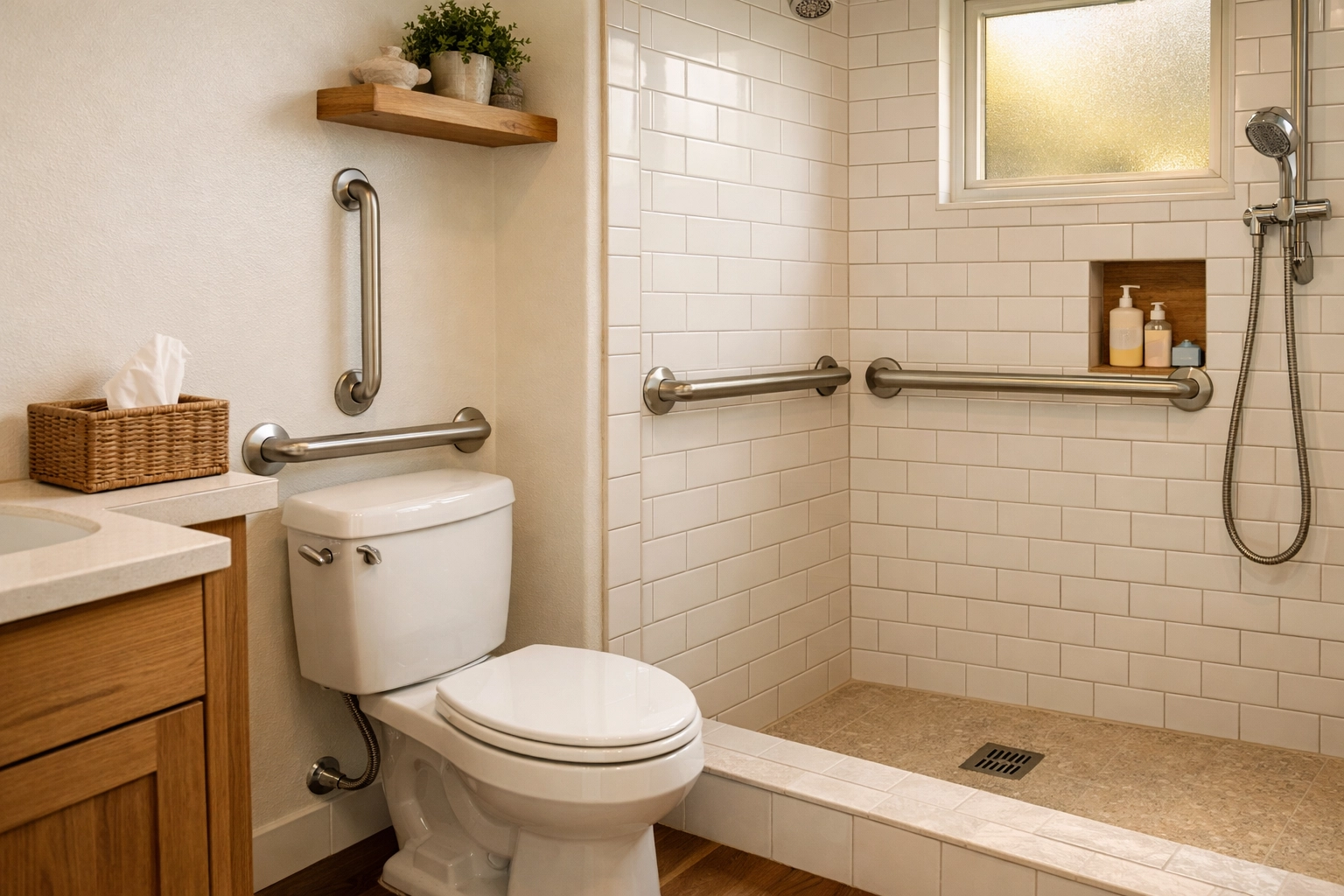
Grab bars are arguably the single most effective bathroom safety modification you can make. These sturdy rails provide crucial support during the moments when you're most vulnerable to falls: transitioning from sitting to standing, stepping in or out of the shower, or maintaining balance on wet floors.
The key is strategic placement. You'll want grab bars:
- Next to the toilet on both sides if space allows
- Inside the shower or tub
- Near the entrance to the shower or tub
- Along any wall where you might need support while moving
Quality matters here. Grab bars must be properly anchored into wall studs or backing, not just drywall. They need to support your full body weight plus additional force if you slip or grab suddenly. Decorative towel bars won't cut it: they're not designed for weight-bearing and can pull right out of the wall.
Modern grab bars come in various styles and finishes, so you don't have to sacrifice aesthetics for safety. You can find options that blend seamlessly with your bathroom décor while providing the support you need.
Walk-In Showers
If you're planning a major bathroom renovation, replacing a traditional bathtub with a walk-in shower should be your first priority. The high edge of a standard tub requires significant leg strength and balance to navigate safely: exactly what becomes more challenging as we age.
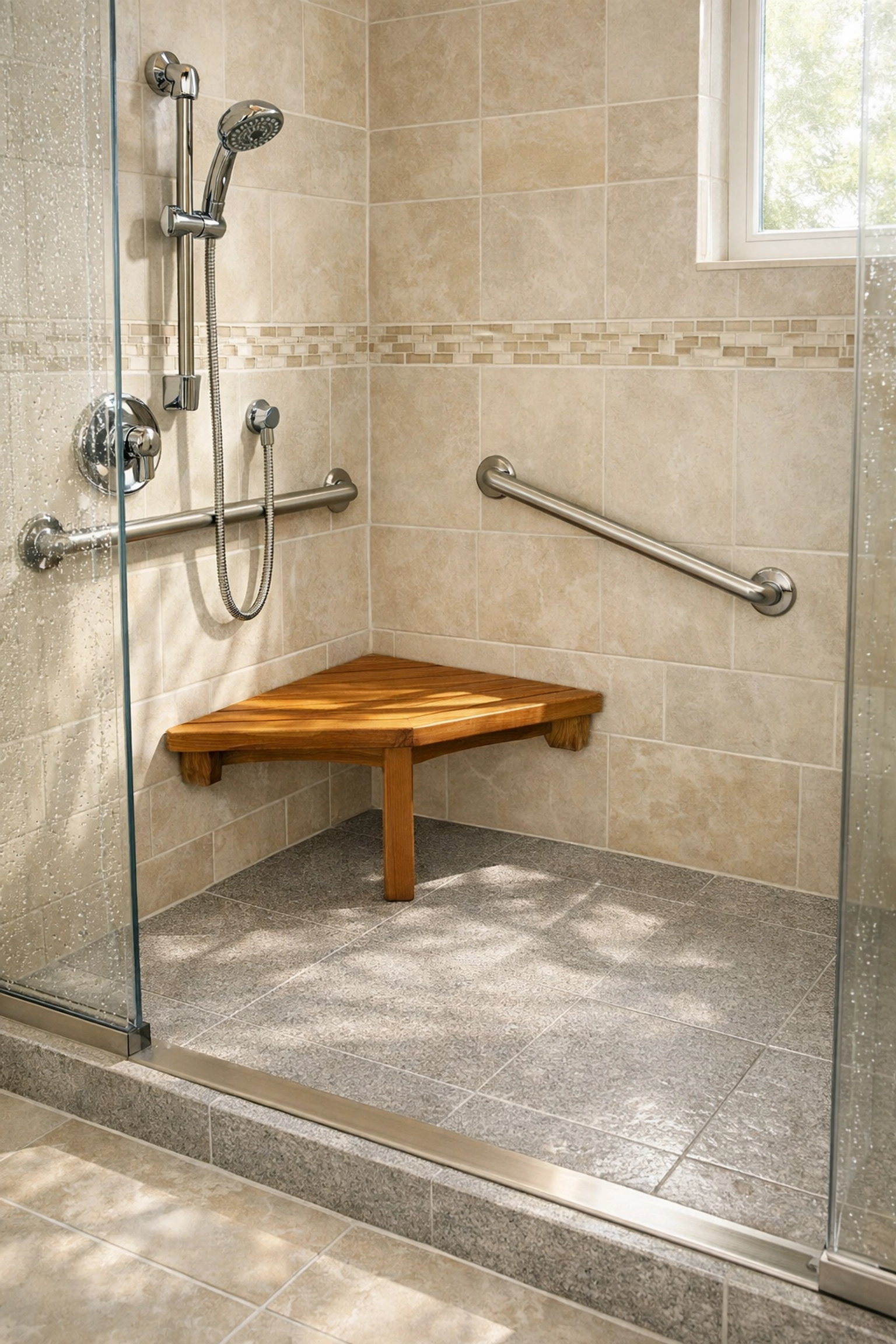
Walk-in showers offer multiple advantages:
- Zero or low threshold entry eliminates the need to step over a high tub wall
- Open design provides better maneuverability, even with mobility aids
- More room to install grab bars and seating
- Easier for caregivers to assist if needed
- Handheld shower heads allow for seated bathing
A well-designed walk-in shower includes non-slip flooring, integrated seating or a fold-down bench, grab bars at multiple points, and good drainage to prevent water pooling. The shower entrance should be wide enough to accommodate a walker or wheelchair if needed.
For those who enjoy baths, walk-in tubs with doors provide an alternative, though they do require you to wait inside while the tub fills and drains.
Non-Slip Flooring
Slippery floors are a major culprit in bathroom falls. Water splashes from the sink, condensation from hot showers, and wet feet all contribute to hazardous conditions.
Replacing existing flooring with non-slip materials makes a substantial difference. Look for:
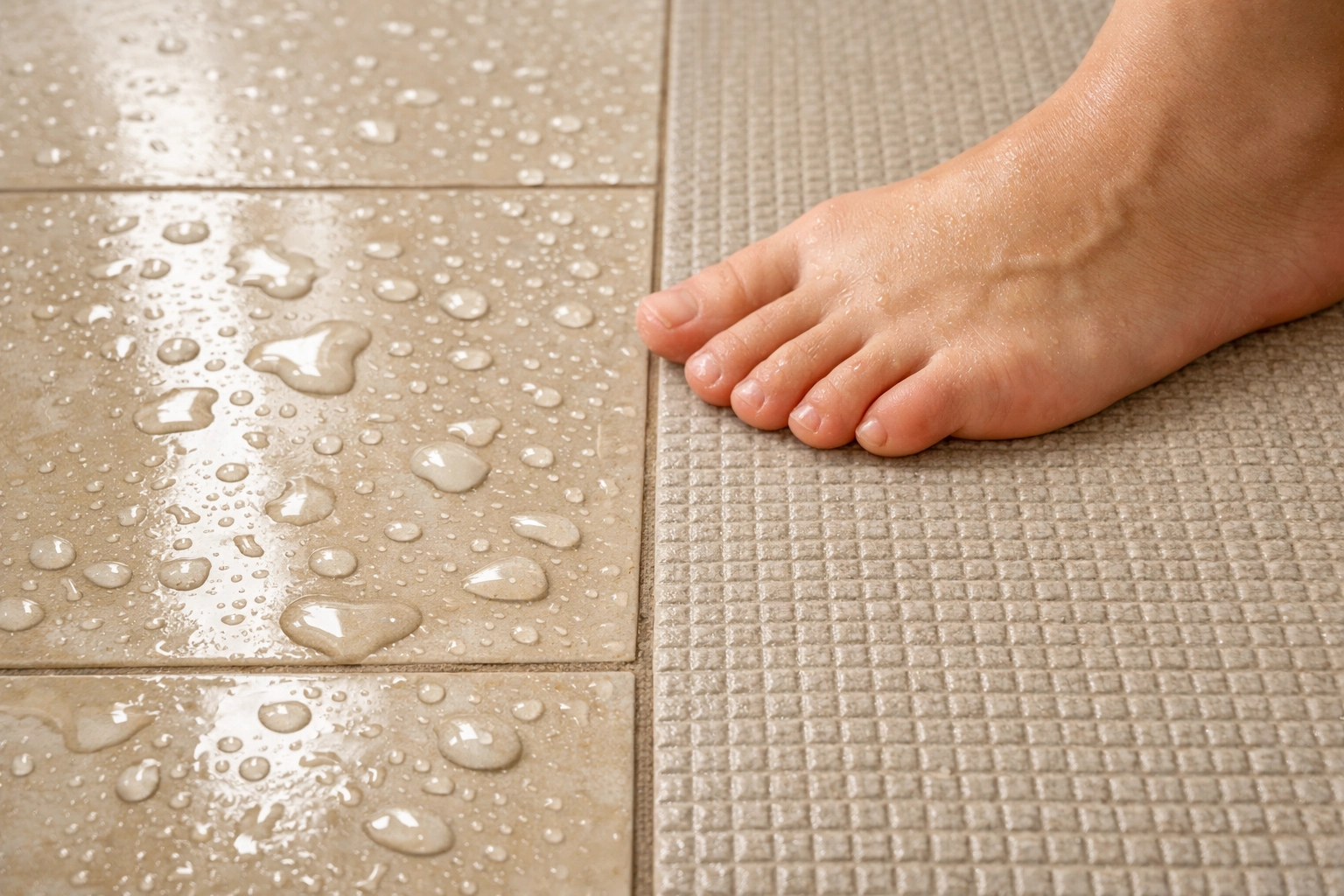
- Textured ceramic or porcelain tiles with a high coefficient of friction
- Slip-resistant vinyl flooring designed for wet areas
- Natural stone with a textured finish
If full floor replacement isn't in your budget right now, you can improve safety with non-slip bath mats that have strong suction cups or rubber backing. Avoid loose rugs that can bunch up or slide: these create tripping hazards rather than preventing them.
You can also add anti-slip strips to existing tubs and showers as an affordable interim solution. These adhesive strips provide extra traction where you need it most.
Additional Modifications to Consider
Once you've addressed the primary safety concerns, several other modifications can further improve bathroom safety and accessibility.
Raised Toilet Seats
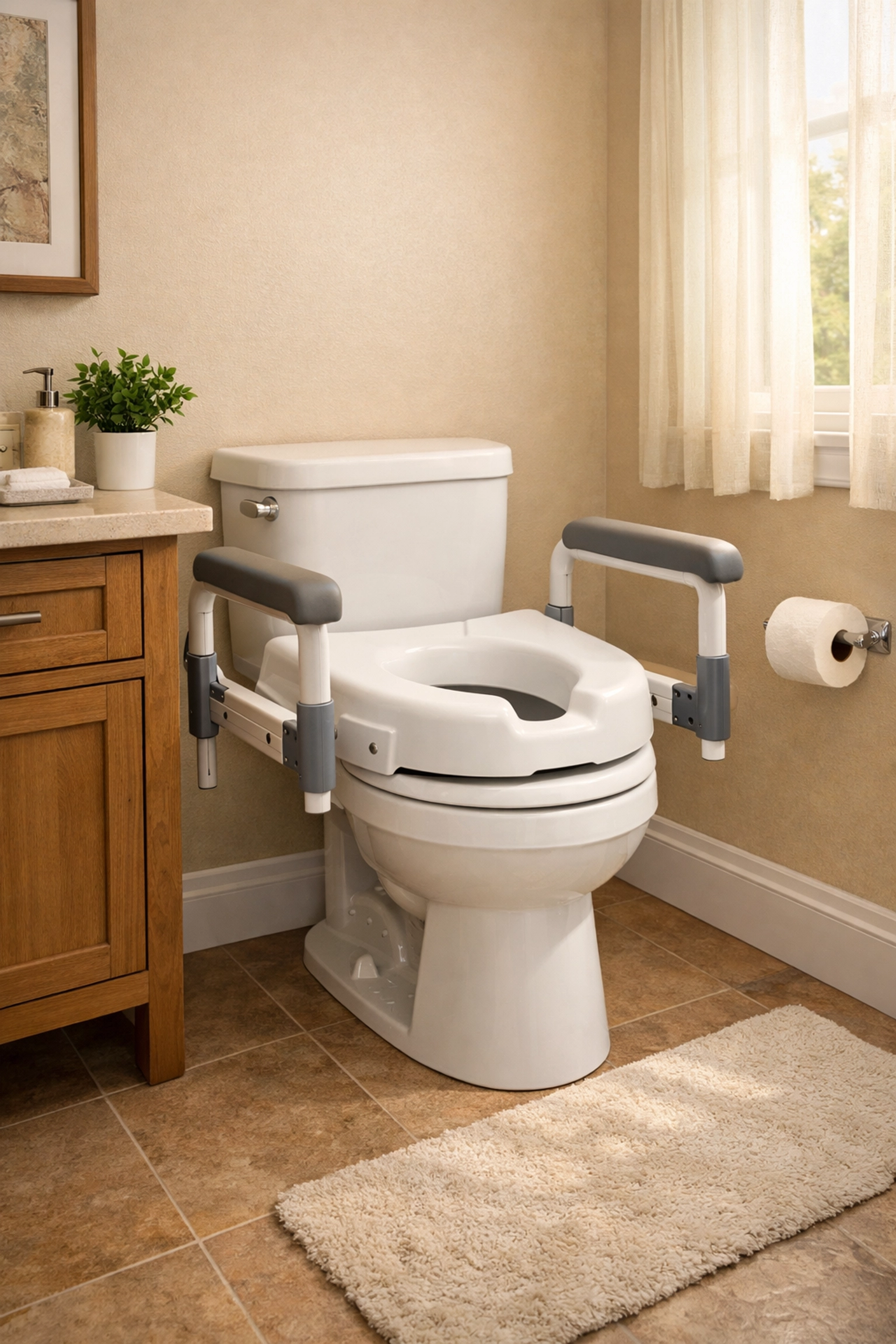
Getting on and off a standard-height toilet becomes increasingly difficult as flexibility and leg strength decline. A raised toilet seat adds several inches to the seat height, significantly reducing the strain on your knees, hips, and back.
You have two main options:
Toilet seat risers attach to your existing toilet and can be removed if needed. They're affordable and easy to install without any permanent changes to your bathroom.
Comfort-height toilets are taller models (typically 17-19 inches versus the standard 15 inches) that look like regular toilets but provide the same benefits as a riser. If you're replacing your toilet anyway, comfort-height models are worth considering.
Some raised toilet seats also include armrests, providing extra support when sitting down or standing up.
Improved Lighting
Poor lighting contributes to bathroom accidents, particularly at night. As we age, we need more light to see clearly, and our eyes take longer to adjust when moving from dark to bright spaces.
Effective bathroom lighting includes:
- Bright overhead lighting that illuminates the entire space
- Task lighting near the mirror that doesn't create harsh shadows
- Night lights for safe nighttime bathroom visits
- Motion-sensor lights that turn on automatically
Consider installing dimmer switches so you can adjust lighting levels for different times of day. The goal is consistent, adequate lighting that eliminates shadows and dark corners without creating glare.
Layout and Space Considerations
If you're planning a more extensive renovation, consider the overall layout and flow of your bathroom. Adequate space makes everything else work better.
Key spatial considerations include:
- Wide doorways (at least 32 inches clear width) to accommodate mobility aids
- Enough clear floor space to turn a wheelchair or walker
- Strategic fixture placement that minimizes the need for extensive movement
- Easy-to-reach storage that doesn't require bending or stretching
Open floor space is particularly important. You need room to maneuver safely, whether you're using a cane, walker, or wheelchair, or simply need extra space for balance.
Planning Your Bathroom Modifications
Approaching bathroom modifications strategically helps you prioritize the most important changes and make the best use of your budget.
Start by assessing your current and anticipated needs. Consider:
- What tasks feel unsafe or difficult right now?
- Which activities are becoming more challenging?
- What mobility aids do you use or might need in the future?
- Are you planning to stay in this home long-term?
You don't have to do everything at once. Many people start with essential safety features like grab bars and non-slip flooring, then tackle larger projects like walk-in showers when time and budget allow.
That said, if you're already planning a bathroom renovation for other reasons, it makes sense to incorporate aging-in-place features from the start rather than modifying again later.
Working with Professionals
While some modifications like adding grab bars can be DIY projects (if you're comfortable with basic home improvement), more extensive renovations benefit from professional expertise.
Consider consulting with specialists who understand aging-in-place design:
- Occupational therapists can assess your specific needs and recommend appropriate modifications
- Certified Aging-in-Place Specialists (CAPS) are professionals trained in home modifications for older adults
- Contractors experienced in accessible design understand both safety requirements and practical implementation
These professionals can help you anticipate future needs, not just address current concerns. They understand building codes, proper installation techniques, and design solutions that maximize both safety and usability.
Moving Forward with Confidence
Bathroom modifications aren't just about preventing falls: they're about maintaining your independence and confidence in your own home. When you feel safe in your bathroom, you can focus on your daily routine rather than worrying about your next step.
The modifications that work best for you depend on your specific needs, budget, and home layout. Start with the basics: grab bars, non-slip surfaces, and adequate lighting: then expand from there as needed.
Remember, these aren't just practical improvements. They're investments in your ability to age in place safely and comfortably, surrounded by the home and community you love.

