
Staying mobile and flexible doesn't require a gym membership or fancy equipment. A few simple stretches done consistently each day can make a real difference in how you move, how you feel, and how confidently you navigate your daily activities.
Whether you're dealing with stiffness from sitting too long, recovering strength after an injury, or simply wanting to maintain your independence, a short stretching routine can help keep your body moving smoothly.
Why Stretching Matters for Mobility
As we age, our muscles naturally become tighter and lose some of their elasticity. This isn't something to fear: it's simply part of life. But it does mean that regular stretching becomes more important over time.
When your muscles are tight, everyday movements become harder. Reaching for something on a high shelf, bending down to tie your shoes, or even turning to look over your shoulder while driving can feel uncomfortable or restricted.
Stretching helps maintain your range of motion, which is the technical term for how far and how easily your joints can move. Better range of motion means more freedom to do the things you want to do without discomfort or limitation.
Regular stretching also improves circulation, reduces muscle tension, and can even help with balance by keeping your muscles responsive and engaged.
The Benefits You Can Expect
When you commit to a daily stretching routine, you're investing in your body's ability to stay functional and comfortable. Here's what regular stretching can do for you:
- Reduce stiffness and discomfort from sitting or inactivity
- Improve flexibility in your hips, shoulders, and back
- Make daily activities easier, from getting dressed to gardening
- Support better posture by releasing tight muscles that pull your body out of alignment
- Enhance balance and stability by keeping muscles engaged and responsive
- Decrease risk of muscle strains by maintaining muscle elasticity
The best part? You can start seeing these benefits with just 10-15 minutes of stretching each day.
Lower Body Stretches
Your lower body carries you through life, so keeping your legs, hips, and lower back flexible is essential for mobility and independence.
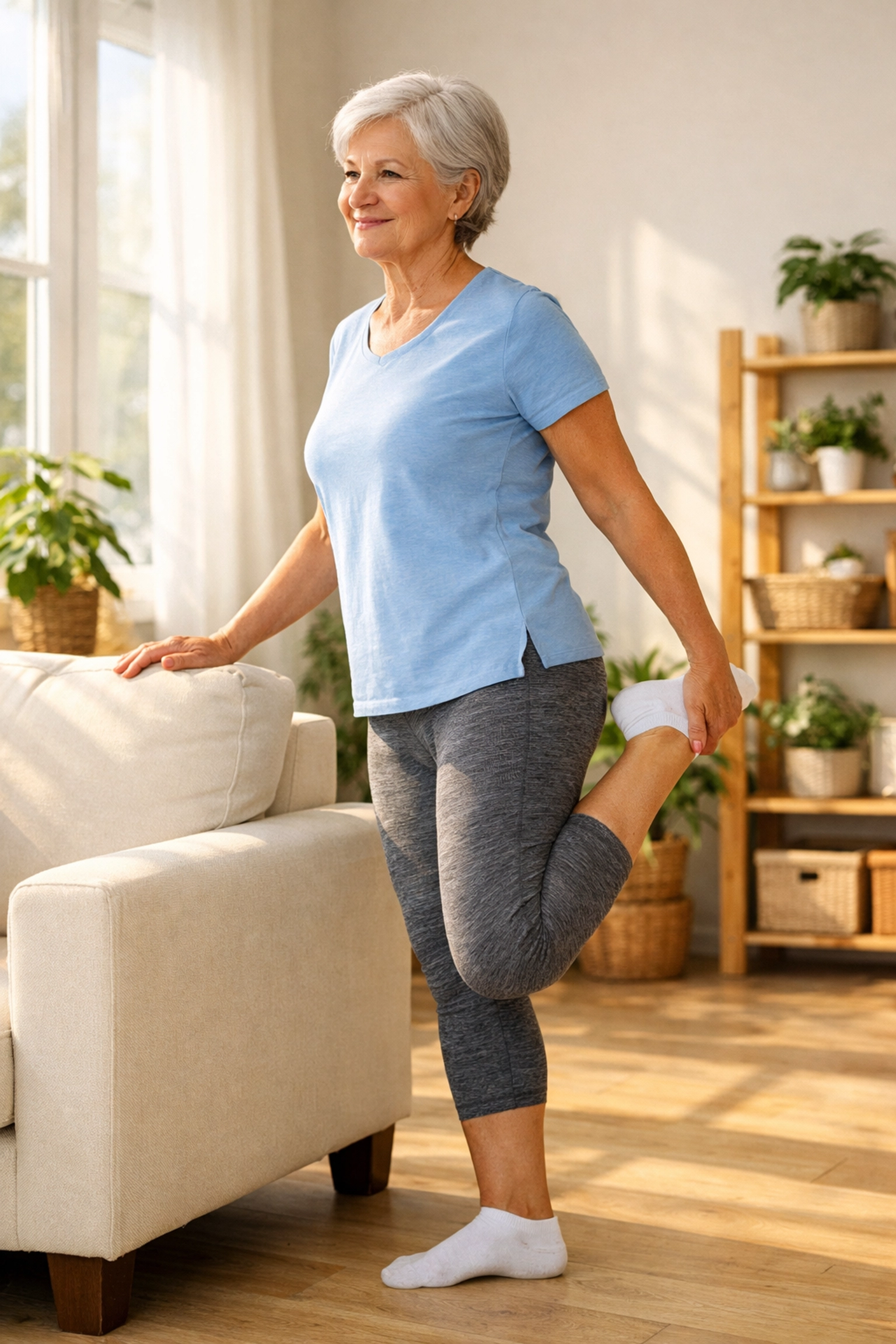
Standing Quadricep Stretch
Your quadriceps: the large muscles on the front of your thighs: can become tight from walking, sitting, or general activity.
Stand next to a wall or sturdy chair for balance. Bend one knee and gently pull your foot toward your buttocks. Keep your knees close together and your pelvis neutral (don't arch your lower back). You should feel a gentle stretch along the front of your thigh.
Hold for 30-60 seconds, then switch sides. If you can't reach your foot, use a towel or strap looped around your ankle to help.
Standing Calf Stretch
Tight calves can affect your walking gait and balance, so this stretch is particularly valuable.
Face a wall and place both hands on it at shoulder height. Step one foot back, keeping it flat on the floor with your heel down. Your front knee should bend slightly while your back leg stays straight. Lean gently forward until you feel a stretch in your back calf.
Hold for 15-30 seconds per side. You can also bend your back knee slightly to target a different part of your calf muscle.
Runner's Stretch for Hip Flexors
Despite the name, this stretch isn't just for runners. It's excellent for anyone who sits regularly, as sitting tightens the hip flexors: the muscles that connect your thighs to your lower spine.
Start in a kneeling position. Step one foot forward so your knee is bent at about 90 degrees. Keep your back knee on the ground (use a cushion if needed for comfort). Gently shift your hips forward until you feel a stretch in the front of your back hip and thigh.
Hold for 30 seconds per side. This stretch helps improve your walking stride and reduces lower back tension.
Standing Forward Fold
This full-body stretch is ideal for office workers or anyone who spends time sitting, as it releases the entire back of your body.
Stand with your feet hip-width apart. Bend at your hips (not your waist) and let your upper body fold forward. Let your arms hang naturally or rest your hands on your thighs. Don't force yourself to touch the floor: just let gravity do the work.
Hold for 15-30 seconds, breathing deeply. This stretch targets your hamstrings, lower back, and calves all at once.
Upper Body Stretches
Your upper body needs attention too, especially if you experience shoulder tightness, neck tension, or upper back discomfort.

Shoulder Blade Stretch
This simple stretch releases tension in your upper back and shoulders.
Bring one arm across your chest. Use your opposite hand to gently pull that arm closer to your body. You should feel a stretch across your shoulder blade and the back of your shoulder.
Hold for 15-30 seconds per side. This is especially helpful if you carry tension in your shoulders.
Doorway Chest Stretch
Modern life tends to round our shoulders forward from computer work, reading, or driving. This stretch opens up the front of your chest and shoulders.
Stand in a doorway and place your forearms on the door frame, with your elbows at about shoulder height. Gently lean forward through the doorway until you feel a stretch across your chest and the front of your shoulders.
Hold for 30 seconds. This stretch can improve your posture and make breathing feel easier.
Neck Stretch
Neck tension is incredibly common and can lead to headaches and upper back discomfort.
Sit or stand tall with good posture. Gently tilt your head to one side, bringing your ear toward your shoulder. You can use your hand to apply very gentle pressure if needed, but don't force it.
Hold for 15-30 seconds per side. You can also do a forward and backward neck stretch by gently tucking your chin toward your chest, then carefully tilting your head back.
Seated Back Twist
This stretch improves spinal mobility and can help release tension in your middle and lower back.
Sit in a chair with your feet flat on the floor. Cross one leg over the other. Gently twist your shoulders toward the crossed leg, using that leg for gentle leverage. Keep your hips facing forward.
Hold for 30 seconds per side. This gentle rotation helps maintain flexibility in your spine.
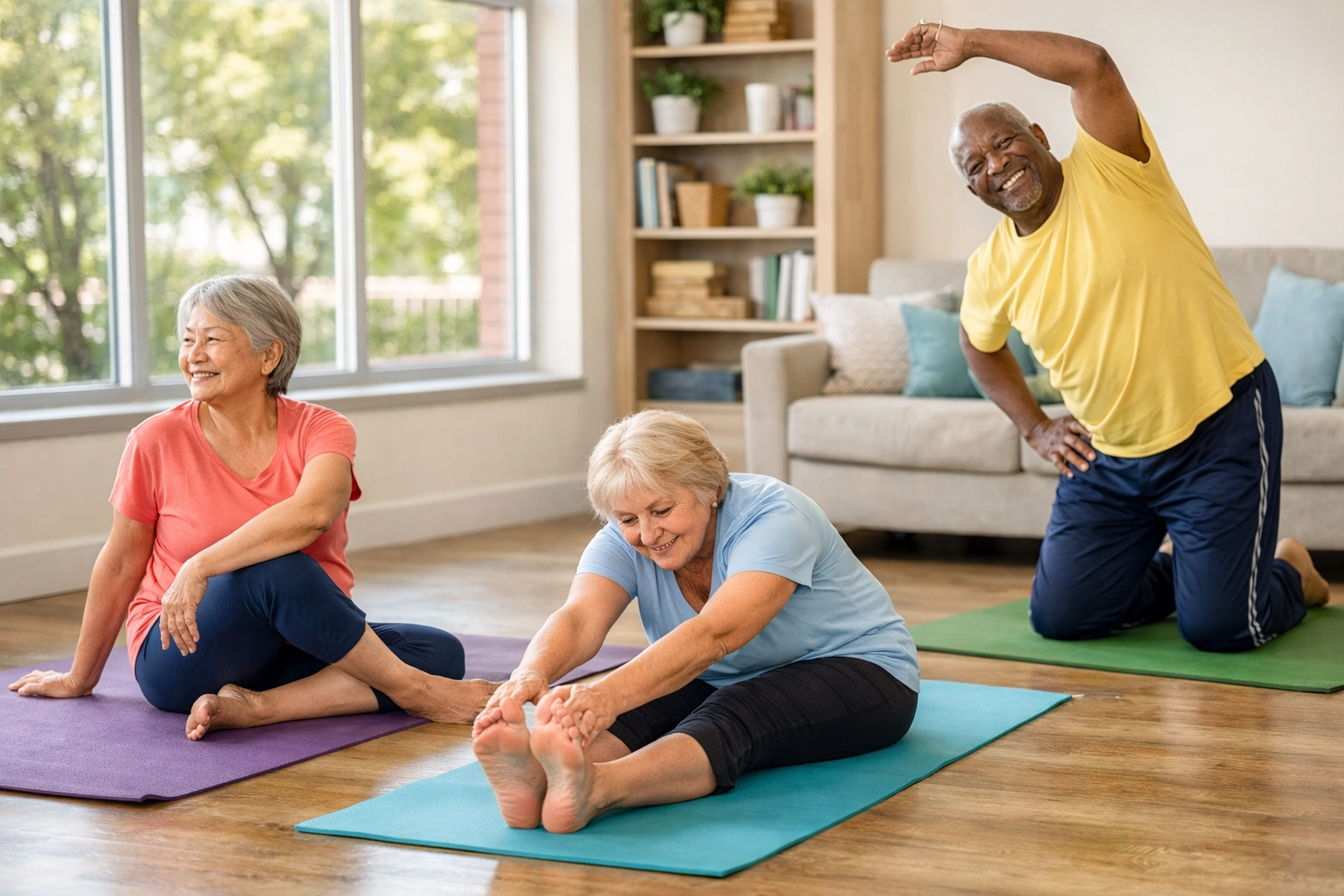
Tips for Safe and Effective Stretching
Getting the most from your stretching routine while staying safe requires following a few key principles:
Warm up first. Never stretch cold muscles. Do some light movement first: walk around your home, march in place, or do some gentle arm circles for 3-5 minutes.
Breathe normally. Don't hold your breath while stretching. Steady, relaxed breathing helps your muscles release tension.
Stretch to mild discomfort, not pain. You should feel a gentle pull or tension, but never sharp pain. If something hurts, ease off.
Hold stretches steady. No bouncing or jerking movements. Hold each stretch in a comfortable position and let your muscles gradually release.
Be consistent. Stretching once in a while won't do much. Daily practice, even for just 10 minutes, will give you real results.
Listen to your body. Some days you'll feel more flexible than others. That's normal. Work within your current range without forcing anything.
Stay balanced. Stretch both sides of your body equally, even if one side feels tighter.
Creating Your Daily Routine
You don't need to do every stretch every day. Start with a simple 5-10 minute routine that targets your tightest areas.
A basic daily routine might include:
- One or two lower body stretches (like the quad stretch and calf stretch)
- One or two upper body stretches (like the shoulder stretch and chest stretch)
- One back or hip stretch (like the seated twist or forward fold)
The best time to stretch is whenever you'll actually do it consistently. Many people prefer mornings to reduce stiffness, but evening stretching before bed can also be relaxing and beneficial.
Set a reminder on your phone, pair your stretching with another daily habit (like after your morning coffee), or do it while watching a favorite show. The key is making it part of your routine rather than something you have to think about each day.
When to Expect Results
Give yourself at least two weeks of consistent daily stretching before judging the results. Most people notice they feel less stiff and move more easily within this timeframe.
After a month of regular practice, you'll likely see more significant improvements in your flexibility and range of motion. Activities that felt uncomfortable may become easier, and you might notice better posture and less tension throughout the day.
Remember that flexibility takes time to develop, especially if you're starting from a place of significant tightness. Be patient with yourself and celebrate small improvements.
Moving Forward
Simple daily stretches are one of the easiest and most effective ways to maintain mobility as you age. They require no special equipment, can be done anywhere, and take just minutes a day.
Start small, be consistent, and listen to your body. Over time, these gentle movements can help you maintain the independence and comfort you want in your daily life.
Your body is designed to move, and giving it regular opportunities to stretch and release tension is one of the best investments you can make in your long-term mobility and quality of life.

