
One of the most effective ways to prevent falls isn't installing grab bars or clearing clutter: though those help. It's building the strength and balance your body needs to catch yourself when you stumble, adjust your footing on uneven ground, and move confidently through your day.
The good news? You don't need a gym membership, special equipment, or even much space. Physical therapists routinely recommend simple exercises that use nothing more than a sturdy chair and your own body weight. These movements target the specific muscle groups and balance systems that keep you stable and independent.
Let's walk through seven exercises that physical therapists consistently recommend for fall prevention. Each one addresses a different aspect of strength and balance, and together, they create a solid foundation for safer movement.
Before You Start: A Quick Safety Note
These exercises are designed to be safe for most people, but everyone's starting point is different. If you've had a recent fall, surgery, or significant health changes, check with your doctor or physical therapist before beginning any new exercise routine.
Always use a sturdy support: a kitchen counter, heavy table, or the back of a solid chair works well. Never use a chair with wheels or anything that could slide. Keep your phone nearby, especially when you're just starting out. And most importantly, if something causes sharp pain or feels wrong, stop and consult a healthcare professional.
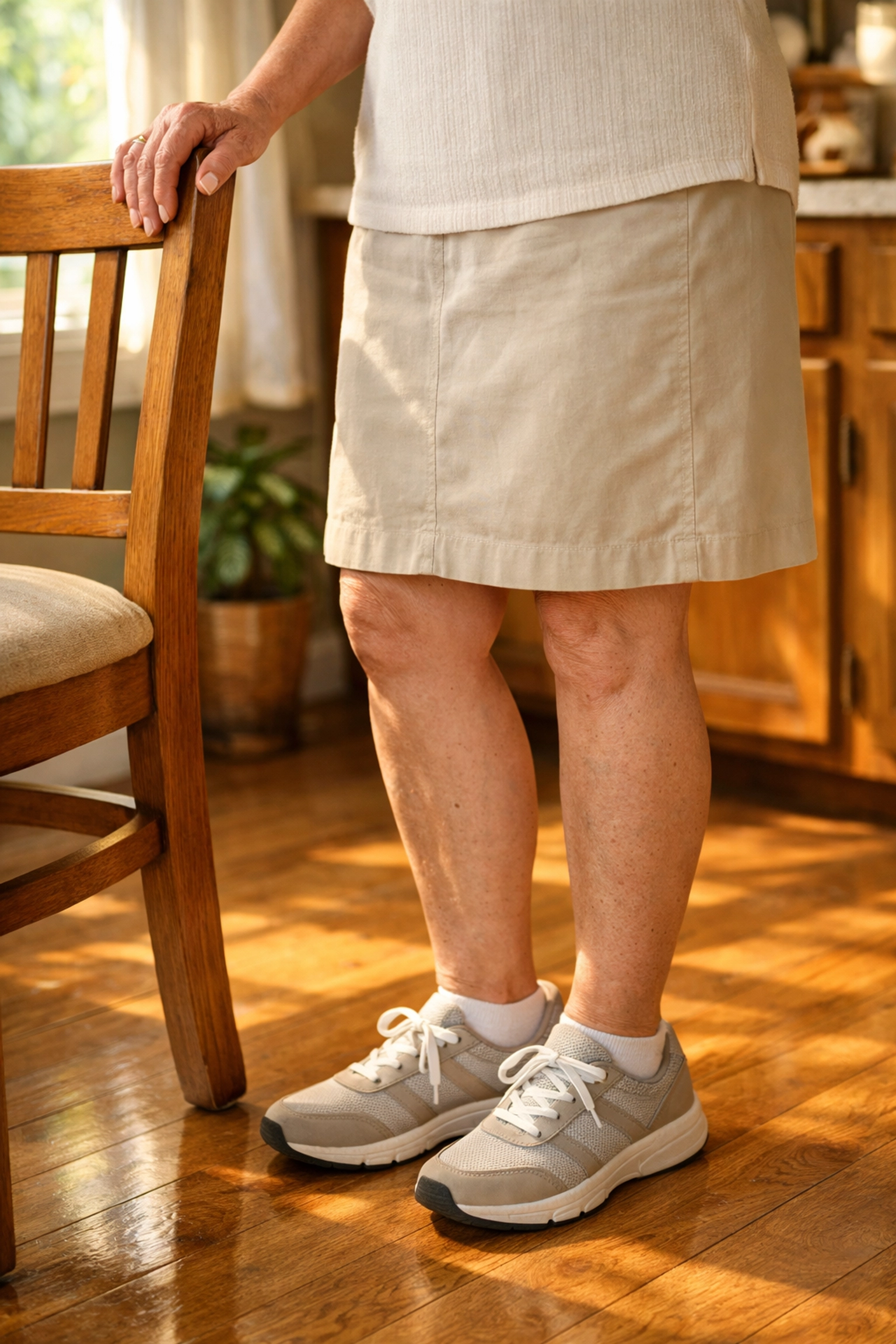
Exercise 1: Knee Raises (March in Place)
This simple movement strengthens your hip flexors and core muscles: the ones you use every time you lift your leg to step into a car, climb stairs, or get out of bed.
How to do it:
- Stand next to a counter or sturdy chair, with one hand resting on it for support
- Keep your posture upright and your core engaged
- Lift one knee up toward your chest to about hip level
- Hold for 1-2 seconds
- Lower it back down with control
- Repeat with the other leg
Target: Work up to 10 lifts on each leg. If that feels too easy, you can march in place for 20 steps total without pausing between legs.
What makes this effective is the controlled movement. You're not just swinging your leg up: you're actively lifting it and lowering it with purpose. That control translates directly to safer walking and better balance.
Exercise 2: Standing Side Leg Raises
Your hip muscles do more than you might realize. They stabilize your entire body when you're standing on one leg (which happens with every step you take), help you change direction, and keep you from swaying or losing balance.
How to do it:
- Stand behind a chair or counter with both hands resting on it
- Keep your feet about shoulder-width apart
- Slowly lift one leg straight out to the side about six inches
- Keep your toes pointing forward (don't let your leg rotate outward)
- Hold for 1-2 seconds
- Lower with control
- Repeat on the other side
Target: 10 repetitions on each leg.
The key here is keeping the movement small and controlled. This isn't about how high you can lift your leg: it's about working the muscles that keep you stable. Six inches is plenty.
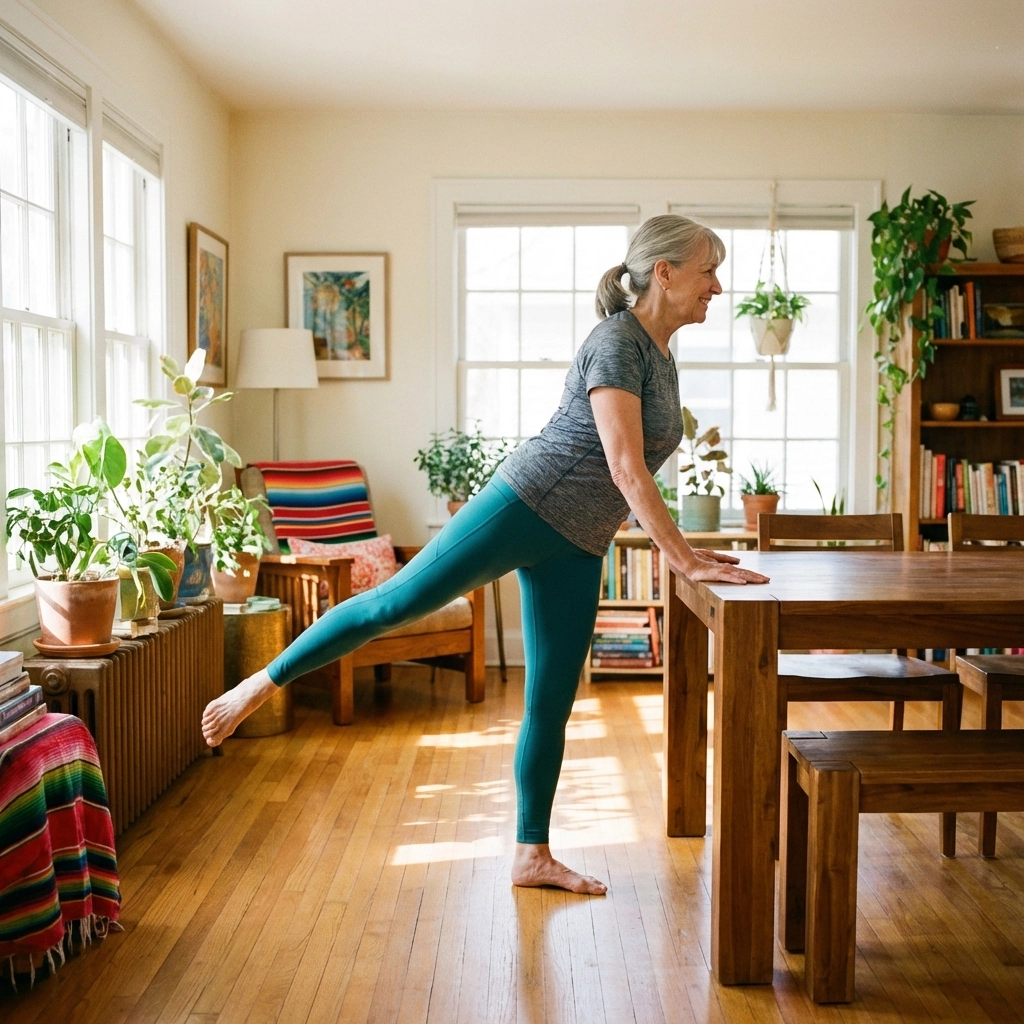
Exercise 3: Standing Heel Raises (Calf Raises)
Strong calves and ankles give you the agility to adjust your footing quickly when you step on something unexpected or lose your balance. They're also essential for walking, especially on uneven surfaces.
How to do it:
- Stand behind a chair or counter with hands resting on it
- Position your feet hip-width apart
- Rise up onto the balls of your feet, lifting your heels off the ground
- Hold for 1-2 seconds at the top
- Lower your heels back down slowly
Target: 10 repetitions.
If this feels too easy, try pausing for a count of three at the top. If it's too challenging, start with just a small lift: even a half-inch rise works the right muscles.
Exercise 4: Standing Back Leg Raises
Your hamstrings and glutes work together to keep you upright and stable. They're the unsung heroes of balance: constantly making tiny adjustments to keep you from tipping forward.
How to do it:
- Stand behind a chair or counter with hands on it for support
- Keep your standing leg slightly bent (not locked)
- Lift one leg straight back about six inches, keeping your knee straight
- Don't arch your lower back: keep your core engaged
- Hold for 1-2 seconds
- Lower with control
Target: 10 repetitions on each leg.
A common mistake here is leaning forward as you lift your leg back. Keep your upper body upright and let the leg do the work. If you're leaning forward, you're lifting too high.
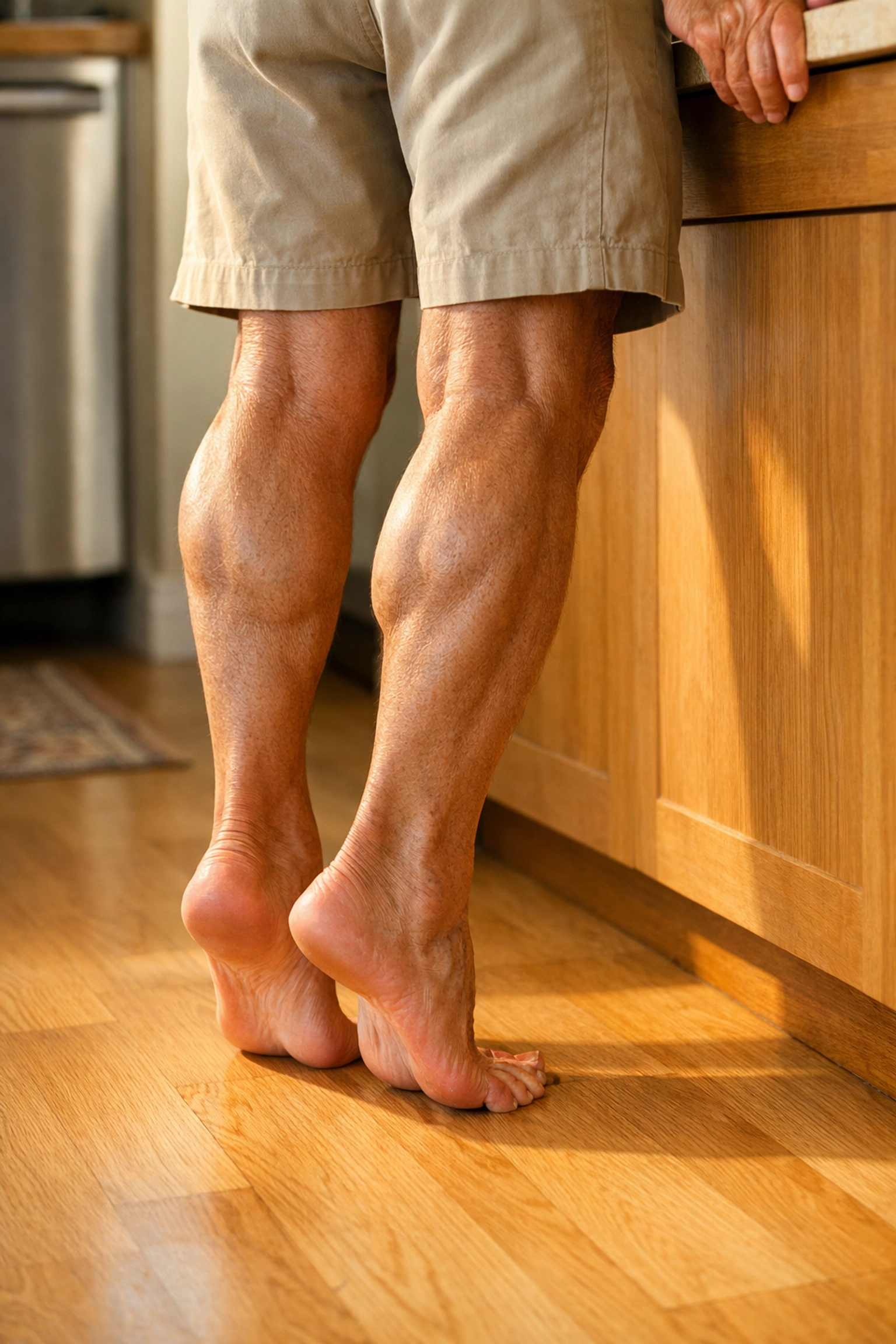
Exercise 5: Sit to Stand (Chair Squats)
This is the big one. Standing up from a chair without using your hands is one of the best indicators of leg strength and fall risk. It strengthens your quads, glutes, hamstrings, and core all at once.
How to do it:
- Sit in a sturdy chair with your feet shoulder-width apart
- Cross your arms over your chest (or hold them straight out in front)
- Lean forward slightly from your hips
- Stand up, pushing through your heels
- Sit back down with control (don't just drop into the chair)
Target: 10 repetitions.
If you can't stand without using your hands yet, that's okay. Use the armrests or place your hands on your thighs for assistance. The goal is to gradually reduce how much you rely on your hands over time.
If this becomes easy, try slowing down the lowering portion: taking 3-5 seconds to sit down builds even more strength.
Exercise 6: Climbing Steps
Stairs challenge your balance, strength, and coordination all at once. Practicing a single step builds the confidence and muscle memory for navigating stairs safely.
How to do it:
- Stand in front of a single step with a handrail if available
- Step up with one foot, then bring the other foot up to meet it
- Step back down with one foot, then bring the other down
- Repeat, alternating which foot leads
Target: 10 times up and down.
If you don't have a handrail, stand next to a counter or wall where you can place your hand for support. The step height doesn't need to be tall: even a thick book or low platform works for building strength.
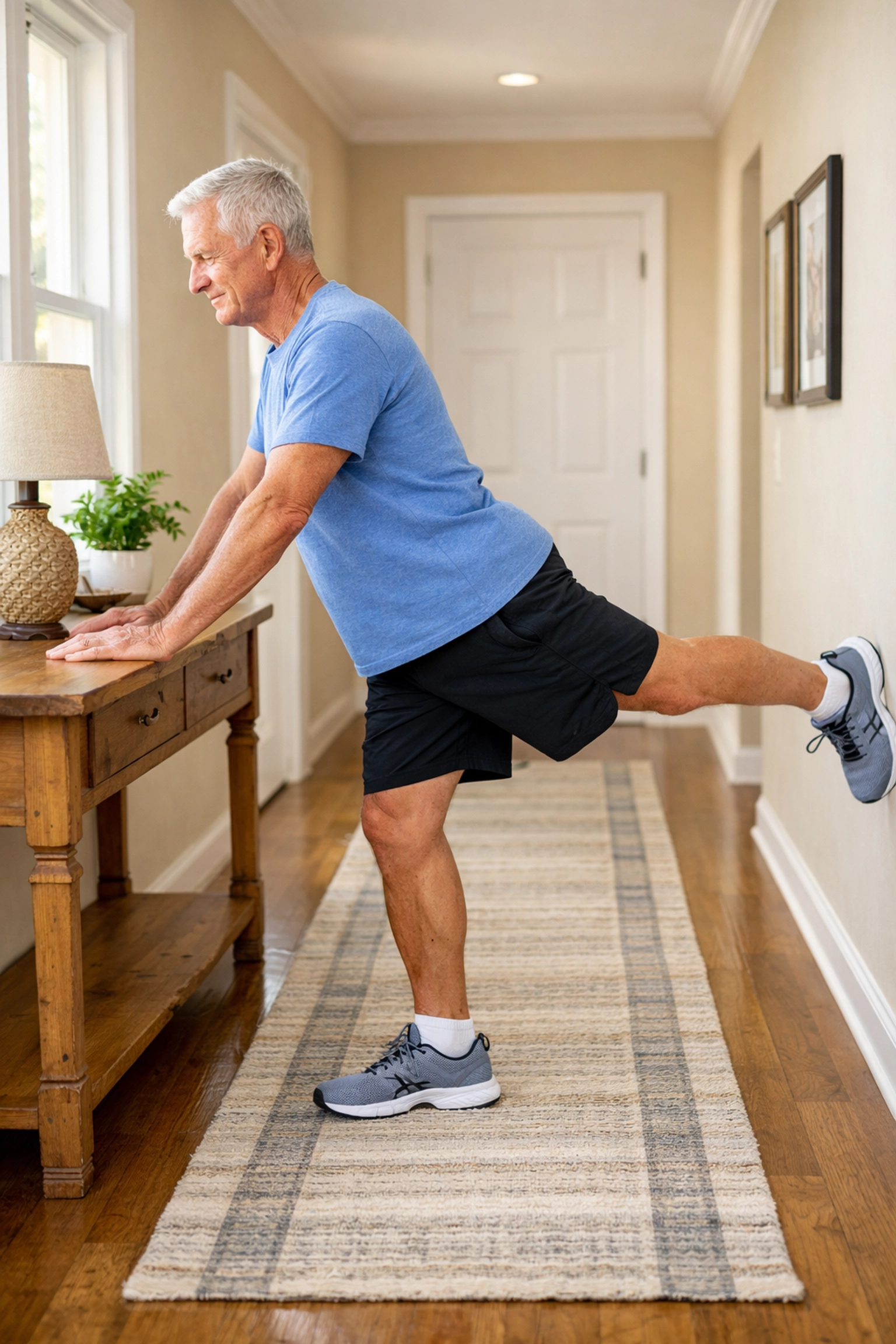
Exercise 7: Heel-to-Toe Walk
Balance isn't just about standing still: it's about maintaining control while moving. This exercise mimics the narrow base of support you use when walking and improves your stability during daily activities.
How to do it:
- Stand next to a counter or wall where you can place one hand for support
- Position your feet in a heel-to-toe stance (like walking a tightrope)
- Take a step forward, placing your heel directly in front of the toes of your other foot
- Continue walking in this heel-to-toe pattern for 20 steps
- Turn around and walk back
Target: Five complete passes (walking to the end and back equals one pass).
Keep your hand lightly touching the counter: use it for balance only, not support. Your goal over time is to use it less and less. This exercise challenges your balance more than the others, so take your time with it.
Building Your Routine: How Often and How Much
Consistency matters more than intensity when it comes to fall prevention. Physical therapists generally recommend doing these exercises three to five times per week.
You don't need to do all seven every single day. A good approach is to alternate between upper and lower body focus days, or simply do what feels manageable. Even three exercises done consistently will make a difference.
Start with one set of each exercise (the recommended repetitions), and pay attention to how you feel. Some mild muscle soreness the next day is normal: it means you're building strength. Sharp pain or dizziness is not normal and warrants a call to your healthcare provider.
As the exercises become easier, you can progress by:
- Increasing repetitions (working up to 15-20)
- Slowing down the movements (especially the lowering phase)
- Reducing hand support (using one finger, then just hovering your hand nearby)
- Holding positions longer

The Bigger Picture
These exercises work because they target the specific ways your body prevents falls. Strong legs keep you upright. Good balance lets you adjust when something unexpected happens. Core strength ties it all together.
But exercise is just one piece of fall prevention. It works best alongside proper footwear, good lighting, regular vision checks, medication reviews, and a home environment free of trip hazards. Think of strength and balance training as your body's first line of defense, supported by smart environmental choices.
When to Seek Professional Help
While these exercises are safe for most people, working with a physical therapist: even for just a few sessions: can be incredibly valuable. They can assess your specific risk factors, correct your form, and design a personalized program that addresses your unique needs.
Consider professional guidance if you:
- Have fallen in the past year
- Feel unsteady or dizzy frequently
- Avoid certain activities because you're worried about falling
- Have difficulty with any of these exercises despite practicing regularly
- Have a chronic condition that affects balance (like neuropathy, Parkinson's, or vestibular disorders)
Many people work with a physical therapist initially to learn proper form and build confidence, then continue the exercises independently at home. Medicare and most insurance plans cover physical therapy for fall prevention when prescribed by a physician.
Getting Started Today
You don't need to wait for a perfect moment or clear an hour from your schedule. Pick one exercise: maybe the sit-to-stand since you're already sitting and standing throughout the day anyway. Do it a few times today. Add another exercise tomorrow.
Small, consistent steps build significant strength over time. And that strength translates directly to confidence, independence, and safety in your daily life. Your future self will thank you for starting today.

