
When you first bring a walker home, it feels like a newfound sense of freedom. It’s that extra set of "legs" that promises to keep you steady as you navigate your home, the grocery store, or the park. But here’s the thing: just because a walker is designed for stability doesn’t mean it’s foolproof. In fact, many people inadvertently use their walkers in ways that actually increase their risk of a fall.
I’m Brian Kerr, and here at Fall Guys Products, we’ve spent a lot of time looking at how people move. We want you to feel confident, not cautious. Using a walker correctly is a skill, much like driving a car or riding a bike. It requires a bit of technique to ensure that the device is working for you, rather than against you.
If you’ve been feeling a bit "off-balance" even with your equipment, you might be making one of these seven common mistakes. Let’s break them down and look at how to fix them so you can get back to moving with total reassurance.
1. Using the Walker as a Moving "Closet"
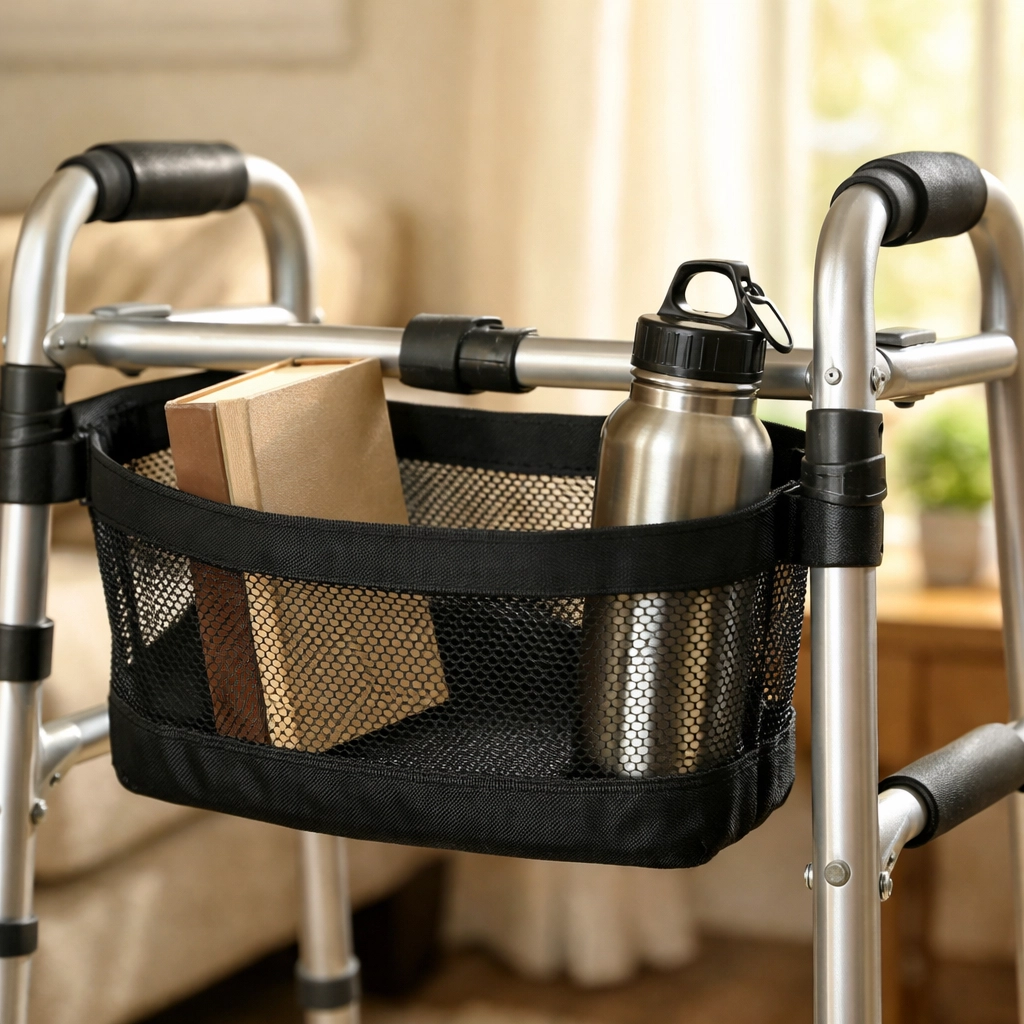
It’s tempting, isn’t it? You’re heading from the kitchen to the living room and you have a book, a bottle of water, and perhaps a heavy handbag. The natural instinct is to hang those bags over the handles or hook them onto the side of the frame.
The Mistake: Hanging items off the side of the walker completely shifts its center of gravity. Walkers are engineered to be stable when weight is distributed evenly through the four legs. When you hang a three-pound purse on the left handle, the walker wants to tip to the left. If you hit a small bump or a rug edge, that uneven weight can cause the walker to swerve or tip over entirely.
The Fix: If you need to carry items, use accessories specifically designed for walkers, such as center-mounted baskets or trays that sit directly over the frame’s center. This ensures the weight is pushed downward through all four legs rather than pulling the device to one side. If you must use a bag, choose a lightweight, "walker-pouch" style that attaches to the front crossbar, keeping the weight centered and low.
2. Staying Within the "Safe" Zones of Your Home
Many people only use their walker on the flat, predictable surfaces of their hallway or kitchen. When they encounter a different type of terrain: like a plush carpet, a gravel driveway, or a slightly sloped sidewalk: they become anxious and lose their rhythm.
The Mistake: Avoiding varied terrain leads to a lack of "muscle memory" for different environments. If the first time you encounter a transition (like moving from wood floor to carpet) is in a high-stress situation, your balance is more likely to falter.
The Fix: Treat your walker use like a practice session. Spend five minutes a day intentionally practicing transitions. Move from the hard floor to the rug. Practice navigating a doorway. If you have a safe, flat outdoor area, practice walking on the grass or a slightly uneven sidewalk while a family member or caregiver stands nearby. Learning how to slightly lift the front of the walker over a small threshold or how to maintain a firm grip on an incline will build the confidence you need for real-world scenarios.
3. The "Reach and Lean" (Distance Issues)
This is perhaps the most common mistake I see. People often push their walker far out in front of them and then "reach" for it, or they huddle so close to it that they can’t take a full step.
The Mistake: When the walker is too far away, you end up leaning forward. This puts your weight on your toes and shifts your center of gravity out of your base of support. If the walker slips forward, you’re going with it. Conversely, if the walker is too close, you don’t have room to swing your legs, leading to a cramped, unstable gait.
The Fix: Think of the walker as an extension of your body, not a separate tool you are chasing. A good rule of thumb is to keep your "core" (your torso) aligned with the back legs of the walker. Your feet should land roughly between the rear wheels or legs.
Check your height, too. When standing straight with your arms hanging naturally at your sides, the handles of the walker should line up with the crease of your wrist. If they are higher or lower, you’ll naturally start leaning or reaching to compensate.
4. Standing Inside the Frame
There’s a common misconception that being "inside" the walker is the safest place to be because the metal frame surrounds you.
The Mistake: When you stand too far forward (inside the frame), your center of gravity actually moves behind the walker’s support. Because most standard walkers don't have a back bar for support, if you lose your balance while standing too far forward, you are almost certain to fall backward. There is nothing behind you to catch that momentum.
The Fix: You want to stay "behind" the walker while keeping your lead foot between the back two legs. Imagine there is an invisible line connecting the two back legs of your walker. You want your midsection to be just behind that line. This allows the walker to support you if you trip forward, while keeping your own legs positioned to stabilize you if you lean back.

5. Locking or Hyperextending Your Knees
When we feel unstable, our natural physical reaction is to "stiffen up." This often results in walking with straight, locked, or hyperextended knees.
The Mistake: Walking with "stiff legs" removes the natural shock absorption of your body. It makes your gait jerky and prevents your muscles from reacting quickly to changes in the floor surface. Hyperextending (pushing the knee back past a straight line) also puts immense pressure on the joint and actually makes you more prone to a backward fall.
The Fix: Practice walking with "soft knees." This doesn't mean you should be in a squat, but there should be a slight, barely visible bend in your knees as you move. This allows your leg muscles to stay engaged and ready to catch you if you stumble. It also helps you maintain a smoother, more rhythmic pace, which is essential for long-term balance.
6. The "Fearful" Shuffle
If you’ve had a fall in the past, or if you’re worried about falling, you might find yourself shuffling your feet: moving them just a few inches at a time without ever fully lifting them off the ground. You might also find yourself walking with your feet very wide apart.
The Mistake: Shuffling is a major trip hazard. If your foot never leaves the ground, the smallest rug corner or floor transition will catch your toe. Furthermore, walking with a wide, "duck-like" base actually makes it harder to shift your weight from side to side, which is a requirement for a healthy walking pattern.
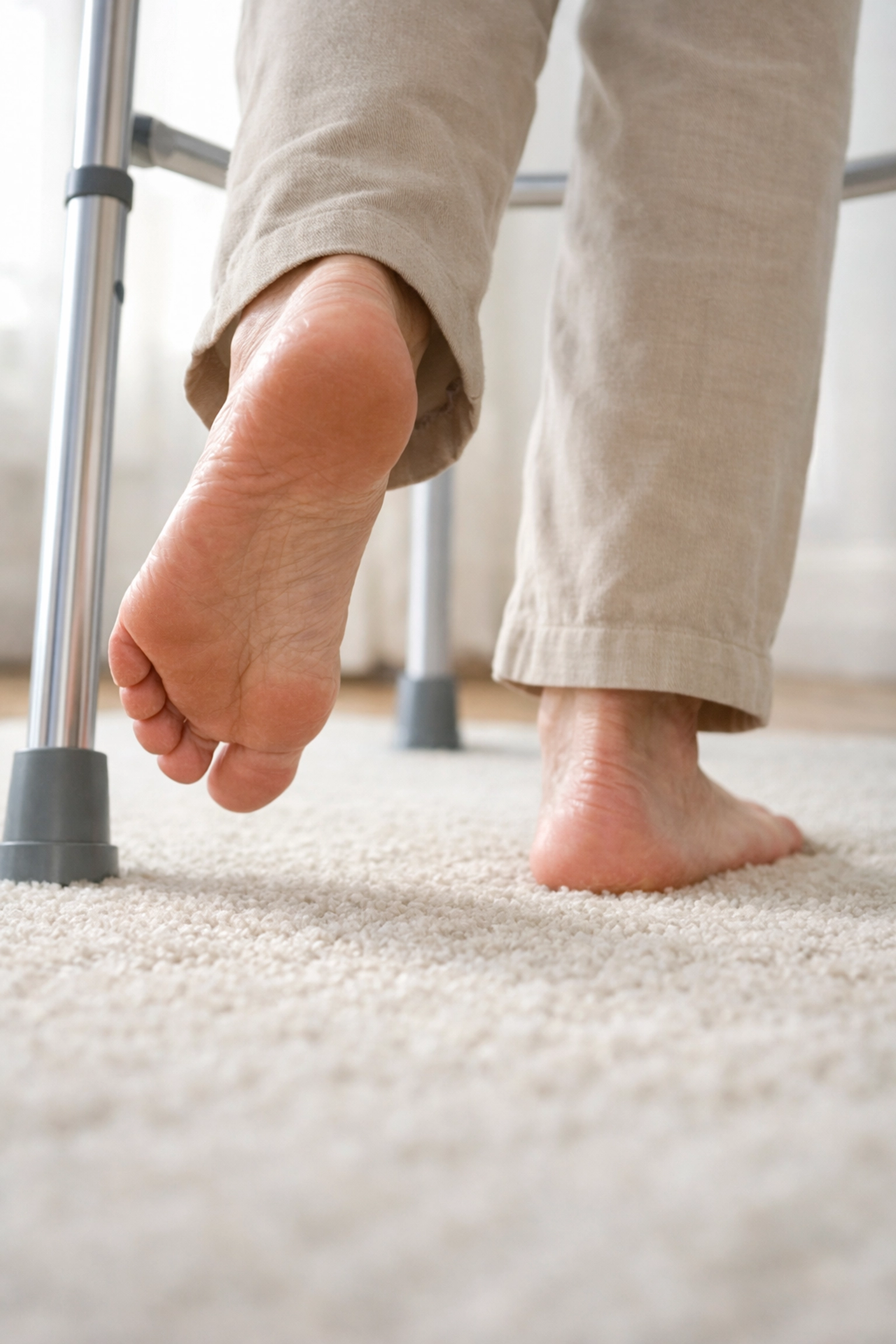
The Fix: Work on "toe-to-heel" walking. Even if your steps are small, focus on lifting your foot clearly off the floor, landing on your heel, and rolling forward to your toe. This rhythmic motion is much more stable than a shuffle. If you feel your feet widening out, stop, reset, and bring them back to hip-width apart. A consistent, narrow-to-mid-width gait is much more efficient for your muscles.
7. The Pivot Turn
Turning around is where many walker-related falls happen. It usually occurs when someone tries to turn the walker and their body at the exact same time in a single, twisting motion.
The Mistake: Pivoting on one foot while twisting your torso creates a moment of extreme instability. Your feet can easily get tangled, or you might "outrun" the walker, leaving you unsupported mid-turn.
The Fix: Think of a turn as a series of small, deliberate "clock steps." If you want to turn to the right, lead with your right foot, then move the walker, then follow with your left foot. Never cross your feet. Take several small steps to complete a full 180-degree turn rather than trying to do it in one or two big movements. It may take five seconds longer, but it keeps your center of gravity firmly over your feet at all times.
A Note on Maintenance: The Silent Balance Killers
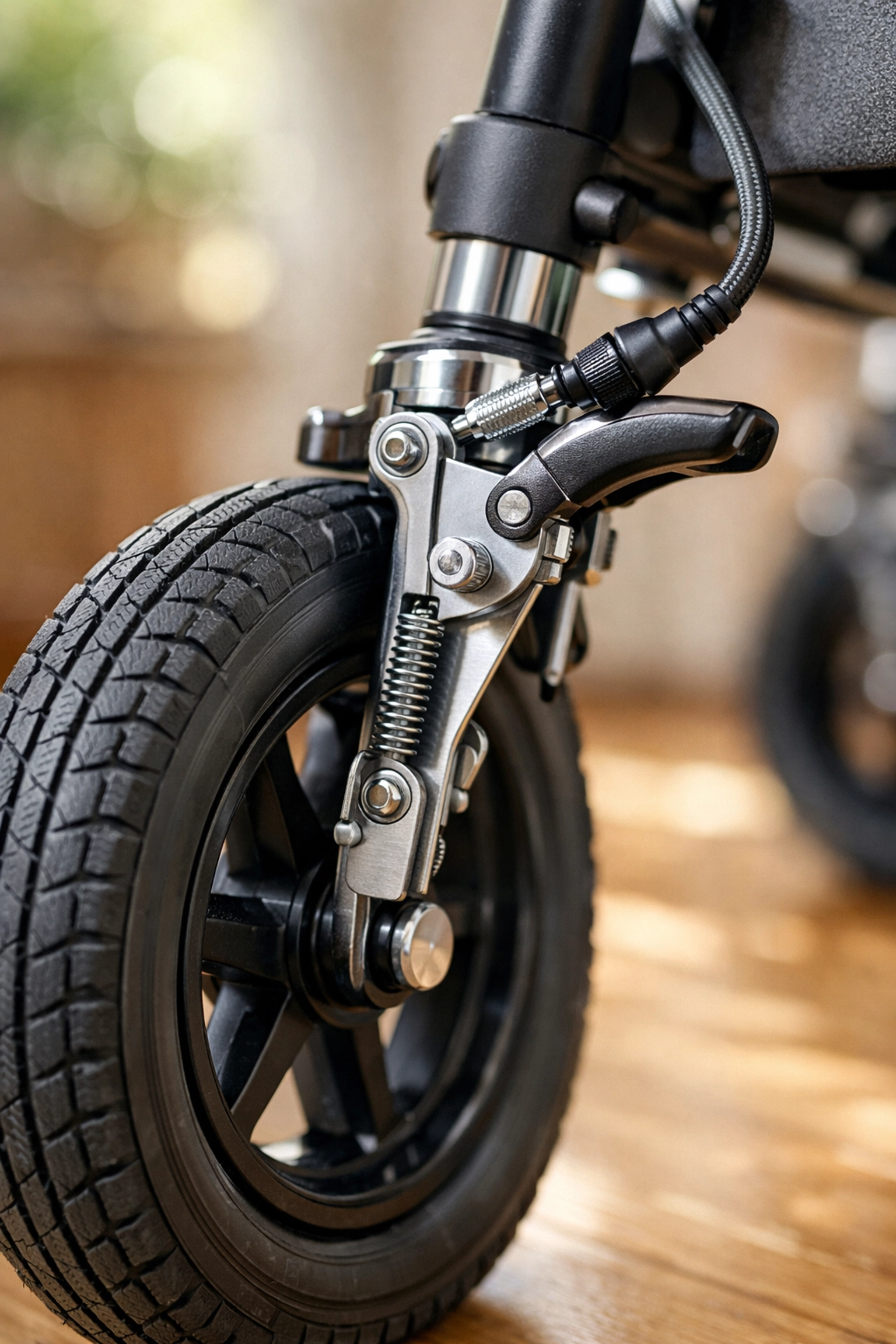
Beyond how you use the walker, the condition of the device itself plays a huge role in your balance. We often forget that walkers have "tires" and "brakes" just like a car.
- Check the Rubber Tips: The rubber caps on the bottom of walker legs provide the friction that keeps the device from sliding out from under you. If they are worn down until they are smooth, or if the metal of the leg is poking through, they need to be replaced immediately.
- Inspect the Handgrips: If your grips are loose or slippery, you can't maintain the firm hold necessary for a recovery if you stumble.
- Brake Tension: If you use a rollator (a walker with wheels and a seat), ensure the brakes engage evenly. If one side is tighter than the other, the walker will "pull" to one side when you try to stop, which can throw you off balance.
Building Your Confidence
Using a walker is a sign of wisdom: it’s an acknowledgment that you value your independence enough to protect it. Correcting these seven mistakes isn't just about safety; it's about energy. When you use a walker correctly, you spend less energy worrying about falling and more energy enjoying your walk.
If you find that you’re still struggling with balance despite making these corrections, it’s always a great idea to speak with a physical therapist. They can provide a personalized assessment and ensure your walker is adjusted perfectly for your height and gait.
Take it one step at a time. Practice that "clock turn," clear out the bags hanging from the handles, and keep those knees soft. You’ve got this, and we’re here to help you stay steady every step of the way.

