
A walker is more than just a piece of metal and plastic; for many, it is a gateway to independence, a tool for recovery, and a guardian against falls. However, simply having a walker in your home isn't enough to ensure safety. Like any specialized equipment, its effectiveness depends entirely on how it is used.
In my years working with mobility aids, I have noticed that even the most well-intentioned users often fall into habits that inadvertently increase their risk of injury. These mistakes are usually subtle: a slight lean here, a quick turn there: but they can lead to significant instability.
If you or a loved one uses a walker, it’s worth taking a few minutes to review your technique. Let’s walk through the seven most common mistakes people make with their walkers and, more importantly, how to fix them so you can move with confidence.
1. Setting the Height Incorrectly
This is perhaps the most frequent error I see, and it happens before you even take your first step. A walker that is too high or too low forces your body into an unnatural posture.
If the walker is too low, you’ll find yourself hunching over. This puts immense strain on your lower back, neck, and shoulders. More dangerously, it shifts your center of gravity too far forward, making you prone to tipping. Conversely, if the walker is too high, your elbows will be bent too sharply. This prevents you from using your arm strength effectively to support your weight, and it can lead to significant shoulder fatigue and discomfort.
How to Fix It
To find the perfect height, follow these steps:
- Stand up straight: Wear the shoes you plan to walk in most often.
- Relax your arms: Let your arms hang naturally at your sides.
- Check the wrist: The handgrips of the walker should align perfectly with the crease on the inside of your wrist.
- Verify the bend: When you place your hands on the grips, your elbows should have a slight, comfortable bend: approximately 15 degrees.
If you are unsure, don't hesitate to ask a physical therapist to check your setup. A small adjustment of just an inch can make a world of difference in your comfort and safety.

2. Walking "Behind" the Walker Instead of "In" It
Think about how you push a grocery cart. You likely push it out in front of you and walk behind it. Many people try to use their walkers the same way: pushing the device far ahead and then "chasing" after it.
When the walker is too far in front of you, it cannot provide the support you need if you trip or lose your balance. If you stumble while the walker is two feet ahead of you, your instinct will be to lean forward to grab it, which actually accelerates a fall. Furthermore, "chasing" the walker keeps your weight off your feet and puts it onto your wrists in an unstable way.
How to Fix It
You should always aim to walk inside the frame of the walker.
- The "Box" Method: Imagine there is a box between the four legs of your walker. Your feet should stay within that box.
- Small Steps: Move the walker forward just a few inches, then step into it.
- Upright Posture: Keep your torso upright and your hips close to the handgrips. This ensures that your center of mass is directly over the support system, providing maximum stability.

3. Forgetting to Lock the Brakes During Transitions
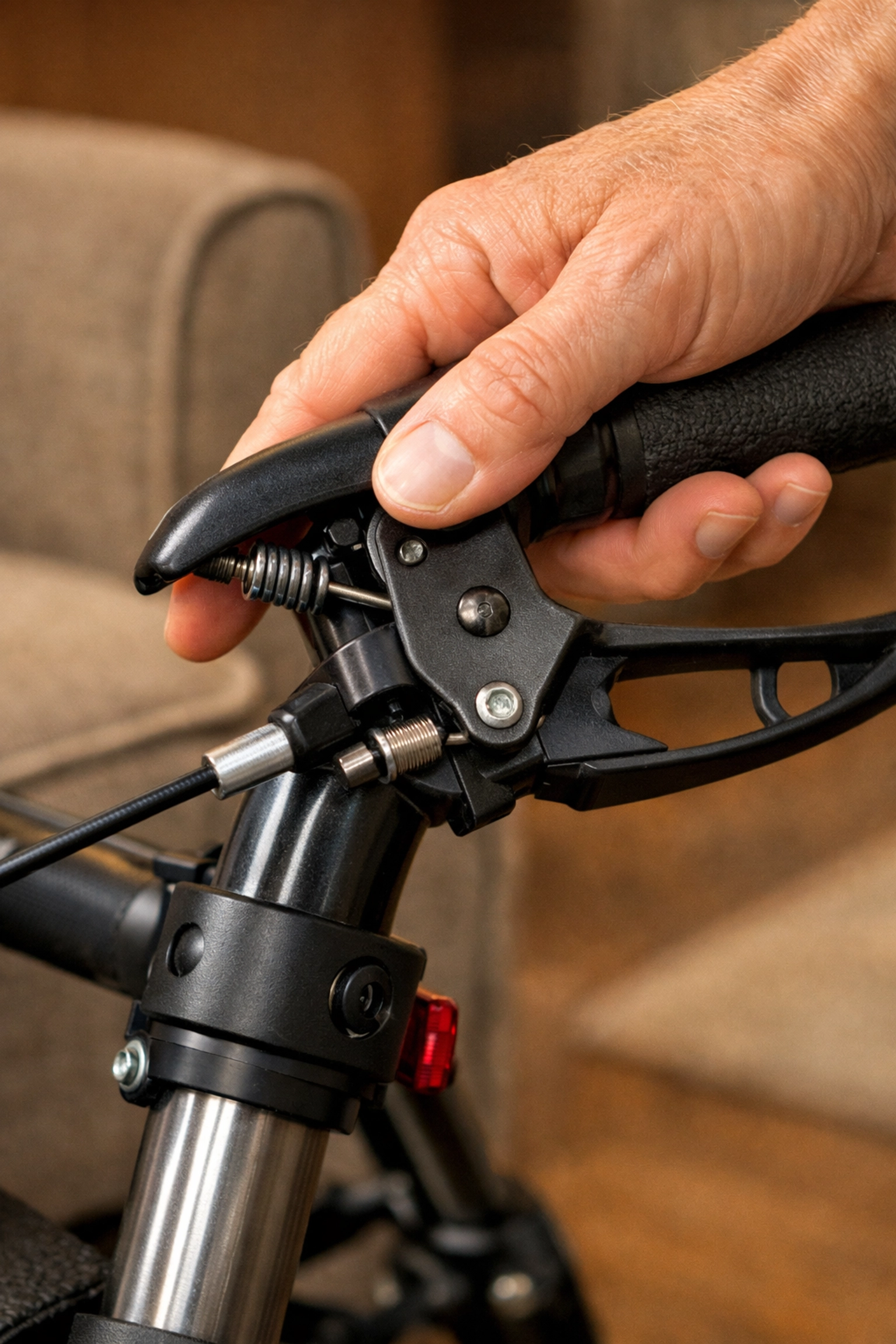
If you use a rollator (a walker with four wheels, brakes, and a seat), the brakes are your most important safety feature. The most dangerous moments often occur not while walking, but during "transitions": the act of sitting down or standing up.
I have seen many instances where a person goes to sit on the walker’s seat, but because the brakes aren't engaged, the walker rolls backward as soon as their weight touches the seat. This often results in a fall directly onto the floor. The same risk applies when standing up; if you use the walker for balance while rising and it isn't locked, it can roll away from you.
How to Fix It
Adopt the mantra: "Lock before you rock."
- Before sitting: Turn around until you feel the seat against the back of your legs. Reach down and click the brake handles into the locked (downward) position. Give the walker a small nudge to ensure it doesn't move before you lower yourself onto the seat.
- Before standing: Ensure the brakes are locked before you push yourself up from a seated position. Only once you are fully upright and have your balance should you release the brakes to begin walking.
4. Turning Too Sharply (The Pivot Mistake)
When we are in a hurry, we tend to pivot on one foot to change direction. When using a walker, this is a recipe for disaster. Turning is actually the number one cause of falls involving mobility aids.
Pivoting usually causes your feet to get tangled with the legs of the walker. It also shifts your weight unevenly, which can cause a lightweight walker to tip over. If the walker has wheels, a sharp turn can cause it to swerve unpredictably.
How to Fix It
Instead of pivoting, you should "walk" the turn.
- Small Steps: To turn right, move the walker slightly to the right, then take a small step with your right foot, followed by a small step with your left foot.
- Keep It Frontal: Always keep the walker directly in front of your body. Your belly button should always be pointing toward the front of the walker.
- Wide Arcs: Think of yourself as a large bus rather than a sports car. Take a wide, slow arc to change direction rather than a sharp, 90-degree twist.

5. Using the Walker to "Pull" Yourself Up
This is a natural instinct. When you are sitting in a chair and want to stand, you see the walker handles right in front of you and want to grab them to pull yourself up.
However, walkers are designed to support weight being pressed downward onto them. They are not designed to withstand a horizontal pulling force. If you pull on the handles, the walker will likely tip toward you, offering no support and potentially hitting you as you fall back into the chair.
How to Fix It
Your strength should come from your legs and the surface you are sitting on, not the walker.
- The Push-Off: Place your hands on the armrests of the chair or the surface of the bed.
- Nose Over Toes: Lean your upper body forward (nose over toes) and push through your legs and arms to rise.
- The Hand-Off: Only once you are standing and have found your balance should you reach out and place your hands on the walker grips.

6. Leaning Too Heavily on the Handles
While a walker is there to provide support, it shouldn't be carrying 100% of your weight. Some users lean so heavily on the handles that their elbows lock out and their shoulders shrug up toward their ears.
This over-reliance makes the device unstable. If you hit a small bump in the carpet or a crack in the sidewalk while leaning all your weight into the walker, the momentum can cause the device to "stutter" or tip. It also leads to chronic pain in the wrists and shoulders.
How to Fix It
The walker should be used for balance and partial weight-bearing.
- Core Engagement: Try to keep your core muscles slightly engaged to help hold your body upright.
- Light Touch: Think of the walker as a steadying hand rather than a crutch.
- Assess Your Needs: If you find it impossible to walk without leaning heavily, it may be time to consult a professional. You might need a different type of mobility aid: perhaps one with forearm supports: or a physical therapy program to strengthen your legs and core.
7. The Speed Demon Mentality
We all have places to be, but rushing with a walker is a major hazard. This is especially true with rolling walkers. Because they move so easily, it’s easy to let the walker’s momentum dictate your pace rather than the other way around.
Walking too fast often leads to the "chasing" mistake mentioned earlier. It also reduces your reaction time if you encounter an obstacle like a rug, a pet, or a wet floor.
How to Fix It
- Find Your Rhythm: Maintain a slow, deliberate pace.
- Watch the Path: Look about 3 to 5 feet ahead of you, rather than looking directly down at your feet. This helps you anticipate obstacles before you reach them.
- Controlled Deceleration: When you need to stop, do so gradually. Don't rely on the brakes to "slam" to a halt; use your steps to slow down first.
Bonus: A Note on Maintenance
Beyond how you use the walker, the condition of the device itself matters.
- Check the Tips: If you have a standard walker (no wheels or wheels only on the front), check the rubber tips on the back legs. If the tread is worn down and the metal is showing through, the walker will slide dangerously.
- Tighten the Bolts: Walkers take a lot of vibration. Over time, the bolts can loosen. Give your walker a "wiggle test" once a week. If it feels rattly or loose, it needs maintenance.
- Clean the Wheels: For rollators, hair and lint can get wrapped around the wheel axles, causing them to stick. A stuck wheel can cause the walker to pull to one side, leading to a trip.
Final Thoughts
Using a walker is a skill, and like any skill, it takes practice to master. It’s easy to get frustrated or feel like the device is a burden, but when used correctly, it is an incredible tool for maintaining a high quality of life.
If you find yourself struggling with any of these points, remember that you don't have to figure it out alone. Physical therapists are experts in gait training and can provide personalized coaching to ensure you are moving as safely as possible.
Stay mindful of your posture, take your time, and remember to "lock before you rock." By avoiding these seven common mistakes, you’re not just using a walker; you’re reclaiming your mobility with confidence.

