
A walker is more than just a piece of medical equipment; for many, it is a ticket to independence. It’s the difference between staying in one room all day and being able to move through the house, visit the garden, or join the family at the dinner table. However, simply having a walker doesn’t automatically make a person safe. In fact, using a walker incorrectly can sometimes create new risks that weren't there before.
I’ve seen it happen often: someone gets a walker from a pharmacy or a thrift store, adjusts it to where it "feels right," and starts moving. But "feeling right" isn't always the same as "being safe." Walkers are designed to work with your body's center of gravity and your natural gait. When we deviate from the proper technique, we lose the mechanical advantages the device offers.
Let’s look at the seven most common mistakes people make with their walkers and, more importantly, how to fix them to ensure you stay upright and confident.
1. The Height is Set Incorrectly
The most common mistake happens before you even take your first step. If the handles of the walker are too high or too low, your entire posture is compromised.
If the handles are too high, your elbows will be bent too much, and you won't be able to put enough weight through your arms to support your legs. This often leads to shoulder pain and reduced stability. Conversely, if the handles are too low, you’ll find yourself hunched over. This "stooped" posture rounds the back, strains the neck, and: most dangerously: shifts your center of gravity too far forward, making a forward fall much more likely.
The Fix: The Wrist-Crease Rule
To get the height right, stand as straight as you can with your arms hanging naturally at your sides. The handgrips of the walker should be level with the crease of your wrist. When you place your hands on the grips, your elbows should have a slight, comfortable bend: usually about 15 to 20 degrees. This angle allows you to push down through your arms effectively if you lose your balance.

2. Walking "Behind" the Walker Instead of "In" It
Imagine you are pushing a heavy shopping cart through a grocery store. Most people push the cart far out in front of them and lean into it. While this might work for groceries, it’s a recipe for disaster with a mobility aid.
Many users push the walker a foot or two ahead of them and then "catch up" to it. This creates a gap between your body and the support system. If you trip while the walker is that far away, you have nothing to grab onto that is within your immediate center of gravity. You essentially become a pendulum, swinging toward a device that is moving away from you.
The Fix: Stay Inside the Frame
Think of the walker as a "safety bubble." You want your body to stay within the framework of the walker. As you move, your feet should land in the space between the rear wheels or the rear legs of the walker. You shouldn't be so far forward that you’re hitting the front bar, but you shouldn’t be lagging behind it either. Keep the walker close enough that you can stand tall while holding the grips.
3. Using the Walker to Pull Yourself Up
When rising from a chair or a bed, the natural instinct is to grab the handles of the walker and pull yourself to a standing position. This is incredibly dangerous. Walkers are designed for downward pressure, not horizontal pulling. If you pull on the walker, the front legs can lift off the ground, causing the device to tip toward you and likely resulting in a fall.
The Fix: Push, Don't Pull
Always start by scooting to the edge of your seat. Place your hands on the armrests of the chair or the surface of the bed. Use your legs and your arms to push yourself up to a standing position. Once you are steady on your feet, reach forward and place your hands on the walker grips one at a time. The walker is there to help you stay up, not to get you up.

4. Failing to Engage the Brakes
This mistake applies primarily to rollators (walkers with four wheels and a seat). Because these devices roll so easily, they can "get away" from you if the brakes aren't locked. We see this most often when someone is sitting down on the walker's seat or when they are standing still and reaching for something on a counter. If the walker rolls while you are transitioning your weight, you will lose your balance.
The Fix: The "Click" Habit
Make it a habit to engage the parking brakes every single time you stop moving. Before you sit on the walker's seat, double-check that the brakes are clicked into the locked position. Before you use the walker to steady yourself while standing at the sink, lock the brakes. It only takes a second, but it provides a solid, immovable base of support.
5. Taking Too Large of a Step
When we are in a hurry, we tend to take longer strides. However, taking a large step with a walker can be problematic. If your lead foot goes too far past the front of the walker, your weight shifts onto a leg that isn't supported by the device's frame. Furthermore, large steps can cause you to accidentally kick the legs or wheels of the walker, which can lead to a stumble.
The Fix: Short, Deliberate Steps
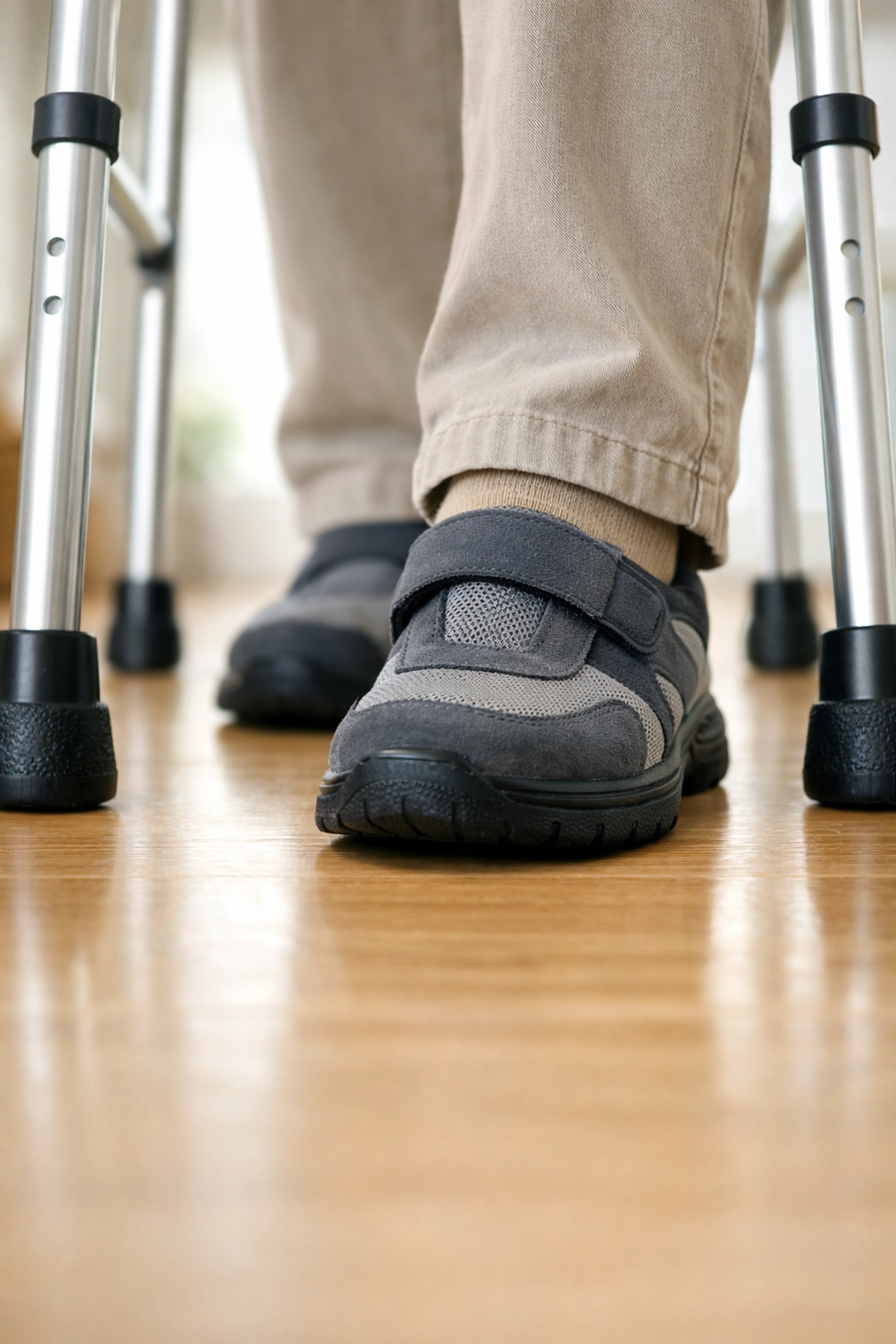
Focus on taking small, even steps. Your lead foot should step into the center of the walker frame, followed by your trailing foot. This "step-to" or "step-through" pattern ensures that your weight is always centered within the four points of contact the walker has with the floor. It may feel slower at first, but it is significantly more stable.
6. Improper Turning Technique
Most falls with a walker happen during a turn. The mistake is trying to turn the walker and your body at the same time in a twisting motion, or "pivoting" on one foot. Twisting can cause you to lose your balance or get your feet tangled in the legs of the walker. People also tend to hold the walker out to the side while they turn, leaving them unsupported.
The Fix: The "Clock" Method
Think of a turn as a series of small segments rather than one big movement. Move the walker slightly in the direction you want to go, then move your feet to follow it. Keep your body facing the front of the walker at all times. If you are turning 90 degrees to the right, think of it as taking three or four tiny "micro-turns" until you are facing the new direction. Always keep the walker in front of you, never to the side.
7. Looking Down at Your Feet
It is a natural human reaction: when we feel unsteady, we look down at our feet to see where we are going. However, looking at your feet actually makes your balance worse. When your head is down, your inner ear (which controls balance) isn't level, and you lose your "visual horizon." Additionally, looking down causes you to hunch over, which we already established is bad for your posture and center of gravity.
The Fix: Eyes Forward
Trust your feet. Practice looking about 10 to 15 feet ahead of you. This allows you to see upcoming obstacles: like a rug, a pet, or a change in floor surface, well before you reach them. By keeping your head up, your spine stays aligned, your airway stays open, and your balance sensors can work more effectively.

Maintaining Your Equipment
Beyond these seven behavioral mistakes, there is a mechanical one: neglecting the walker itself.
If you use a standard folding walker, check the rubber tips on the bottom regularly. If they are worn down or uneven, they can slip on smooth surfaces like tile or hardwood. If you use a rollator, check that the brakes are tight and that the wheels aren't wobbling.
For those who use "walker skis" or tennis balls on the back legs to help the walker slide, keep an eye on how quickly they wear out. Once a tennis ball is worn through to the core, it can actually create friction and "catch" on the carpet, which is exactly what you want to avoid.
A Final Thought on Safety
Using a walker is a skill. Like any skill, it takes practice to get it right. If you or a loved one are new to using a mobility aid, I highly recommend asking a physical therapist for a "gait training" session. They can watch you walk in your own environment and point out specific habits that might be putting you at risk.
Remember, the goal of a walker is to keep you moving safely. By avoiding these common pitfalls: staying inside the frame, keeping your head up, and respecting the brakes: you can navigate your home and community with much more confidence. Staying mobile is one of the best ways to maintain your overall health, and doing it correctly ensures you can keep doing the things you love for years to come.

