
Mobility aids are supposed to be symbols of freedom. They are the tools that allow us to keep going to the grocery store, visiting family, and moving around our own homes with confidence. But here is the thing about tools: if you don’t use them correctly, they can actually become a hazard rather than a help.
I’m Brian Kerr, and at Fall Guys Products, we spend a lot of time thinking about how to keep people upright and active. One of the most common things we see is someone using a walker or a rollator in a way that actually increases their risk of a fall. It’s usually not for lack of effort; often, it’s simply because no one ever sat them down and showed them the "right" way to do it.
Whether you’ve been using a walker for years or you’re just starting out, avoiding these seven common mistakes will make your movement smoother, safer, and much less tiring.
Why Technique Matters More Than the Equipment
Before we dive into the mistakes, let’s talk about why this matters. A walker or rollator is designed to widen your "base of support." When you stand on your two feet, your base is relatively small. By adding a frame around you, you’ve effectively tripled that base.
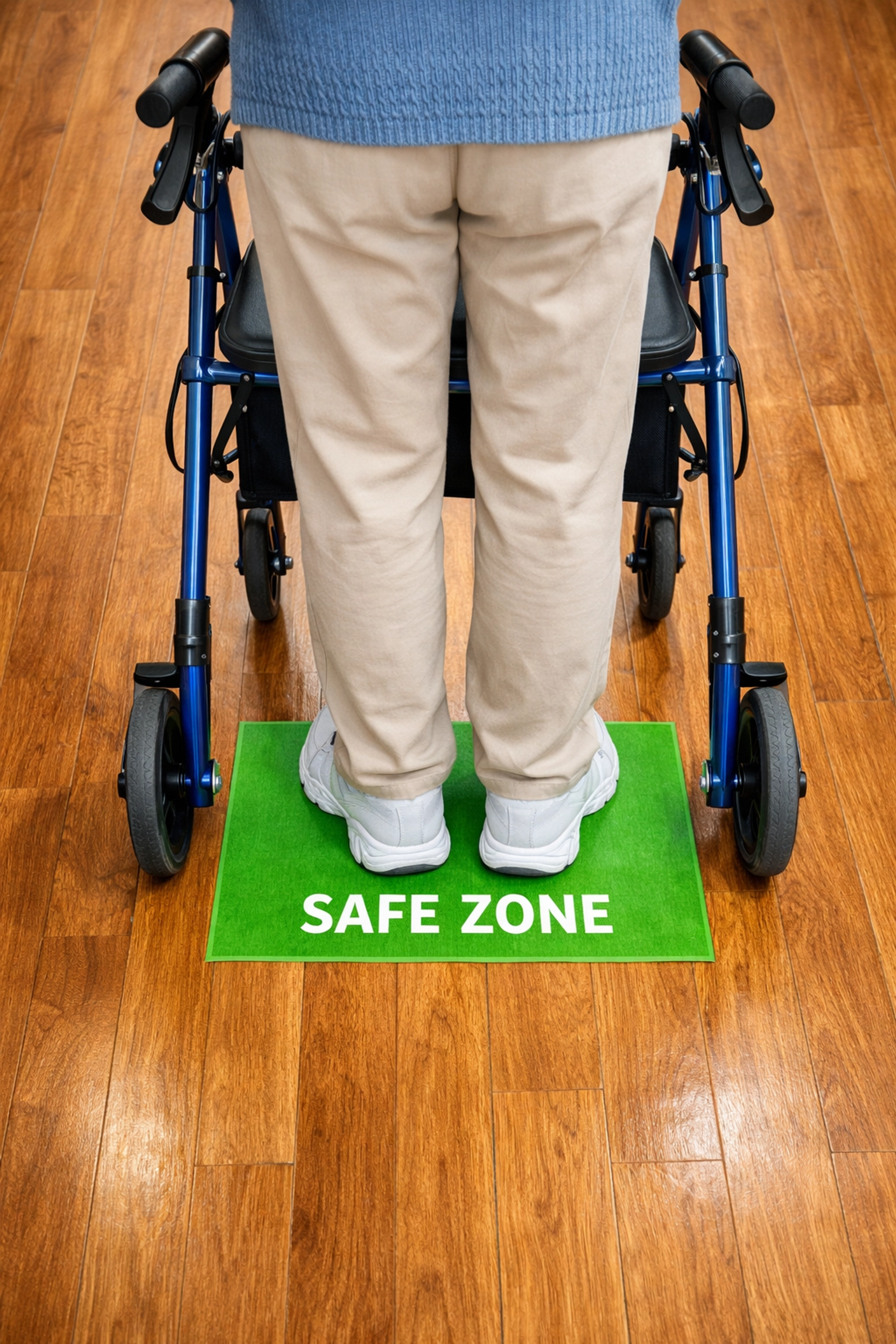
However, that support only works if your center of gravity stays within that frame. The moment you lean too far forward, push the walker too far out, or fail to lock the brakes, you’ve moved your weight outside of that safe zone. That’s when accidents happen.

Mistake #1: The Height is Just a Little Off
This is the number one mistake we see, and it’s usually because people "eyeball" the height instead of measuring it properly.
If the walker handles are set too low, you’ll find yourself hunching over. This puts an immense amount of strain on your lower back and neck. It also shifts your weight forward, making you more likely to tip. On the flip side, if the handles are too high, your elbows will be bent too much. You won’t be able to push down and use your arm strength to support your weight, leading to shoulder fatigue and a lack of stability.
How to Fix It:
To find your "Goldilocks" height, follow these steps:
- Wear the shoes you plan to walk in most often.
- Stand up as straight as you comfortably can.
- Let your arms hang naturally at your sides.
- The handles of the walker should be level with the crease of your wrist.
When you place your hands on the grips, your elbows should have a slight, comfortable bend: about 15 degrees. This allows you to lock your arms if you need to take the weight off your legs suddenly.
Mistake #2: "Chasing" the Walker (The Grocery Cart Effect)
We’ve all seen it: someone pushes their walker two feet out in front of them and then "chases" after it. People often treat walkers like grocery carts, but a walker isn't there to lead the way; it’s there to support you while you walk.
When the walker is too far ahead, you are leaning forward. If your foot catches on a rug or a threshold while the walker is out in front, you have nothing underneath you to break the fall. You’re effectively "off-balance" the entire time you’re moving.
How to Fix It:
You want to walk inside the walker, not behind it.
- The Visualization: Think of the walker as a protective bubble. Your feet should stay between the back legs of the walker at all times.
- The Rhythm: Push the walker forward just a few inches. Step into the frame with your weaker leg first, then follow with your stronger leg. Keep your torso upright and your eyes looking forward, not down at the floor.
Mistake #3: Forgetting the Brakes During Transitions
This mistake is specific to rollators (the ones with four wheels and a seat). Because rollators move so easily, they are prone to rolling away the second you shift your weight.
The most dangerous moments are transitions: sitting down on the rollator seat, standing up from a chair, or getting into a car. If you reach for the walker and it rolls forward, you’re going to fall. If you go to sit on the built-in seat and the rollator scoots backward, you’ll end up on the floor.
How to Fix It:
Adopt the mantra: "Lock before you rock."
- Before you sit down on the walker’s seat, engage both hand brakes (usually by pushing the levers down until they click).
- Give the walker a little nudge to make sure it’s truly locked.
- When standing up from a couch or chair, do NOT pull on the walker to get up. Use the armrests of the chair to push yourself up, and only grab the walker once you are steady. Ensure the brakes are locked during this process as well.
Mistake #4: The Sharp Pivot
When we are in a hurry, we tend to turn our bodies quickly. With a walker, a quick pivot is a recipe for a trip. Your feet can easily get tangled in the legs or wheels of the device, or the walker itself can tip if you apply sideways pressure too quickly.
How to Fix It:
Think like a bus, not like a sports car. You need a wide turning radius.
- Instead of twisting your body, take several small steps in a wide arc.
- Always keep your body facing the front of the walker. If the walker turns, you turn with it, step by step.
- Never "cross" your feet when turning. Keep a wide base of support between your feet.

Mistake #5: Using the Wrong Walker for the Terrain
Not all walkers are created equal. A standard walker with no wheels (or small 5-inch wheels) is great for stable, indoor environments with flat floors. However, if you take that same walker onto a gravel path, thick grass, or a cracked sidewalk, those small wheels can get stuck in a divot, causing the walker to stop abruptly while your body keeps moving forward.
How to Fix It:
Match your tool to your environment.
- Indoors: Smaller wheels or even "skis" on the back legs are fine for carpet and hardwood.
- Outdoors: If you enjoy being outside, look for a rollator with larger wheels (8 inches or more). Larger, pneumatic (air-filled) or soft-rubber wheels act like shock absorbers and can roll over pebbles and cracks without jarring your arms or getting stuck.
- The "Lift" Test: If you have to lift your walker over every transition, you might need a different wheel configuration.
Mistake #6: The "Shopping Bag" Lean
It is tempting to use the front bar of a walker to hang a heavy purse, a bag of groceries, or a gallon of milk. However, adding weight to the front or sides of a walker shifts the center of gravity. A front-heavy walker is much more likely to tip forward if you hit a small bump, and a side-heavy walker can pull you off balance during a turn.
How to Fix It:
Keep the weight centered and low.
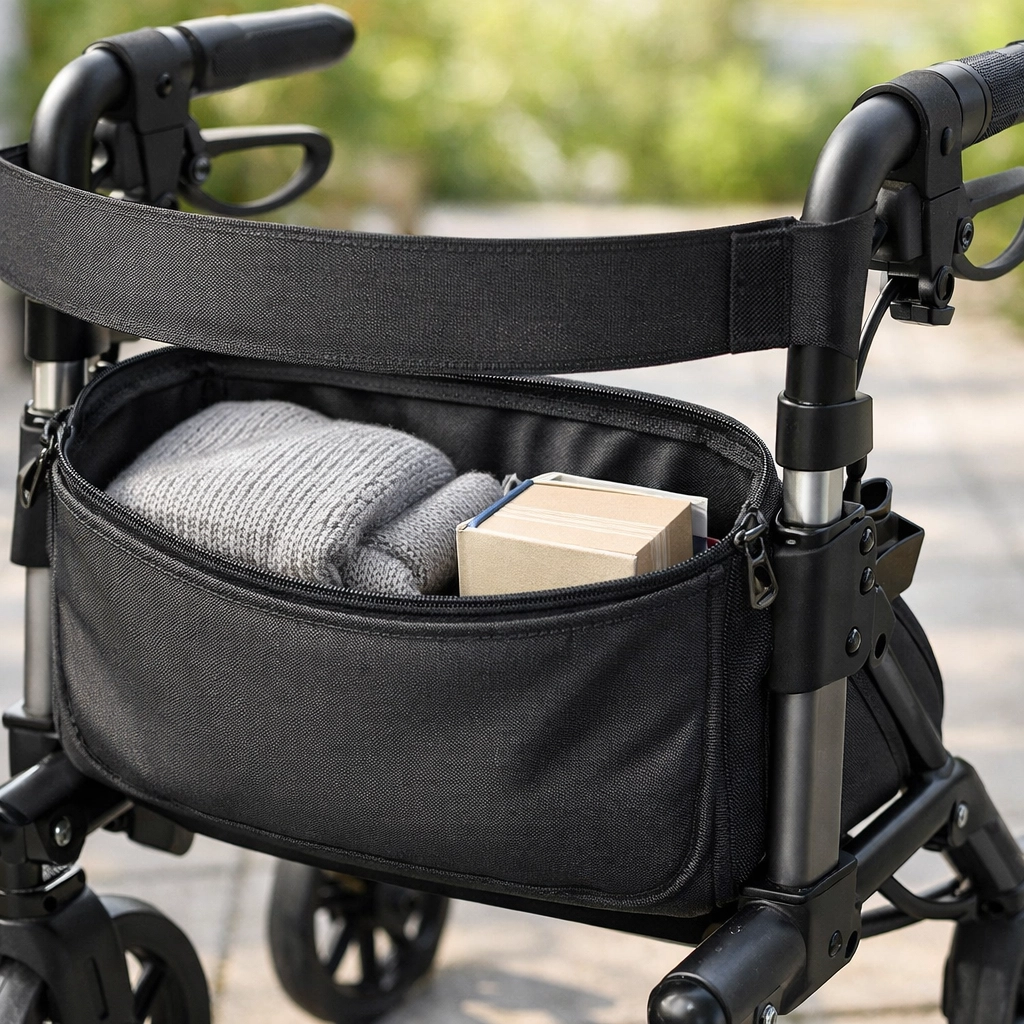
- Use accessories specifically designed for your model, such as a basket that sits directly over the center of the frame or a pouch that hangs between the handles.
- If you must carry items, keep them light. If you have heavy items to move (like laundry or groceries), it is much safer to have someone help you or use a dedicated rolling cart that isn't your primary mobility aid.
Mistake #7: Looking at Your Feet
It’s a natural instinct. When we feel unsteady, we want to look at where our feet are landing. But looking down actually makes you less stable. It rounds your shoulders, shifts your weight forward, and: most importantly: prevents you from seeing hazards like rugs, pets, or wet spots that are five feet ahead of you.
How to Fix It:
Practice "spatial awareness."
- Keep your head up and your chin level with the ground.
- Trust that the walker is where it needs to be.
- Scan the environment 6 to 10 feet in front of you. This gives your brain enough time to process a hazard and decide how to navigate around it before you’re right on top of it.
A Bonus Tip: Don't Forget the "Tires"
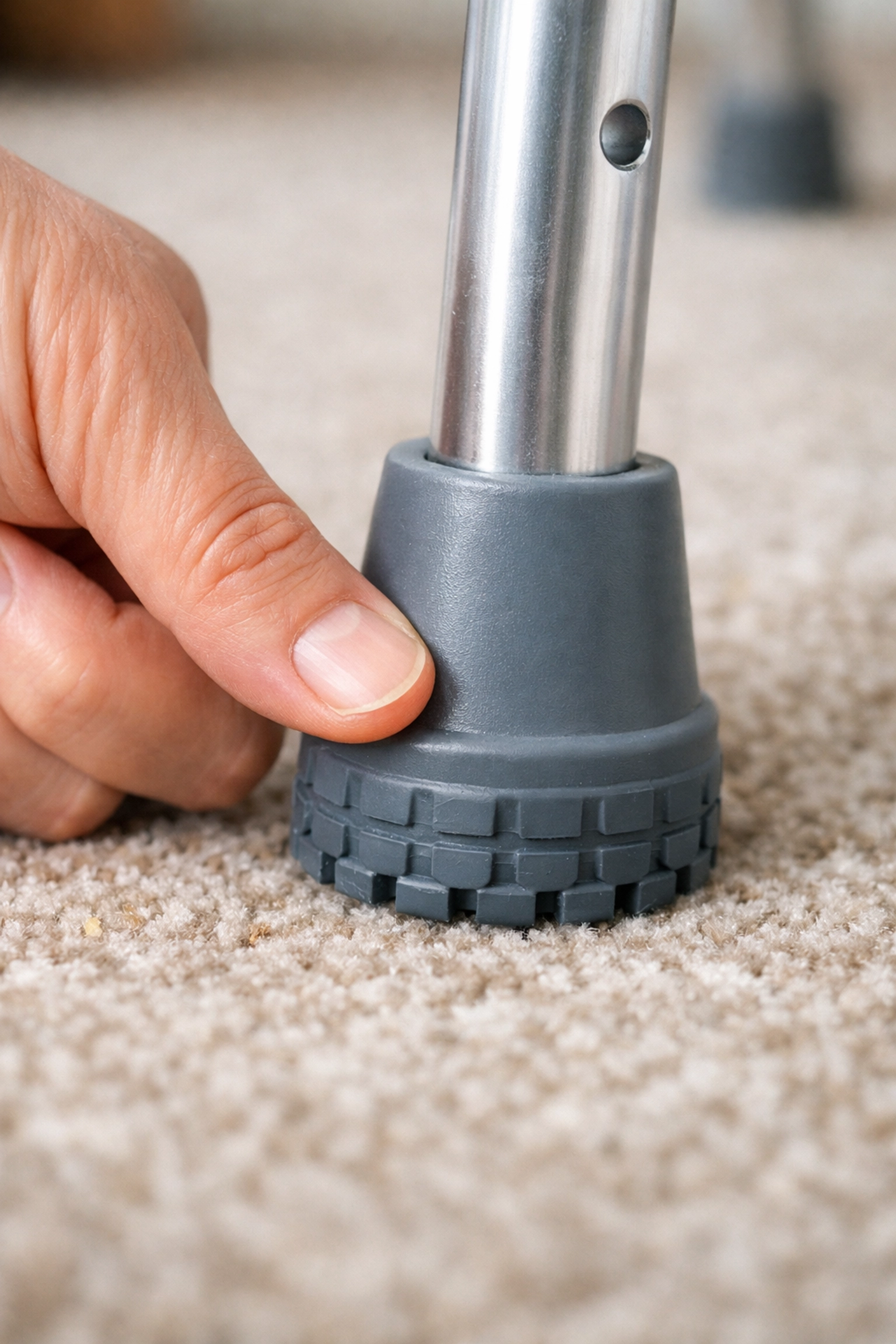
Just like a car, a walker needs a tune-up. Over time, the rubber tips on the bottom of a standard walker can wear down until the metal pole is exposed. This makes the walker incredibly slippery on tile or wood floors. On rollators, the brake cables can stretch, meaning you might squeeze the handle, but the wheel doesn't actually stop.
The Weekly 30-Second Check:
- Check the tips: Are the rubber bottoms worn smooth or cracked? Replace them immediately if they are.
- Check the brakes: Pull the brakes and try to push the walker. If the wheels still turn, the cables need tightening.
- Check the bolts: Give the walker a little shake. If it rattles, a screw or bolt might be coming loose.
Finding Your Confidence
Using a walker or rollator isn't about admitting defeat; it’s about choosing to stay in the game. When you use these devices correctly, you’re not just preventing a fall: you’re preserving your energy so you can enjoy the destination once you get there.
Take a moment today to check your handle height and practice walking "inside the bubble." A few small adjustments to your technique can make a world of difference in how safe and sturdy you feel. Stay safe out there!

