
When you first bring a walker home, it feels like a symbol of freedom. It’s the tool that keeps you moving, helps you get to the kitchen for a cup of tea, and gives you the confidence to walk down the driveway to check the mail. But like any tool: whether it’s a high-tech kitchen appliance or a lawnmower: it only works safely if you use it correctly.
I’m Brian Kerr, and here at Fall Guys Products, we spend a lot of time thinking about how to keep people upright and independent. Over the years, I’ve noticed that many of the falls involving walkers don’t happen because the device failed. They happen because of small, common habits that have crept into the daily routine. Most people don’t even realize they’re making these mistakes until a "near miss" occurs.
The good news is that these mistakes are incredibly easy to fix. By making a few small adjustments to how you stand, move, and maintain your walker, you can significantly reduce your risk of a tumble. Let’s walk through the seven most common mistakes and, more importantly, how to correct them.
1. Setting the Height Incorrectly
This is arguably the most common mistake we see. Many people inherit a walker from a friend or pick one up at a thrift store and start using it immediately without adjusting the height.
If a walker is too low, you’ll find yourself hunching over. This puts a tremendous amount of strain on your lower back, neck, and shoulders. More importantly, it shifts your center of gravity forward, making it much easier to lose your balance and tip over. On the flip side, if the walker is too high, your arms will be bent at an uncomfortable angle, and you won’t be able to put enough weight through your arms to support your legs.
The Fix: The Wrist Crease Rule
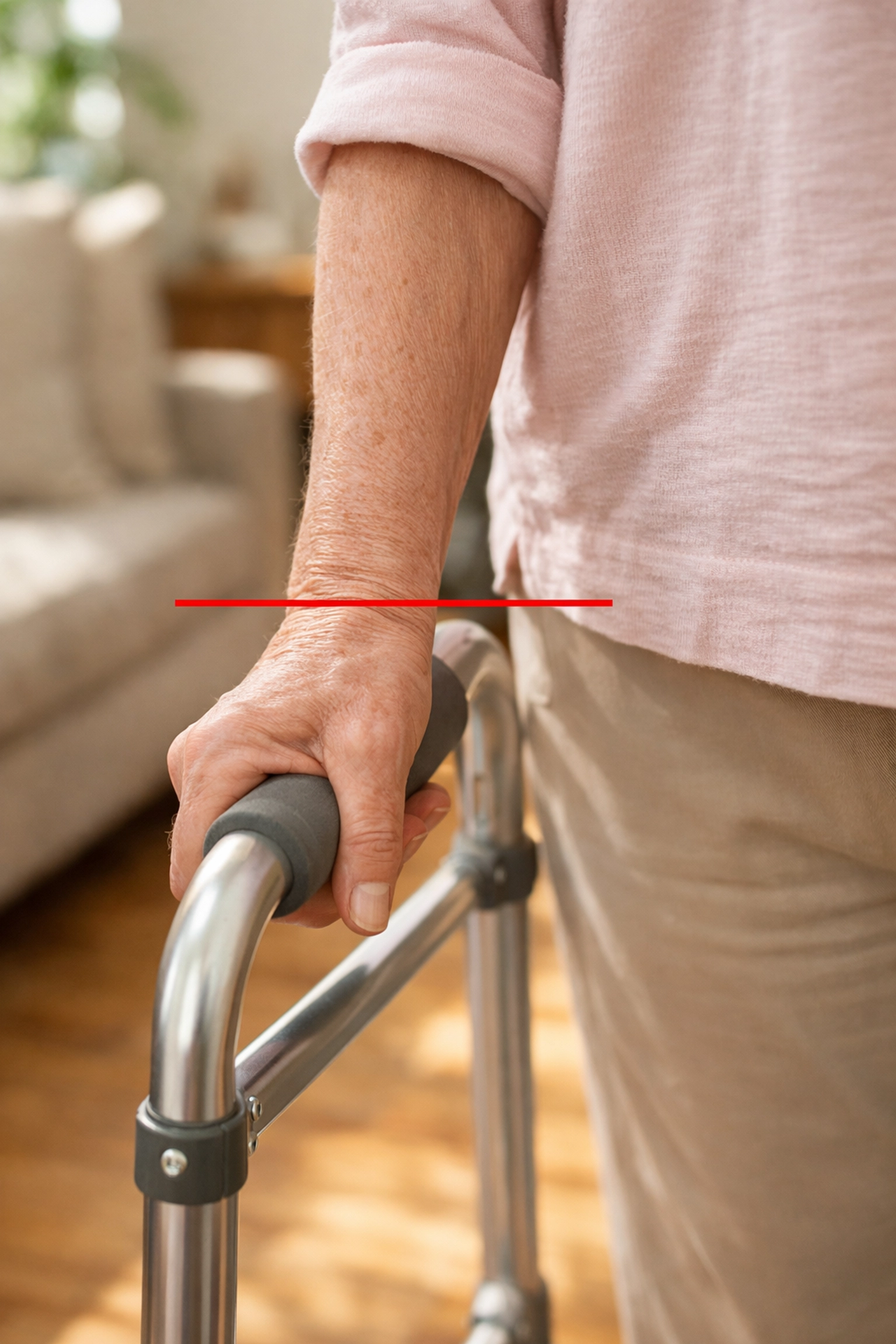
To get the perfect height, stand as straight as you can with your arms hanging naturally at your sides. Look at your wrists. There is a crease where your hand meets your arm. The handgrips of the walker should be level with that crease.
When you place your hands on the grips, your elbows should have a slight bend: about 15 degrees. This angle allows you to push down with enough force to support your body weight while maintaining a comfortable, upright posture.
2. Walking "Behind" the Walker
I call this the "Shopping Cart Syndrome." Think about how people push a heavy cart at the grocery store: they push it far out in front of them and lean into it. While that works for groceries, it’s dangerous for mobility.
When the walker is too far ahead of you, it can’t support your weight. If you trip on a rug or a door threshold, the walker is already a foot or two away from you, and you won’t be able to use it to steady yourself. You are essentially chasing the walker rather than being supported by it.
The Fix: Step into the Frame
You should always walk inside the walker, not behind it. Your feet should stay between the back legs of the device.
The rhythm should be:
- Push the walker forward just a short distance (about one step's length).
- Step into the center of the frame with one foot.
- Follow with the other foot.
By staying "inside" the walker, your center of mass stays aligned with the support of the frame. If you lose your balance, the handles are right there where your hands can apply downward pressure to stabilize you.
3. The "Launch" (Forgetting the Brakes)
If you use a rollator: the kind of walker with four wheels and a seat: the brakes are your best friend. However, many people forget to engage them when they are transitioning from sitting to standing or vice versa.
Imagine you are backed up to a chair, ready to sit down. You reach back for the seat, but as you shift your weight, your hands accidentally nudge the walker. Because it’s on wheels, it rolls forward. Now, the support you thought was there is gone, and you’re in the middle of a fall.
The Fix: Lock, Then Move
Make it a hard rule: the brakes must be locked before your bottom leaves a chair and before your bottom touches a seat.
When you are ready to stand up, lock the brakes on both handles. When you are ready to sit down, back up until you feel the chair against the back of your legs, lock the brakes, and then reach back for the armrests of the chair (not the walker: more on that in a moment).

4. Using the Walker to "Pull" Yourself Up
This is a mistake that often happens when someone is tired. You’re sitting in your favorite armchair, you grab the handles of the walker in front of you, and you try to pull yourself up to a standing position.
Most walkers are lightweight. If you pull on the handles horizontally, the walker will simply tip toward you. It provides zero leverage for pulling. Instead of helping you up, it becomes a falling object that can hit you or cause you to lose your grip.
The Fix: Push from the Chair
Never use the walker to pull yourself up. Instead, use the armrests of the chair or the surface of the bed to push yourself upward.
- Scoot to the edge of your seat.
- Place your feet firmly on the floor, one slightly in front of the other.
- Use your hands on the chair arms to push yourself up.
- Once you are steady on your feet, then reach for the walker handles.
5. The Pivot Mistake (Turning Too Fast)
When we are in a hurry, we tend to pivot on one foot to turn around. With a walker, this is a recipe for a trip. If you twist your body while the walker is still facing forward, your feet can easily get tangled in the legs of the device. Furthermore, pivoting shifts your weight to one side, which can make the walker tip if you aren't careful.
The Fix: The Clock Method
Think of your turn as a series of small, deliberate steps rather than one big twist. If you want to turn around, move the walker slightly in the direction you want to go, then take several small steps to follow it.
Keep the walker directly in front of your chest at all times. If your chest is pointing north but your walker is pointing northeast, you’re out of alignment. Stay squared up with the frame and take your time.
6. Overloading the Front
It’s tempting to turn your walker into a mobile storage unit. We see people hanging heavy purses, grocery bags, or even oxygen tanks from the front crossbar.
The problem is physics. A walker is designed to be stable when weight is applied straight down through the handles. When you hang weight off the front, you change the center of gravity. This makes the walker prone to tipping forward, especially when you hit a bump, a rug, or a door threshold.
The Fix: Centered Storage
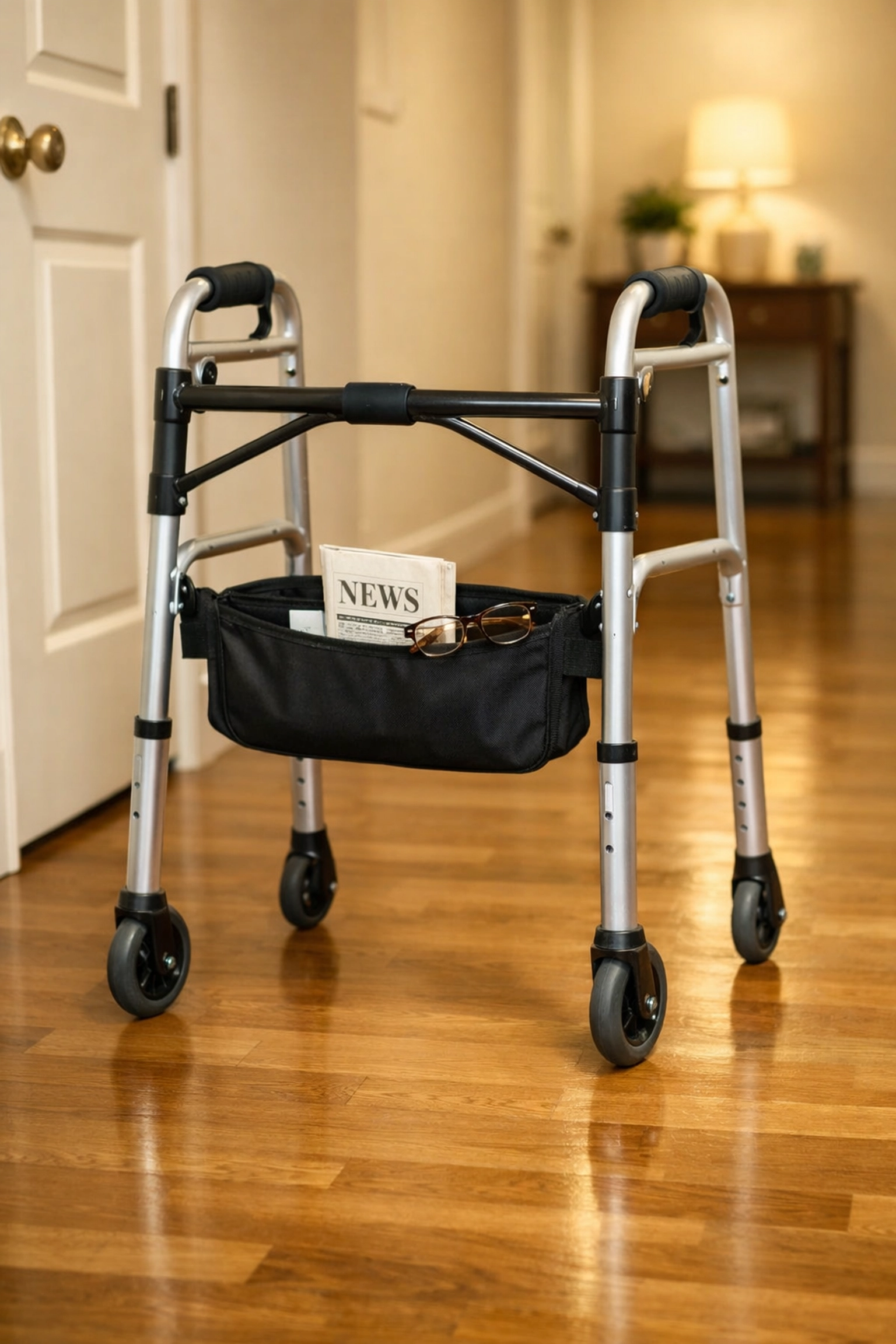
If you need to carry items, use accessories specifically designed for walkers, like a center-mounted basket or a pouch that attaches to the side or inside the frame. Keep the weight as low and as centered as possible. If you find the walker is getting hard to push or feels "front-heavy," it’s time to lighten the load.
7. Looking at Your Feet
It’s natural to want to look down to see where you’re stepping, especially if you’re worried about tripping. However, staring at your feet while using a walker is actually counterproductive.
When you look down, you lose your "situational awareness." You can’t see the cat running across the floor, the puddle of water in the kitchen, or the corner of the rug five feet ahead. Looking down also causes you to hunch your shoulders, which ruins your posture and balance.
The Fix: Look Six Feet Ahead
Try to keep your chin up and your eyes scanning the floor about six to ten feet in front of you. This gives your brain enough time to process obstacles before you reach them. You’ll be able to see hazards early and navigate around them smoothly rather than having to make a sudden, jerky stop.

Bonus: Maintenance and Safety Checks
Even if you follow all the rules of movement, a walker that is in poor repair can still cause a fall. Think of your walker like a car; it needs a regular "tune-up."
Check the Rubber Tips
The rubber tips on the bottom of a standard walker are like the tires on a car. Over time, the tread wears down. If the rubber is smooth or if you can see the metal of the walker leg poking through, the walker will slide on tile or wood floors like it’s on ice. Replace these tips as soon as they show signs of wear.
Tighten the Bolts
Walkers take a lot of vibration from being pushed over sidewalks and bumpy floors. Every few months, take a moment to check the bolts and "wing nuts" on the frame. If anything feels wiggly or loose, tighten it up.
Clean the Wheels
If you have a wheeled walker, hair, lint, and carpet fibers can get wrapped around the axles. This causes the wheels to drag or lock up unexpectedly. A quick check and a pair of tweezers can keep the wheels spinning freely.
Navigating Different Surfaces
Using a walker on a perfectly flat hospital floor is one thing; using it at home is another. Here are a few tips for the "tricky" spots:
- Carpets to Tile: When moving from a carpeted room to a hard floor, the walker will suddenly move much faster. Be prepared for that change in resistance.
- Thresholds: When crossing a doorway threshold, don't try to "plow" through. Lift the front legs of the walker over the bump, set them down, and then step forward.
- Rugs: Throw rugs are the number one enemy of walker users. If possible, remove them. If you must keep them, ensure they are taped down with double-sided rug tape so the walker legs don't catch the edges.
A Reassuring Word
If you’ve realized you’re making one (or all) of these mistakes, don’t worry. Habits take time to form, and they take time to change. The goal isn't to be perfect on day one; it's to be safer today than you were yesterday.
Using a walker is a skill. Like any skill, it gets easier with practice. By focusing on your posture, keeping the walker close, and being mindful of your environment, you aren't just preventing a fall: you’re ensuring that you can keep enjoying your home and your community for years to come.
Take a look at your walker today. Check the height, look at the tips, and the next time you stand up, remember: push from the chair, lock the brakes, and step into the frame. You’ve got this.

