
When you or a loved one first starts using a walker, it often feels like a newfound sense of freedom. It’s a tool designed to provide stability, reduce the risk of falls, and keep you moving through your home and community. However, simply having a walker isn't the same thing as using it correctly.
I’ve seen it time and time again: someone gets a walker from a pharmacy or a neighbor, adjusts it to a height that "feels okay," and starts moving. But over time, they notice back pain, sore wrists, or: worst of all: trips and stumbles.
A walker is a piece of medical equipment, and like any tool, there is a right way and a wrong way to use it. Many of the most common mistakes people make are subtle, but they significantly impact safety and posture. In this guide, we’re going to walk through the seven most frequent mistakes people make with walkers and, more importantly, how to fix them so you can stay steady and confident.
1. The Walker is at the Wrong Height
This is perhaps the most common issue I see. If your walker is too high, your arms will be constantly flexed, causing tension in your shoulders and neck. If it’s too low, you’ll find yourself hunching over, which creates a forward-leaning posture that actually increases your risk of falling forward.
The Fix:
To find the perfect height, stand as straight as you can with your arms hanging naturally at your sides. The handgrips of the walker should align with the crease of your wrist.
When you place your hands on the grips, your elbows should have a slight, comfortable bend: usually about 15 to 30 degrees. This "soft" bend allows your arm muscles to help absorb the shock of your weight and gives you better leverage if you need to steady yourself suddenly.

2. "Walking the Dog" (Pushing the Walker Too Far Ahead)
When people are in a hurry or feeling a bit rushed, they tend to push the walker far out in front of them and then "chase" it. We often call this "walking the dog."
The problem with this is that once the walker is far away from your body, it no longer provides a stable base of support. If you were to trip while the walker is two feet ahead of you, your center of gravity is already compromised, and you won’t have the strength in your extended arms to catch yourself.
The Fix:
You should always stay "inside" the walker frame. As you move, your feet should stay between the back legs of the walker. Think of the walker as a protective bubble around your body. You move the walker forward a short distance, then step into it. By keeping the frame close to your center of gravity, you ensure that the device is actually there to support your weight if you lose your balance.
3. Looking Down at Your Feet
It is a natural instinct to look at your feet when you are worried about tripping. However, staring at the floor while you walk is a major safety hazard.
First, when you look down, you aren't seeing obstacles that might be a few feet ahead: like a loose rug, a pet, or a change in flooring. Second, looking down changes your posture, tucking your chin and shifting your weight forward. This suppresses your vestibular system (your internal balance center) and makes you more prone to dizziness or loss of coordination.
The Fix:
Practice looking straight ahead, toward where you want to go. You want to maintain a "horizon gaze." If you are worried about the ground immediately in front of you, use your peripheral vision or take a quick glance down while standing still, then look back up before you move. Keeping your head up keeps your spine aligned and helps your brain process balance more effectively.

4. Using the Walker to Pull Yourself Up
When rising from a seated position: whether it’s a sofa, a dining chair, or a bed: many people instinctively grab the handles of their walker and pull on them to stand up.
Most walkers are lightweight by design. If you pull on the handles while you are still seated, the walker is likely to tip backward toward you. This can lead to a fall before you’ve even taken a single step.
The Fix:
Never use the walker for leverage to stand up. Instead, place your hands on the armrests of the chair or the surface of the bed you are sitting on. Push yourself upward using your legs and your arms on the stable furniture. Once you are fully upright and have your balance, then reach forward and place your hands on the walker grips. The same rule applies when sitting down: reach back for the chair handles first, rather than holding onto the walker as you descend.
5. Negotiating Curbs and Thresholds Incorrectly
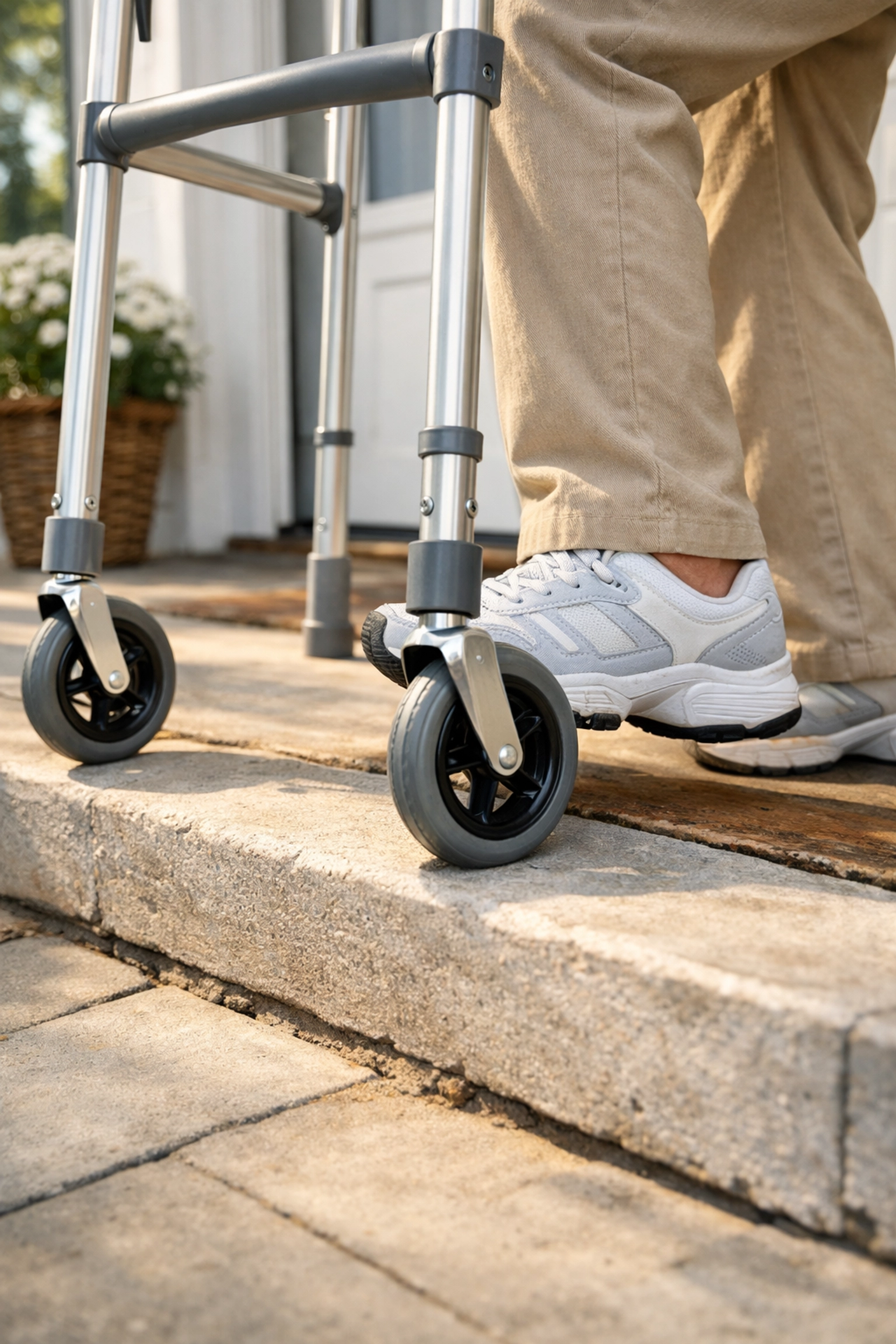
Transitions are where many falls happen. Whether it’s a raised door threshold or a curb on a sidewalk, moving a walker over an elevation change requires a specific technique. Many people try to "wheel" over a curb or lift the whole walker while standing on one foot, both of which are dangerous.
The Fix:
The safest way to handle a curb is the "Up with the Good, Down with the Bad" rule, adapted for a walker.
- Going Up: Place the walker firmly on the elevated surface (the curb) first. Make sure all four legs or wheels are stable. Then, step up with your stronger leg, followed by your weaker leg.
- Going Down: Move the walker down to the lower level first. Ensure it is stable. Then, step down with your weaker leg first, using the walker to take the weight off that limb. Finally, bring your stronger leg down to join it.
Always ensure the walker is fully stationary on the new level before you attempt to shift your body weight.
6. Neglecting Maintenance (Worn Tips and Loose Screws)
A walker is a mechanical device that experiences wear and tear. The rubber tips on the bottom of standard walkers are there to provide grip. Over time, these tips wear down, becoming smooth or even exposing the metal tubing underneath. This turns your "stability aid" into a "sliding hazard," especially on tile or hardwood floors.
Similarly, for those using rollators (walkers with four wheels and a seat), brakes can loosen over time, meaning the walker might roll away when you try to sit on it.
The Fix:
Perform a weekly "safety check." Look at the rubber tips; if the tread is gone or if they look uneven, replace them immediately. They are inexpensive and easy to swap out. If you have a rollator, test the brakes regularly. When you squeeze the brake handles, the wheels should lock completely. If the walker still moves while the brakes are engaged, it needs a professional adjustment. Also, check for any rattling sounds or loose bolts, as these can indicate the frame is becoming unstable.
7. Carrying Items in Your Hands
It’s tempting to try and carry a glass of water, a phone, or a book in one hand while using the walker with the other. However, a walker is designed to be used with both hands. Using only one hand significantly reduces the stability of the device and makes it much easier for the walker to swerve or tip to one side.
The Fix:
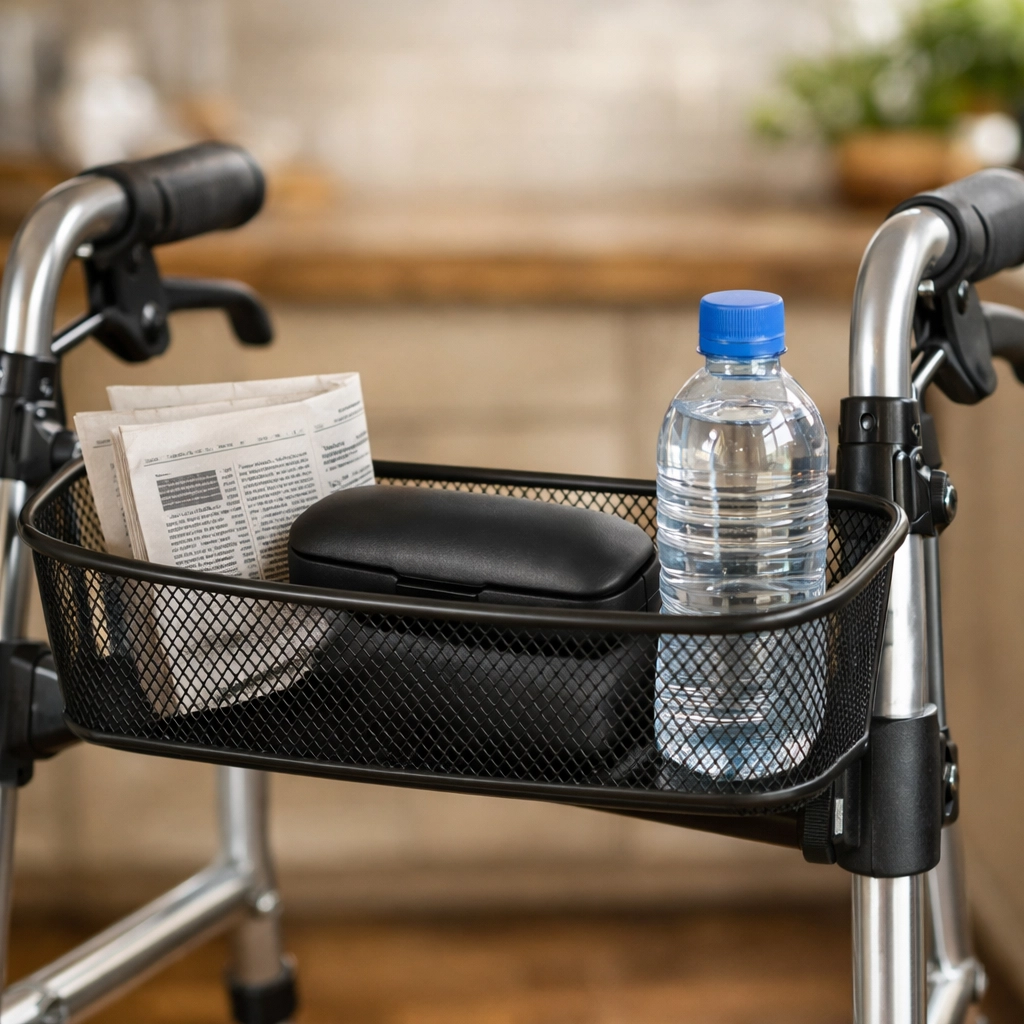
Keep your hands free at all times. If you need to transport items, use attachments specifically designed for walkers. A basket on the front of a rollator or a tray that clips onto the top of a standard walker can hold your essentials without compromising your safety. For smaller items like a phone or a TV remote, a small pouch that hangs from the side rail is a great solution. The goal is to ensure that both of your hands are always on the grips while you are in motion.
Choosing the Right Walker for the Job
Sometimes the "mistake" isn't in the technique, but in the choice of equipment itself. There are three main types of walkers, and using the wrong one for your specific needs can lead to frustration.
Standard Walkers (No Wheels)
These offer the most stability because they don't roll. However, they require you to lift the device with every step. These are best for people with significant balance issues who need a very stable frame and are only moving short distances.
Front-Wheeled Walkers
These have wheels on the front two legs and rubber caps or "skis" on the back. This allows for a more natural walking gait because you don't have to lift the walker completely. These are a great middle-ground for most seniors, providing a blend of mobility and support.
Rollators (Four-Wheeled Walkers)
These have wheels on all four legs, a seat, and hand brakes. They are excellent for people who can walk longer distances but need frequent rests. However, because they roll easily, they are not recommended for people with severe balance issues or those who might "lean" too heavily on the device, causing it to roll away from them.
A Note on Posture and Fatigue
Even if you fix all these technical mistakes, fatigue is still a major factor in falls. When we get tired, our form slips. We start looking at our feet, we start "walking the dog," and we forget to stay inside the frame.
If you find that your posture is deteriorating or you’re starting to lean heavily on the handles, it’s a sign that your muscles are tired. Take a break. Use a chair or, if you have a rollator, use the built-in seat (after ensuring the brakes are locked). Recovery is a part of safe mobility.
Final Thoughts
Using a walker correctly is a skill that takes practice. It might feel a bit slow or "clunky" at first to stay inside the frame and keep your head up, but these habits are what keep you safe.
If you aren't sure if your walker is adjusted correctly or if you are using it the right way, I highly recommend speaking with a physical therapist. They can provide a personalized assessment and help you fine-tune your technique.
Remember, the walker is there to support your independence. By avoiding these seven common mistakes, you ensure that your equipment is working for you, not against you. Stay upright, stay inside the frame, and keep moving forward with confidence.

