
Hi, I’m Brian Kerr, the founder of Fall Guys Products. Over the years, I’ve seen thousands of people take the brave step of using a mobility aid to keep their independence. Whether it’s a cane for a little extra balance or a walker for more significant support, these tools are game-changers.
However, there is a big difference between having a walker and using it correctly. Using a mobility aid the wrong way can actually increase your risk of falling or cause secondary pains in your back, wrists, and shoulders. It’s like wearing shoes that are three sizes too small: you might get where you’re going, but you’re going to hurt along the way.
If you or a loved one are using a cane or walker, let’s look at the seven most common mistakes people make and, more importantly, how to fix them so you can move with confidence.
1. The Height is "Just a Little Off"
This is by far the most common mistake I see. Most people pick up a cane or walker and just start using it at whatever height it came out of the box.
If your mobility aid is too high, you’ll end up shrugging your shoulders every time you take a step. This leads to neck and shoulder tension. If it’s too low, you’ll find yourself stooping over. Not only does this ruin your posture, but it also shifts your center of gravity too far forward, making a fall more likely.
How to fix it:
There is a simple "wrist crease" rule that works for almost everyone.
- Put on the shoes you plan to wear most often.
- Stand up as straight as you comfortably can.
- Let your arms hang naturally at your sides.
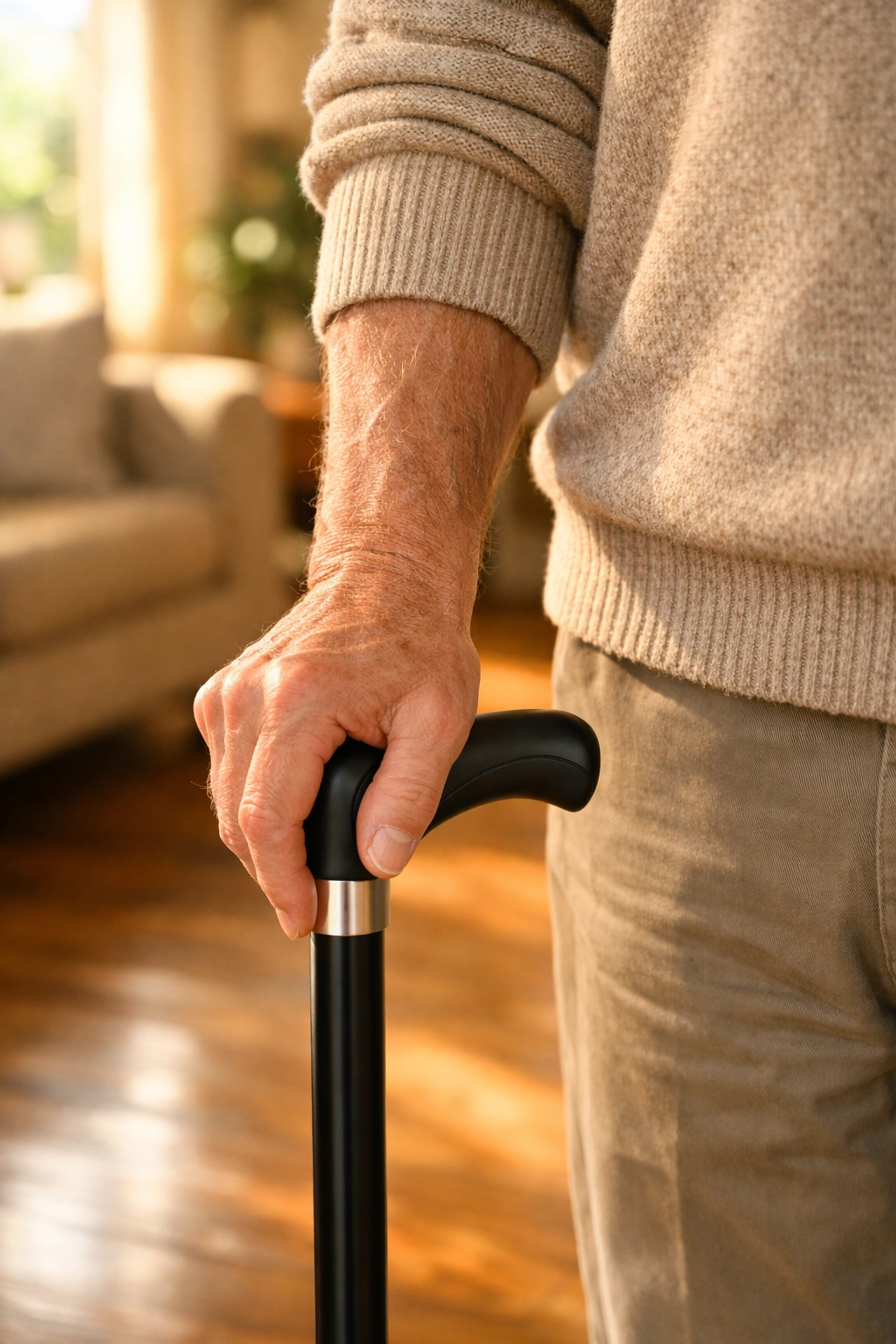
- The handle of your cane or walker should line up exactly with the crease on the inside of your wrist.
When you grip the handle, your elbow should have a slight bend: about 15 to 20 degrees. This allows your arm muscles to act as shock absorbers without putting too much strain on your joints.
2. Using a Cane on the "Wrong" Side
It feels intuitive: "My right leg is weak, so I should put the cane in my right hand to support it."
In reality, that’s the opposite of what you should do. When we walk naturally, our arms and legs move in opposition. When your right leg moves forward, your left arm swings forward. Using a cane on the same side as your injury actually throws off your balance and forces you to lean awkwardly, which can cause hip pain on your "good" side.
How to fix it:
Always use the cane on the side opposite of your weakness or injury. If your right knee is the problem, hold the cane in your left hand.
When you take a step with your weak leg, move the cane forward at the same time. The cane and the weak leg share the weight-bearing load, mimicking the way your body naturally moves. This "tripod" effect provides the most stable base possible.
3. Treating a Walker Like a Shopping Cart
We’ve all seen it: someone pushing their walker three feet out in front of them and then "chasing" after it. This is incredibly common with rollators (the walkers with seats and four wheels).
When the walker is too far ahead of you, you lose the support it’s meant to provide. If you trip while the walker is far away, you can’t use it to stabilize yourself; instead, you’ll likely just push it further away as you fall.
How to fix it:
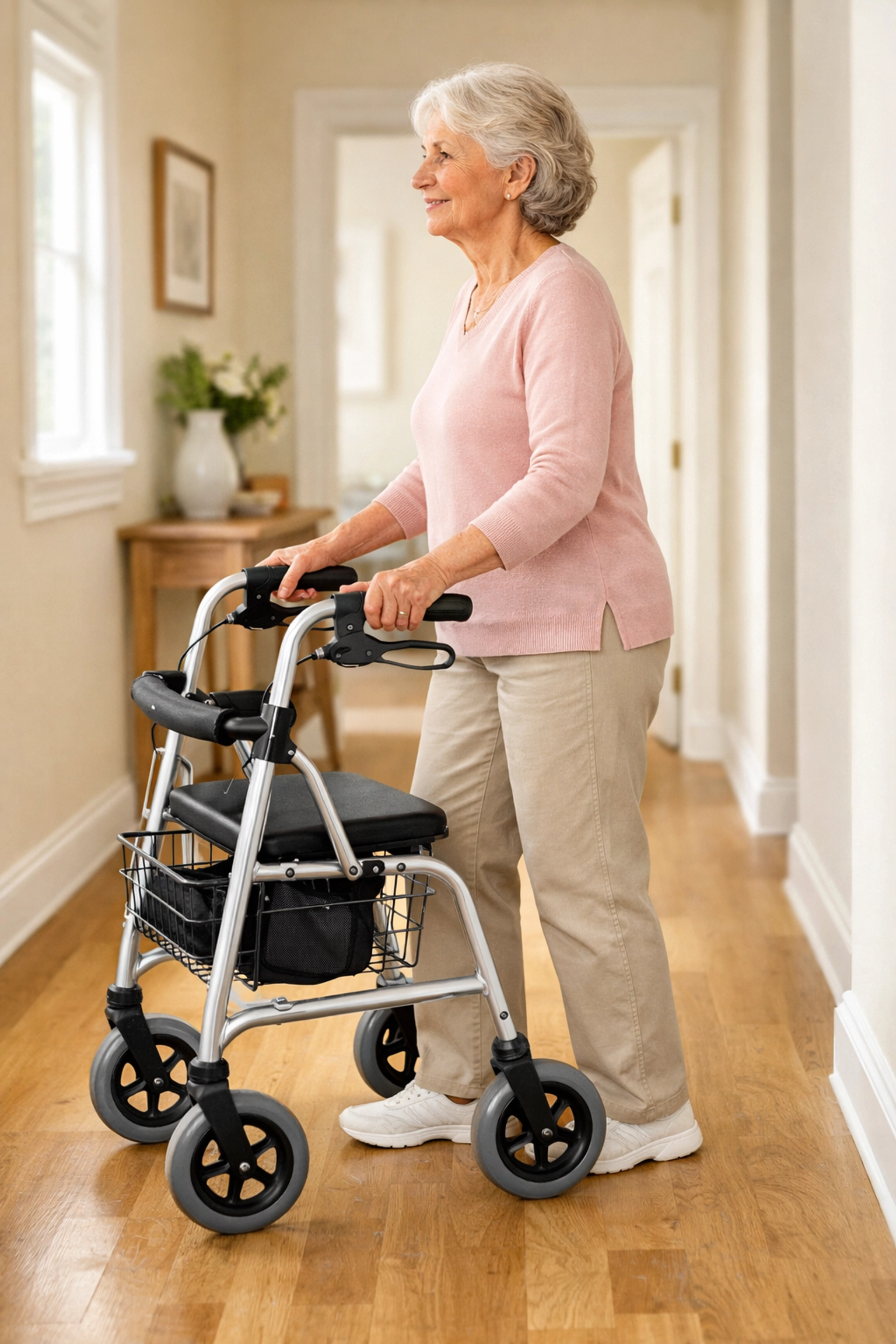
Think of yourself as walking inside the walker, not behind it. Your feet should generally stay between the back wheels (or back legs) of the frame.
When you move the walker forward, only move it about one step’s length. Keep your torso upright and stay close to the crossbar. This ensures that if you lose your balance, your weight goes straight down into the frame of the walker, where it is most stable.
4. Prioritizing Style Over Functionality
I understand the appeal of a vintage wooden cane with a carved silver handle or a sleek, minimalist design. However, many decorative canes are designed for "fashion" or "balance assist" rather than weight-bearing support.
A handle that is just a round knob or a thin hook (like the classic "candy cane" shape) can put immense pressure on the small nerves in your palm. This can lead to numbness, tingling, or even carpal tunnel issues over time.
How to fix it:
Look for ergonomic handles. "Derby" or "offset" handles are designed to distribute your body weight across the palm of your hand. If you have arthritis, look for "palm-grip" or "gel-grip" handles that are thicker and easier to hold without squeezing tightly.
Function should always come first. A cane that looks great but makes your hand go numb will eventually end up in the closet, and that doesn't help anyone stay safe.
5. The "Rhythm" is Out of Sync
Walking is a rhythmic process. When that rhythm gets interrupted by a mobility aid, people often get frustrated and move too fast, or they take "stutter steps."
The most common rhythmic mistake is moving the device, then moving both feet, then stopping. This makes the walk jerky and tiring.
How to fix it:
Practice the "Three-Point Gait" for canes or standard walkers:
- The Device: Move the cane or walker forward a short distance.
- The Weaker Leg: Step forward with your affected leg.
- The Stronger Leg: Step forward with your "good" leg, moving it past the first foot.
With a rollator (wheeled walker), the movement should be more fluid. However, the rule remains: move the device and the weak leg together, then follow with the strong leg. Taking the time to find this "one-two, one-two" rhythm will make walking feel much more natural and less like a chore.
6. Ignoring the "Tires" (The Rubber Tips)
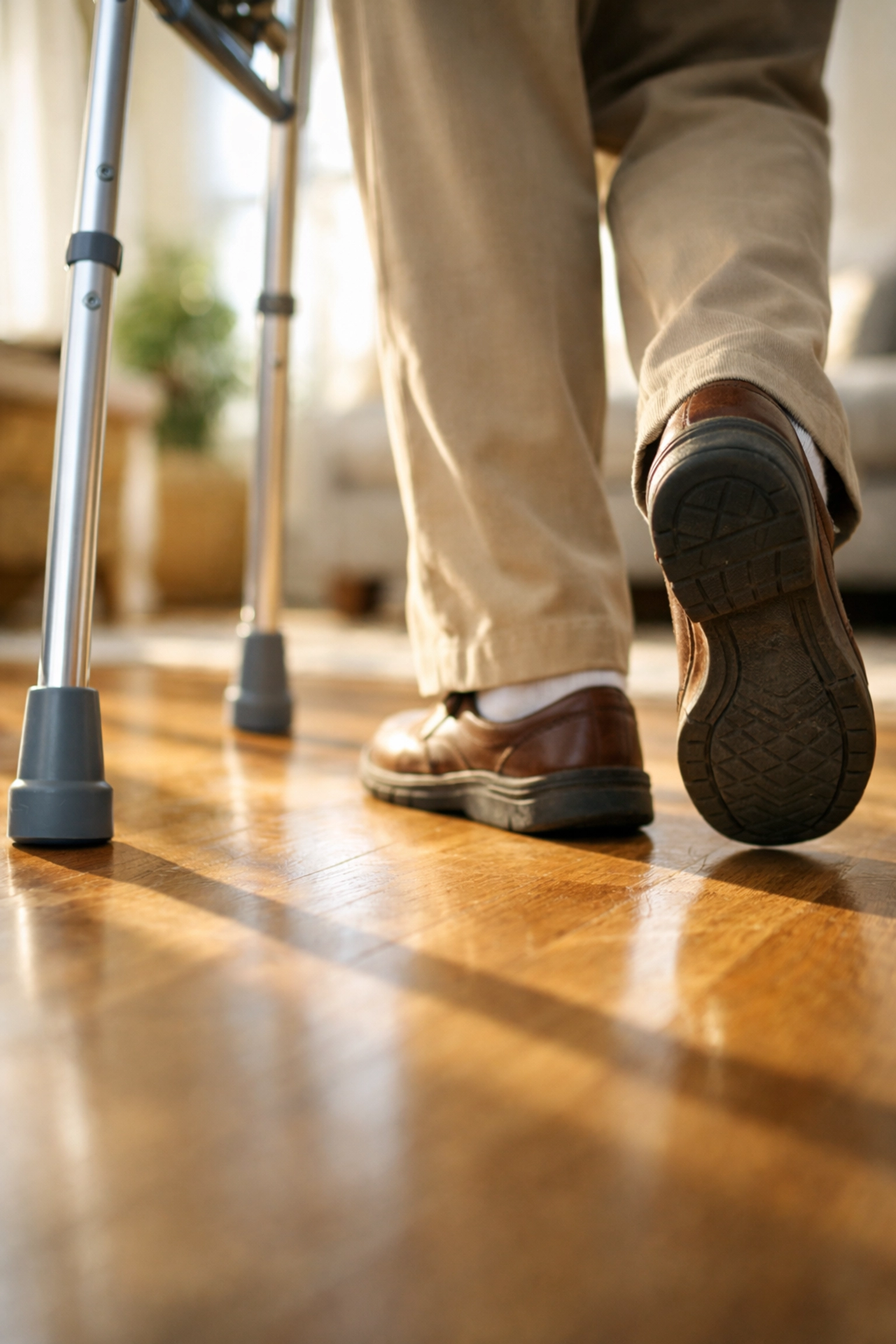
Think of the rubber tips on the bottom of your cane or walker like the tires on your car. If the tread is gone, you’re going to skid: especially on smooth surfaces like tile, hardwood, or wet pavement.
Over time, these rubber tips wear down at an angle based on how you walk. Once they become slanted or smooth, they lose their grip. A worn-out tip can turn a safety device into a sliding hazard.
How to fix it:
Perform a "tip check" once a month. Look at the bottom of the rubber. Is the tread still visible? Is the rubber soft and grippy, or has it become hard and brittle? If you see any metal peeking through the rubber, replace the tip immediately.
Replacement tips are very inexpensive and can be found at almost any pharmacy. It’s the simplest, cheapest way to ensure your aid stays safe. For extra stability, you can even find "quad tips" for canes that allow the cane to stand up on its own and provide a wider base.
7. Skipping the Professional "Fitting"
Many people "inherit" a walker from a neighbor or buy a cane at a local drugstore and assume that’s all there is to it. While mobility aids are sold over the counter, they are still medical equipment.
Using the wrong type of aid is a mistake in itself. For example, someone with Parkinson’s might struggle with a rollator that moves too fast, while someone with severe balance issues might find a single-point cane doesn't offer enough support.
How to fix it:
If possible, have a physical therapist (PT) or occupational therapist (OT) evaluate your walk. They can tell you exactly which type of device is best for your specific needs.
A professional can also teach you advanced maneuvers, such as how to safely navigate curbs, how to get in and out of a car with a walker, and how to transition from sitting to standing. These "micro-skills" are often where falls happen, and a 30-minute session with a pro can prevent a lifetime of injury.

Bonus: A Note on the "Stairs"
Stairs are the ultimate test for mobility aids. A common mistake is trying to use a walker on stairs. Standard walkers and rollators are not designed for stairs. Attempting to use one can lead to a very dangerous fall.
If you must use a cane on the stairs, remember this simple phrase: "Up with the good, down with the bad."
- Going up: Step up with your stronger leg first, then bring the cane and the weaker leg up to the same step.
- Going down: Put the cane down first, then the weaker leg, then follow with the stronger leg.
Final Thoughts
Using a walker or cane isn't a sign of "giving up." It's a tool for staying in the game. It’s like using a flashlight in a dark room: it just helps you see the path more clearly so you don't trip.
By taking ten minutes today to check your handle height, inspect your rubber tips, and ensure you're holding your cane on the correct side, you are taking a massive step toward staying independent and safe in your own home.
Moving with confidence starts with the right foundation. Let’s make sure yours is solid.

