
Stairs are a fundamental part of many homes, yet they are often the most overlooked area when it comes to proactive safety. For many of us, navigating a flight of steps is a rhythmic, subconscious action we’ve done thousands of times. However, as our mobility needs change or as we support aging loved ones, those familiar steps can become significant hazards.
At Fall Guys Products, we believe that staying safe at home shouldn't feel like a chore or a source of anxiety. It’s about making small, smart adjustments that preserve independence. Most stairway accidents aren't caused by a single catastrophic event, but rather by small, repeatable mistakes that accumulate over time.
If you or a family member are starting to feel a bit "unsure" on the stairs, or if you simply want to proof your home for the future, here are seven common mistakes and the practical, reassuring ways to fix them today.
1. Viewing Handrails as Optional Accessories
One of the most frequent mistakes we see is the "one-sided" handrail or, worse, no handrail at all on shorter transitions. Many homeowners believe that if a staircase only has three or four steps, a railing isn't necessary. Others have a sturdy rail on one side but leave the other side open.
The reality is that balance is bilateral. Having a point of contact for both hands significantly reduces the load on your joints and provides a secondary "fail-safe" if your foot slips. A single rail forces you to lean toward one side, which can actually throw off your center of gravity.
How to Fix It Today:
Ensure your stairs have handrails on both sides. If you only have one, consider installing a second. Check the "grip-ability" of your current rail. A safe handrail should be "circumferential": meaning you can wrap your hand all the way around it for a "power grip." Decorative, wide, or flat railings might look nice, but they are difficult to grasp firmly in an emergency. Ensure the rail extends about 12 inches past the top and bottom steps so you have support before you start climbing and after you finish.
2. Treating the Stairs Like a Temporary Storage Unit
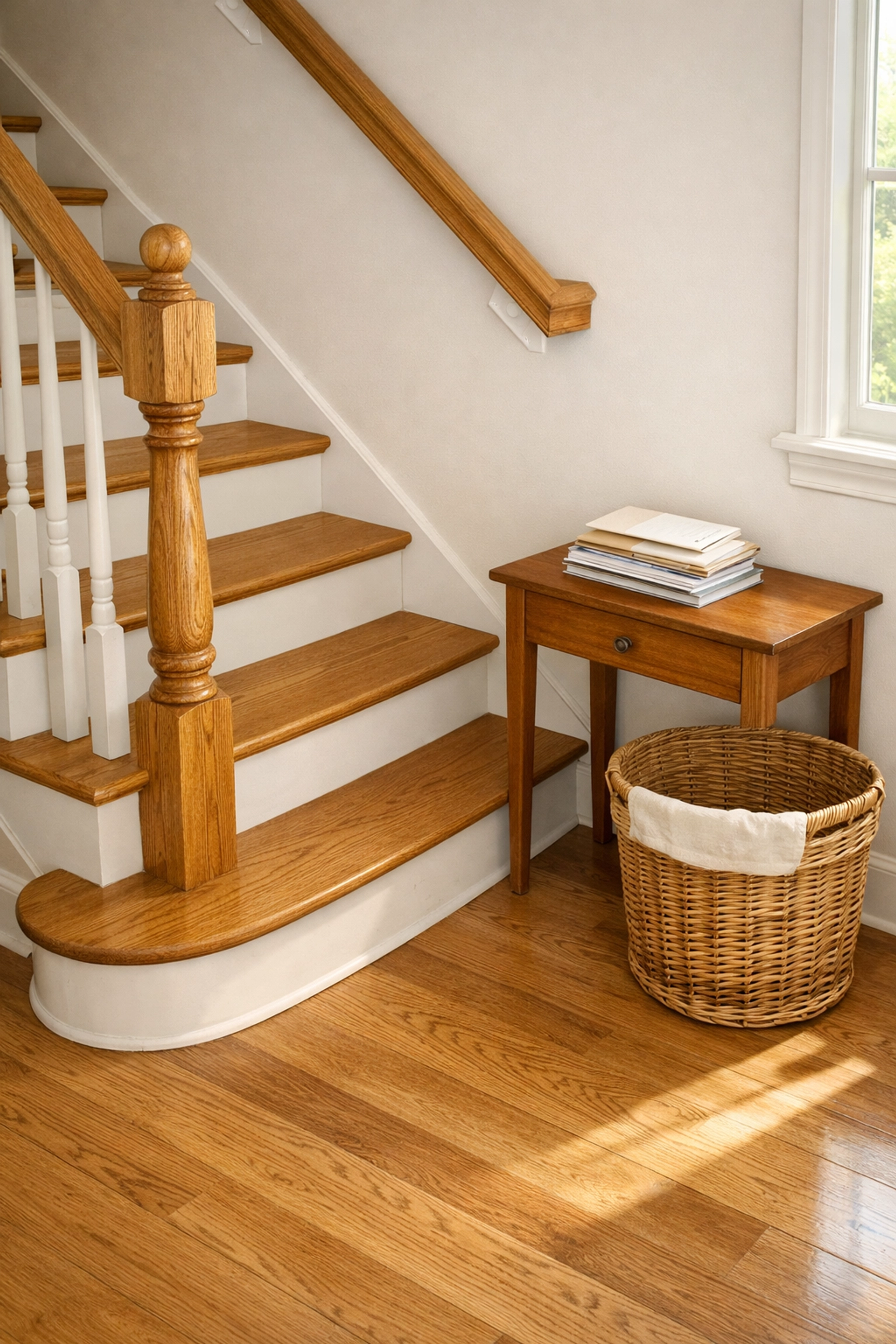
We’ve all done it. You have a pair of shoes, a stack of mail, or a basket of laundry that needs to go upstairs, so you set it on the bottom step to "take it up later." This creates a psychological and physical trap.
Physically, clutter narrows the walking path and creates a direct tripping hazard. Psychologically, it creates a "visual distraction." When you are navigating stairs, your brain needs to focus on the depth and edge of each tread. Clutter breaks that focus, making it easier to misjudge where the step ends.
How to Fix It Today:
Establish a "Zero-Stair Policy." Nothing: not even a single envelope: should ever sit on a step. If you find it difficult to carry items up and down as they appear, place a small "transition table" at the top and bottom of the stairs. Put the items there, and wait until you have a helper or until you are prepared to make a dedicated trip with your hands free.
3. Underestimating the "Transition Zone" Lighting
Most falls don't happen in the middle of a staircase; they happen at the top or bottom transition. A common mistake is having a bright light in the hallway but a dim light over the stairs themselves. This creates shadows that can mask the "nose" (the front edge) of the step.
As we age, our eyes require more light to distinguish depth and contrast. If the lighting is uneven, your brain might struggle to tell the difference between a flat landing and the beginning of a descent.
How to Fix It Today:
Install high-lumen, "warm" LED bulbs that eliminate shadows without creating a harsh glare. If your staircase doesn't have a built-in light fixture, you don't necessarily need an electrician. Battery-operated, motion-sensor LED strips can be applied under the lip of each step or along the baseboard. These light up automatically as you approach, ensuring every single tread is clearly visible.
4. Rushing the "Rhythm" of the Climb
In our fast-paced world, we often try to multitask while using the stairs. We might be checking a phone, talking to someone in another room, or simply trying to get to the door before the bell stops ringing. Rushing changes your gait. Instead of placing your full foot firmly on the tread, you might only land on the ball of your foot, which is much less stable.
How to Fix It Today:
Adopt the "One Step at a Time" rule. It sounds simple, but consciously deciding to place both feet on a single step before moving to the next can dramatically increase stability. Take a breath before you start your ascent or descent. Focus entirely on the movement. If you find yourself rushing because you're worried about missing a phone call, keep your phone in a pocket or consider a wearable alert system so the "urgency" is removed from your movement.
5. Overlooking the "Nose" of the Step
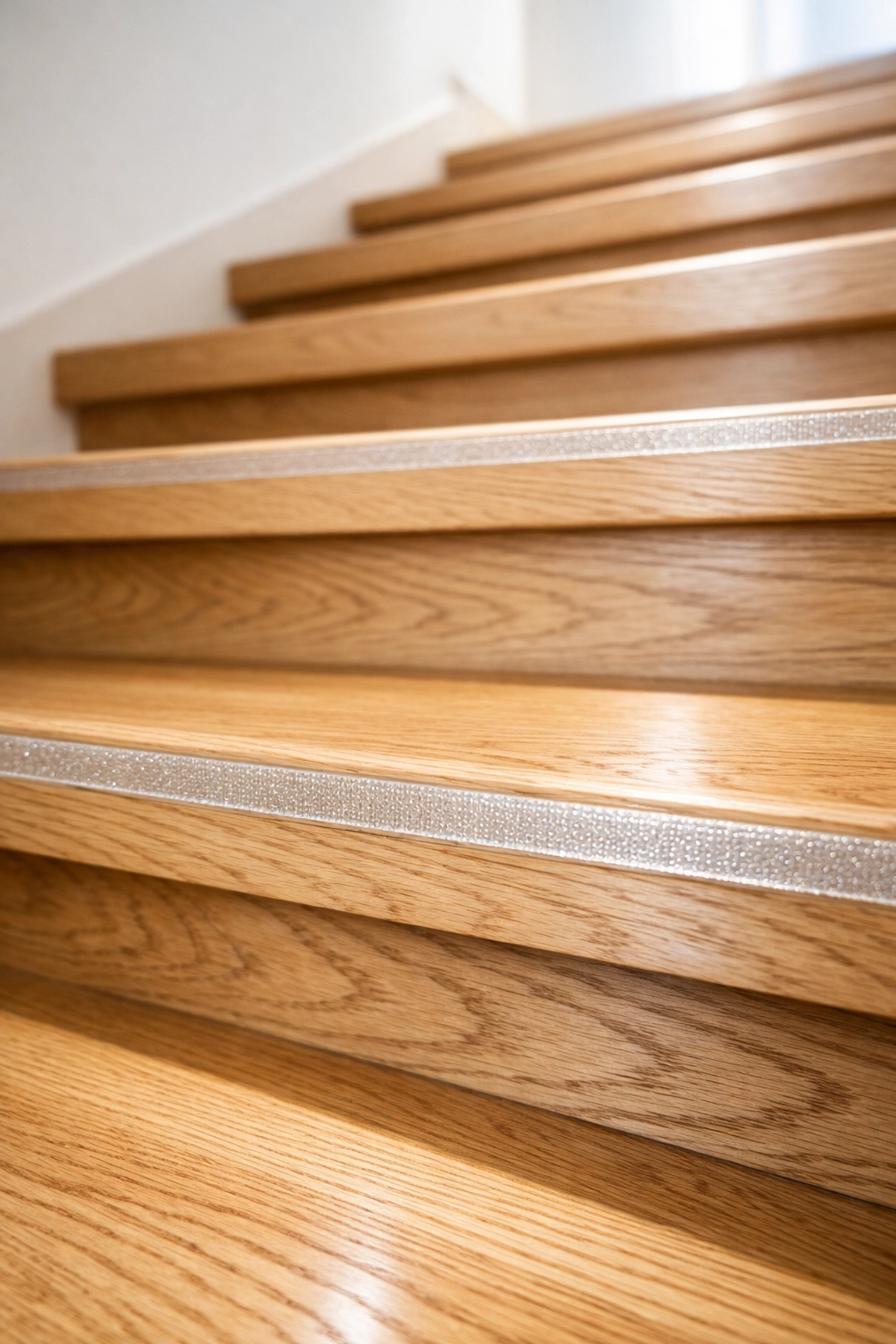
The "nose" is the front edge of the stair tread. In many homes, especially those with old carpeting or polished wood, the edge of the step becomes rounded or slick over time. When the edge is worn down, there is less surface area for your foot to grip, and it becomes much easier for your heel to slide off during a descent.
How to Fix It Today:
Inspect the edges of your stairs. If you have carpet, ensure it is pulled tight and isn't "bunched" at the edges. If you have wood or tile stairs, consider adding "anti-slip" adhesive strips. These are often clear or colored to match your decor, but they provide a gritty texture that catches the sole of your shoe. For those with vision impairment, using a high-contrast strip (like a dark strip on a light wood step) helps clearly define where the step ends.
6. Carrying Heavy or Bulky Loads with Both Hands
This is perhaps the most dangerous mistake. Carrying a large laundry basket or a heavy box blocks your line of sight. If you can't see your feet or the next step, you are relying entirely on muscle memory, which is risky. Furthermore, if you are using both hands to carry an object, you have zero "points of contact" with a handrail. If you lose your balance, there is nothing to catch you.
How to Fix It Today:
Never carry anything that requires both hands while on the stairs. If you have laundry, try using a smaller bag that can be slung over one shoulder, leaving one hand free for the railing. Alternatively, "drop and go": toss soft items (like clothes) down the stairs first, then walk down with both hands free to collect them at the bottom. For heavier items, wait for a family member or friend to assist.
7. Ignoring the "Footwear Factor"
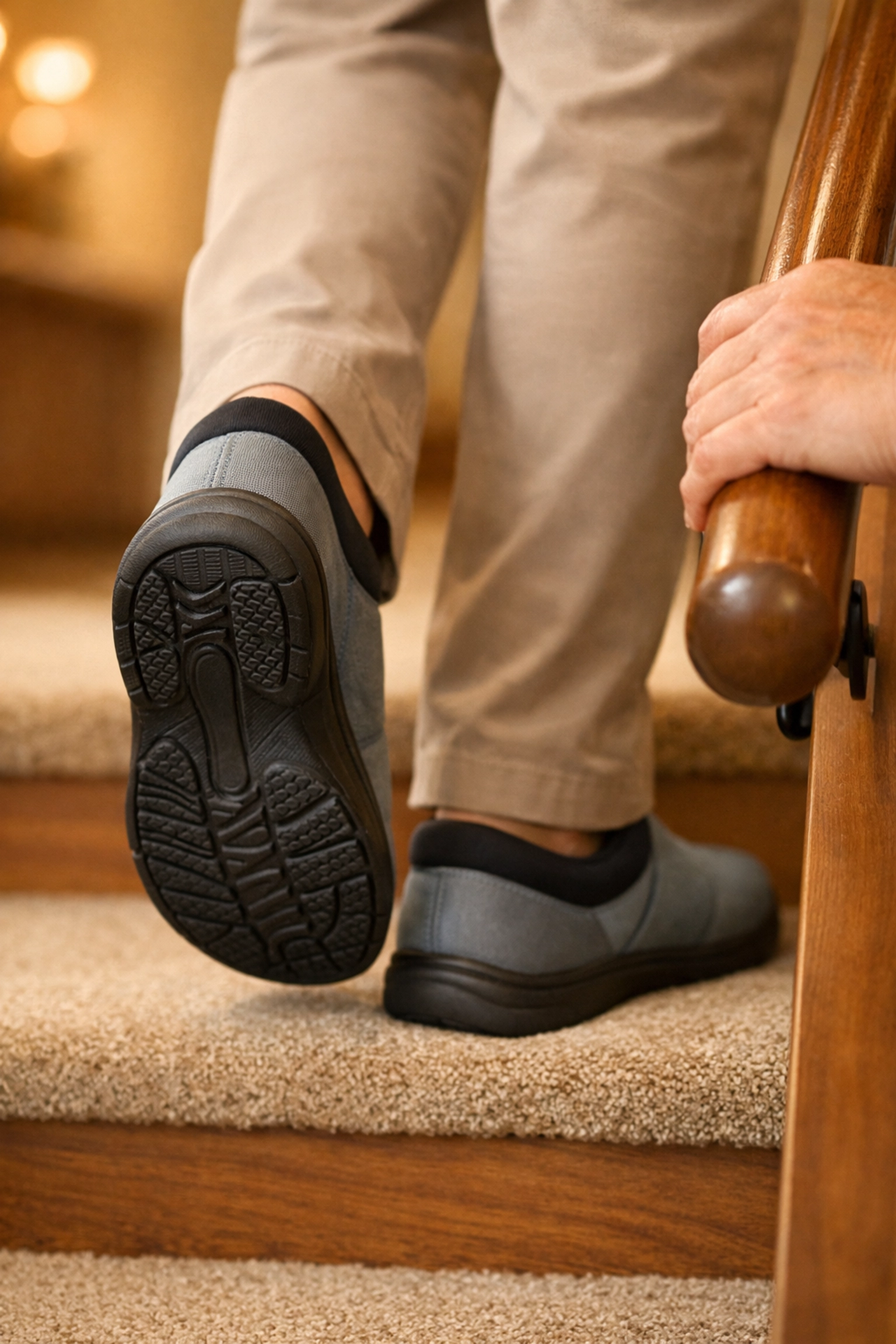
Many people feel safest in their own homes and choose to walk around in socks or loose slippers. However, stairs and socks are a recipe for a slide. Plain socks offer almost zero traction on wooden or laminate stairs. Conversely, some heavy outdoor boots can be too bulky, catching on the lip of the step as you lift your foot.
How to Fix It Today:
Adopt a "Safe Footwear" rule for the house. If you prefer not to wear outdoor shoes inside, invest in a dedicated pair of "indoor-only" shoes with rubber, non-slip soles and a closed heel. Avoid "scuff" slippers that can easily slide off your foot. If you absolutely must wear socks, ensure they are the type with rubberized "grippers" on the bottom, though a firm-soled shoe is always the gold standard for stair safety.
A Final Reassurance
Safety isn't about limiting your life; it’s about empowering it. Making these changes isn't an admission of "getting old": it's a smart, proactive way to ensure your home remains a place of comfort rather than a place of risk.
If you're unsure where to start, begin with Mistake #2 and Mistake #3. Clearing the clutter and changing a lightbulb are "quick wins" that take less than ten minutes but provide immediate protection. From there, you can look into more permanent fixes like secondary handrails or tread textures.
Remember, the goal is to feel confident. When you know your stairs are clear, well-lit, and equipped with sturdy support, that feeling of "unsteadiness" often fades, allowing you to move through your home with the peace of mind you deserve.
Your home should be your sanctuary. By addressing these seven common mistakes, you’re taking a massive step toward keeping it that way for years to come. Take it one step at a time, literally.

