
Stairs are one of those things we use every single day without really thinking about it. They are a fundamental part of our homes, connecting our living spaces and providing access to our bedrooms or basements. But for many of us, especially as we get older or care for someone who is, stairs can transition from a simple convenience to a significant source of anxiety.
The truth is, staircases are statistically one of the most common locations for falls in the home. However, a fall on the stairs is rarely "just an accident." Most of the time, it’s the result of small, overlooked hazards that have been there for years. We get used to the creak on the third step or the dim light in the hallway, and we adapt our movements to compensate. But eventually, those "workarounds" can fail us.
My goal here isn't to make you afraid of your own home. Instead, I want to pull back the curtain on the most common mistakes people make with stair safety and show you exactly how to fix them. Most of these fixes are simple, affordable, and can be done in a weekend.
1. Living with Inadequate Lighting
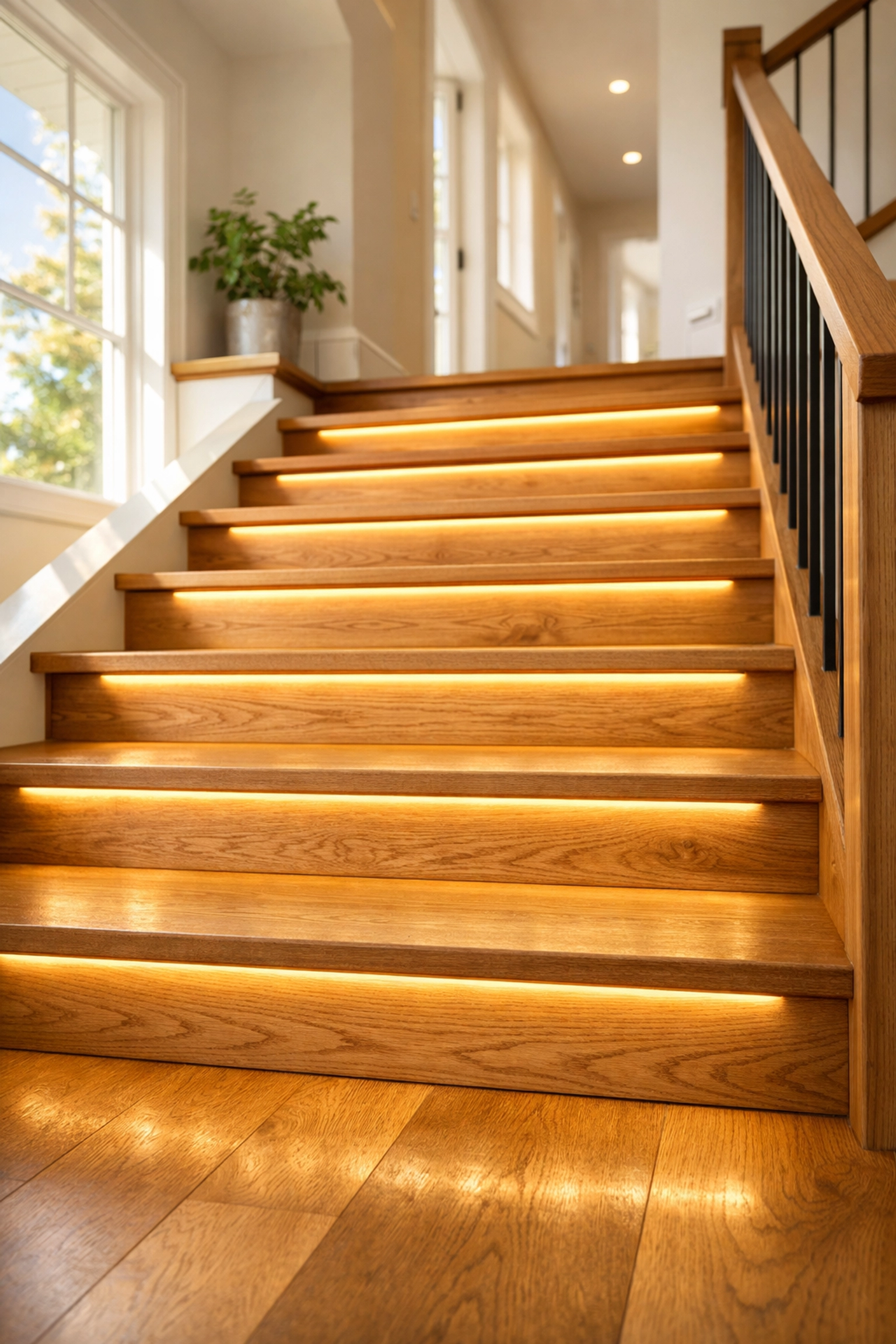
The single most common mistake I see is a lack of proper lighting. Many staircases rely on a single overhead bulb at the top or bottom of the flight. This creates a "shadow zone" in the middle of the stairs where it becomes nearly impossible to see the edge of the tread.
When you can’t clearly distinguish where one step ends and the next begins, your brain has to guess. That’s when missteps happen. Glare is also a factor; if you have a high-gloss finish on your stairs and a bright, unshielded bulb, the reflection can actually blind you momentarily as you descend.
How to Fix It:
- Dual-Switch Lighting: Ensure there is a light switch at both the top and the bottom of the stairs. You should never have to navigate the stairs in the dark to reach a switch.
- Motion-Sensing LED Strips: This is a game-changer. You can install battery-operated LED strips along the baseboards or under the lip of each tread. They light up automatically as you approach, providing a clear path without needing to fumble for a switch.
- Increase Lumens, Decrease Glare: Use "soft white" bulbs that provide high visibility without the harshness of "daylight" bulbs, which can create confusing shadows.
- Nightlights: Plug in a high-quality nightlight in the hallways leading to the stairs to help your eyes adjust as you move from room to room.
2. Overlooking Slippery Surfaces
Many of us love the look of polished hardwood or natural stone. They are beautiful, but they can be incredibly treacherous, especially if you are wearing socks or slippers without grip. Even some types of low-pile carpet can become "buffed" over time, becoming slicker than they were when they were first installed.
The danger increases if the stairs are in an area where moisture might track in, like near a garage or front entry. A tiny bit of water on a polished surface is a recipe for a slide.
How to Fix It:
- Non-Slip Adhesive Strips: You can find transparent or decorative non-slip tape that applies directly to the edge of each step. It provides a tactile "grip" for your foot.
- Stair Treads: If you have wooden stairs, adding individual carpet treads (securely attached with adhesive or staples) can provide both traction and a visual cue for where the step ends.
- Check Your Carpet: If you have full carpeting on your stairs, check for "rounding." Over time, the carpet at the edge of the step can compress and become rounded, making it easier for your foot to slip off. If the carpet is loose or worn, it needs to be replaced or re-stretched.
- Anti-Slip Coatings: There are specialized clear-coat finishes that contain a fine aggregate to provide "grit" without changing the appearance of the wood too much.
3. Relying on "Decorative" or Incomplete Handrails
Not all handrails are created equal. In many older homes, handrails were designed for aesthetics rather than safety. They might be too thick to wrap your hand around, or they might end a step or two before the flight actually finishes.
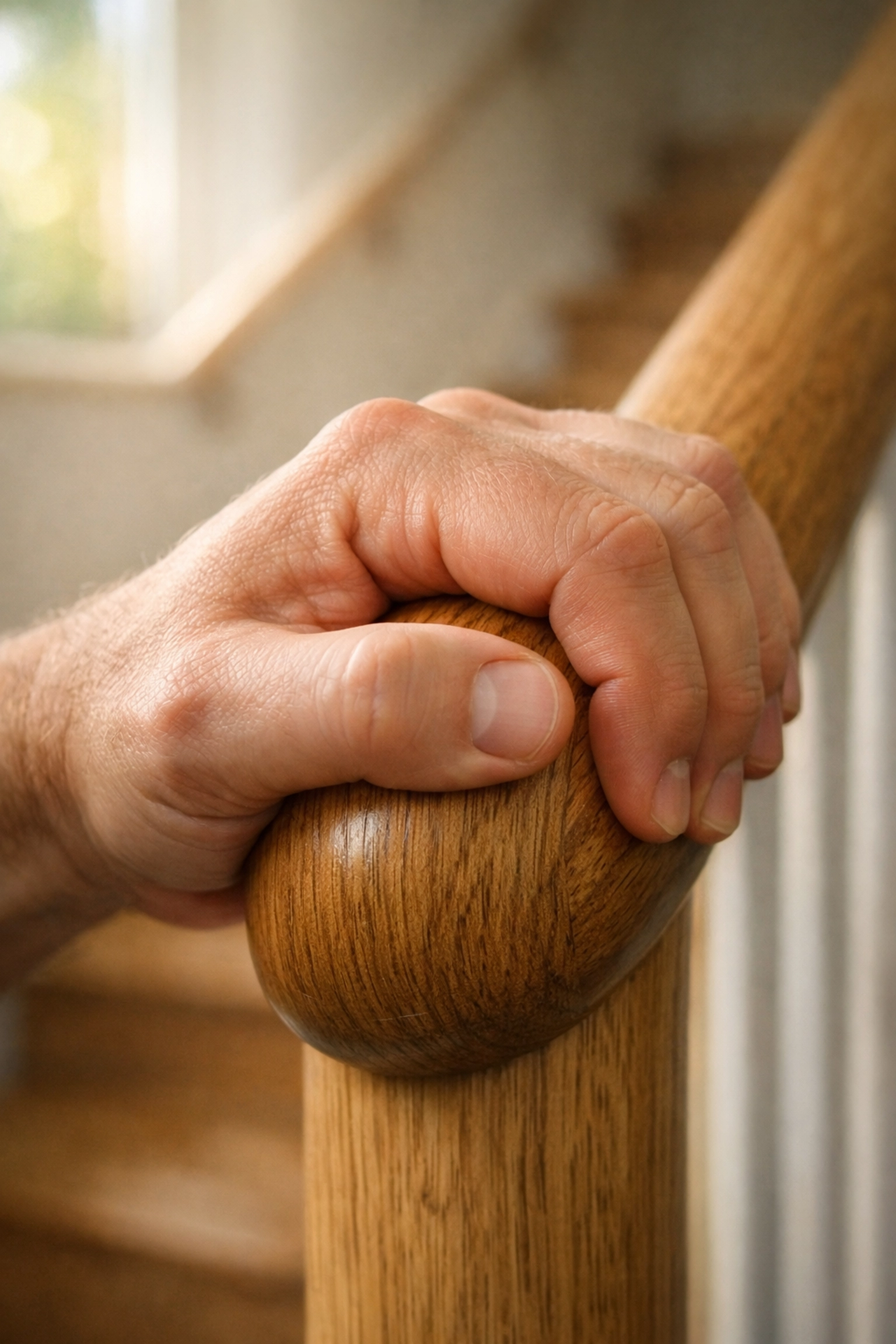
A functional handrail should allow for a "power grip." This means you should be able to wrap your fingers all the way around the rail so that your thumb and fingers can meet. If the rail is a wide, flat piece of wood, you can only use a "pinch grip," which is much weaker and more likely to fail if you actually start to trip.
How to Fix It:
- The Power Grip Test: Try to wrap your hand around your rail. If you can’t make your fingers touch your thumb, the rail is too wide. Consider replacing it with a 1.5-inch to 2-inch diameter rounded rail.
- Install Dual Rails: Most building codes only require a rail on one side. However, for maximum safety, having a rail on both sides is significantly better. It allows you to use your stronger arm regardless of whether you are going up or down.
- Check the Extension: The handrail should extend about 12 inches beyond the top and bottom steps. This allows you to stabilize yourself before you take that first step and maintain support after the last one.
- Secure the Mounting: Grab the rail and give it a firm shake. If it moves at all, the brackets are loose or aren't anchored into the wall studs. This needs to be fixed immediately.
4. Ignoring Inconsistent Step Dimensions
Our brains are remarkably good at recognizing patterns. When we walk up a flight of stairs, our motor memory takes over after the first two steps. We expect every riser (the vertical part) and every tread (the horizontal part) to be the exact same size.
If one riser is even half an inch higher than the others, your foot will likely catch it. This is a very common issue in DIY renovations or older homes where the floor has settled. The most dangerous steps are the very top and the very bottom, as these are often "shorted" to make the stairs fit the space.
How to Fix It:
- Measure Your Stairs: Use a tape measure to check the height and depth of every single step. If you find a discrepancy of more than 1/4 inch, you have a major trip hazard.
- Visual Cues: If you can't realistically rebuild the staircase, use visual cues to alert your brain to the change. A strip of high-contrast paint or tape on the edge of the "irregular" step can help you subconsciously adjust your stride.
- Consult a Professional: If the stairs are significantly uneven, it may be worth having a contractor or a physical therapist take a look. Sometimes a small adjustment to the flooring at the top or bottom can level things out.
5. Using Stairs for "Temporary" Storage
We’ve all done it. You have a pile of mail, a pair of shoes, or a basket of laundry that needs to go upstairs, so you set it on the bottom two steps to take up "on your next trip."
This is one of the most dangerous habits you can have. Clutter on stairs narrows the walking path and forces you to alter your gait. Even worse, if you are carrying something else, you might not see the object on the step until it’s too late. Stairs should be a "zero-tolerance zone" for storage.
How to Fix It:
- The "One Trip" Rule: If something needs to go up or down, take it all the way. Don’t leave it on the steps.
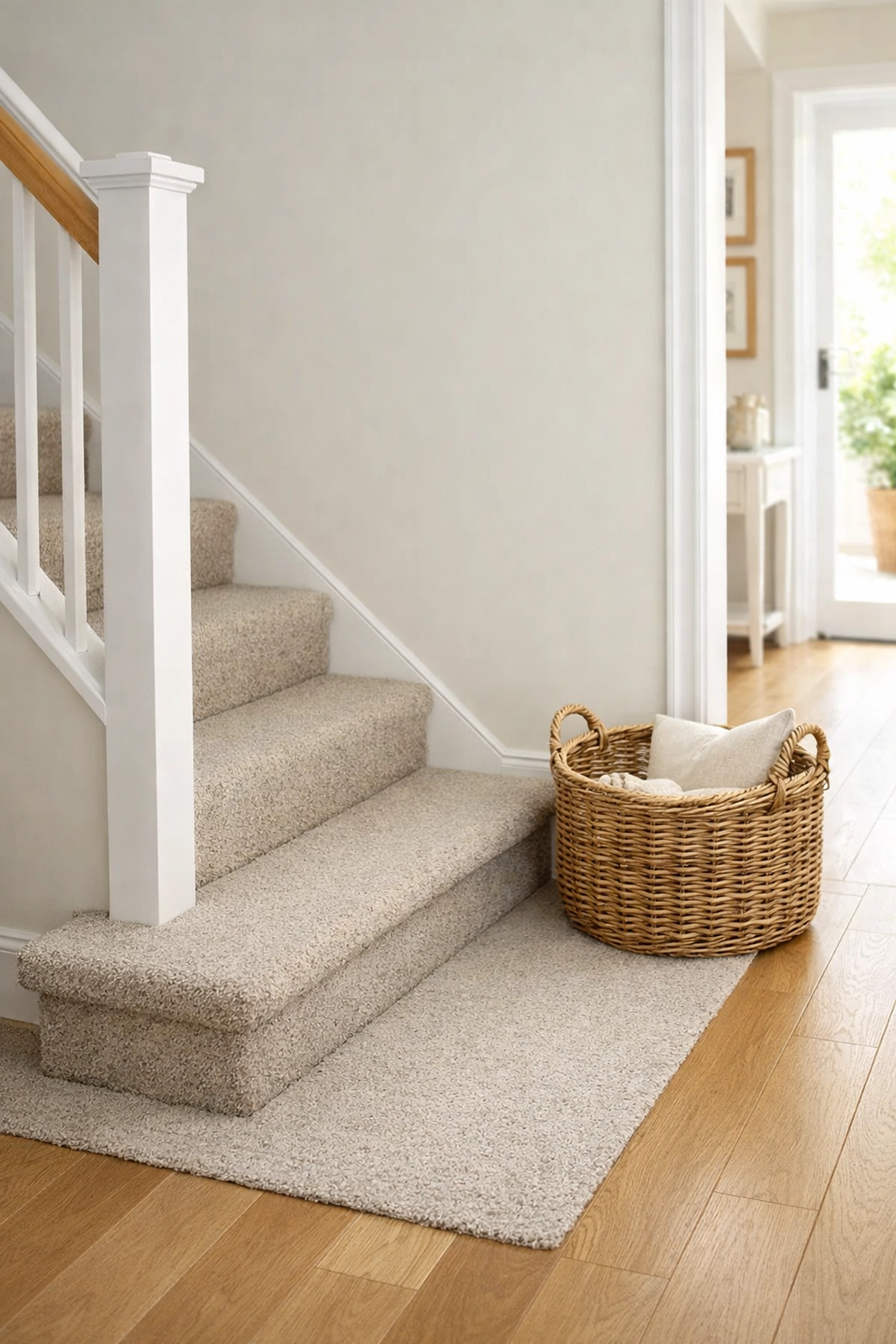
- Landing Baskets: If you really need a place to stage items, put a basket on the floor at the very top or bottom of the stairs, well away from the actual walking path.
- Clear the Landings: It’s not just the steps; the area immediately leading to the stairs needs to be clear of rugs, shoes, and furniture. You need a "runway" to safely transition onto the flight.
6. Neglecting Regular Maintenance
Staircases take a lot of abuse. Every time you walk up or down, you are applying several times your body weight in force to the structure. Over time, wood dries out, nails loosen, and glue fails.
A squeak might seem like a minor annoyance, but it’s often a sign that a tread is loose. A loose tread can shift under your weight, causing a sudden loss of balance. Similarly, if you have an outdoor staircase, wood rot or rusting metal can compromise the structural integrity of the entire unit.
How to Fix It:
- The Monthly Walk-Through: Once a month, walk slowly up and down your stairs. Listen for squeaks and feel for any "give" in the steps.
- Tighten and Secure: Use wood screws (which have much better holding power than nails) to secure loose treads into the stringers.
- Check the "Nosing": The nosing is the part of the step that overhangs the riser. Ensure it isn't cracked or splintering. If it is, it can catch on the heel of your shoe as you descend.
- Outdoor Care: For exterior stairs, keep them clear of moss, ice, and wet leaves. These can be even more slippery than a polished indoor floor.
7. Practicing Unsafe "Stair Habits"
Sometimes the mistake isn't with the stairs themselves, but with how we use them. Rushing is a primary culprit. We hear the phone ringing or the doorbell, and we move faster than our balance allows.
Another major factor is what we wear. Walking on stairs in stocking feet is incredibly risky. Similarly, long robes or loose trousers can snag on the edge of a step. Finally, carrying heavy or bulky items that block your view of your feet is a recipe for a misstep.
How to Fix It:
- The Two-Point Contact Rule: Always have at least one hand on the rail. Ideally, keep two points of contact (both hands on rails if available, or one hand on the rail and feet firmly planted).
- Proper Footwear: Wear shoes with non-slip soles, even inside the house. If you prefer not to wear shoes, high-quality "gripper" socks are a better alternative than plain cotton or wool socks.
- Lighten the Load: If you have a lot to carry, make two trips. Or, use a small backpack to keep your hands free to hold the handrail.
- Take Your Time: Consciously decide to slow down. One step at a time, ensuring your whole foot is planted on the tread before moving the next foot.
Small Changes, Big Results
When we talk about "fall prevention," it can sometimes feel like an overwhelming task. But when you break it down, it’s really about managing the environment and being mindful of our habits.
Improving your stair safety doesn't necessarily mean installing a stairlift or remodeling your entire home. It starts with changing a lightbulb, clearing off that pile of books on the landing, and making sure your handrail is actually sturdy enough to catch you if you stumble.
If you are a caregiver, take a walk through your loved one's home with this list in hand. Look at the stairs through their eyes. Is the lighting bright enough for someone with aging vision? Is the carpet patterned in a way that makes the steps look like a flat ramp? These small details matter.
Taking the time to fix these seven mistakes isn't just about safety: it's about confidence. When you know your stairs are solid, well-lit, and clear, you can move through your home with peace of mind. And that's exactly what home should feel like.

