
Stairs are often the most daunting part of a home for anyone concerned about mobility. Whether you are helping an aging parent stay independent or you are looking to "age in place" yourself, the staircase is usually the first place people look when they think about safety. However, many of the most significant risks aren't the stairs themselves, but rather how we maintain them, how we use them, and the small design flaws we’ve learned to ignore over the years.
At Fall Guys Products, we see these issues every day. My name is Brian Kerr, and I’ve spent years looking at home environments through the lens of fall prevention. What I’ve learned is that most stairway accidents are preventable. It’s rarely just "bad luck." Usually, it’s a combination of small mistakes that create a "perfect storm" for a slip or a trip.
In this guide, we’re going to look at seven common mistakes people make with stair safety and, more importantly, the practical steps you can take to fix them.
1. The "Invisible" Step: Poor Lighting and Shadowing
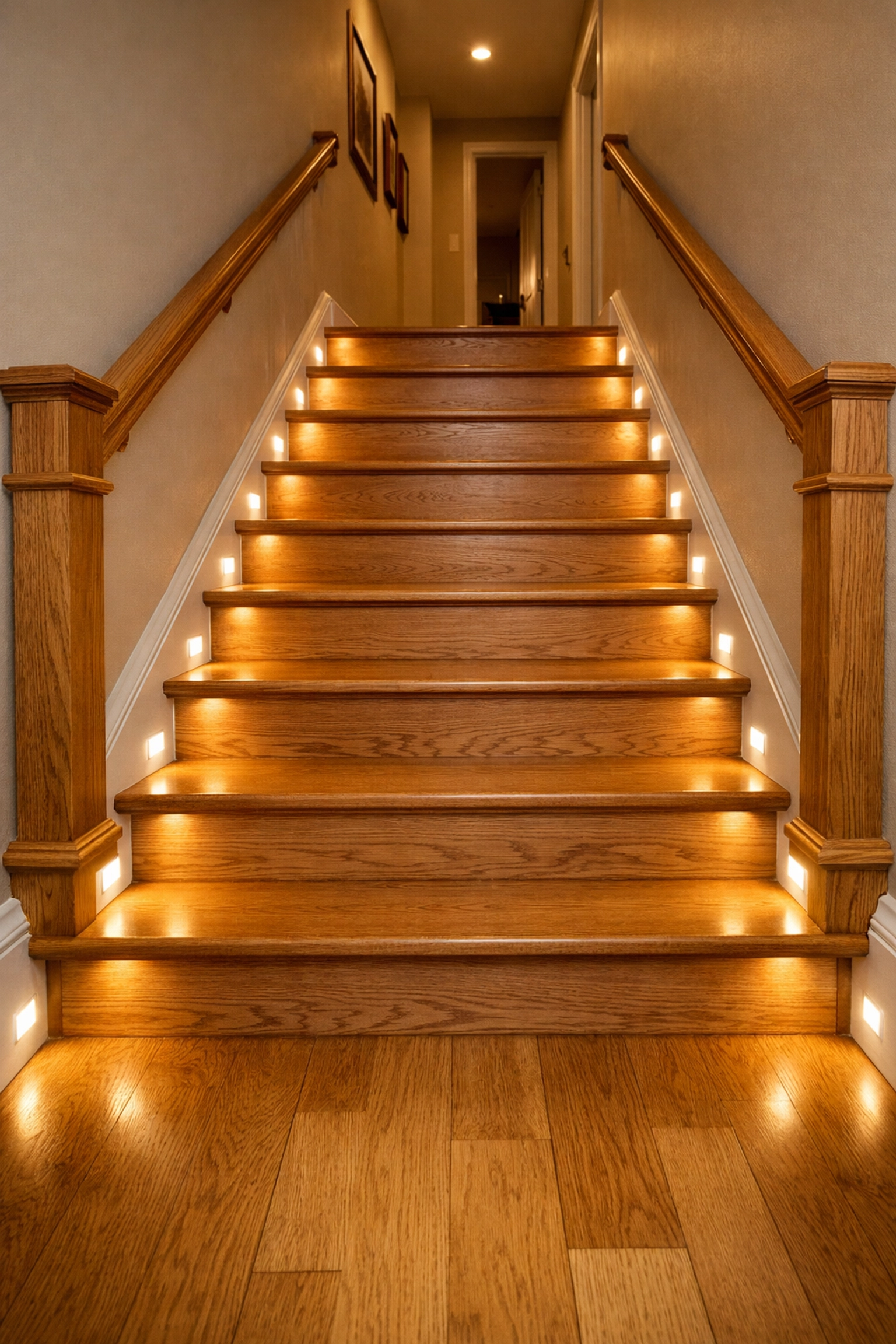
One of the most common reasons people lose their footing on stairs is that they simply cannot see where the tread (the flat part of the step) ends and the riser (the vertical part) begins. As we age, our eyes require more light to process depth and contrast. If your stairwell relies on a single, dim overhead bulb, you are likely dealing with shadows that hide the edge of the step.
The Mistake: Relying on inadequate or outdated lighting. Many homes have a light switch at the bottom of the stairs but not at the top, or vice versa, leading people to "brave the dark" rather than making the trip to turn on the light.
The Fix:
- Dual Switching: Ensure there are switches at both the top and bottom of the staircase.
- Increase Lumens: Swap out old bulbs for brighter, high-contrast LED bulbs. You want the light to be bright but not create a glare.
- Motion Sensors: Consider installing battery-operated, motion-sensing LED lights along the baseboard of the stairs. These light up the path automatically as you approach, which is a lifesaver for those late-night trips to the kitchen or bathroom.
- Uniformity: Make sure the lighting is even. Harsh spotlights can create deep shadows that look like steps, which is just as dangerous as no light at all.
2. Using the Stairs as a Temporary Shelf
We’ve all done it. You have a stack of mail, a pair of shoes, or a basket of laundry that needs to go upstairs, so you set it on the bottom two steps to take up "on the next trip." This habit is one of the leading causes of trips on the stairs.
The Mistake: Treating the stairs as a storage area. Even if the items are pushed to the side, they narrow the usable walking path and create a psychological distraction. Your brain should be focused on the rhythm of your steps, not on navigating around a pair of slippers.
The Fix:
- The "Zero-Object" Rule: Implement a strict rule that nothing: ever: sits on the stairs.
- Landing Baskets: If you need to "stage" items to go up or down, place a dedicated basket at the top and bottom of the stairs, at least three feet away from the actual steps.
- Immediate Action: If you see something on the stairs, move it immediately. It’s better to make one extra trip than to risk a fall.
3. The Single-Handrail Trap
Most building codes require at least one handrail, but for many seniors or those with balance issues, one is simply not enough. Relying on a single rail means that on the way down, you might be using your dominant hand, but on the way up, you’re forced to use your non-dominant side: or worse, you have nothing to hold onto at all on one side.
The Mistake: Having only one handrail or having a handrail that is "decorative" rather than functional.
The Fix:
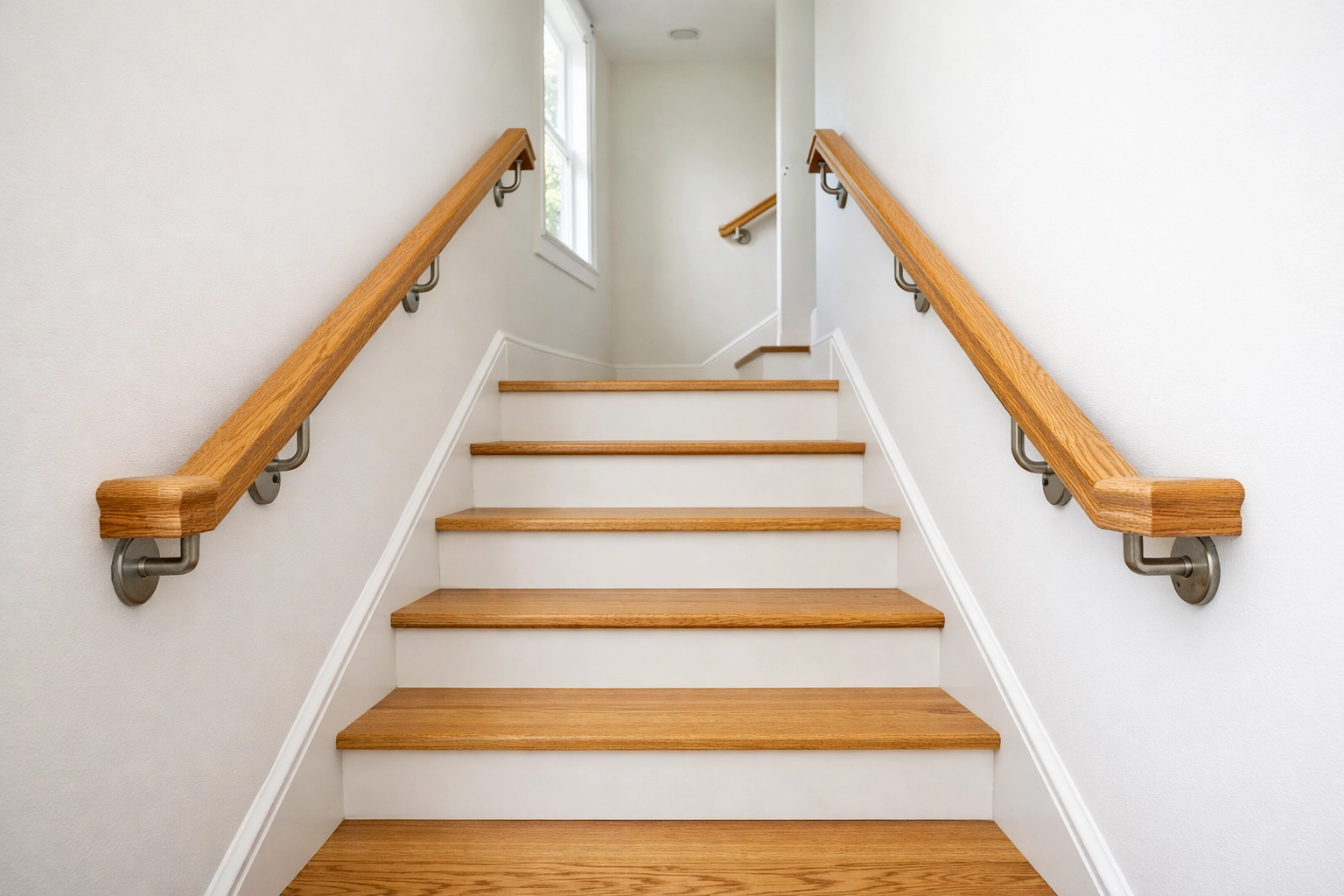
- Double Up: Install handrails on both sides of the staircase. This provides a "closed loop" of safety, allowing you to use both hands to stabilize yourself.
- Extend the Rail: A common mistake in older homes is a handrail that stops at the last step. A safe handrail should extend at least 12 inches beyond the top and bottom steps. This allows you to gain your balance before you start climbing and maintain it until you are safely on level ground.
- Grip Check: Ensure the handrail is easy to wrap your hand around. A "power grip" (where the thumb and fingers can meet) is much stronger than a "pinch grip" used on wide, flat decorative rails.
4. Ignoring "Stairway Blindness" (Lack of Contrast)
If your stairs are all one color: say, all dark wood or all beige carpet: the edges of the steps can blend together. This is especially dangerous when going downstairs. Without a clear visual cue of where the step ends, it’s easy to overstep or understep.
The Mistake: Having a monochromatic staircase where the steps blend into one another.
The Fix:
- Contrast Strips: Apply a strip of high-contrast tape or paint to the edge (the nosing) of each step. If you have dark wood stairs, use a light-colored strip. If you have light carpet, consider a darker runner or edge guards.
- Texture Change: Sometimes a change in texture at the top and bottom of the stairs (like moving from wood to a low-pile rug) can signal to your brain and feet that the transition is coming.
- Highlight the Nosing: The goal is to make the "edge" of the step pop visually so your depth perception doesn't have to work as hard.
5. Rushing and Distractions
This is a behavioral mistake that affects everyone, regardless of age. We live in a world of constant notification. Many people try to check their phones, finish a conversation, or carry a heavy load while navigating the stairs.
The Mistake: Rushing to answer the door or phone, or carrying items that obscure your view of your feet.
The Fix:
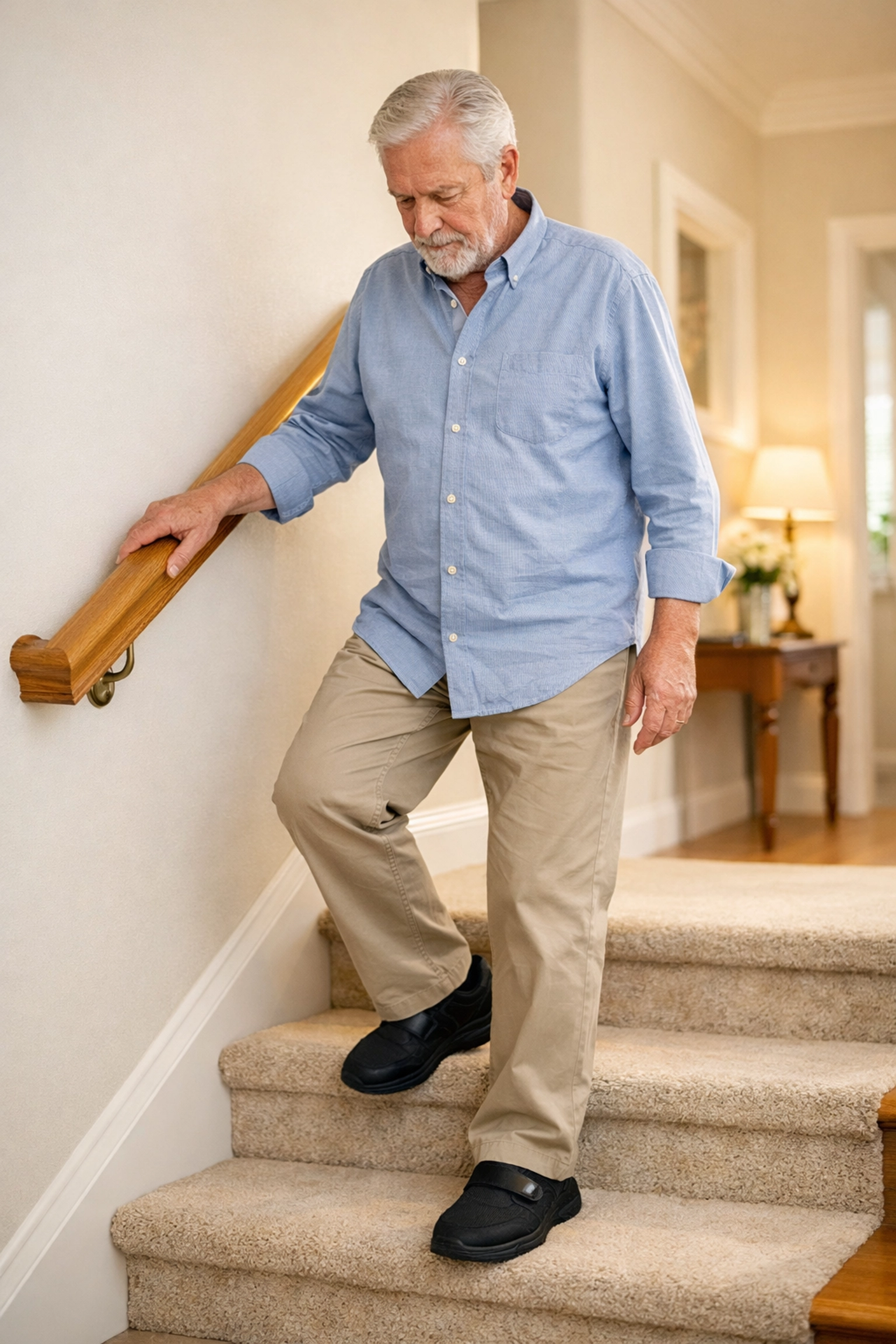
- The Three-Point Rule: Always try to have at least one hand on a railing. If you are carrying something, carry it in one arm so the other is free for the rail.
- Pause Before You Step: Before starting your ascent or descent, take a breath. Make sure your vision is clear and your focus is on the task at hand.
- The "Half-Load" Rule: If you have a lot to carry, break it into two smaller loads. Never carry anything so bulky that you cannot see the steps in front of you. It’s not worth the "efficiency" of one trip if it results in an injury.
6. Neglecting Footwear Choice
What you wear on your feet is just as important as the stairs themselves. Many falls occur because someone is wearing "house shoes" with no grip, or worse, just socks.
The Mistake: Walking on stairs in socks, loose slippers, or high heels. Smooth wooden or tiled stairs are essentially ice rinks when paired with standard socks.
The Fix:
- Grip is Key: Wear shoes with non-slip rubber soles, even inside the house.
- Avoid "Floppy" Slippers: Slippers should have a back and fit snugly. If they can slide off your heel, they can cause a trip.
- Non-Slip Treads: If you prefer to walk in socks or have slippery wooden stairs, consider adding transparent non-slip adhesive strips to the treads. They provide grip without ruining the aesthetic of your wood floors.
7. Overlooking Variations in Step Height (The Rhythm Breaker)
Our brains are incredible at pattern recognition. When you walk up a flight of stairs, your brain "maps" the height of the first two steps and assumes the rest are the same. This creates a physical rhythm. If even one step is a half-inch higher or lower than the others (a "non-uniform riser"), your foot will likely catch on the edge or "drop" unexpectedly.
The Mistake: Ignoring uneven steps or loose carpeting. Over time, house settling can cause stairs to shift, or DIY repairs might result in uneven heights.
The Fix:
- The Measurement Test: If you feel like you always "stumble" on a specific part of your stairs, get a tape measure. Measure the height (riser) of every step. If there is a variation of more than 3/8 of an inch, it’s a significant safety hazard.
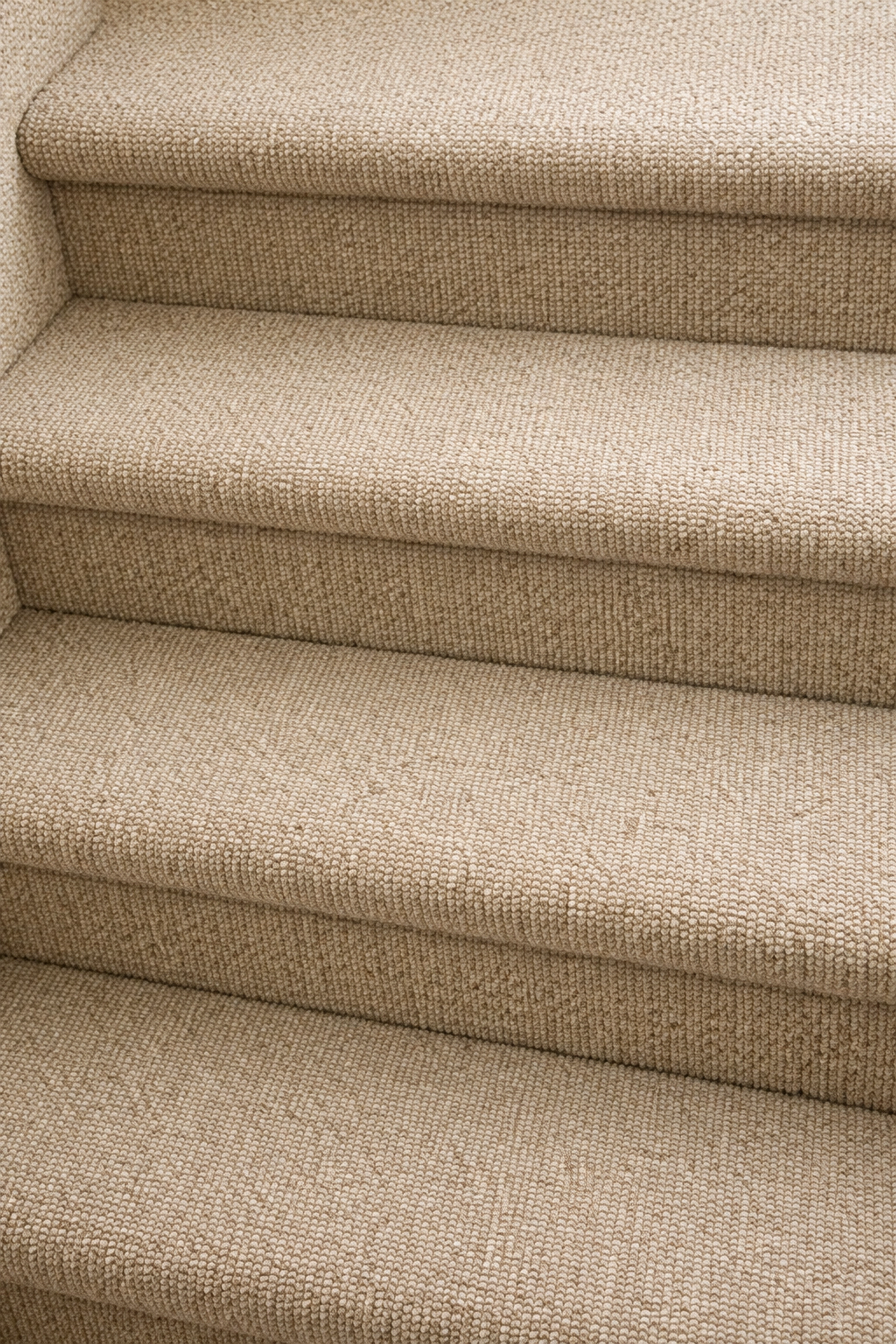
- Fix Loose Carpet: If you have carpeted stairs, check for "bubbles" or loose edges. A loose carpet can act like a rug on a hardwood floor: sliding right out from under you. Ensure the carpet is tightly tacked down at every junction.
- Consult a Professional: If your stairs are structurally uneven, it may require a carpenter to shim the treads or adjust the staircase. While this sounds like a big project, it is much cheaper than the medical bills associated with a fall.
How to Conduct a Stair Safety Audit
Now that we’ve covered the seven mistakes, I encourage you to walk over to your stairs right now and perform a quick audit. Use this checklist to see where you stand:
- Light: Is there a switch at both ends? Can I see the edge of every step clearly at 10:00 PM?
- Rails: Are there rails on both sides? Do they wiggle when I pull on them? (They shouldn't!)
- Clutter: Is there anything: even a single piece of paper: sitting on the steps?
- Contrast: If I squinted, could I still tell where one step ends and the next begins?
- Surface: Are the steps slippery? Is the carpet tight?
- Landing: Is the area at the top and bottom of the stairs clear of "trip hazards" like throw rugs?
Final Thoughts from Fall Guys Products
At Fall Guys Products, we believe that safety shouldn't feel like a chore or a medical necessity: it should feel like a natural part of a well-maintained home. Stairs don't have to be a source of anxiety. By addressing these seven common mistakes, you can significantly reduce the risk of accidents and navigate your home with confidence.
Remember, fall prevention isn't about limiting your life; it's about making sure you can keep living it to the fullest. Take the time this weekend to fix that loose railing, swap out that dim bulb, and clear off the "temporary" storage. Your future self will thank you.
Stay safe, stay mobile, and keep moving forward.

