
Stairs are a fundamental part of many homes, representing the bridge between our living spaces and our private sanctuaries. However, as we age or face mobility challenges, these architectural features can transition from simple transitions to significant hurdles. According to safety experts, the stairway is one of the most common locations for falls in the home.
The good news is that most stair-related accidents are not the result of unavoidable "accidents." Instead, they are often the result of small, overlooked environmental factors or habits that have developed over decades. By identifying these common mistakes and implementing practical, reassuring solutions, you can significantly reduce the risk of a fall and maintain your independence.
Here are seven mistakes people commonly make with stair safety and, more importantly, how you can fix them.
1. Using Stairs as a "Waiting Room" for Clutter
We have all done it. You have a stack of mail, a pair of shoes, or a book that needs to go upstairs, but you aren't heading that way yet. So, you place it on the bottom step or the landing, promising yourself you will grab it on your next trip.
This is perhaps the most common mistake in home safety. Even a small object: a rogue slipper or a single envelope: can cause a foot to slide or a person to trip. When your brain is focused on the rhythm of climbing or descending, it may not register a small object in its path until it is too late.
How to Fix It:
The rule should be simple: the stairs are a thoroughfare, not a storage unit. If you find it difficult to make multiple trips, consider placing a "stair basket" at the top and bottom of the flight. Place the items inside the basket, well away from the steps: and only carry the basket up when you have a free hand and are feeling steady. Better yet, ask a family member or caregiver to clear the baskets at the end of each day.
2. Relying on Insufficient or "Harsh" Lighting
As we age, our eyes require significantly more light to see clearly. What felt like a bright hallway twenty years ago might feel dim and shadowy today. Furthermore, the way light hits a staircase matters just as much as the amount of light. Harsh, overhead lights can create deep shadows that hide the edge of a step, making it difficult to judge depth.
Many people also fail to have light switches at both the top and bottom of the stairs. Navigating a dark staircase to reach a switch is a recipe for a fall.
How to Fix It:
First, ensure you have "three-way" switches so you can turn the lights on before you start your journey and off once you’ve reached your destination. Second, consider the quality of the light. Warm, diffused light is often better than a single, blinding bulb.
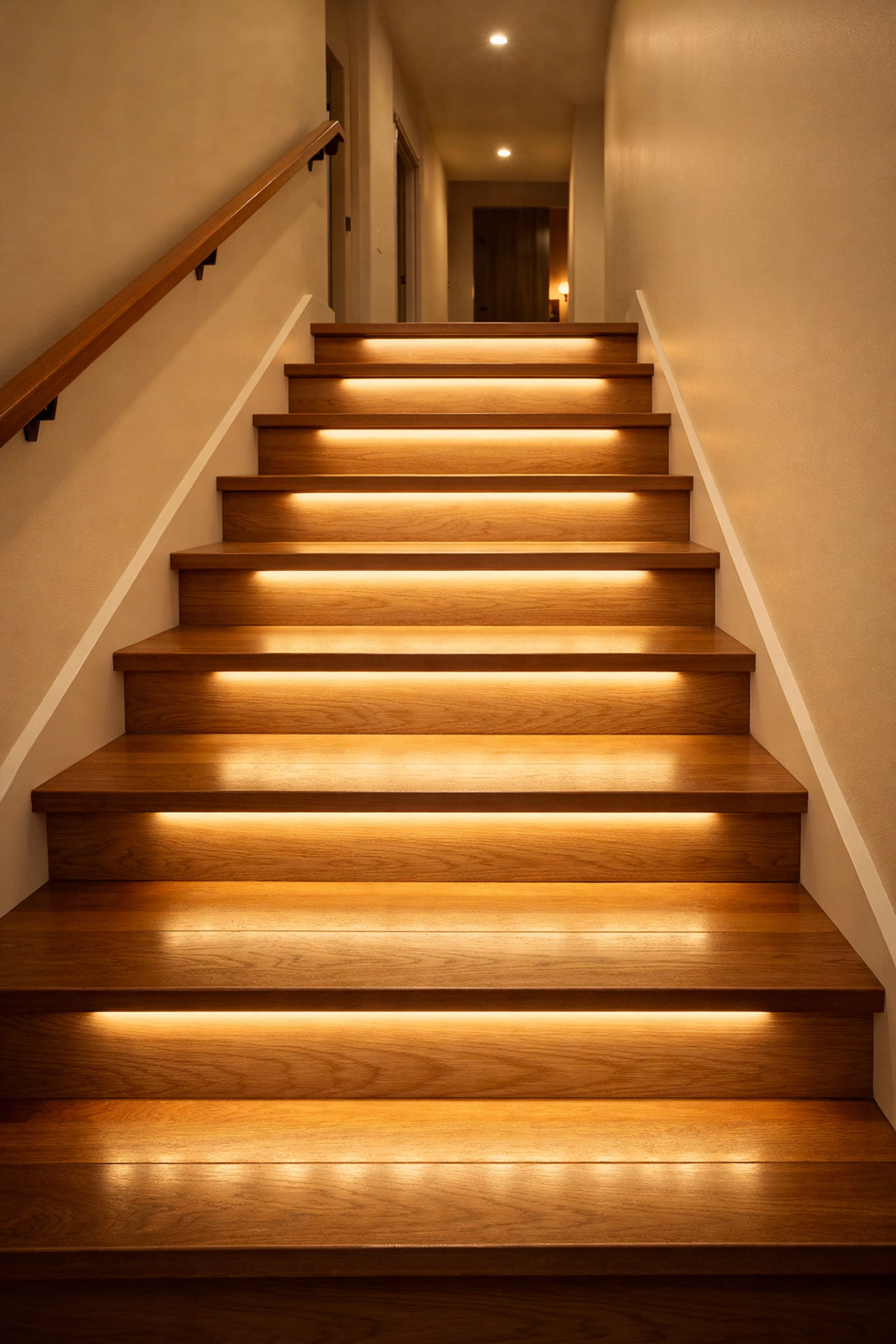
One of the most effective modern fixes is the installation of motion-activated LED strip lighting under the lip of each tread or along the baseboard. This illuminates the actual path of your feet without glaring in your eyes, and because they are motion-activated, you never have to worry about fumbling for a switch in the middle of the night.
3. The "One-Sided" or Short Handrail
In many older homes, staircases were built with a handrail on only one side. While this may meet old building codes, it doesn't meet the needs of someone focusing on fall prevention. If your "strong" side is away from the rail when you are descending, you may feel off-balance.
Another common handrail mistake is a rail that ends abruptly. If the handrail stops before the very last step, you lose your primary point of stability exactly when you are transitioning back to a flat surface: the moment when many falls occur.
How to Fix It:
Ideally, a staircase should have sturdy handrails on both sides. This allows you to use both hands for support if you are feeling fatigued, or to always have a rail accessible to your dominant hand regardless of whether you are going up or down.
Ensure the rails are "load-bearing," meaning they are screwed into the wall studs, not just the drywall. The rail should also extend at least 12 inches beyond the top and bottom step, allowing you to maintain a grip until your feet are firmly on level ground.
4. Prioritizing Aesthetics Over Traction
Hardwood stairs are beautiful. Polished stone is elegant. However, these smooth surfaces offer very little "grip," especially if you are walking in socks or smooth-soled slippers. A slight bit of moisture from a spill or a rainy day can turn a beautiful staircase into a slide.
Many people resist adding safety features to their stairs because they worry it will ruin the look of their home. But safety and style can coexist.
How to Fix It:
There are several ways to add traction without sacrificing aesthetics:
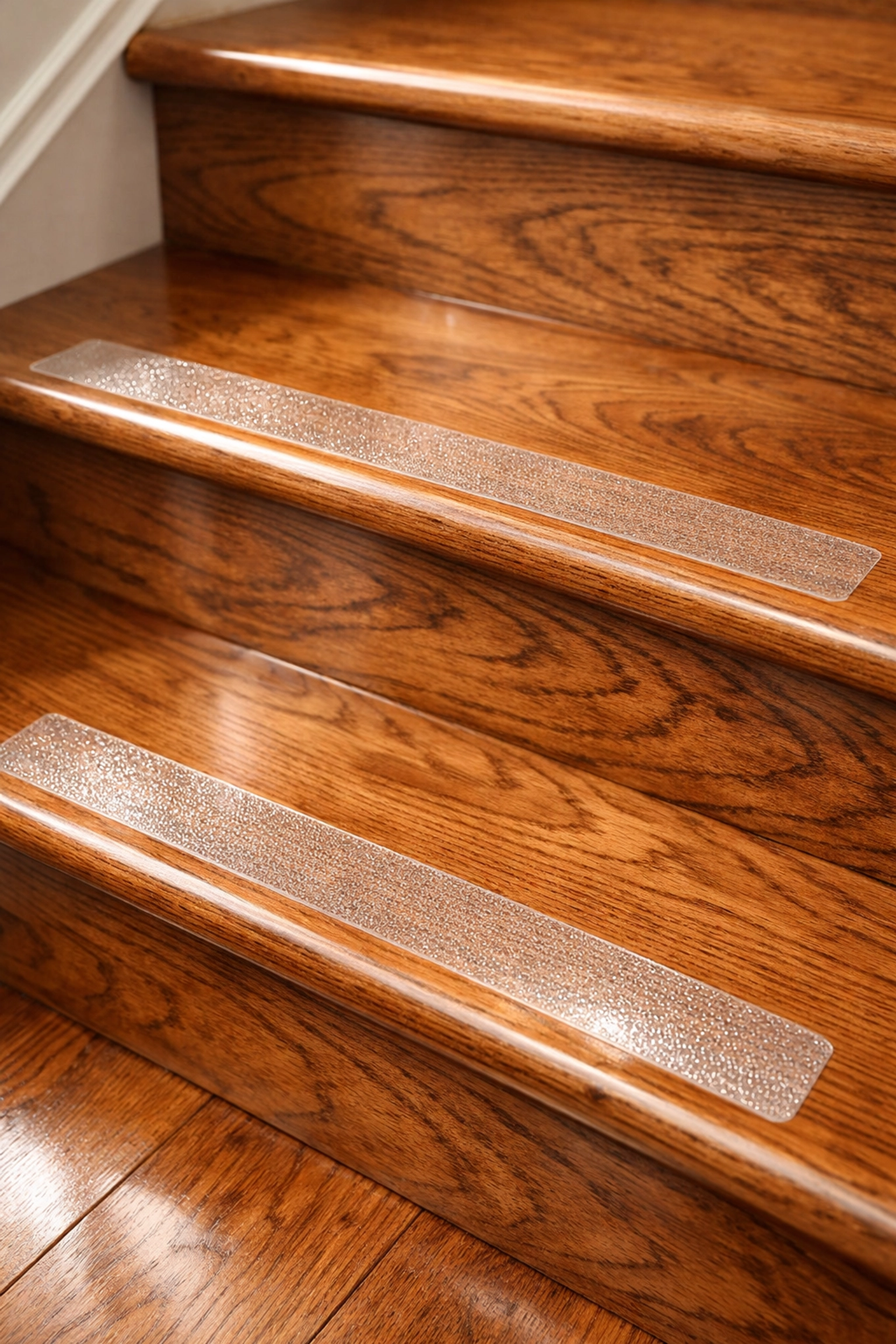
- Anti-Slip Treads: Clear, adhesive-backed strips can be applied to the edge of each step. They are nearly invisible but provide a gritty texture that prevents feet from sliding.
- Carpet Runners: A tightly woven, low-pile carpet runner can provide excellent grip. Ensure it is professionally installed and stretched tight; a loose carpet is more dangerous than no carpet at all.
- Contrast Strips: If you have trouble seeing where one step ends and the next begins, apply a strip of paint or tape in a contrasting color to the edge (the "nosing") of each step. This provides a visual cue that helps your brain map the distance.
5. Ignoring "Minor" Structural Wear and Tear
Stairs take a lot of abuse. Over time, wood can warp, nails can pop, and carpet can become loose. Many homeowners ignore a "squeaky" step or a slightly wobbling banister, thinking of it as a house "quirk" rather than a safety hazard.
However, a loose tread can shift under your weight, causing a momentary loss of balance. A wobbly handrail won't provide the support you need if you actually start to stumble.
How to Fix It:
Perform a "stair audit" once every few months. Walk up and down slowly, intentionally placing weight on different parts of each step. Listen for creaks and feel for any "give" in the wood. Check every bracket on your handrail to ensure the screws are tight. If you find a loose tread, secure it with wood screws (which hold better than nails) or call a professional to reinforce the structure.
6. Incorrect Proportions: The "Riser and Tread" Issue
While you cannot easily change the architecture of your home, it is important to understand if your stairs are inherently risky. Standard safety codes suggest a "riser" (the vertical part) of about 7 inches and a "tread" (the horizontal part) of about 11 inches.
If your stairs are too steep (high risers) or too shallow (narrow treads), your foot may not have enough room to plant firmly. This is common in basement stairs or older "attic" style steps.
How to Fix It:
If your stairs are structurally "tight" or steep, you must adjust your behavior. Use the "sideways" method if your feet are too large for the treads: turning your body slightly to the side allows more of your foot to contact the step. If the stairs are very steep, it may be time to consult with an occupational therapist about whether a stairlift or a change in living arrangements (moving the primary bedroom to the main floor) is a safer long-term solution.
7. Rushing and "The Heavy Load" Mistake
The final mistake isn't about the stairs themselves, but how we use them. We are often in a hurry: answering a ringing phone, heading to the door, or trying to carry a heavy laundry basket in one trip.
Carrying a large object in front of you obscures your vision. You cannot see your feet or the edges of the steps. Furthermore, if you are using both hands to carry something, you have zero hands available to grab the handrail if you trip.
How to Fix It:
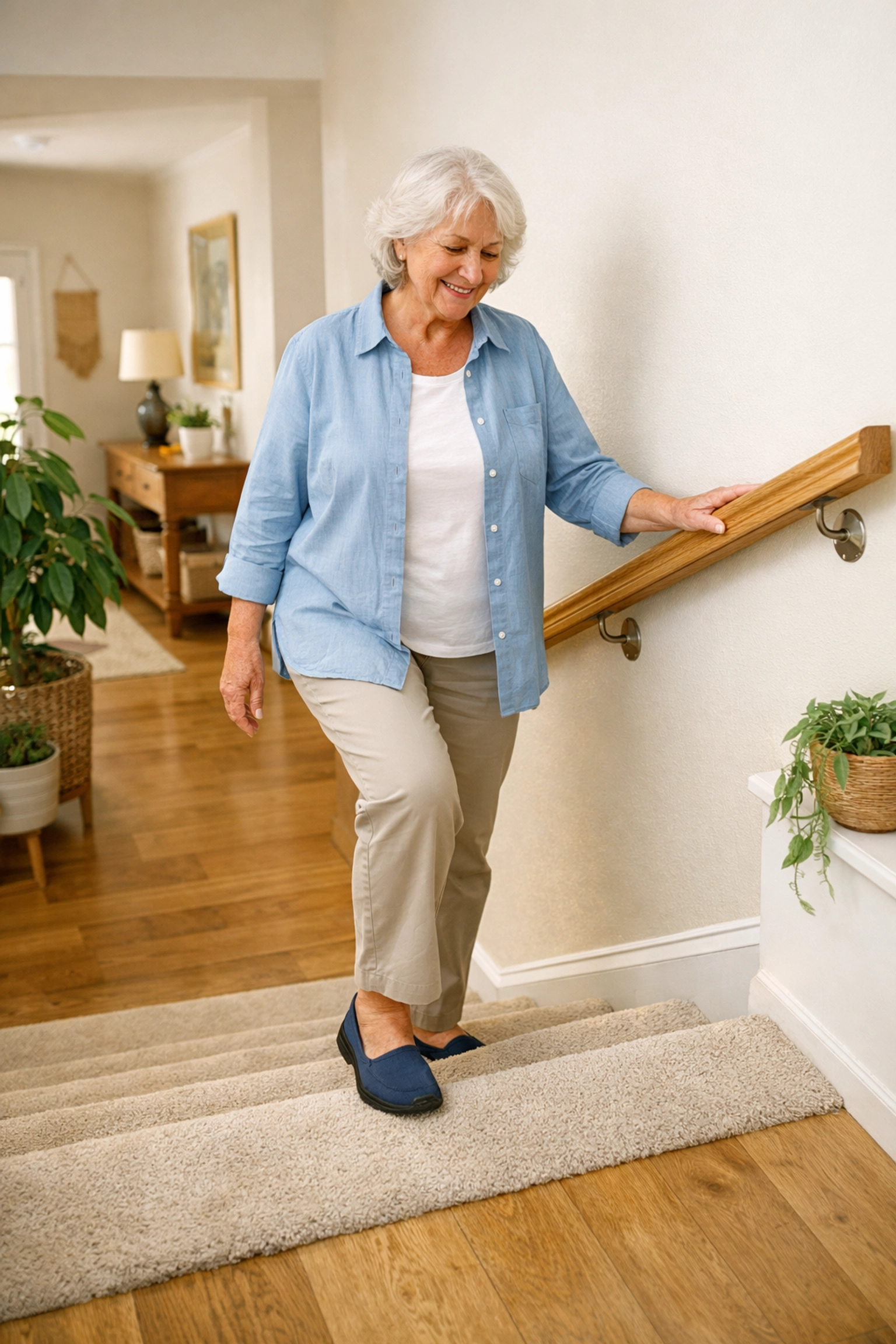
Practice the "One Hand Free" rule. Never carry anything that requires both hands while on the stairs. If you have laundry, try using a smaller bag that can be slung over your shoulder, or drop the laundry down the stairs (if it’s soft) and meet it at the bottom.
Always take "one step at a time." It sounds simple, but consciously placing both feet on a step before moving to the next can significantly increase your stability. This is often called the "toddler step," and while it takes longer, it is the safest way to navigate a flight of stairs.
Building a Habit of Safety
Fixing these mistakes isn't just about home renovation; it's about shifting your mindset. It is about acknowledging that while you are capable and independent, your environment should work for you, not against you.
A few small changes: tightening a screw, adding a second handrail, or clearing away that pile of mail: can create a sense of peace and security. Your home should be a place where you feel confident in every room, including the ones upstairs. Take a moment today to look at your stairs with fresh eyes. What is one small fix you can make right now? Your future self will thank you for the foresight.

