
Stairs are often the most daunting part of a home as we age. They represent independence, the ability to access a second-floor bedroom or a basement hobby shop, but they also represent a significant point of risk. According to the National Center for Injury Prevention and Control, falls are the leading cause of injury among older adults, and a large percentage of those falls occur on stairways.
Hi, I’m Brian Kerr, the founder of Fall Guys Products. We spend a lot of time thinking about how to make homes safer without making them feel like hospitals. When it comes to stairs, many of us are unknowingly making small mistakes that significantly increase the risk of a stumble. The good news is that most of these are incredibly easy to fix.
Let’s look at the seven most common mistakes people make with stair safety and, more importantly, how you can address them today.
1. The "Hurry" Factor: Treating Stairs Like a Race
We’ve all done it. The phone rings in the other room, or we realize we left the oven on, and we find ourselves double-stepping or moving quickly down the flight. Rushing is perhaps the single most common cause of stair-related accidents.
As we age, our proprioception: the body’s ability to sense its position in space: can change. When we rush, we give our brain less time to process where our feet are landing. This leads to "overstepping" (placing the foot too far forward) or "understepping" (missing the tread entirely).
How to Fix It: The "One-Step-at-a-Time" Rule
It sounds simple, but mindfulness is your best safety tool. Make it a habit to pause at the top of the stairs for one breath before descending. This resets your focus. Always place both feet on each step if you feel even slightly unsteady. Ensure your entire foot is planted firmly on the tread before moving the next foot. If you are carrying something, try to keep one hand free for the rail, even if it means making two trips.
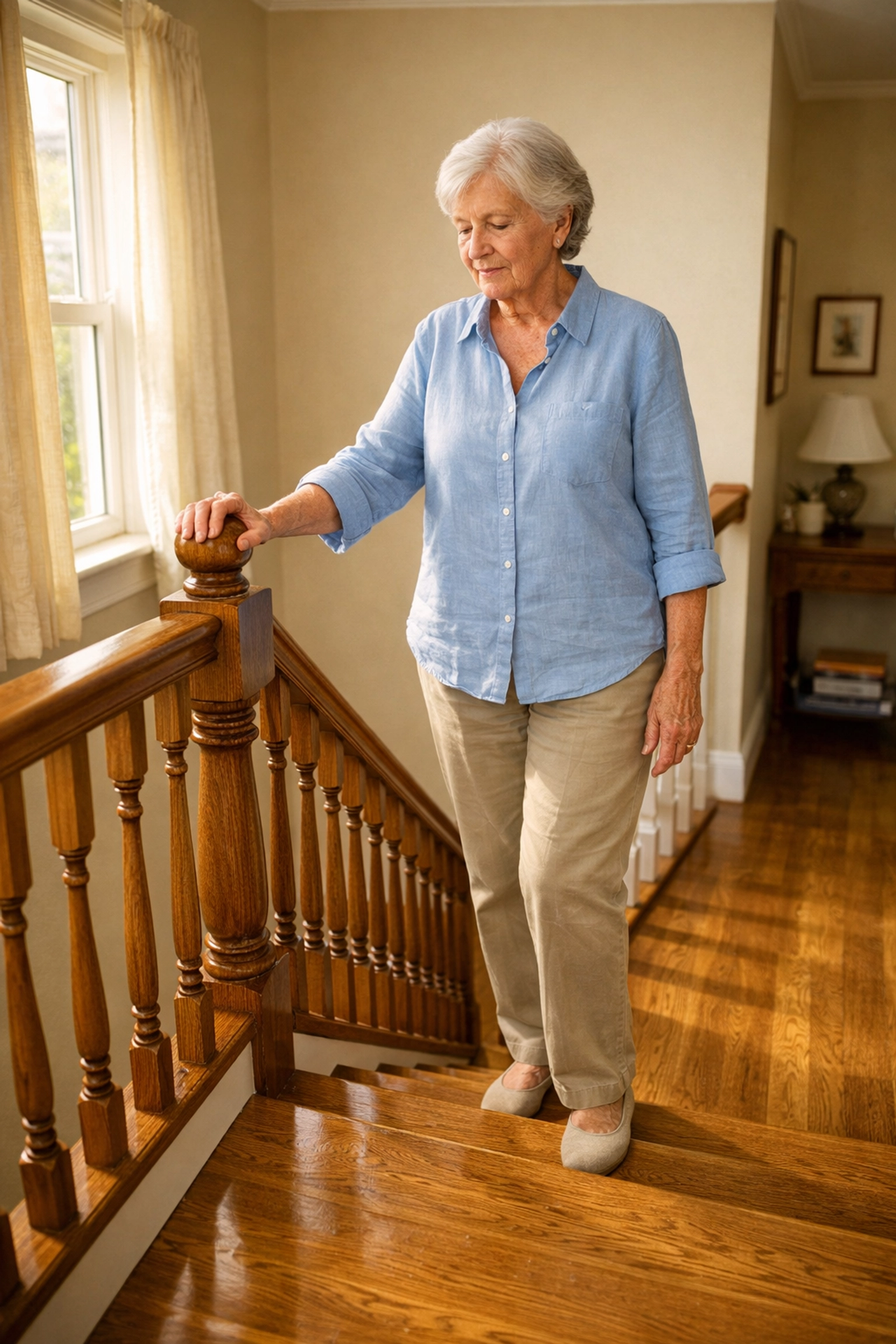
2. Neglecting the Handrail (or Having Only One)
A common mistake is assuming that because you feel strong today, you don't need to use the handrail. Many people treat handrails as a "last resort" to catch themselves during a fall, rather than a preventative tool to maintain balance throughout the descent.
Furthermore, many older homes only have a handrail on one side. This creates a "weak side" risk. If you are descending and your stronger leg or arm is on the side without a rail, your stability is compromised.
How to Fix It: Install Dual Rails
For maximum safety, every staircase should have handrails on both sides. This allows you to maintain "three points of contact" (two feet and at least one hand) at all times.
When checking your rails, ensure they are at a comfortable height: usually between 34 and 38 inches from the floor. The rail should be "graspable," meaning your hand can wrap almost all the way around it. If the rail is too wide or decorative to grip firmly, it’s a hazard, not a help. Lastly, ensure the rail "returns" to the wall at the ends so your sleeves don’t get caught on a protruding edge.
3. Using Stairs as a Temporary Storage Unit
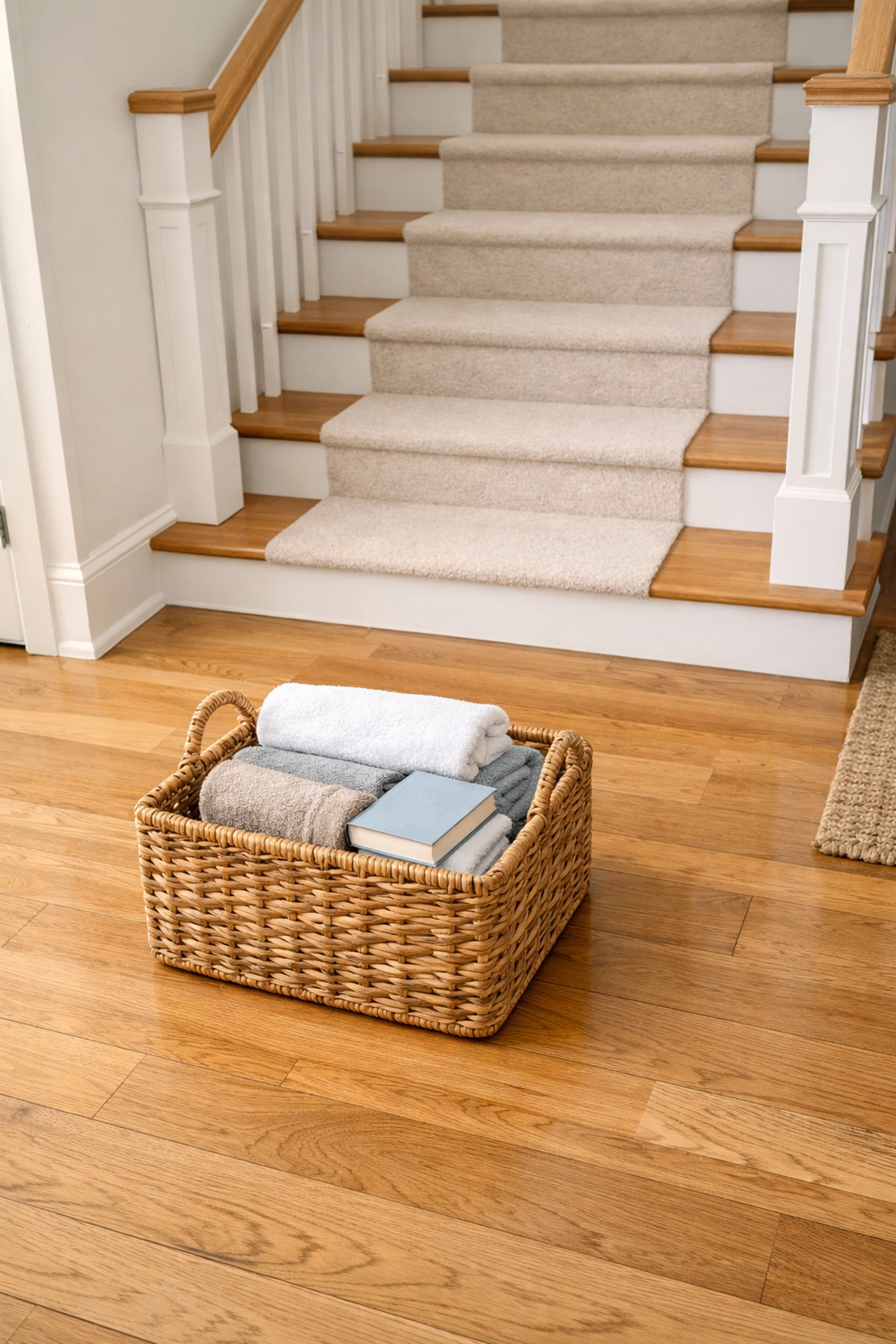
We’ve all seen it: a stack of books, a pair of shoes, or a basket of laundry sitting on the bottom two steps, waiting for the next trip up. This is a recipe for disaster. Clutter on stairs reduces the "effective tread width," forcing you to place your feet in awkward positions. It also creates a massive trip hazard that is especially dangerous in low-light conditions.
How to Fix It: The Zero-Clutter Policy
Adopt a strict "nothing on the stairs" rule. If you have items that need to go up or down, place them in a dedicated "stair basket" located at least three feet away from the top or bottom step. Only move the items when you are ready to carry them properly, keeping one hand free for the railing.
4. Poor Lighting and Distorting Shadows
Lighting is often overlooked in home safety. As we age, the lenses of our eyes yellow and our pupils shrink, meaning we need significantly more light to see as clearly as we once did.
A major mistake is having a single, dim bulb at the top of the stairs. This often creates long shadows that obscure the edge of the steps. If you can’t see exactly where the "nosing" (the edge) of the step ends, you are much more likely to misplace your foot.
How to Fix It: Layered Lighting
You want uniform light across the entire flight. Consider these three fixes:
- Three-Way Switches: Ensure there are light switches at both the top and bottom of the stairs.
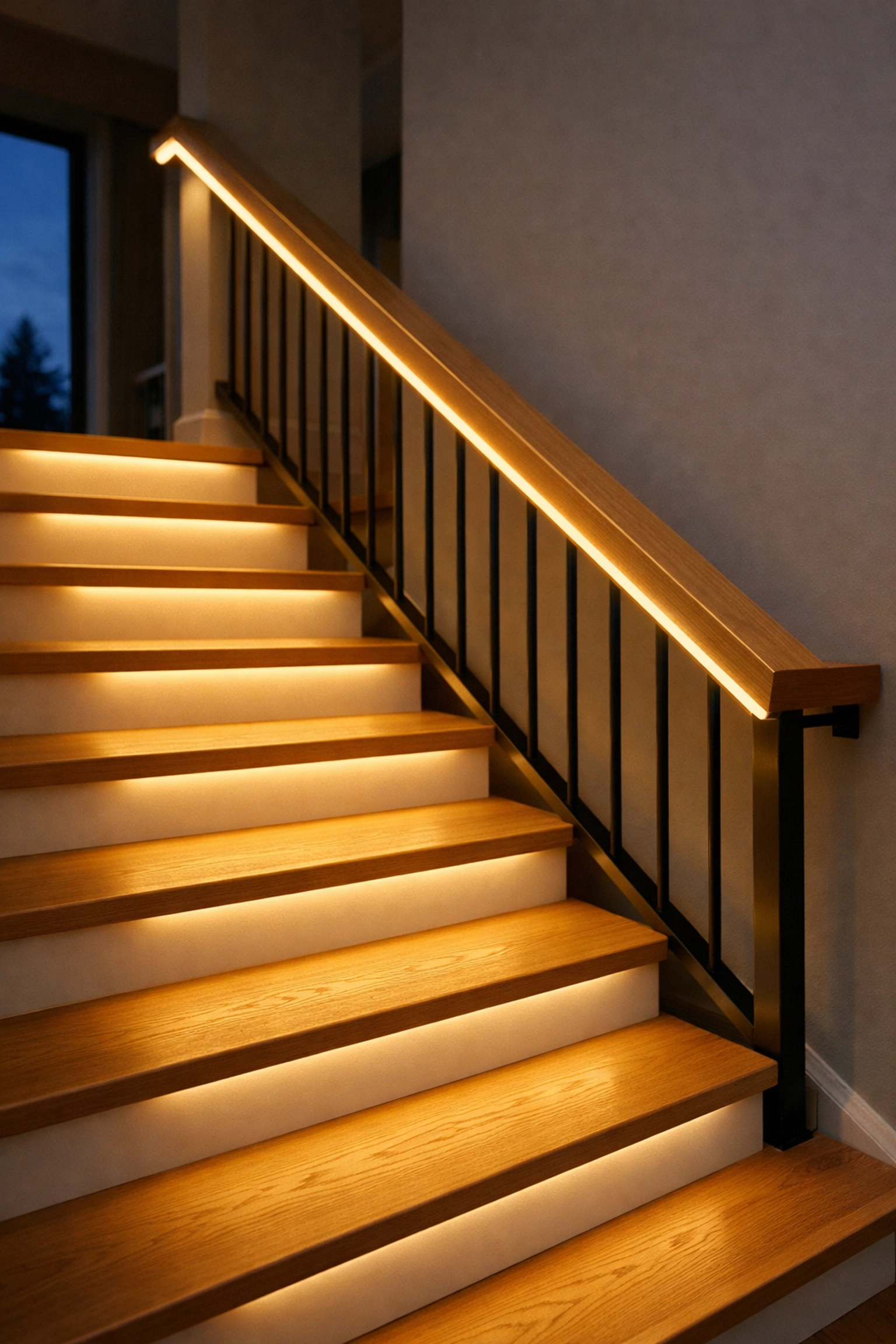
- Motion-Sensor LEDs: You can find battery-operated LED strips that stick under the handrail or along the baseboards. These light up automatically when they detect movement, providing a clear path without needing to fumble for a switch.
- Reduce Glare: Use "warm" bulbs rather than "cool" blue-toned bulbs, as blue light can increase glare and make depth perception more difficult for aging eyes.
5. Ignoring Worn-Out Treads and Friction
Over time, the "nosing" of wooden steps becomes rounded and smooth. Carpet can become loose or develop "pills" that make it slippery. If your stairs don't have enough friction, your foot can easily slide forward, leading to a "tailbone fall": the most common type of stair injury.
Another hidden danger is patterned carpet. High-contrast patterns (like floral or geometric designs) can actually hide the edges of the steps, creating a visual "camouflage" that tricks the eye.
How to Fix It: Improve Traction and Contrast
If you have wooden or tile stairs, consider adding non-slip adhesive strips. For the best safety, choose a color that contrasts with the stairs: for example, a black strip on a light oak step. This solves two problems: it provides grip and clearly marks the edge of the step.
If your stairs are carpeted, ensure the carpet is pulled tight and has no bulges. If the pattern is making it hard to see the edges, you might consider replacing the runner with a solid, neutral color that allows the shadows of the step edges to be clearly visible.
6. Wearing the Wrong Footwear (or No Footwear at All)
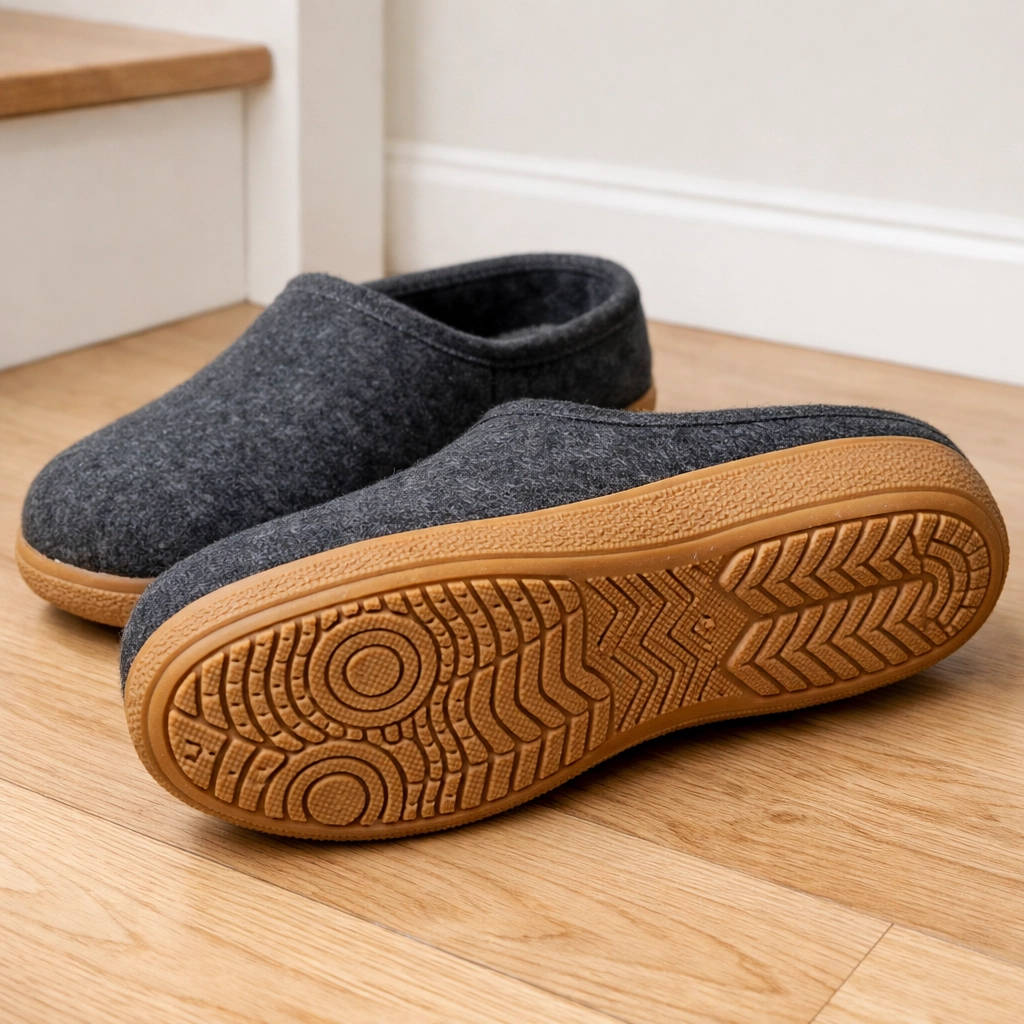
What you wear on your feet is just as important as the stairs themselves. A very common mistake is walking on stairs in socks. Whether it’s hardwood or carpet, socks provide almost zero traction. Conversely, loose-fitting "scuff" slippers can easily slip off the heel, causing a trip.
How to Fix It: The "House Shoe" Habit
Invest in a pair of supportive house shoes with a rubber, non-slip sole and a "full back" (meaning the heel is enclosed). Avoid walking on stairs in bare feet if you have any issues with sensation (like neuropathy), as you may not feel if your toe is hanging off the edge. If you prefer socks, ensure they have high-quality rubber grips on the bottom, though a firm-soled shoe is always the safer choice.
7. The "Bottom-of-Flight" Illusion
The most dangerous step on any staircase isn't the top one: it’s the bottom one. Many falls occur because a person thinks they have reached the floor when they actually have one step remaining. This is often due to the bottom step blending into the flooring of the landing or hallway. When you expect flat ground and instead drop four to seven inches, your knee can buckle, leading to a fall.
How to Fix It: Visual Markers
You need to create a visual "break" that tells your brain the stairs aren't over yet. You can do this by:
- Changing the Color: Use a piece of high-contrast tape on the edge of the final step.
- Lighting: Ensure the landing area is more brightly lit than the stairs themselves.
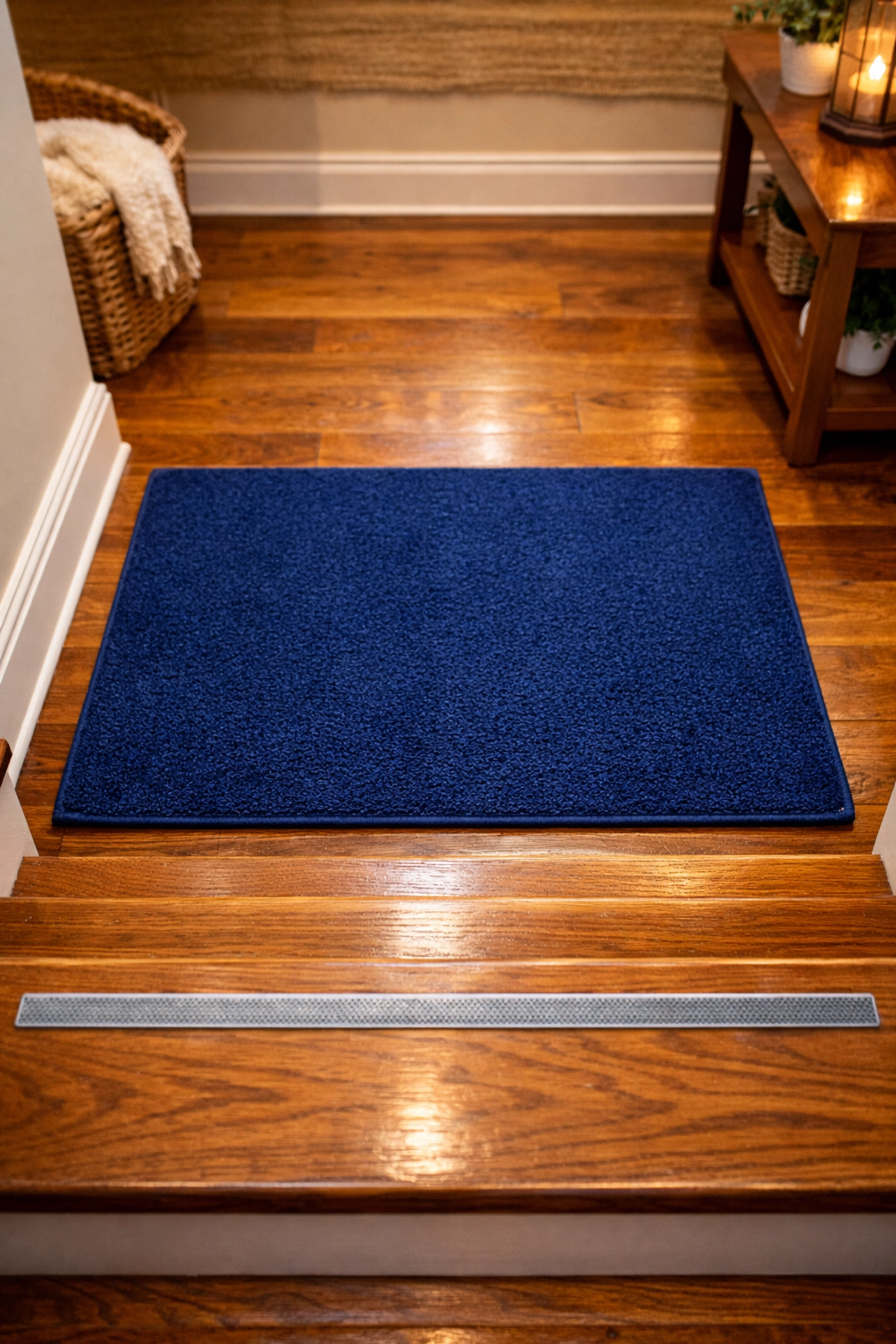
- Area Rugs: Place a brightly colored rug at the base of the stairs (ensure it has a non-slip pad underneath). The change in color and texture acts as a tactile and visual cue that you have successfully reached the floor.
Creating a Safety Routine
Safety isn't a one-time project; it’s a habit. I always recommend that homeowners do a "Stair Audit" once every few months.
Walk your stairs and check for:
- Loose Rails: Give the handrail a firm shake. It shouldn't wiggle.
- Creaks and Groans: Squeaky wooden steps often indicate a loose tread that could eventually shift or crack.
- Bulging Carpet: Check for any "bubbles" in the carpet runner.
- Bulb Life: Replace any flickering or dim bulbs immediately.
Stairs don't have to be a source of anxiety. By addressing these seven common mistakes, you can significantly reduce the risk of falls and keep your home a safe, comfortable place for years to come. Remember, it’s not about losing independence: it’s about taking the smart steps necessary to maintain it.
Take it one step at a time, stay mindful, and don't be afraid to make those small environmental changes. Your future self will thank you.

