
Stairs are a fundamental part of many homes, yet they are often the most overlooked area when it comes to safety. For many of us, navigating a flight of stairs is something we do on autopilot. We’ve climbed those same steps thousands of times, and our muscles remember the rhythm. However, as we age, or as our mobility needs change, those familiar steps can become a source of significant risk.
At Fall Guys Products, we believe that staying safe at home shouldn't feel like living in a hospital. It’s about making smart, subtle adjustments that allow you to move with confidence. When it comes to stairs, the difference between a safe environment and a hazardous one often comes down to small details that are easily missed.
If you’re a senior looking to stay independent or a caregiver trying to protect a loved one, it’s time to take a closer look at your staircase. Here are seven common mistakes people make with stair safety and, more importantly, how you can fix them.
1. The "Inconsistent Step" Trap
One of the most dangerous elements of a staircase isn't actually a steep incline: it’s inconsistency. Our brains are incredibly efficient at mapping out movement. When you start climbing a flight of stairs, your brain calculates the height of the first two steps and then assumes every subsequent step will be exactly the same.
If one riser (the vertical part of the step) is even half an inch taller or shorter than the others, it breaks that rhythm. This leads to "toe-stubbing" on the way up or "over-stepping" on the way down, both of which are leading causes of falls.
How to Fix It:
Take a measuring tape and check the height of every riser on your staircase. In a perfect world, they should all be between 6 and 7 inches high. If you find significant variations, it might be time to consult a contractor. For minor inconsistencies, sometimes the issue is actually a loose floorboard or a warping tread (the horizontal part you step on). Securing these can level out the path. If you are building or remodeling, ensure your risers are between 15–18 cm and your step depth is at least 25–30 cm.
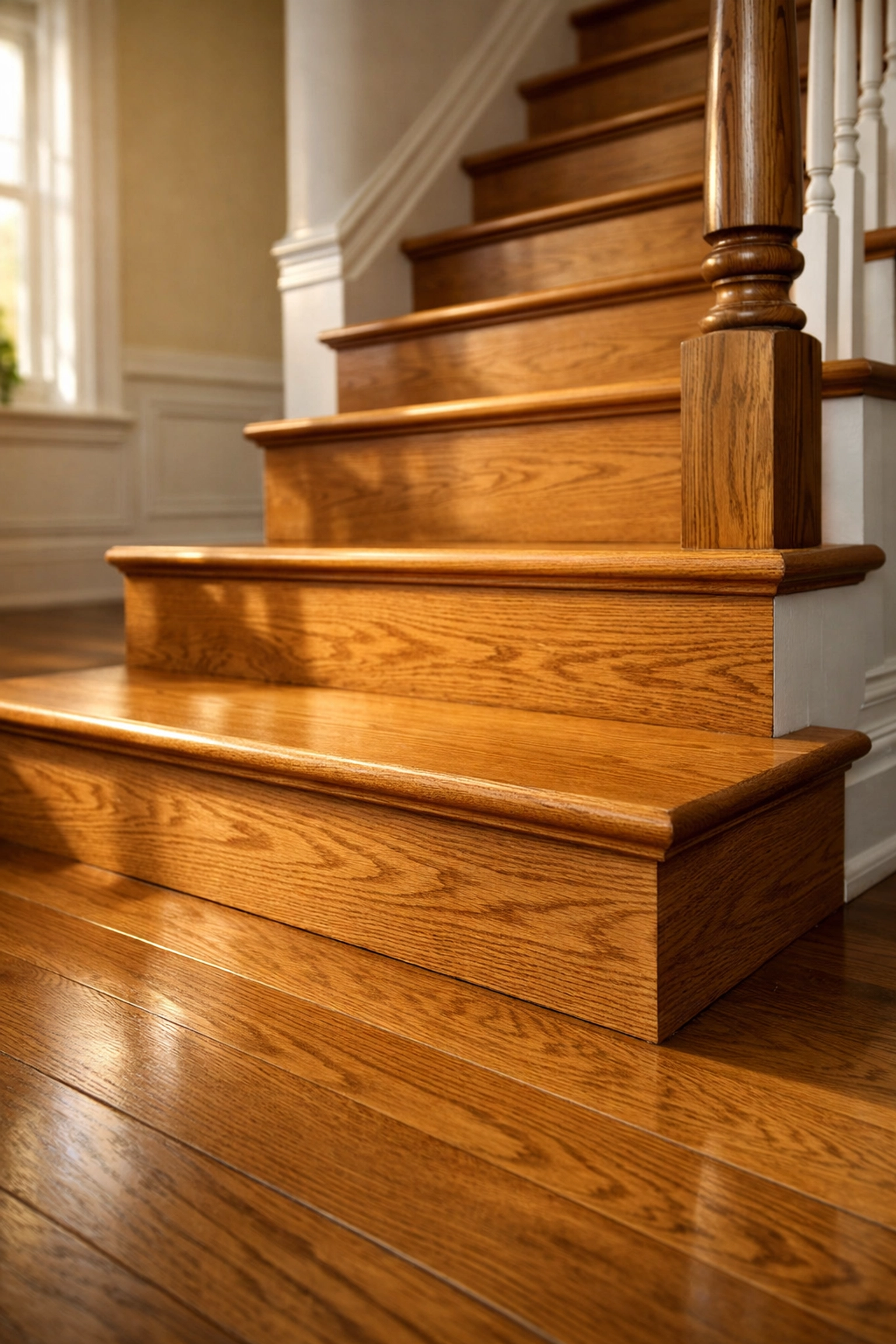
2. Neglecting the "Transition Zones"
We often focus on the middle of the staircase, but the most dangerous parts are actually the top and the bottom. These are the "transition zones" where your body shifts from walking on a flat surface to climbing or descending.
A common mistake is having a handrail that ends exactly at the last step. If you have to let go of the rail before your feet are firmly planted on the flat landing, you are at your most vulnerable point without any support.
How to Fix It:
Safety standards suggest that handrails should extend at least 12 inches (300 mm) beyond the top and bottom risers. This allows you to maintain a firm grip until you have fully completed the transition to level ground. If your current railing stops short, you can often find "rail extensions" or have a handyman add a segment that curves downward or extends horizontally to provide that extra bit of security.
3. Relying on a Single Handrail
Many homes are built with a handrail on only one side of the stairs. While this might meet minimum building codes in some areas, it’s a significant safety oversight for anyone with balance or strength issues.
If you have weakness on one side of your body: perhaps due to a previous injury or a stroke: you may only be able to pull yourself up or steady yourself effectively using one specific hand. If that hand isn't on the side with the rail, you're left unsupported.
How to Fix It:
Install a second handrail. Having "dual-support" allows you to use both arms to distribute your weight and maintain balance. It also ensures that whether you are going up or coming down, you always have a rail available for your strongest side. Ensure the rails are mounted at a height of about 34 to 38 inches (roughly 90 cm) and that they are easy to grip. A "round" or "mop-handle" style rail is much easier to wrap your hand around than a wide, decorative wooden beam.
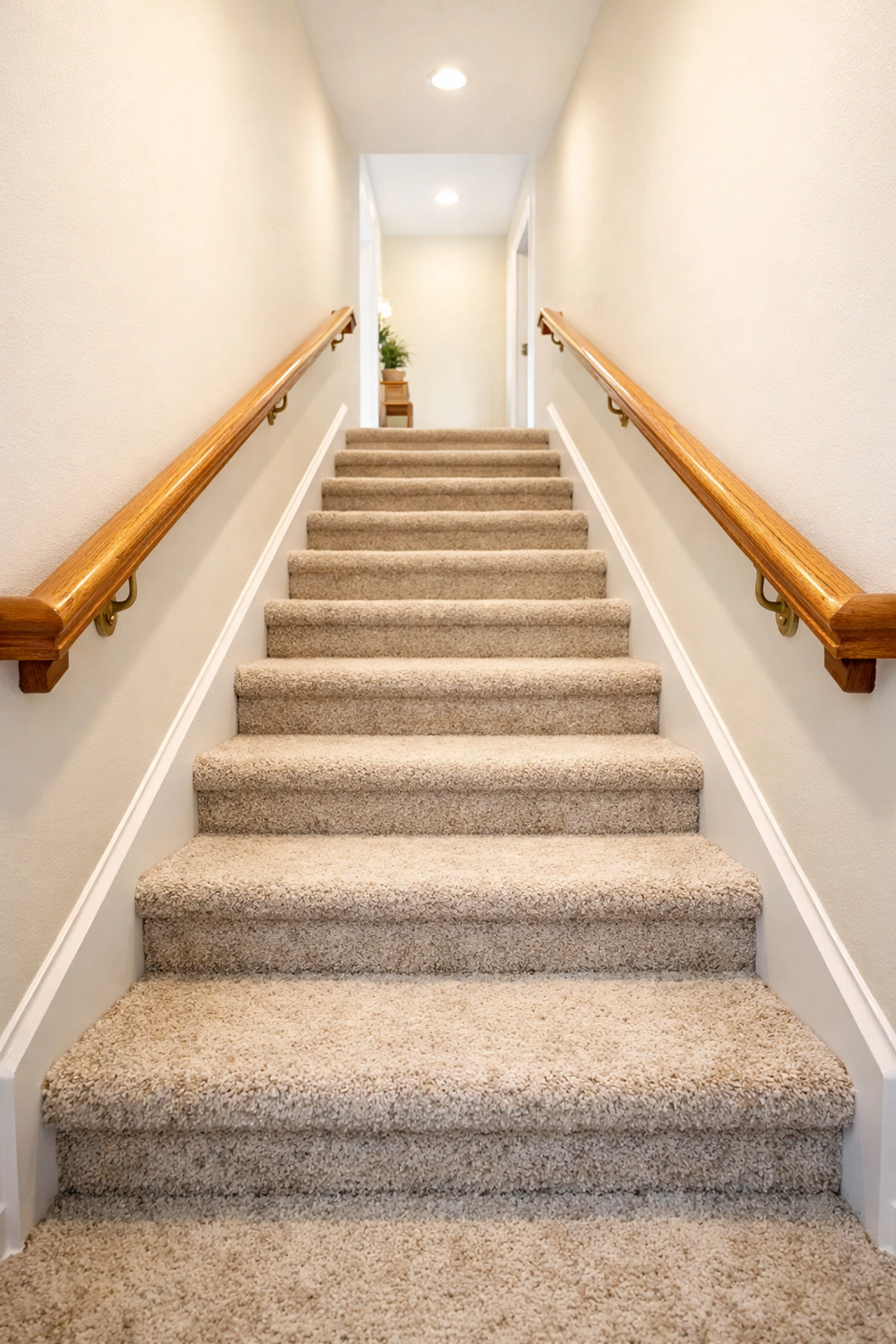
4. Underestimating the Power of Contrast
As we age, our depth perception and contrast sensitivity naturally decline. To a pair of aging eyes, a staircase covered in a uniform beige carpet can look like a flat, sloping ramp rather than a series of individual steps. If you can't clearly see where one step ends and the next begins, the risk of a misstep skyrockets.
This is especially true in the "descent" phase. Looking down from the top, the edges of the steps often blur together, making it difficult to judge exactly where to place your foot.
How to Fix It:
Create visual contrast. If you have wooden stairs, you can apply a strip of high-contrast anti-slip tape to the edge (the "nosing") of each step. For example, if your stairs are dark wood, use a light-colored or reflective strip. If you have carpeting, consider using a different colored "runner" or applying contrast markers. This simple visual cue tells your brain exactly where the "drop" is, allowing for much safer foot placement.
5. Shadowy Steps and Poor Lighting
Lighting is perhaps the most frequent mistake we see. Many stairways have a single overhead light at the top or bottom. This creates long shadows that can hide the edges of the steps or obscure small objects that might have been left behind.
Furthermore, many people hesitate to turn on the "big lights" for a quick trip up the stairs in the middle of the night, opting instead to navigate in the dark or by the glow of a distant television.
How to Fix It:
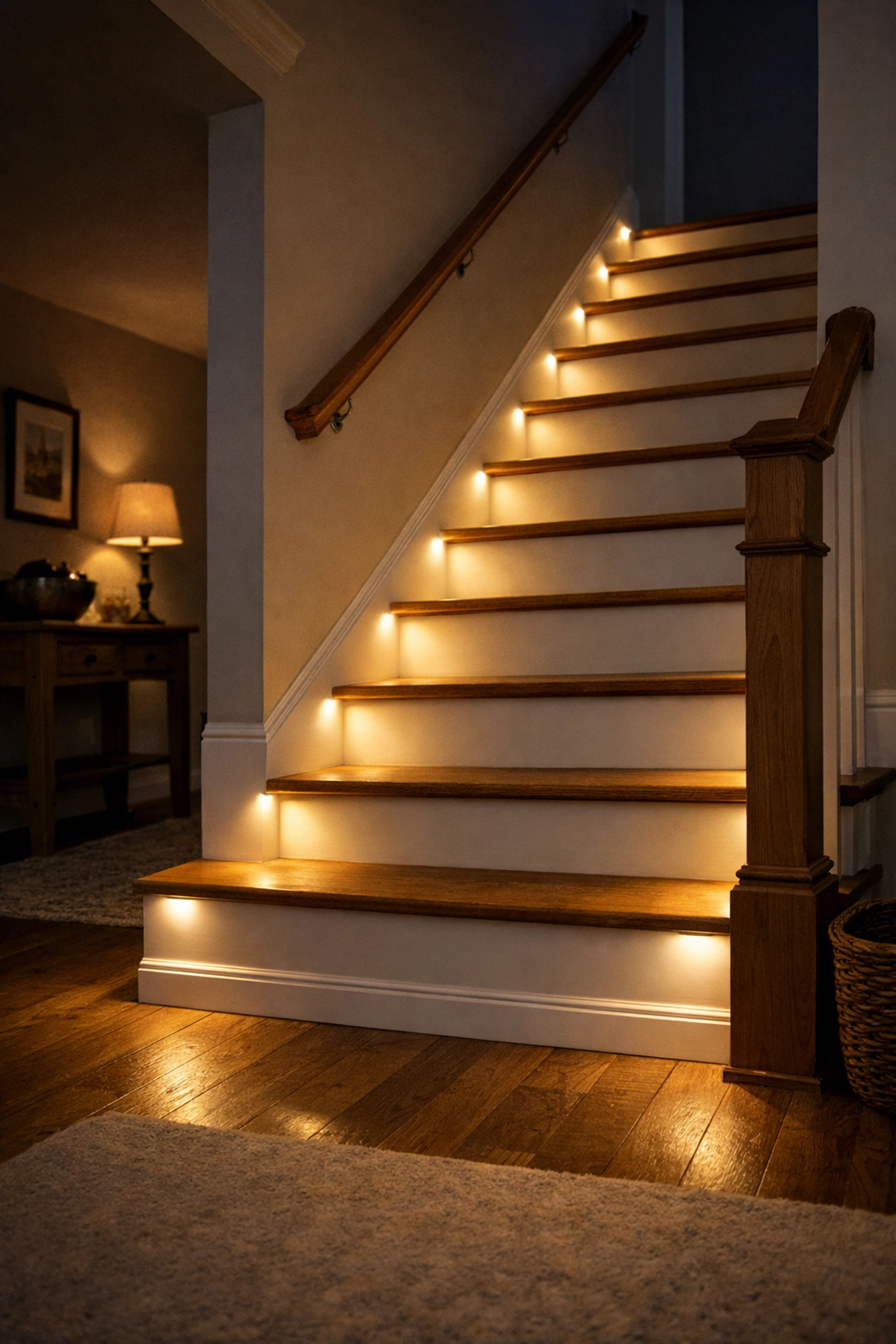
First, ensure you have switches at both the top and bottom of the stairs (two-way switches). Second, consider installing motion-activated LED lighting. You can find battery-operated LED strips that stick to the underside of the handrail or along the baseboards. These provide a soft, clear glow that illuminates the treads directly without blinding you. This "pathway lighting" eliminates shadows and ensures that every trip, even at 2 AM, is fully illuminated.
6. Using the Stairs as a Temporary Shelf
We've all done it. You have a stack of books or a basket of laundry that needs to go upstairs, so you set it on the bottom two steps to remind yourself to take it up next time you go.
This is a recipe for disaster. Stairs should never be used for storage. Even if you think there is "plenty of room" to walk around the object, you are narrowing your path and creating a trip hazard. If you are carrying something else and your vision of your feet is obscured, you might forget the object is there.
How to Fix It:
Implement a "Zero-Object Policy" for stairs. If something needs to go up or down, place it on a side table near the stairs, but never on the steps themselves. For caregivers, check the stairs every morning and evening to ensure they are completely clear of shoes, toys, or clutter. Remember, a clear path is a safe path.
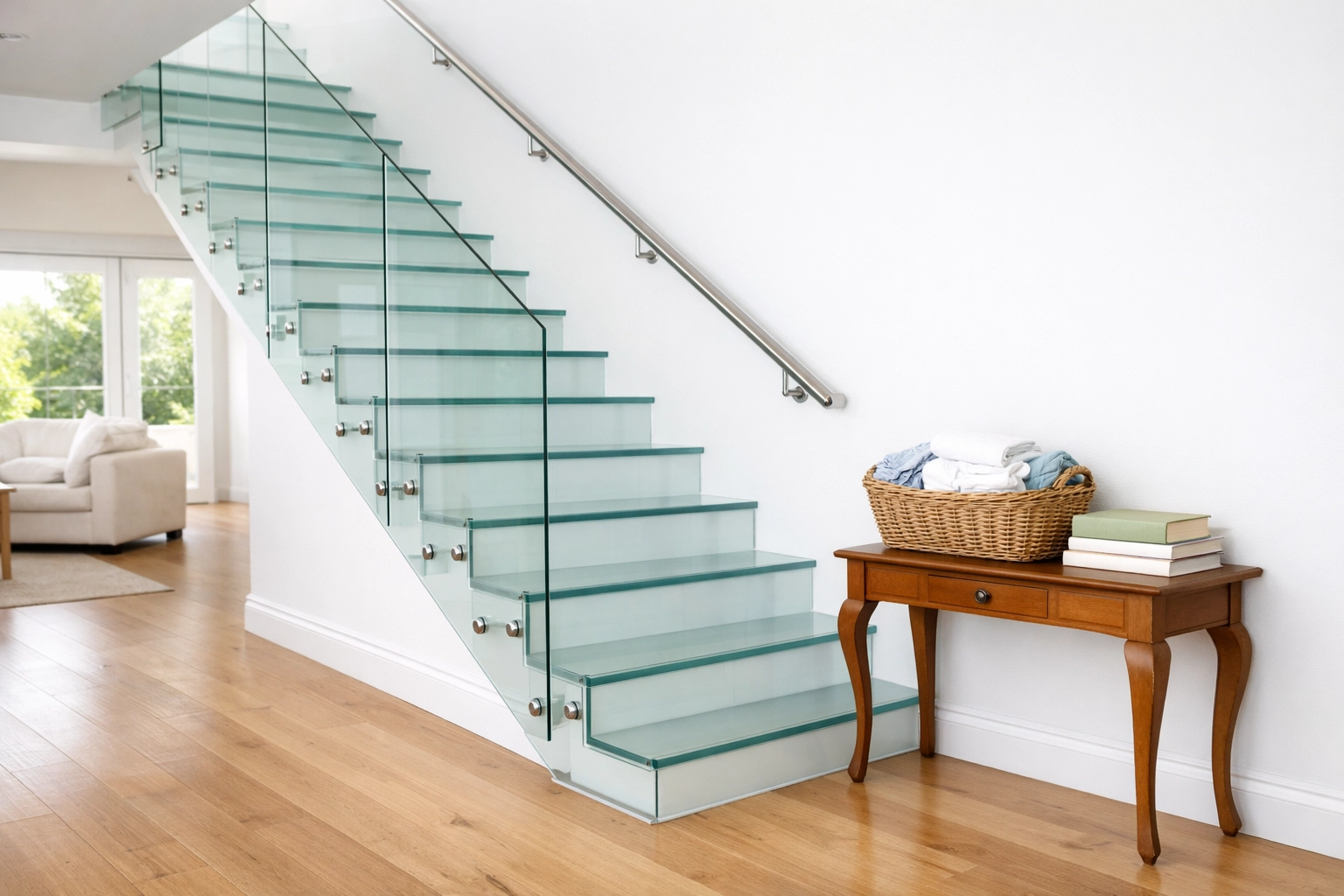
7. Ignoring "The Grip" (Footwear and Surfaces)
The material of your stairs and what you wear on your feet are two sides of the same coin. Polished hardwood or marble stairs are beautiful, but they are incredibly slippery, especially if you are wearing socks. On the flip side, old, frayed carpeting can catch a heel and cause a stumble.
Many falls occur because the foot literally slides out from under the person as they apply weight to the next step.
How to Fix It:
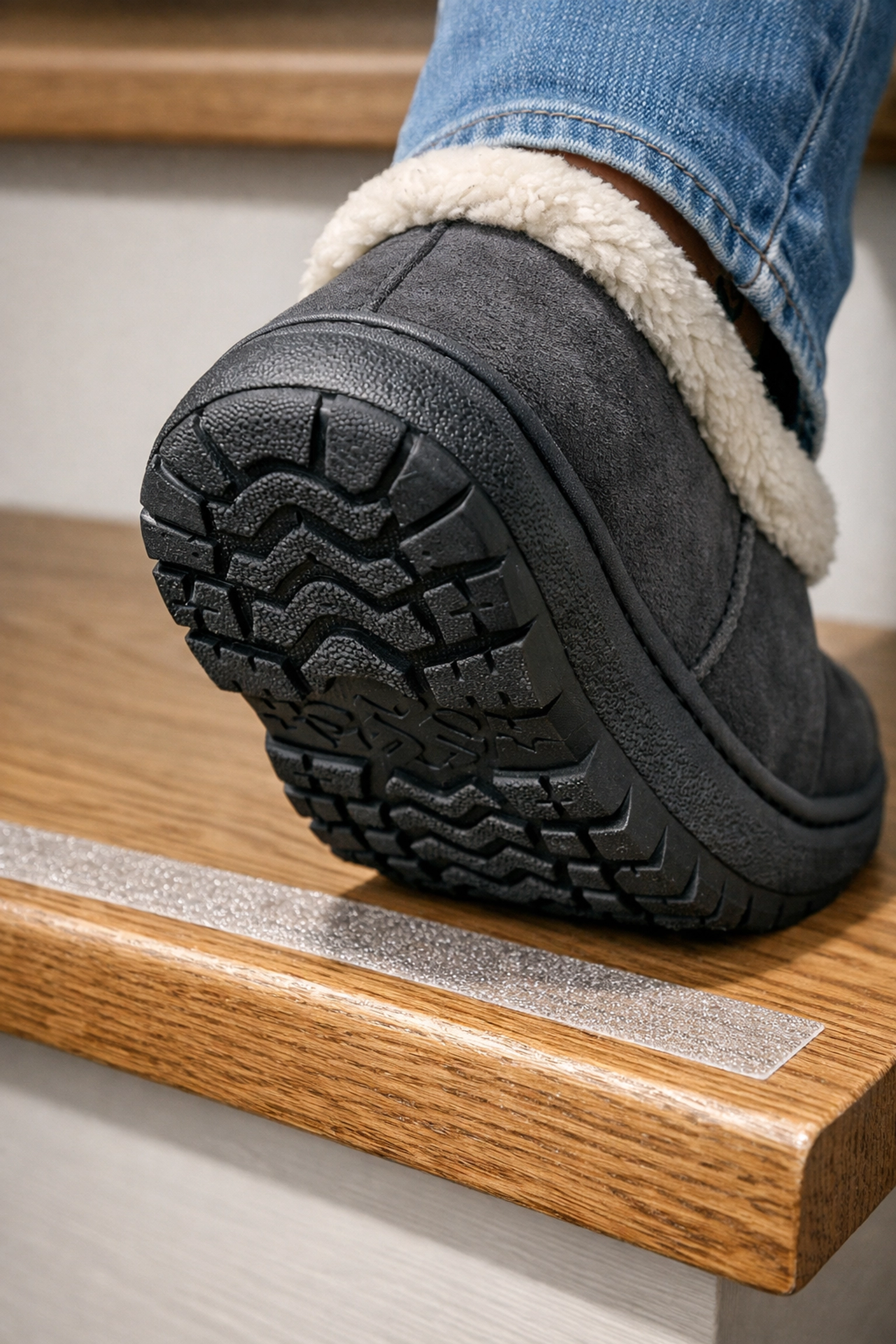
If you have hard-surface stairs, consider adding transparent anti-slip adhesive strips. They provide "grit" without ruining the aesthetic of the wood. If your stairs are carpeted, ensure the carpet is tight and free of any loops or tears.
Perhaps more importantly, be mindful of footwear. Walking on stairs in stocking feet is one of the most dangerous things you can do. Encourage the use of "indoor shoes" or slippers with non-skid rubber soles. If you prefer socks, look for "grip socks" that have rubberized patterns on the bottom.
The Role of Physical Readiness
While fixing the environment is crucial, stair safety is also about the person using them. Climbing stairs requires a unique combination of leg strength, ankle flexibility, and balance.
If you find that you are pulling yourself up the stairs using the handrail, it’s a sign that your leg strength may need a little boost. Simple exercises like "sit-to-stands" from a sturdy chair can help build the quadriceps and glutes needed for safer climbing. Additionally, having your vision checked regularly ensures that your prescription is up to date, which is vital for that depth perception we mentioned earlier.
A Note on "The Right Way" to Climb
It sounds funny to suggest there is a "right way" to walk, but as our needs change, so should our technique. When descending stairs, many physical therapists recommend a "sideways" approach if balance is an issue. By turning slightly toward the handrail, you increase your base of support and allow your feet more room on the tread.
Always take one step at a time. Plant both feet on a step before moving to the next one. It may feel slower, but it significantly reduces the amount of time you are balancing on one leg.
Final Thoughts
Stair safety isn't about one big change; it’s about a series of small, intentional adjustments. By fixing inconsistent steps, extending handrails, improving contrast and lighting, and keeping the path clear, you can transform a high-risk area into a safe part of your daily routine.
At Fall Guys Products, our goal is to help you navigate your home with peace of mind. Stairs don't have to be a source of anxiety. With a little bit of attention to detail and a commitment to maintenance, you can keep your home: and yourself: moving safely for years to come. Take a walk over to your staircase today and see which of these seven fixes you can implement right now. Your safety is worth the effort.

