
Stairs are a fundamental part of most homes, yet they are often the most overlooked when it comes to safety planning. We use them dozens of times a day, often without a second thought. However, as we age or assist loved ones who are aging, the stairway can become one of the most hazardous zones in a house.
According to various safety studies, stairs are the site of a significant percentage of household falls, particularly among seniors. The good news is that most of these incidents are preventable. Often, it isn't a single catastrophic event that leads to a fall, but rather a series of small, correctable habits or environmental factors that have gone unnoticed for years.
I’m Brian Kerr, and here at Fall Guys Products, we spend a lot of time thinking about how to make homes safer and more accessible. Today, I want to walk you through seven of the most common mistakes people make with stair safety and, more importantly, how you can fix them to ensure your home remains a safe haven.
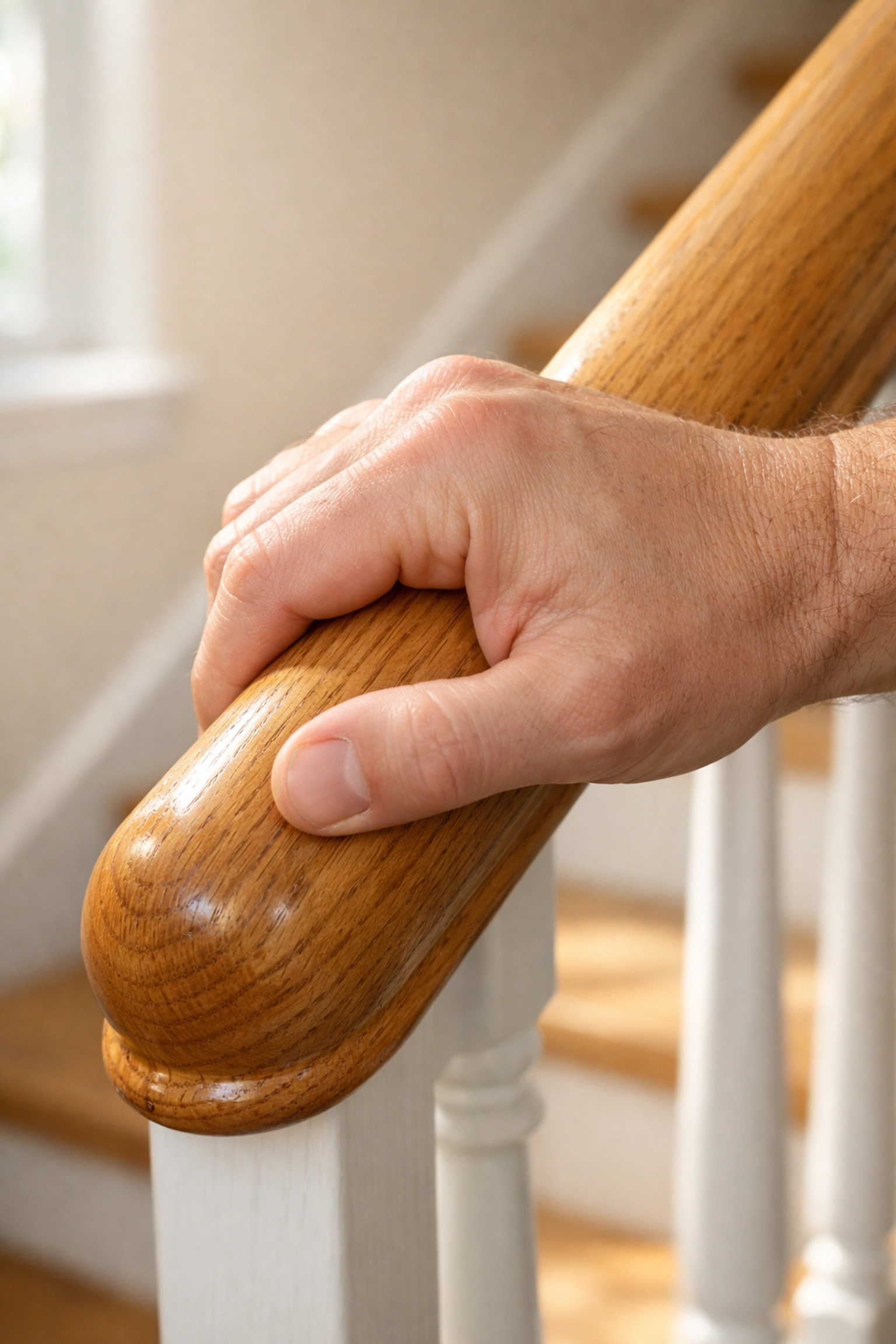
1. Treating the Handrail as Optional
The most frequent mistake people make is simply not using the handrail. Many of us feel confident in our balance and view the railing as something to be used only "if we need it." The reality is that by the time you realize you need a handrail, it might be too late to grab it effectively.
Why it happens
We often carry items: laundry baskets, groceries, or even a cup of coffee: using both hands, which renders the handrail useless. Or, we might feel that holding the rail is a sign of "getting older" and resist the habit out of a desire for independence.
How to fix it
The rule should be: one hand for the rail, one hand for the world. If you need to carry something up the stairs, try to do it in smaller loads that allow you to keep one hand free.
Furthermore, check the quality of your handrail. A safe handrail should be "power-grip" compatible. This means you should be able to wrap your fingers and thumb completely around it. If your railing is a flat board or too wide to grasp firmly, it’s more of a "guide" than a safety feature. Replacing a decorative rail with a functional, circular one can make a world of difference.
2. Navigating in the Shadows (Poor Lighting)
Visibility is perhaps the single most important factor in stair safety. If you can’t see the edge of the step, you can’t accurately place your foot.
Why it happens
Stairways are often tucked into the center of a home or in hallways where natural light doesn't reach. Many older homes have a single light at the top or bottom, leaving the middle of the flight in a "grey zone" of shadows. Furthermore, as we age, our eyes require more light to see clearly and take longer to adjust to changes in brightness.
How to fix it
Ensure there is high-quality lighting at both the top and the bottom of the stairs. If your stairway feels dim, consider installing LED strip lighting under the lip of each tread or along the baseboards.
A common technical mistake is having a single light switch. Every stairway should have "three-way" switches: one at the top and one at the bottom: so you never have to navigate the stairs in the dark to reach a switch. For added safety, motion-sensor nightlights can provide instant illumination the moment someone approaches the stairs.
3. Using the Stairs as a Temporary Storage Unit
We’ve all done it: we place a stack of books, a pair of shoes, or a delivery box on the bottom steps, intending to take them up "on the next trip." This habit creates a literal obstacle course.
Why it happens
It’s a matter of convenience. We want to save ourselves a trip, so we accumulate items on the stairs throughout the day. However, even a small object can catch a heel or cause a toe to trip, leading to a loss of balance.
How to fix it
Maintain a "zero-tolerance" policy for clutter on the stairs. This includes the landings at the top and bottom. A landing should be clear enough to allow a person to turn around or pause safely. If you find yourself constantly leaving items on the stairs, place a "to-go" basket at the base of the stairs (on the floor, not the step) and carry the whole basket up once it’s full: while keeping one hand on the rail, of course.
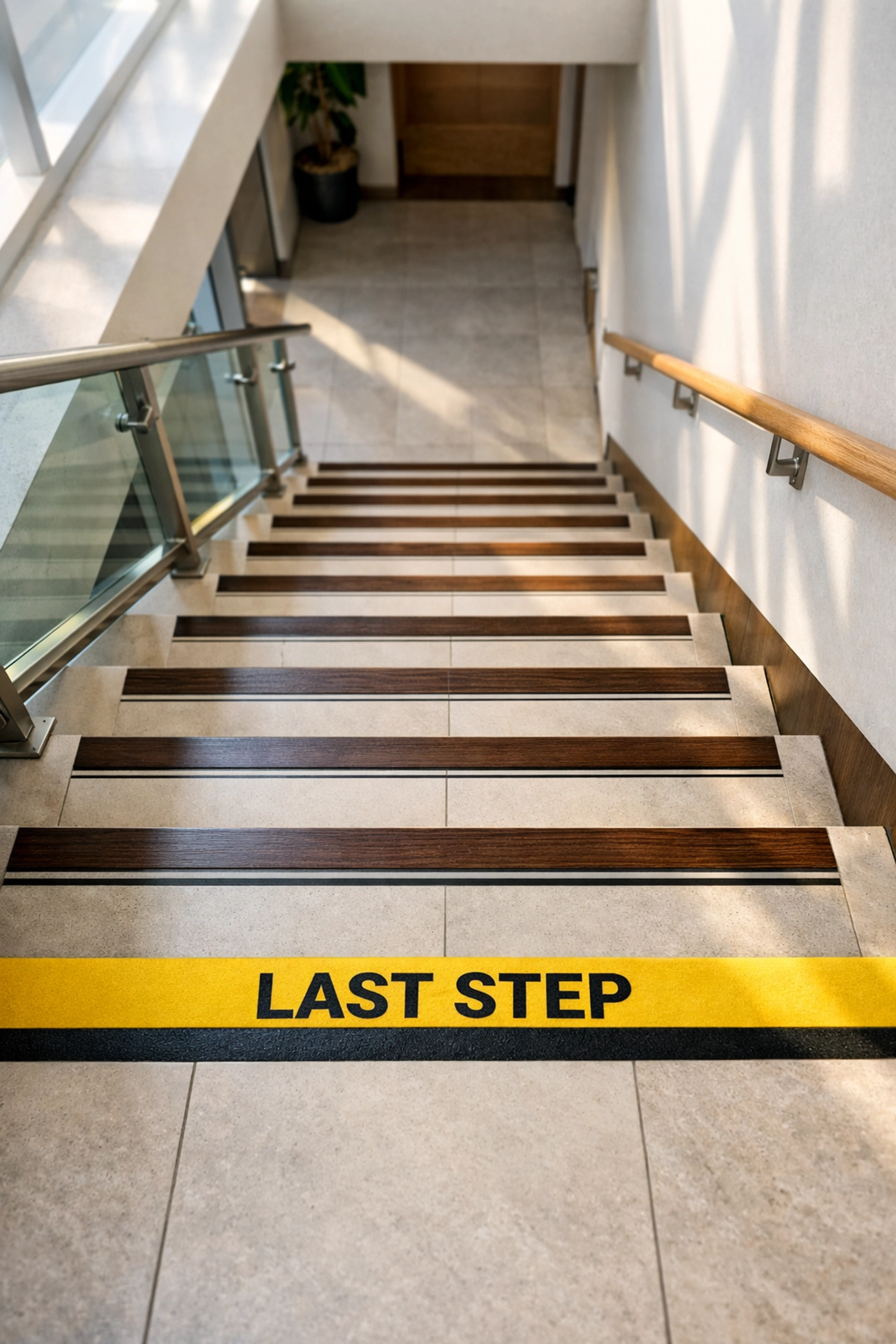
4. Overlooking the "Last Step" Illusion
A significant number of falls occur at the very bottom or the very top of the stairs because of a visual miscalculation. This is often called the "last step" illusion, where a person thinks they have reached the floor but there is actually one more step, or vice versa.
Why it happens
This happens most often when the flooring on the stairs is identical to the flooring on the landing. If you have the same beige carpet on your stairs and your hallway, the edges of the steps "disappear" into a sea of tan. Without a visual cue, the brain can struggle to distinguish where one step ends and the floor begins.
How to fix it
Create visual contrast. You can do this by using a different color or texture for the stair treads than for the landings. If you aren't looking to recarpet or remodel, a simple fix is applying a strip of high-visibility, non-slip tape to the edge (the "nosing") of each step. This clearly defines the boundary of each stair, helping the brain and eyes coordinate a safe descent.
5. Walking in "Slippery" Footwear
What you wear on your feet is just as important as the stairs themselves.
Why it happens
Many people prefer to walk around their homes in socks or smooth-bottomed slippers. On wooden or polished stone stairs, socks provide almost zero traction. Conversely, loose-fitting slippers can easily slide off the foot, causing a stumble as you try to "catch" the shoe while moving.
How to fix it
The safest way to navigate stairs is in well-fitting shoes with rubber soles, or even barefoot (which provides more grip than socks). If you prefer socks, ensure they have "gripper" pads on the bottom. Encourage everyone in the household to avoid "socks-only" travel on hardwood stairs. Additionally, ensure that your laces are always tied and that there are no loose threads or frayed hems on your trousers that could catch on a stair nosing.
6. Ignoring Structural Wear and Tear
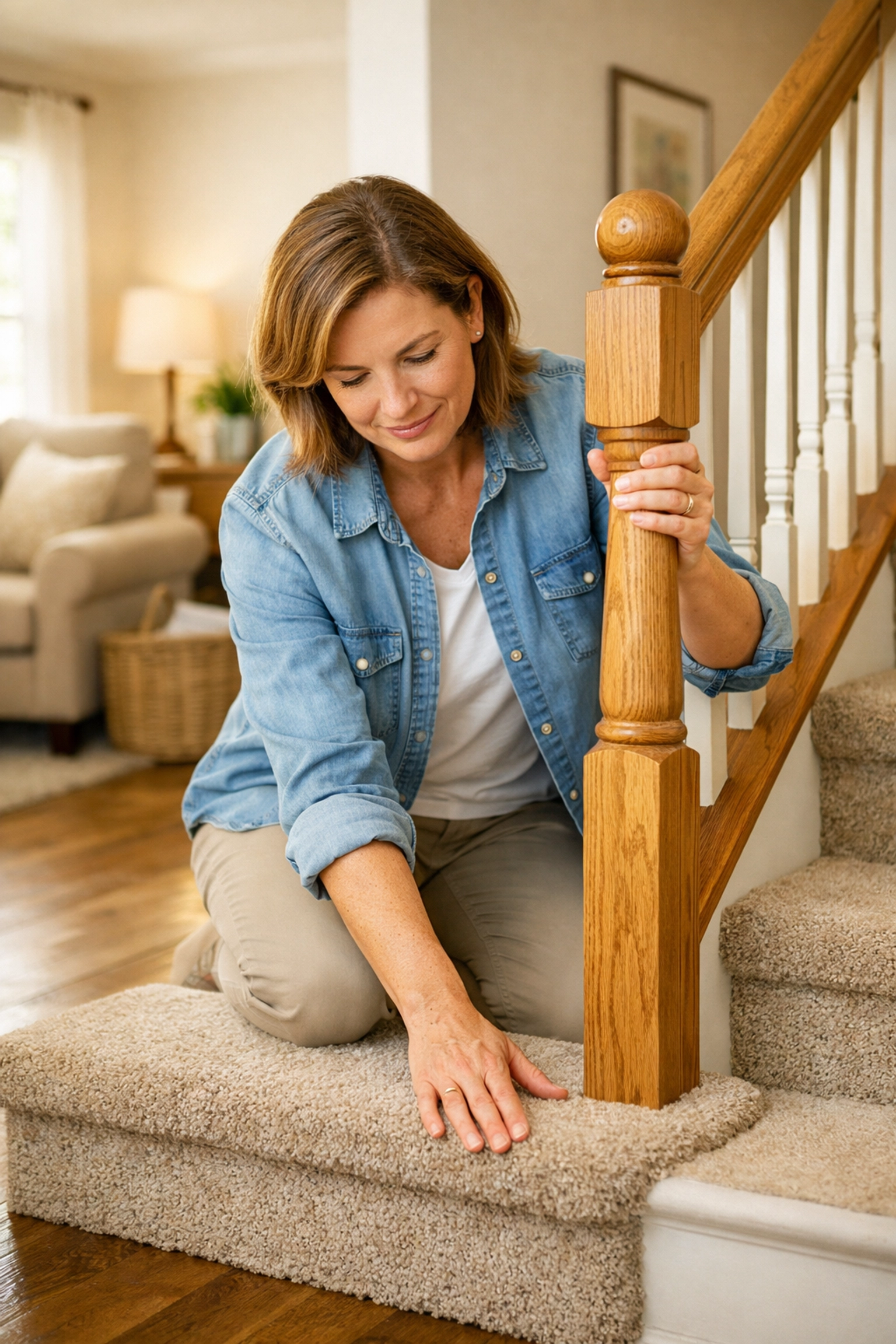
Stairs undergo a lot of stress. Over time, wood can warp, nails can loosen, and carpet can become un-stretched.
Why it happens
Because we use stairs every day, we become "nose-blind" to the small changes. We might ignore a slight creak or a carpet edge that has pulled away from the riser, instinctively stepping around it.
How to fix it
Perform a "stair audit" every few months. Walk the stairs slowly and look for:
- Loose carpeting: Any ripples or bunching can catch a toe.
- Wobbly handrails: Give the rail a firm shake. It should feel solid and capable of supporting your full weight.
- Creaks and groans: These often indicate a loose tread that may eventually shift or tilt.
- Outdoor debris: For exterior stairs, check for moss, ice, or wet leaves, all of which are incredibly slippery.
7. The Distraction Trap
In our fast-paced world, we are rarely doing just one thing. We walk down the stairs while checking a text message, looking at a watch, or talking to someone in another room.
Why it happens
Stair climbing is a "background" activity for most of us. We’ve done it thousands of times, so we don't feel we need to pay attention. However, navigating stairs requires complex coordination between our vision, our inner ear (balance), and our muscular system.
How to fix it
Practice "mindful movement." When you are on the stairs, let that be the only thing you are doing. Put the phone in your pocket. Finish your conversation once you reach the landing. Keep your eyes on the steps ahead of you. This is especially important for individuals who wear bifocals or multifocal lenses, as looking through the wrong part of the lens while glancing down can distort depth perception and lead to a misstep.
A Note on Depth Perception and Vision
Since I mentioned bifocals, it’s worth diving a bit deeper into this. If you or a loved one wears bifocals, the bottom portion of the lens is designed for reading (close-up work). When you look down at your feet while walking down stairs, you are often looking through that reading portion, which makes the stairs look blurry or further away than they are.
If this is a frequent issue, some people find it helpful to have a separate pair of single-vision glasses specifically for walking or distance. At the very least, being aware of this visual distortion allows you to be extra cautious and rely more heavily on the handrail.
Creating a "Stair Safety" Culture at Home
Fixing these mistakes isn't just about hardware; it's about habits. It’s about reassuring ourselves and our family members that taking an extra thirty seconds to be safe is always worth it.
If you are a caregiver for an older adult, approach these changes with empathy. Instead of pointing out what they are doing "wrong," frame it as "upgrading the home" for everyone's benefit. Better lighting benefits the whole family. A clearer stairway makes the house look better. A sturdier handrail gives everyone a bit more confidence.
Summary Checklist for a Safer Stairway
To wrap things up, here is a quick checklist you can use to assess the stairs in your home today:
- Handrails: Are there rails on both sides? Can you wrap your hand all the way around them? Are they bolted securely into the studs?
- Lighting: Is the entire flight of stairs bright enough to see a dropped coin? Are there switches at both ends?
- Contrast: Can you clearly see where each step ends, or do they blend together?
- Surface: Is the carpet tight and snag-free? Are wooden steps treated with a non-slip finish or equipped with adhesive treads?
- Clutter: Are the steps and the landings completely clear of objects?
- Behavior: Is everyone in the house in the habit of using the handrail and wearing appropriate footwear?
Stairs don't have to be a source of anxiety. By identifying these seven common mistakes and taking the simple, practical steps to fix them, you can significantly reduce the risk of falls and keep your home a place of comfort and safety. Taking the time to address these issues today is a small investment that pays off in long-term independence and peace of mind.

