
Stairs are a fundamental part of many homes, yet they are often the most overlooked area when it comes to safety. We walk up and down them dozens of times a day without a second thought. However, as we age or care for those who are aging, the staircase transforms from a simple architectural feature into a complex environment where small errors can lead to significant consequences.
Most falls on stairs aren't caused by a single dramatic event, but rather by a combination of minor oversights: what we like to call the "invisible risks." The good news is that once you identify these mistakes, they are remarkably easy to fix. In this guide, we’ll look at the seven most common stair safety errors and provide practical, reassuring steps to ensure your home remains a safe haven.
1. Choosing Aesthetics Over Friction
It is easy to fall in love with the look of polished hardwood, sleek tile, or smooth marble stairs. They are beautiful and easy to clean. However, the most common mistake homeowners make is prioritizing the visual appeal of a staircase over its grip.
Most falls on stairs result from slipping rather than tripping. When a surface is smooth, there is very little "bite" between the sole of a shoe (or a stocking foot) and the step. This is especially dangerous on the "nosing": the very edge of the step: where most of your weight is balanced as you descend.
How to Fix It
The goal is to increase the coefficient of friction without ruining the look of your home.
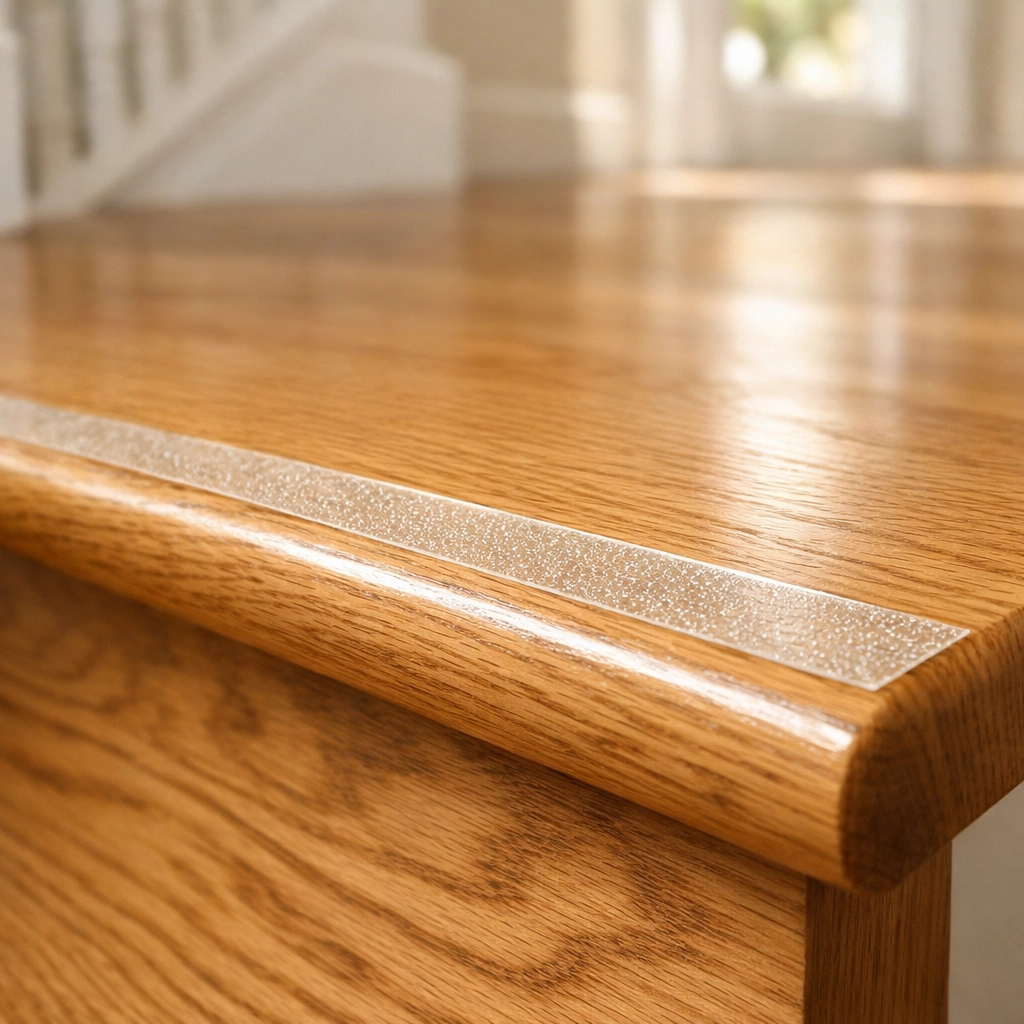
- Anti-Slip Treads: You can apply transparent or color-matched adhesive strips to the edge of each step. These provide a gritty texture that grips the foot.
- Rubber Matting: For basement or outdoor stairs, heavy-duty rubber treads are an excellent choice.
- Non-Slip Coatings: There are specialized clear-coat paints and sprays that contain fine aggregates. When applied, they leave a nearly invisible texture that significantly reduces slipperiness.
- Low-Pile Carpet: If you prefer carpet, ensure it is a low-pile, tight-weave variety. Shag or thick carpeting can actually hide the edge of the step, creating a different kind of hazard.
2. Ignoring Inconsistent Step Dimensions
The human brain is a master of patterns. When you take the first two steps on a flight of stairs, your brain subconsciously "maps" the height (riser) and depth (tread) of those steps. It then puts your legs on autopilot for the rest of the climb.
A major safety mistake occurs when steps are inconsistent. If one riser is even half an inch taller than the others, or if a landing is slightly sloped, the "autopilot" fails. This leads to a "toe-catch" or a missed step. This is frequently seen in older homes where the house may have settled unevenly, or in DIY renovations where the math didn't quite line up.
How to Fix It
While you might not be able to rebuild your entire staircase, you can mitigate the risk:
- Measure Your Steps: Use a tape measure to check the height of every riser and the depth of every tread. If you find a variance of more than 3/8 of an inch, that step is a high-risk zone.
- Visual Cues: For the "odd" step, use a high-contrast color or a different texture to alert the brain that the pattern has changed.
- Professional Assessment: If the stairs are significantly uneven, it may be worth consulting a carpenter to install "shims" or build out certain treads to create a uniform rhythm.
3. Treating Handrails as Decorative Accessories
Many handrails are installed more for building code compliance or decoration than for actual human use. We see rails that are too thick to grab, rails that are blocked by decorative moldings, or rails that end a few inches before the stairs actually stop.
A handrail is not just a "guide"; it is a life-saving tool. In the event of a slip, your hand needs to be able to perform a "power grip": where the fingers and thumb can fully encircle the rail to support your full body weight. If the rail is too wide (like a 2×4 piece of lumber) or too close to the wall, you cannot get a secure hold.
How to Fix It
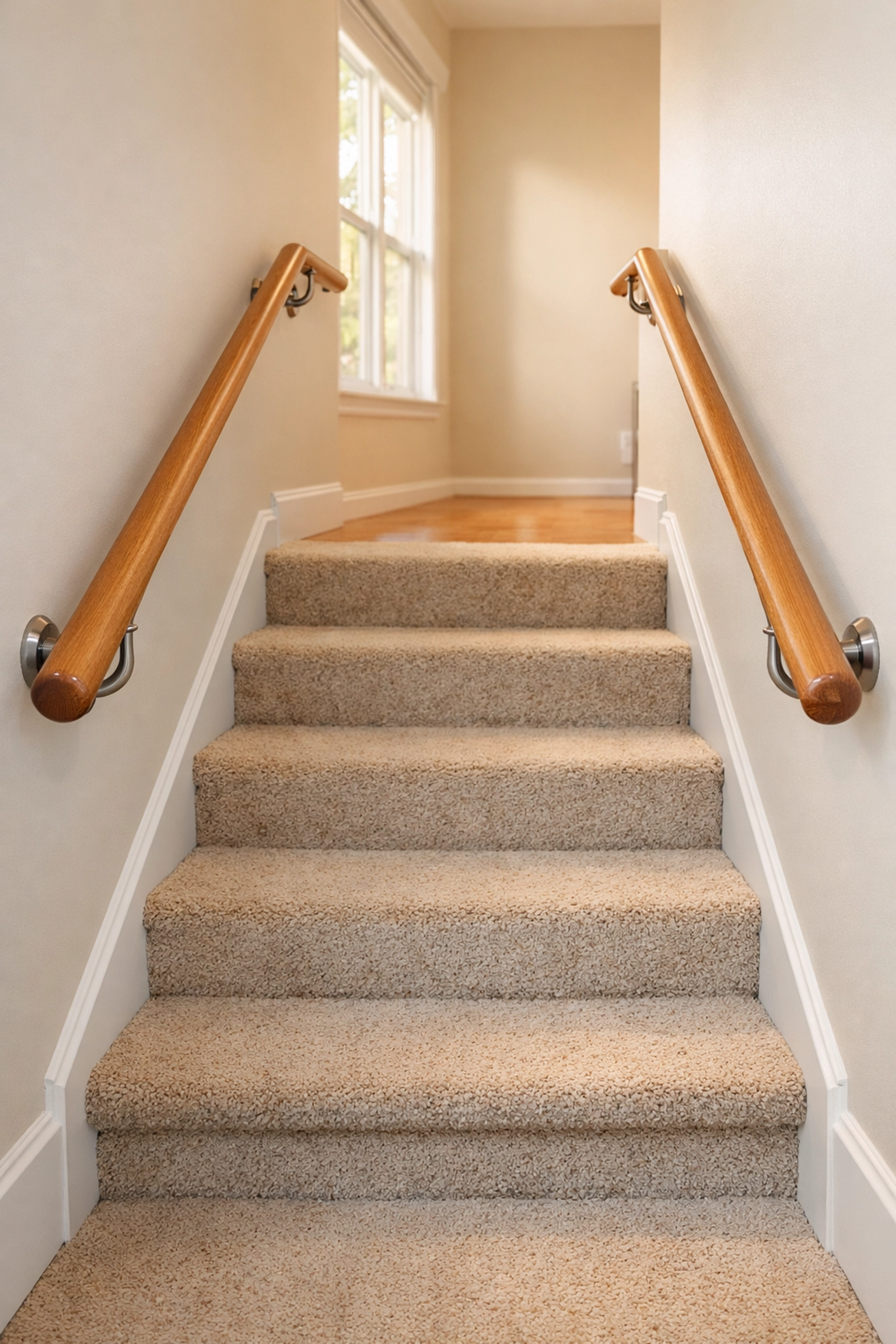
- The "Wrap" Test: You should be able to wrap your hand entirely around the rail. If you can't, consider replacing it with a standard 1.5-inch to 2-inch diameter round rail.
- Install Dual Rails: Most stairs only have a rail on one side. Installing a second rail on the opposite side provides balanced support and is essential for individuals who may have weakness on one side of the body.
- Check the Length: The handrail should extend about 12 inches beyond the top and bottom step. This allows the user to find their balance before they even begin to climb or descend.
- Secure the Mounting: Lean on your rail. Does it wiggle? Use long lag bolts to secure the brackets directly into the wall studs, not just the drywall.
4. Letting the Stairs Become a Storage Zone
We’ve all done it: we place a stack of books, a pair of shoes, or a bag of groceries on the bottom few steps, intending to take them up "on the next trip." This habit is one of the leading causes of tripping accidents.
Stairs are high-traffic transit zones, not storage shelves. Even if you think you’ll remember the item is there, in a moment of distraction or in low light, that object becomes a major obstacle. Furthermore, objects on stairs often force you to change your gait or step around them, which throws off your balance.
How to Fix It
- The "Zero-Object" Rule: Establish a firm household rule that nothing: ever: is placed on the stairs.
- Landing Baskets: If you tend to accumulate items that need to go upstairs, place a basket at the very top and very bottom of the stairs, well away from the walking path. Place the items in the basket, and only carry the basket up when you are ready.
- Clear the Landing: Ensure the area at the top and bottom of the stairs is also clear of throw rugs, which can slide or bunch up.
5. Underestimating the Power of Lighting
Vision plays a massive role in balance. As we age, our eyes require more light to distinguish depth and contrast. A staircase that looks "fine" during the day can become a dark tunnel of shadows at night.
Poor lighting hides the "nosing" of the steps, making it difficult to see exactly where the step ends and the void begins. Shadows cast by overhead lights can also create optical illusions, making a flat landing look like an extra step or vice versa.
How to Fix It
- Add Lumens: Replace low-wattage bulbs with brighter, "daylight" LED bulbs. Aim for a high level of uniform light across the entire flight.
- Dual Switches: Ensure there is a light switch at both the top and the bottom of the stairs so you never have to navigate them in the dark to reach a switch.
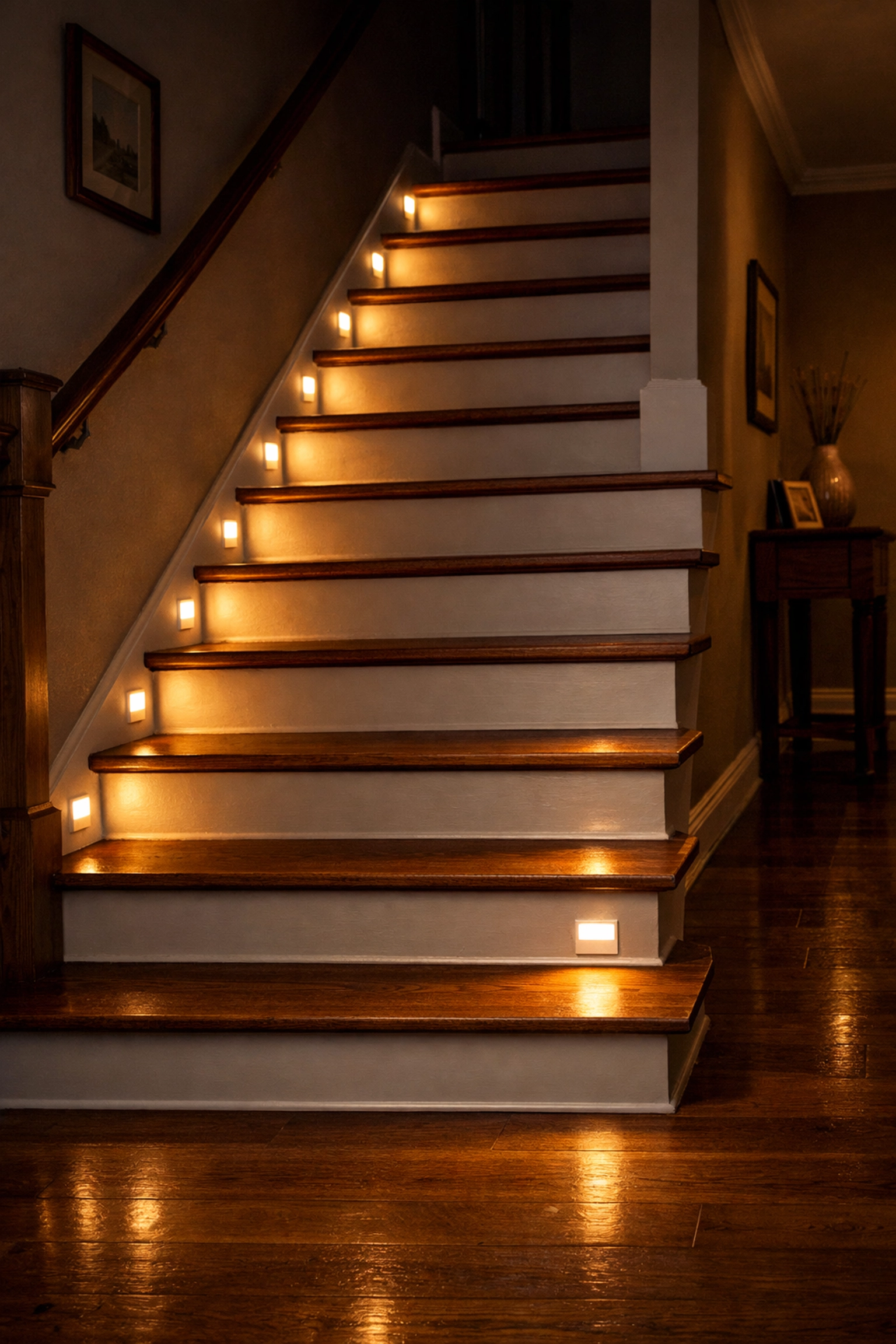
- Motion Sensors: Battery-operated LED motion lights are a game-changer. They can be stuck to the wall along the baseboards and will automatically illuminate the path as soon as you approach.
- Eliminate Glare: While you want it bright, avoid bare bulbs that cause glare. Use frosted covers or indirect lighting to keep the light soft but pervasive.
6. The "Bottom-Step Illusion"
The most dangerous step on any staircase is almost always the last one. Many falls occur because a person thinks they have reached the floor when they actually have one more step to go, or they think there is one more step when they are already on the landing.
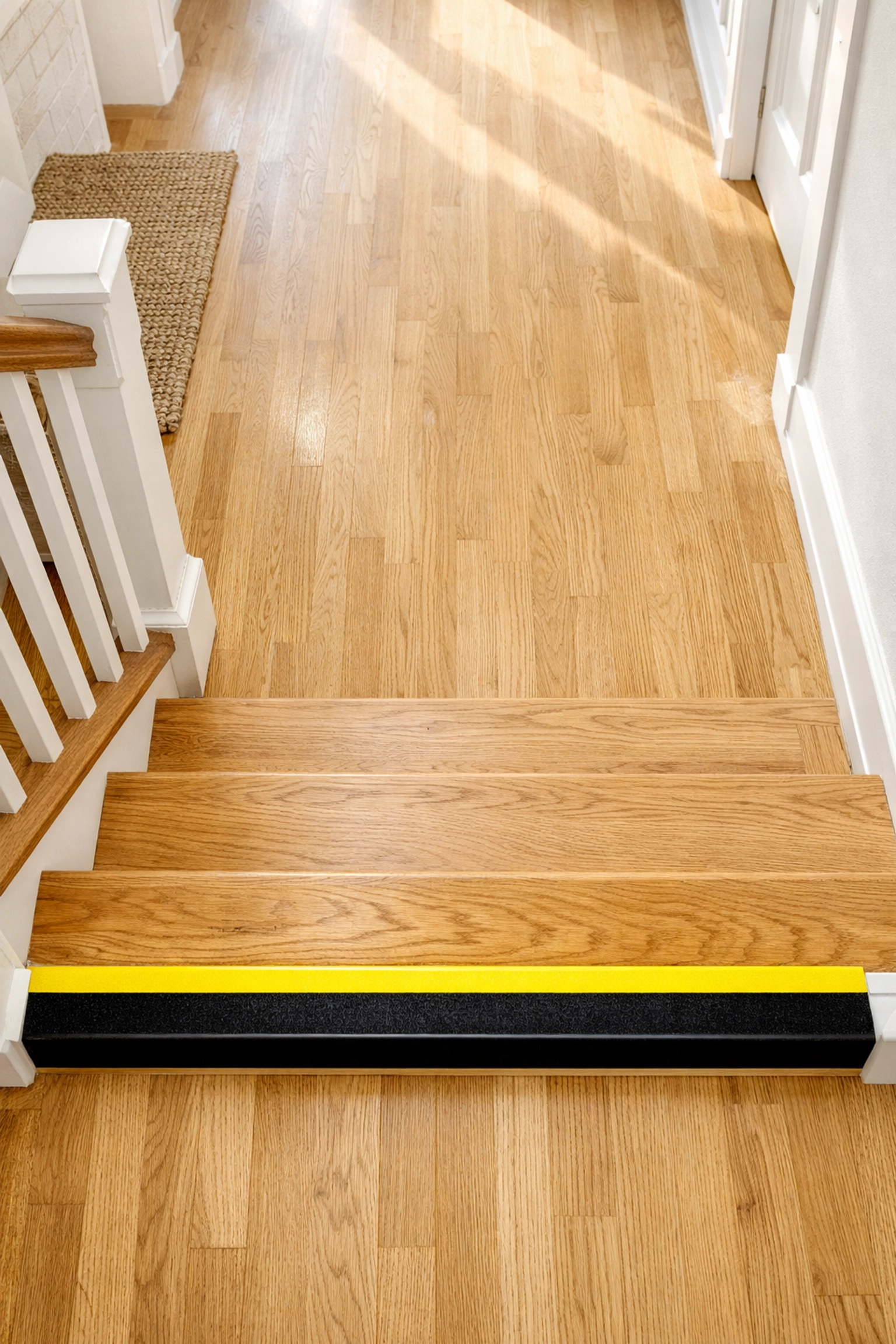
This often happens because the flooring of the hallway matches the flooring of the stairs perfectly. When looking down, the bottom step "blends" into the floor, erasing the depth perception needed to land safely.
How to Fix It
- Contrast is Key: Use a high-contrast strip of tape or a different colored tread on the very last step. This creates a visual "stop sign" for the brain.
- Change the Texture: Placing a non-slip mat at the very bottom of the stairs (one with a rubber backing that won't slide) provides a tactile cue through the feet that you have officially reached level ground.
- Focus Your Gaze: Train yourself to look at the steps as you descend, rather than looking straight ahead at your destination.
7. Rushing and Multi-Tasking
In our busy lives, we often treat the stairs as a hurdle to be cleared as quickly as possible. We rush down to answer the door, or we carry a large laundry basket that blocks our view of our feet.
Rushing changes your center of gravity. When you move quickly, your momentum carries you forward, making it much harder to recover if you lose your footing. Similarly, carrying heavy or bulky items prevents you from using the handrails and obscures your line of sight.
How to Fix It
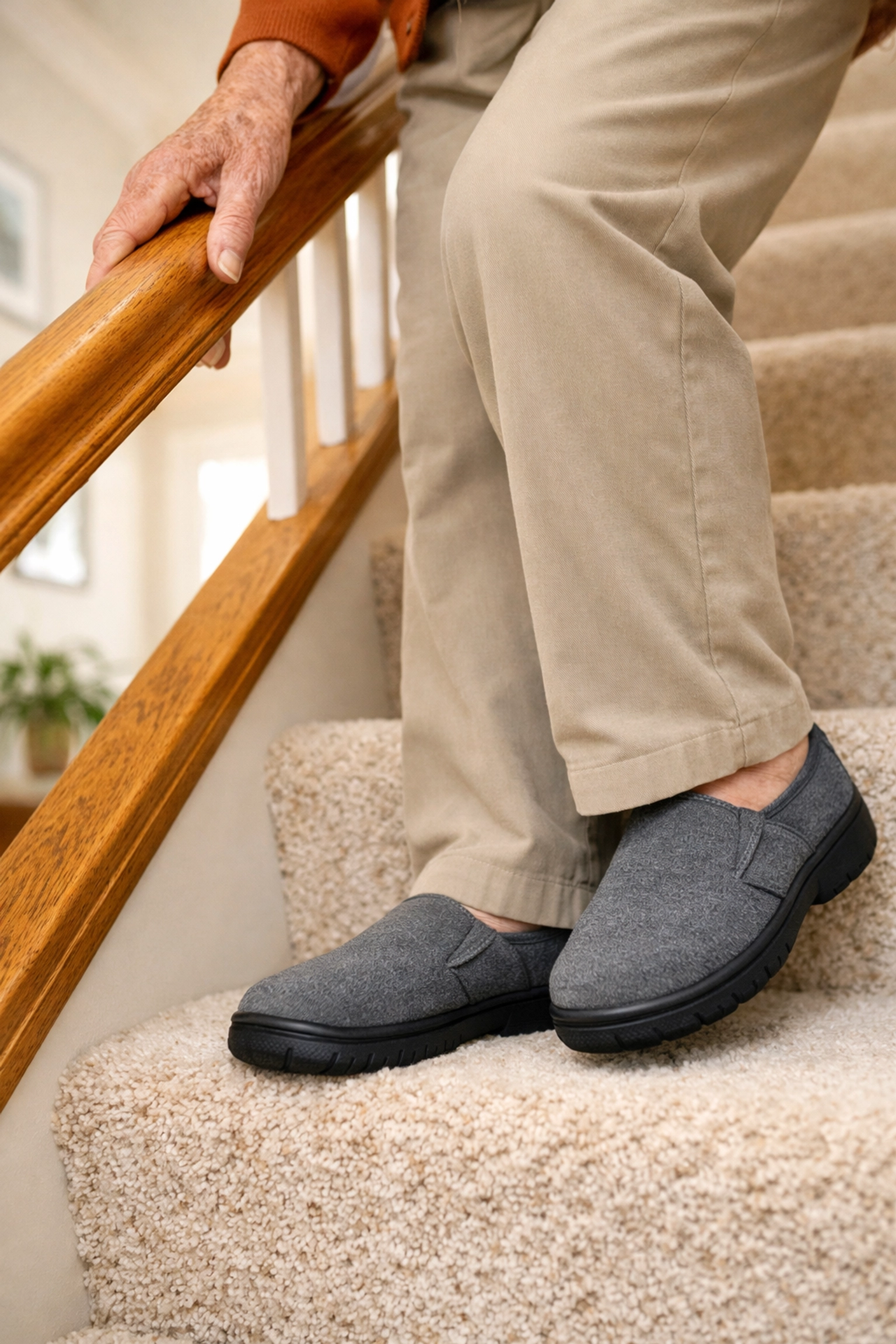
- The "One Hand Free" Rule: Never carry so much that you can't keep at least one hand firmly on the handrail. If you have a lot to move, make two trips or use a backpack.
- Mindful Stepping: Make a conscious effort to slow down. Place your entire foot on each tread, rather than just the ball of your foot.
- Proper Footwear: Avoid walking on stairs in loose slippers, socks, or floppy flip-flops. Bare feet or shoes with rubber soles provide the best sensory feedback and grip.
Building a Culture of Safety
Creating a safe home isn't about fear; it’s about empowerment. By addressing these seven common mistakes, you aren't just preventing a fall: you are preserving independence. A safe staircase allows you or your loved ones to move through the home with confidence and peace of mind.
Take a walk through your home today. Stand at the top of your stairs and look down. Can you see the edges clearly? Is the rail sturdy? Is the path clear? Small changes made today can prevent the accidents of tomorrow. Safety is a journey, and every step: when taken carefully: leads to a more secure future.

