
Stairs are a fundamental part of most homes, but for many of us, they eventually become more than just a way to get from floor to floor. They become a source of anxiety. Whether you are living independently in your later years or you are caring for a loved one, the staircase is often the "high-traffic, high-risk" zone of the house.
Statistics show that nearly one million stair-related injuries occur annually in the United States alone. While that number sounds daunting, the reality is that many of these incidents are preventable. Falls on stairs aren't usually caused by one single "unlucky" moment; they are often the result of small, overlooked mistakes in the way the stairs are built, lit, or used.
At Fall Guys Products, we believe that understanding these risks is the first step toward a safer home. Here are the seven most common mistakes homeowners make with stair safety: and exactly how you can fix them to ensure peace of mind for everyone in the family.
1. Ignoring Irregular Riser Heights and Narrow Treads
The rhythm of climbing stairs is something our brains handle mostly on autopilot. When we step onto a staircase, our bodies quickly calibrate to the height of the first few steps. If those steps are inconsistent: meaning one riser is even a quarter-inch taller than the next: our "internal map" fails, and we trip.
The Mistake: Many older homes have "settled," causing stairs to shift and become uneven. In other cases, DIY repairs or poor initial construction results in risers (the vertical part) that are too high or treads (the horizontal part) that are too narrow. If your foot doesn't have enough room to land fully on the step, you are naturally more prone to a slip.
The Fix: Standard residential stairs should ideally have treads between 250mm and 300mm deep (about 10 to 12 inches) and risers around 150mm to 180mm high (about 6 to 7 inches).
- Uniformity: Use a measuring tape to check every single step. If you find a variation of more than 3/8 of an inch between any two steps, it’s a significant hazard.
- Consult a Professional: If your stairs are uneven, a carpenter may need to shim the treads or rebuild the stringers to ensure every step is identical. Consistency is the key to safety.
2. Settling for Inadequate Lighting
Visibility is perhaps the most underrated factor in stair safety. As we age, our eyes require significantly more light to see the same level of detail they did in our younger years. Furthermore, our depth perception can change, making it difficult to distinguish where one step ends and the next begins.
The Mistake: Many hallways and stairwells rely on a single, dim overhead bulb that creates long, confusing shadows. If the light switch is only at the bottom or only at the top of the stairs, people often risk the climb "just this once" in the dark rather than making the extra trip to flip the switch.
The Fix:
- The Two-Way Switch: Ensure there are light switches at both the top and bottom of the staircase. This is a non-negotiable safety feature.
- Eliminate Shadows: Instead of one bright bulb that creates harsh shadows, use multiple light sources.
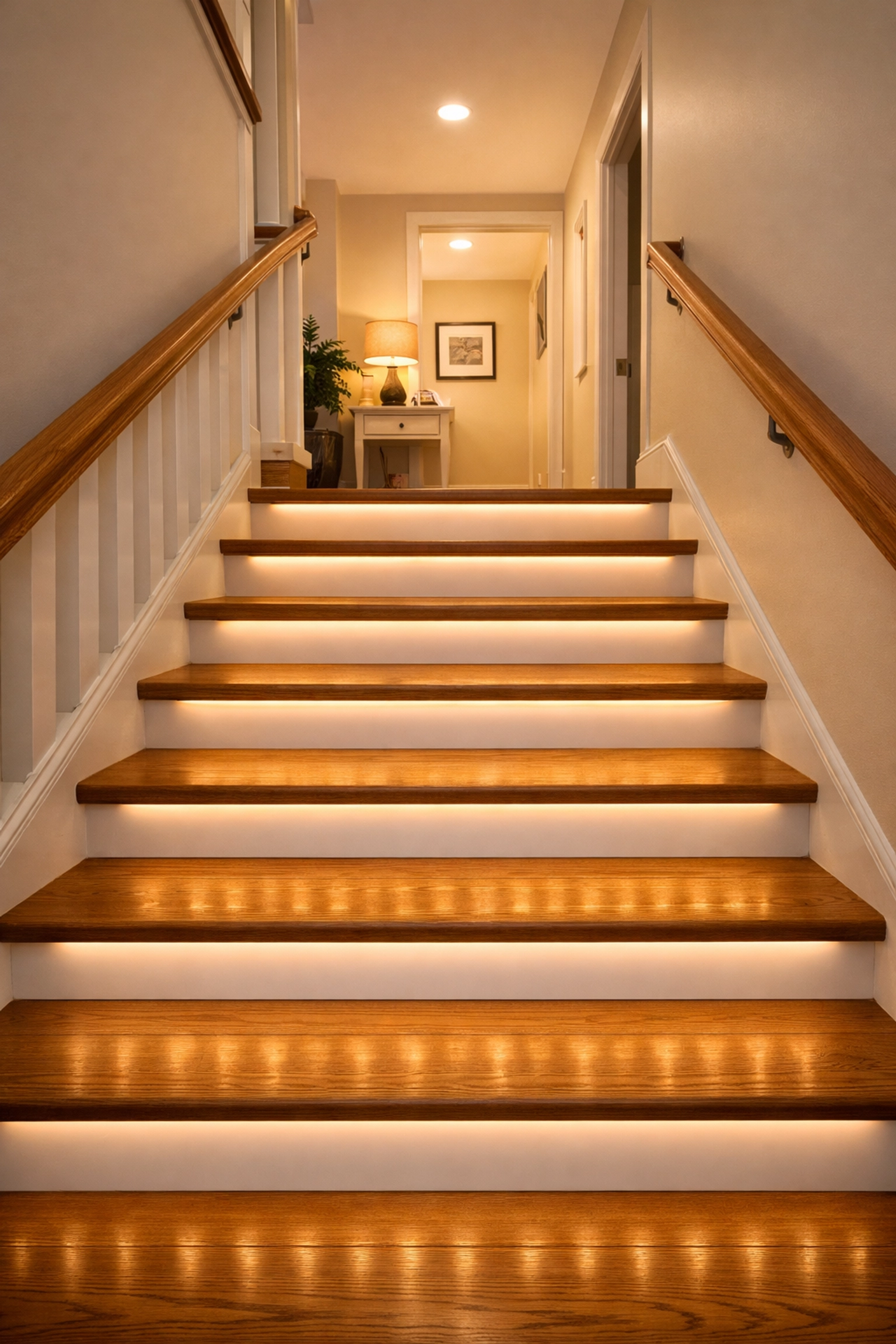
- Step Lighting: Install low-profile LED strip lighting or recessed "puck" lights along the baseboards or under the lip of each tread. This illuminates the exact surface where the foot needs to land.
- Motion Sensors: Consider battery-operated, motion-sensing lights that activate automatically when someone approaches the stairs.
3. Relying on Weak, Poorly Placed, or Single Handrails
We often view handrails as something to grab if we fall, but their real purpose is to prevent the fall from happening in the first place by providing continuous stability.
The Mistake: Many staircases only have a handrail on one side. Others have handrails that are purely decorative: too thick to wrap your hand around or mounted so loosely that they would pull out of the wall if you actually leaned your weight on them. Another common error is a handrail that ends exactly at the last step, leaving the user unsupported for that final, crucial transition to the floor.
The Fix:
- Double Up: Install handrails on both sides of the staircase. This allows for a "three-point contact" system (two hands on rails, one foot on a step).
- Proper Extension: A safe handrail should extend at least 300mm (about 12 inches) beyond the top and bottom risers. This gives the user a stable point to hold onto before they even begin the climb and after they have finished it.
- Grip and Strength: Ensure the rail is "graspable": meaning you can wrap your fingers all the way around it. It should be mounted into wall studs using heavy-duty brackets that can support at least 250 pounds of force.
4. Choosing Slippery Materials and Poor Traction
The aesthetic of a polished hardwood staircase or a sleek stone entry is beautiful, but from a safety perspective, these surfaces can be treacherous, especially when wearing socks or smooth-soled slippers.
The Mistake: Polished wood, tile, and marble have very low "coefficient of friction." Add a little bit of moisture from a rainy day or a spilled drink, and the stairs become a slide. Additionally, loose decorative rugs (runners) that aren't properly tacked down can slide right out from under a person’s feet.
The Fix:
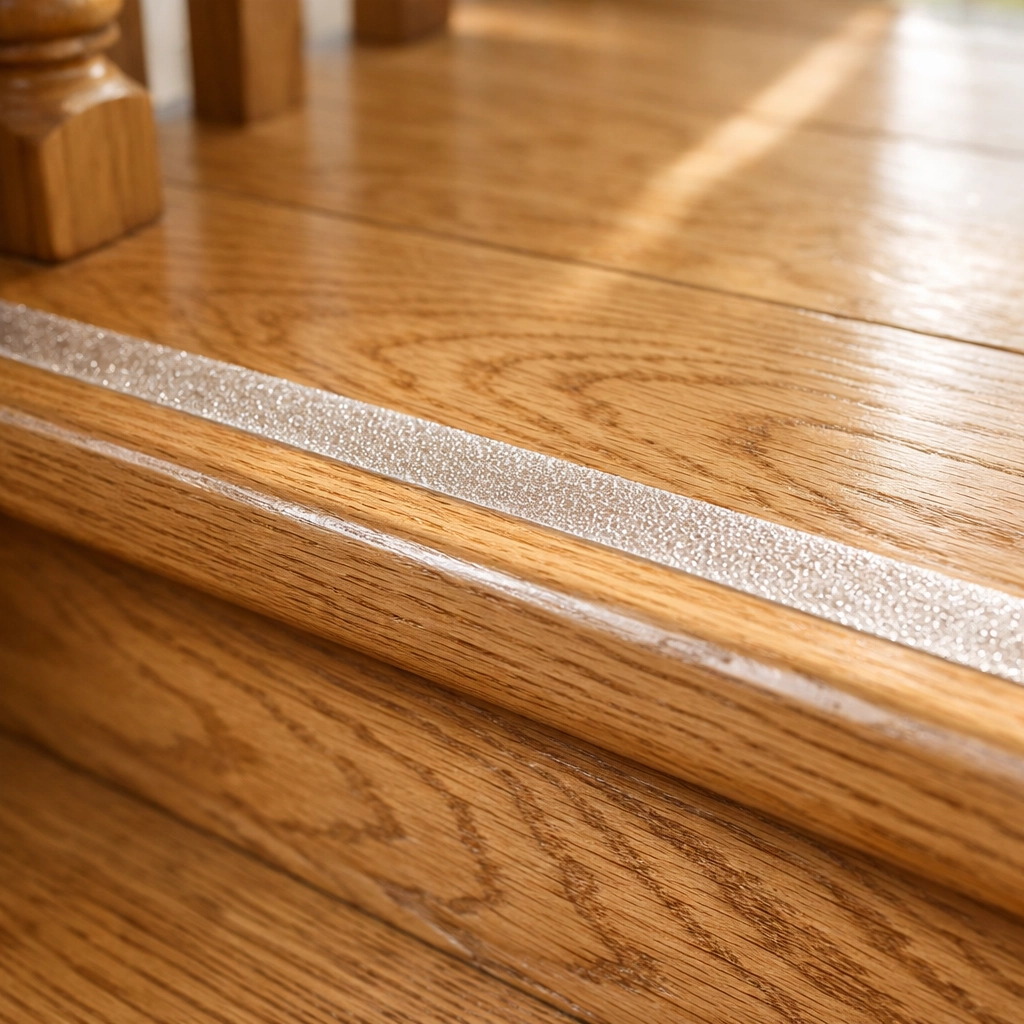
- Non-Slip Strips: If you have hard-surface stairs, apply transparent anti-slip adhesive strips. They provide grit and traction without ruining the look of the wood.
- Carpet Maintenance: If your stairs are carpeted, ensure the carpet is tight and low-pile. Shag or thick padding can actually hide the edge of the step, making it easier to misplace your foot.
- Contrast Edging: Use a strip of contrasting color or texture on the edge of each step. This helps the eye "map" the staircase and clearly identifies where the tread ends.
5. Using Stairs for Temporary Storage
It is a common habit in many households: placing a book, a basket of laundry, or a pair of shoes on the bottom steps to "take up later."
The Mistake: This creates a massive tripping hazard. Even if you think you’ll remember the item is there, distractions happen. In an emergency or a moment of fatigue, an object on the stairs is an accident waiting to happen. Furthermore, items on the stairs often force a person to move away from the handrail to bypass the obstruction, losing their primary support.
The Fix:
- The "Clear Path" Rule: Establish a strict household rule that nothing: absolutely nothing: is ever placed on the stairs.
- Landing Baskets: If you need to move items between floors, place a basket on a table near the stairs, but never on the stairs themselves.
- Clear the Landings: Ensure the areas at the very top and very bottom of the stairs are also clear of clutter, rugs that bunch up, or furniture that might impede a wide turning radius.
6. Ignoring the "Human Element": Vision and Footwear
Sometimes the mistake isn't with the staircase itself, but with how we interact with it. Our physical state and our gear matter just as much as the carpentry.
The Mistake: Two major contributors to stair falls are bifocal lenses and improper footwear. Bifocals are designed so the bottom of the lens is for reading. When a person wearing bifocals looks down at their feet to navigate stairs, the stairs appear blurry or distorted, leading to a misstep. Regarding footwear, walking up or down stairs in just socks is one of the most dangerous things you can do in a home, as socks provide zero grip on wood or carpet.
The Fix:
- Vision Checks: Talk to your optometrist about "stair-safe" glasses. Some people benefit from a single-vision pair of glasses specifically for walking and navigating the home.
- Footwear Habits: Encourage the use of sturdy, well-fitting shoes with non-slip soles inside the house. If shoes aren't preferred, high-traction "grip socks" are a better alternative than standard hosiery, though a firm-soled slipper is always safer.
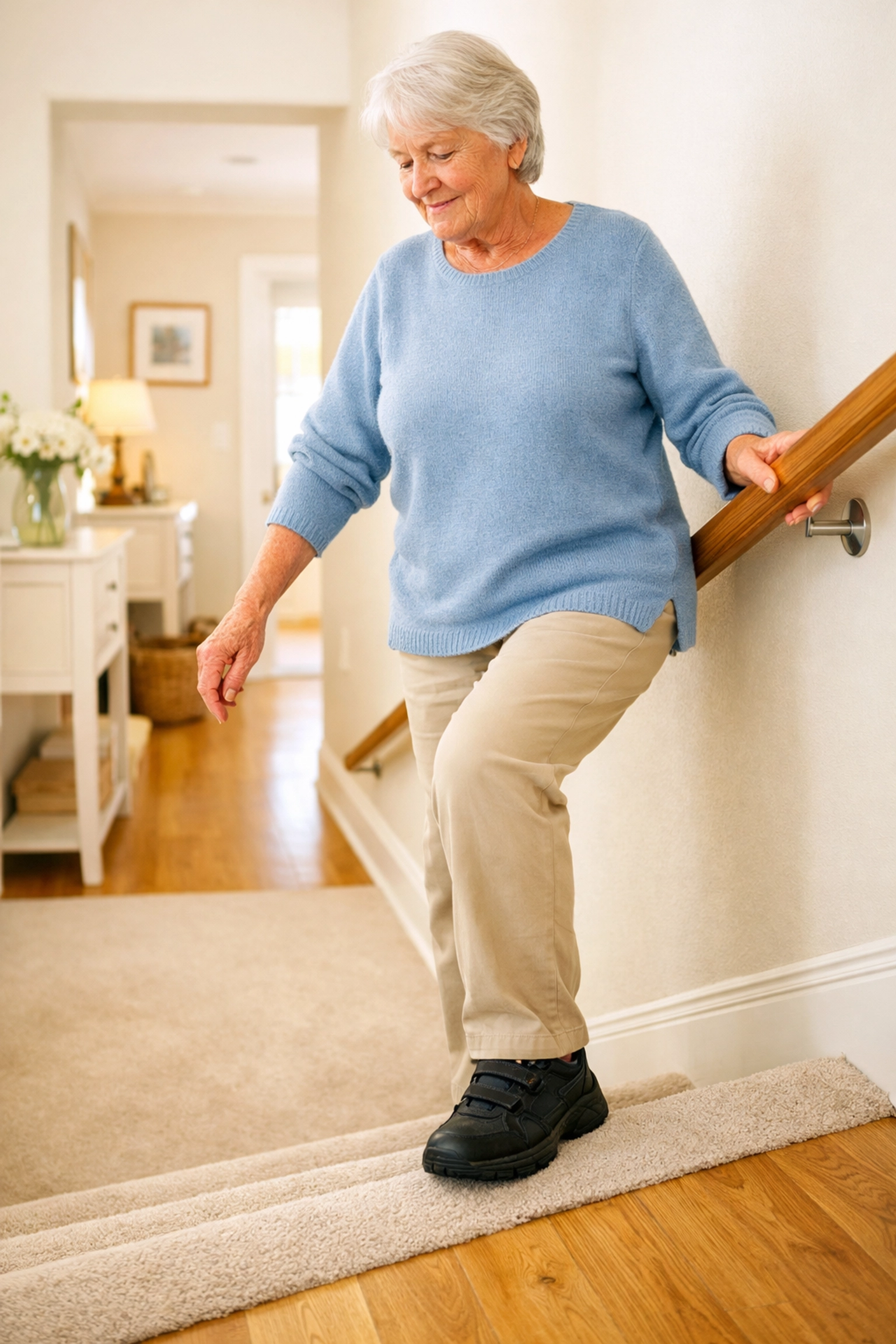
- The "One Hand" Rule: Always keep at least one hand on the rail. Avoid carrying large items with both hands that block your view of your feet.
7. Overlooking Outdoor Stair Safety and Maintenance
Outdoor stairs often get less attention than indoor ones, yet they are exposed to the elements, which can degrade their structural integrity over time.
The Mistake: Many people ignore loose boards on a deck or crumbling concrete on a front stoop until someone actually trips. Outdoor stairs are also prone to becoming "invisible" at night if there is no porch light, or becoming slick with algae, moss, or ice.
The Fix:
- Regular Inspections: Every spring and autumn, inspect outdoor stairs for rot, rust, or loose railings.
- Abrasive Coatings: Apply a weather-resistant abrasive paint or "grit tape" to outdoor steps.
- Clear the Elements: Ensure gutters are not dripping directly onto outdoor stairs, which can lead to ice patches in the winter or slippery moss in the summer.
- Visibility: Install solar-powered lights along the path leading to outdoor stairs to ensure the first step is always visible.
Building a Culture of Safety
Safety isn't about one big renovation; it's about a combination of environment, habit, and awareness. By addressing these seven common mistakes, you aren't just fixing a staircase: you're preserving independence.
Taking the time to measure your risers, improve your lighting, and clear the clutter sends a powerful message that the home is a place of security and comfort. Stairs don't have to be a source of fear. With the right adjustments, they can remain a safe and functional part of your home for years to come.
If you're unsure where to start, consider a professional mobility assessment. Experts can often spot the "invisible" risks: like a handrail that’s a half-inch too low or a shadow that obscures a landing: that the rest of us might miss in our daily routines. Peace of mind starts with a single, steady step.

