
Stairs are often the most functional part of a home, connecting our living spaces and providing the structure we move through every day. However, as we age or as our mobility needs change, these same stairs can go from being a simple architectural feature to a significant source of anxiety.
According to various safety studies, the staircase is one of the most common locations for falls in the home. The good news is that most stair-related accidents aren't "accidents" in the sense of being random or unavoidable. They are often the result of specific environmental factors: mistakes in design, maintenance, or daily habits that we can identify and correct.
In this guide, we’re going to walk through the seven most common mistakes homeowners and caregivers make regarding stair safety. By understanding the "why" behind these hazards, you can take practical, reassuring steps to make your home a safer place to navigate.
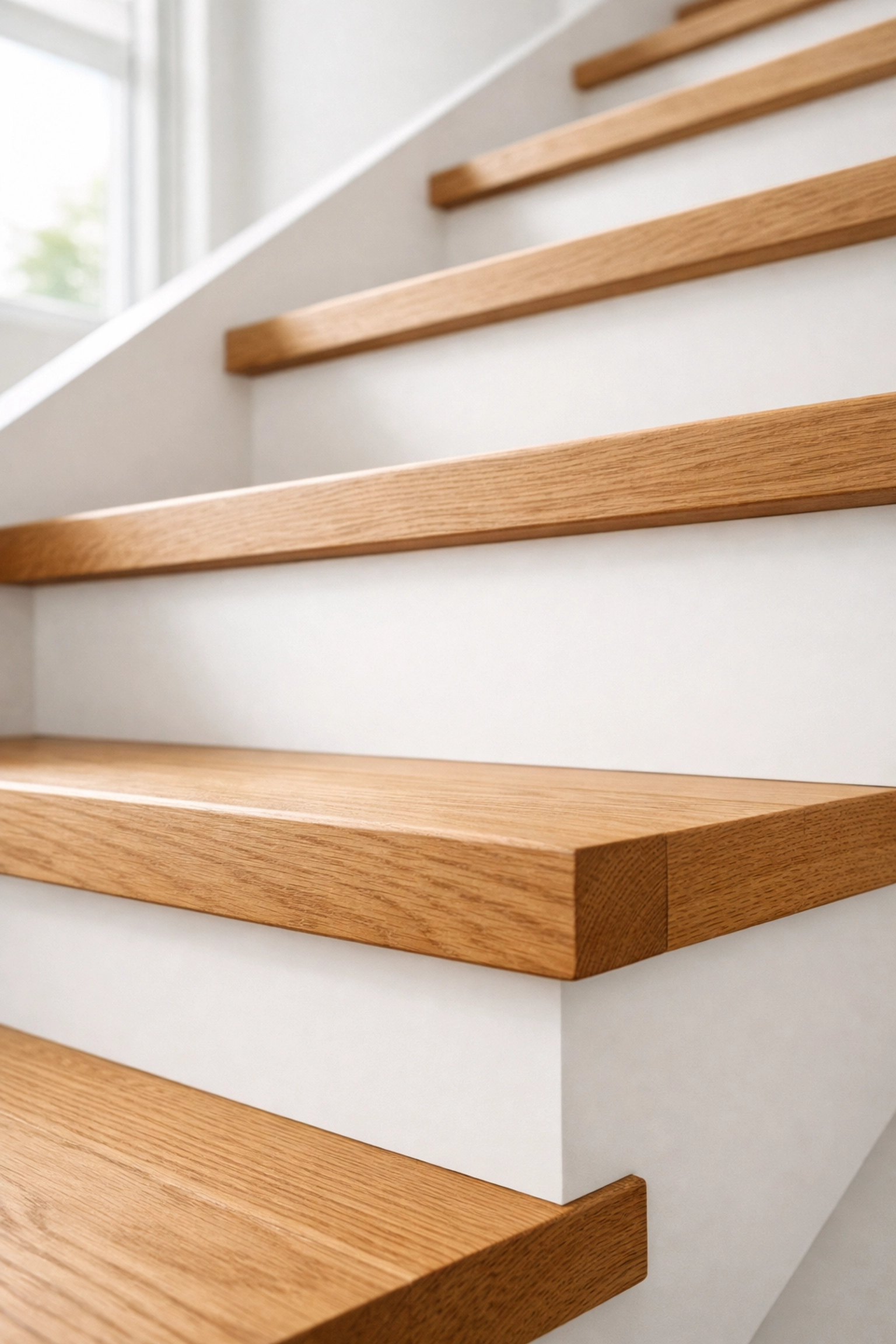
1. Ignoring the "Step Geometry" (Treads and Risers)
One of the most frequent mistakes happens before anyone even sets foot on the stairs: poor dimensions. In the world of construction, we talk about "treads" (the horizontal part you step on) and "risers" (the vertical part between steps).
When a tread is too narrow, your foot doesn't have enough surface area to land securely. This often leads to "overstepping" or slipping off the edge. Conversely, if a riser is too high, it requires more physical exertion and balance to lift the leg, which can be exhausting for those with limited mobility or joint pain.
The Fix: Standardize Your Steps
If you are building or renovating, aim for the "gold standard" of residential dimensions. This typically means treads that are between 10 and 11 inches (250–300mm) deep and risers that are about 7 inches (150–180mm) high.
If you aren't in a position to renovate, pay close attention to the consistency of your steps. A major tripping hazard occurs when one step is even a fraction of an inch different in height from the others. Our brains develop "muscle memory" as we climb; if that pattern is broken by an uneven step, a fall is much more likely. Use a level and a tape measure to check your stairs. If you find significant variations, consider consulting a professional to see if the staircase can be leveled or adjusted.
2. Inadequate or Short Handrails
A handrail shouldn't just be a decorative piece of wood attached to the wall. Its primary job is to provide a continuous point of contact and a stable anchor for your weight. Many homes have handrails that are too thin to grip properly, too low to reach comfortably, or: most dangerously: they stop too early.
A handrail that ends exactly at the top or bottom step leaves the user "floating" for that last crucial movement. This is often where balance is lost because the person lets go of the rail before their feet are firmly on the level landing.
The Fix: The 12-Inch Rule
Ensure your handrails are sturdy enough to support the full weight of an adult. A proper handrail should be mounted at a height of about 34 to 38 inches from the floor.
More importantly, look at where the rail ends. Ideally, a handrail should extend at least 12 inches (300mm) beyond the top and bottom risers. This allows the user to maintain their grip until they have completely transitioned onto the flat floor. If your current rail is short, you can often find extension kits or have a contractor add a "return" that curves into the wall at the ends to prevent clothing from snagging.
3. Prioritizing Aesthetics Over Traction
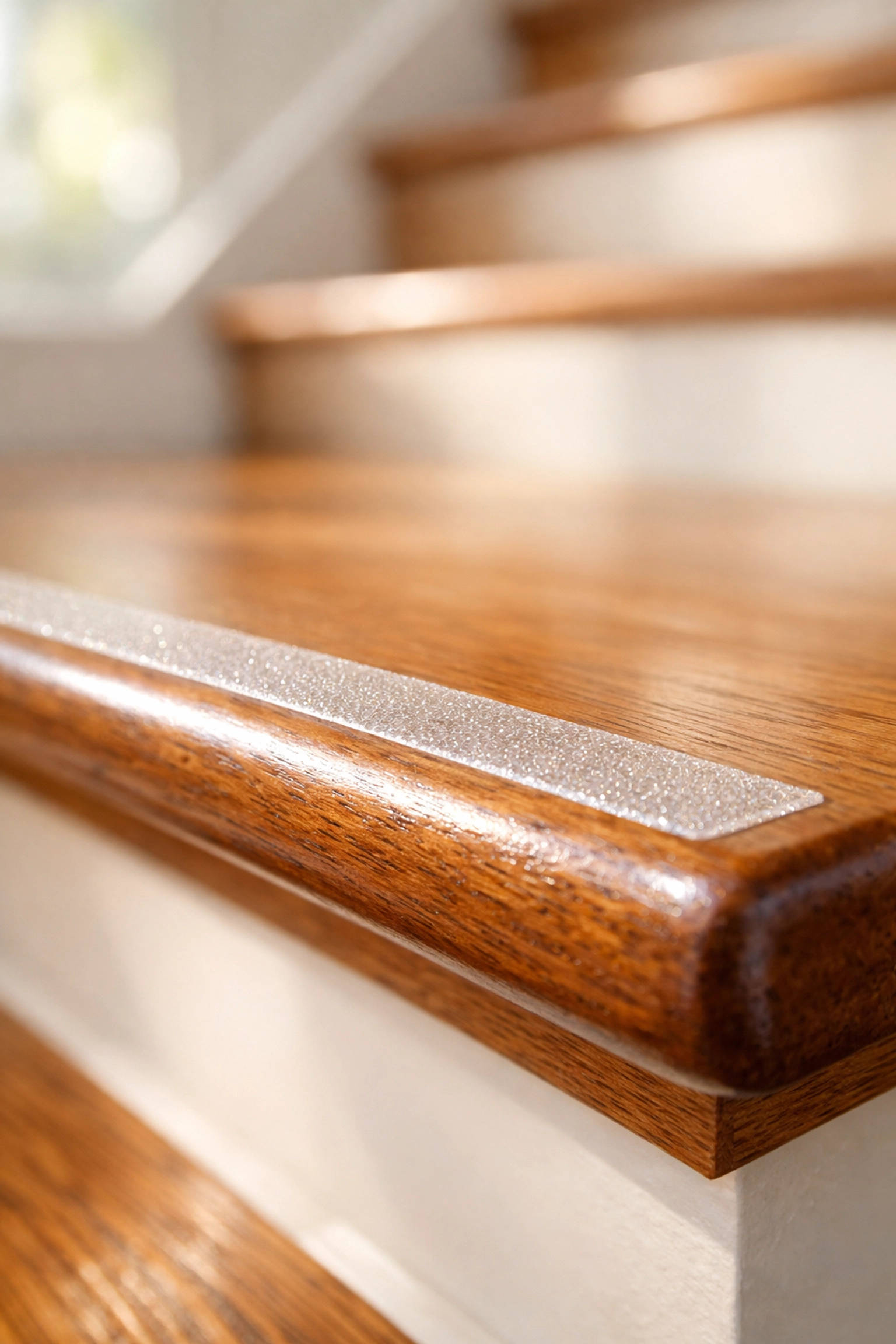
We all love the look of polished hardwood or sleek, glossy tile. However, these materials are essentially "slip-and-slides" when paired with socks or smooth-soled slippers. Even carpet, if it is low-pile and worn down, can become surprisingly slick over time.
Slippery surfaces are a major contributor to "descending falls," where the heel slips forward on the edge of the step, causing the person to fall backward onto the stairs.
The Fix: Add Texture
You don't have to rip out your beautiful wood stairs to make them safe. There are several ways to add traction without sacrificing style:
- Non-slip Treads: These are clear or colored adhesive strips that provide a "gritty" surface for your feet to grip.
- Carpet Runners: A firmly installed, high-traction carpet runner can provide better grip than bare wood. Just ensure it is stapled down securely and doesn't have any loose edges.
- Anti-slip Coatings: There are transparent paints and sprays that add a textured, rubberized finish to the wood or tile, making them much less slippery even when wet.
4. The "Dim Hallway" Syndrome
Our eyes need time to adjust to changing light levels, especially as we get older. A common mistake is having a well-lit living room that leads to a dimly lit staircase. If you can’t clearly see the edge of the step: where the tread meets the riser: your depth perception will struggle, and you are much more likely to misplace your foot.
Shadows are also a hidden enemy. A single overhead light can cast a long shadow over the steps, making it look like the stairs are deeper or shallower than they actually are.
The Fix: Layered Lighting
The goal is to eliminate shadows and highlight the edges of the steps.
- Motion Sensors: Install motion-activated lights at the top and bottom of the stairs. This ensures the path is lit before you even reach the first step, removing the need to fumble for a switch in the dark.
- LED Strip Lighting: Running a thin strip of LED lights under the "nosing" (the overhang) of each step or along the baseboard can illuminate the entire flight evenly.
- Contrast Strips: If lighting is still an issue, you can apply a strip of contrasting color (like a dark strip on light wood) to the edge of each step to provide a visual cue for where the step ends.
5. Using the Stairs as Storage
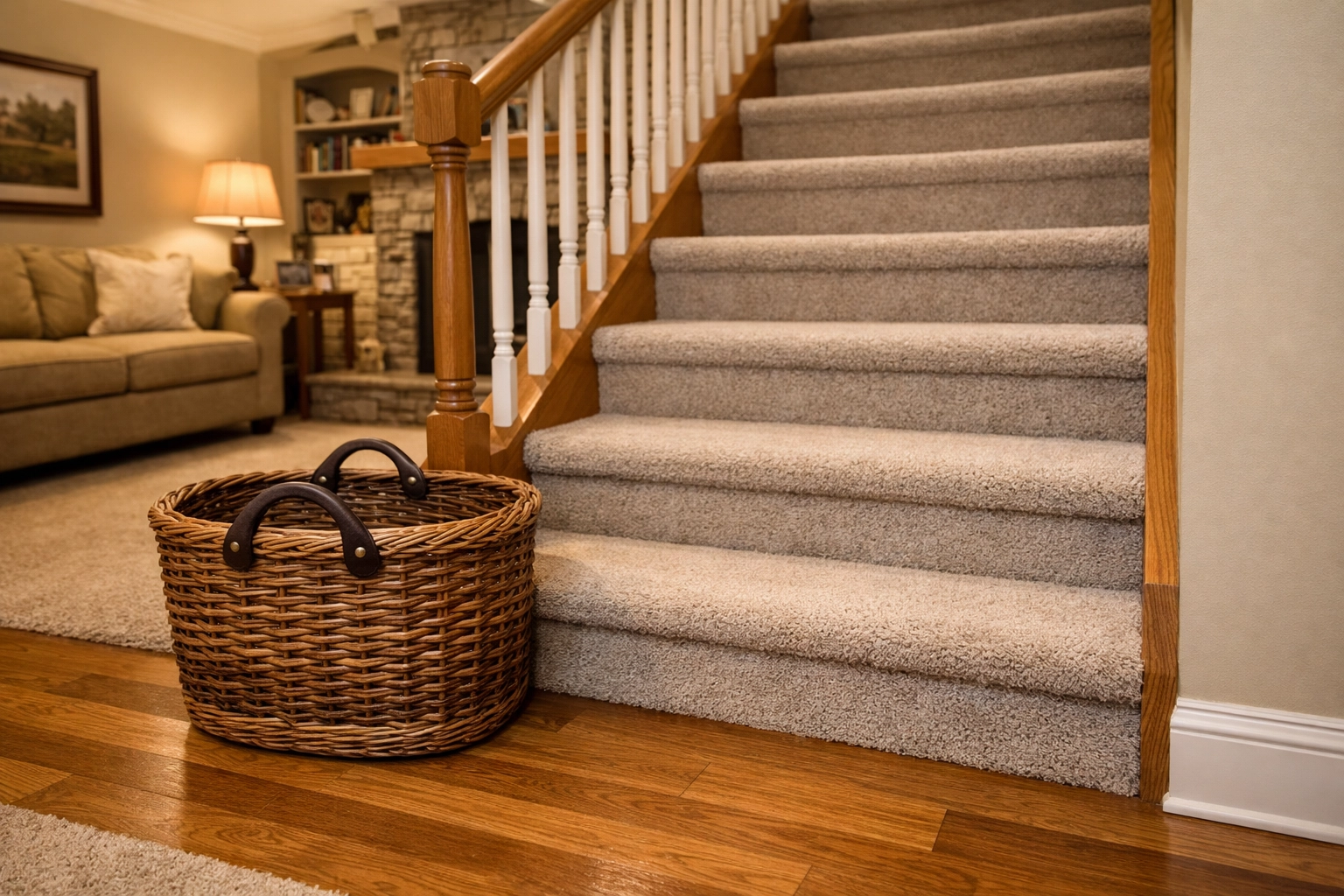
We’ve all done it: we have a pile of mail, a pair of shoes, or a basket of laundry that needs to go upstairs, so we set it on the bottom two steps to take up "later."
This is one of the most dangerous habits in home safety. These items reduce the "effective width" of the stairs, forcing the user to walk closer to the edge or change their gait. Furthermore, if you are carrying something else and don't see the object on the step, it becomes an immediate trip hazard.
The Fix: The "Clear Path" Policy
Establish a strict rule: nothing ever sits on the stairs. Not for a minute, not for "later."
If you need to move items between floors, use a "stair basket" with a handle that sits on the floor at the base of the stairs. When you are ready to go up, you carry the basket all the way to the top in one trip. This keeps the actual steps clear of clutter at all times.
6. Neglecting Structural Maintenance
Over years of use, stairs undergo a lot of stress. Wooden treads can warp, nails can work their way up, and "stringers" (the structural sides of the stairs) can pull away from the wall.
A "creaky" stair is often more than just an annoyance; it’s a sign that the wood is moving. If a tread is loose, it can shift when you put your weight on it, causing a sudden loss of balance.
The Fix: The Annual Stair Audit
Once a year, perform a "safety walk" of your staircase.
- Check for Movement: Step firmly on the left, center, and right of every tread. If anything shifts or squeaks loudly, it needs to be secured.
- Secure the Fasteners: If you see nail heads poking up, don't just hammer them back in (they will likely pop up again). Use wood screws to pull the tread down tight to the stringer.
- Inspect the Railing: Grab the handrail and give it a firm shake. It should not wiggle. If it does, tighten the brackets or add more support.
7. Overlooking the "Human Factors"
Sometimes the mistake isn't with the stairs themselves, but with how we interact with them. This includes things like:
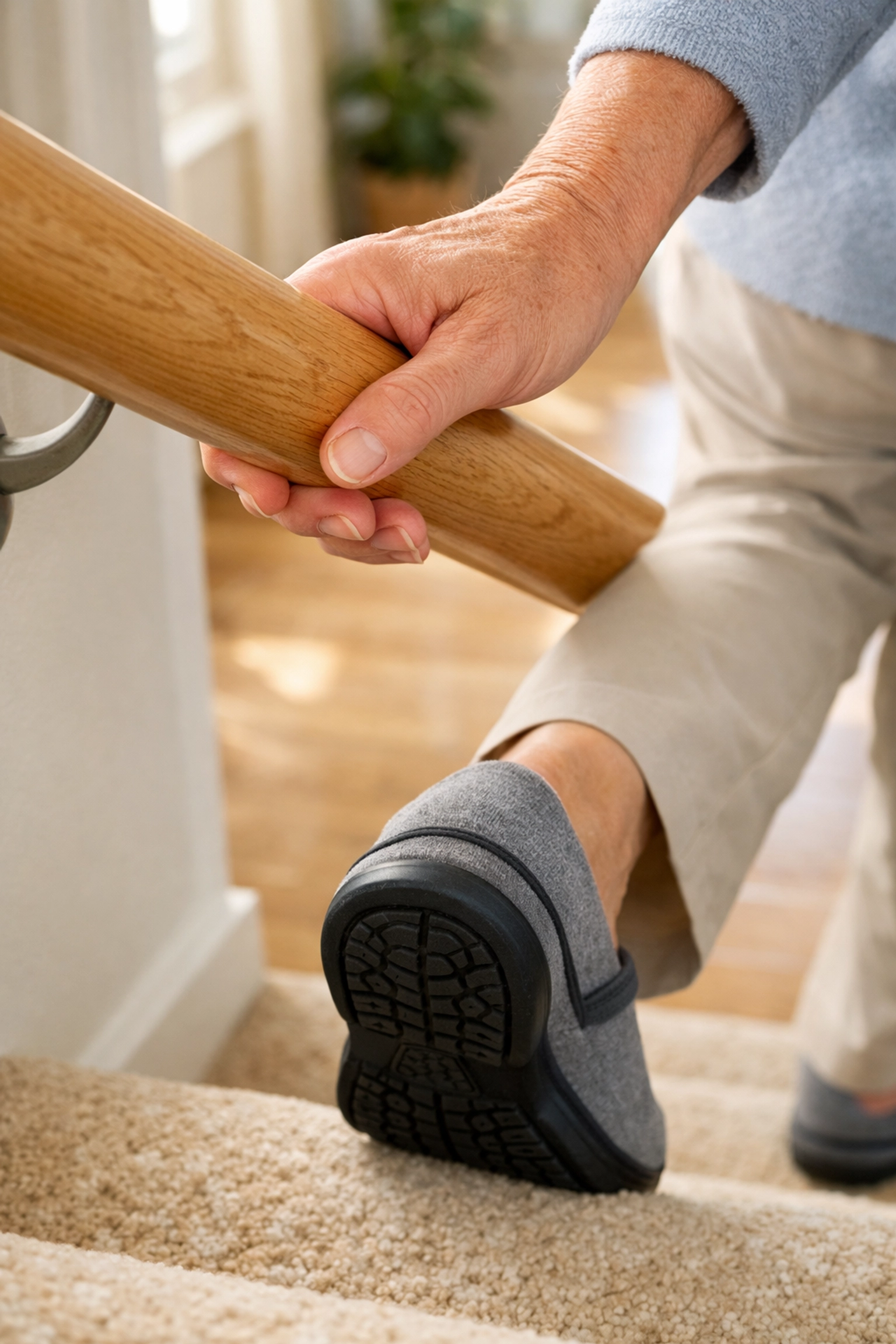
- Inappropriate Footwear: Walking in loose slippers, floppy flip-flops, or just socks is a recipe for a fall.
- Carrying Too Much: If you use both hands to carry a large box, you lose your ability to use the handrail.
- Rushing: Trying to answer the door or a phone call often leads to taking steps too quickly.
The Fix: Mindful Movement
- The "One Hand Free" Rule: Always keep at least one hand free to hold the handrail. If you have a lot to carry, make two trips or use a small backpack.
- Footwear Awareness: Wear shoes with a rubber sole and a closed heel when moving between floors. If you prefer to be "shoes-off" in the house, consider high-traction house shoes or grip-socks.
- Vision Checks: Ensure your glasses (especially bifocals or trifocals) are adjusted correctly. Bifocals can sometimes distort your view of the floor, making steps look further away than they are. When using stairs with bifocals, it’s often helpful to tilt your head down slightly so you are looking through the top portion of the lens.
Creating a Reassuring Environment
Making these changes isn't about admitting "defeat" or acknowledging that you can't handle the stairs anymore. Instead, it’s about proactive empowerment. By fixing these common mistakes, you are ensuring that your home remains a place of comfort rather than a place of risk.
Most of these fixes: like adding a motion-sensor light or clearing away clutter: are low-cost and can be done in a single afternoon. Others, like checking the structural integrity of your treads, provide long-term peace of mind.
Stair safety is a journey of small adjustments. When we take the time to look at our environment through the lens of prevention, we create a space where everyone: regardless of age or ability: can move with confidence. Stay safe, take it one step at a time, and remember that a few small changes today can prevent a major headache tomorrow.

