
Stairs are often the most intimidating part of a home as we get older. They represent independence: the ability to access the second floor or the basement: but they also represent a significant risk. Statistically, the staircase is one of the most common locations for serious falls in the home.
The good news is that many stair-related accidents are entirely preventable. Most falls don’t happen because of a lack of ability, but rather because of small, overlooked habits or environmental factors that have gone unaddressed for years. At Fall Guys Products, we believe that safety isn’t about fear; it’s about preparation.
In this guide, we’ll walk through the seven most common mistakes people make with stair safety and, more importantly, the practical steps you can take today to fix them.
1. The "One-Handed" or "No-Handed" Approach
One of the most frequent mistakes is overconfidence. We’ve all done it: carrying a basket of laundry with both hands or simply walking down the steps without touching the railing because we feel steady that day. This is a major risk factor.
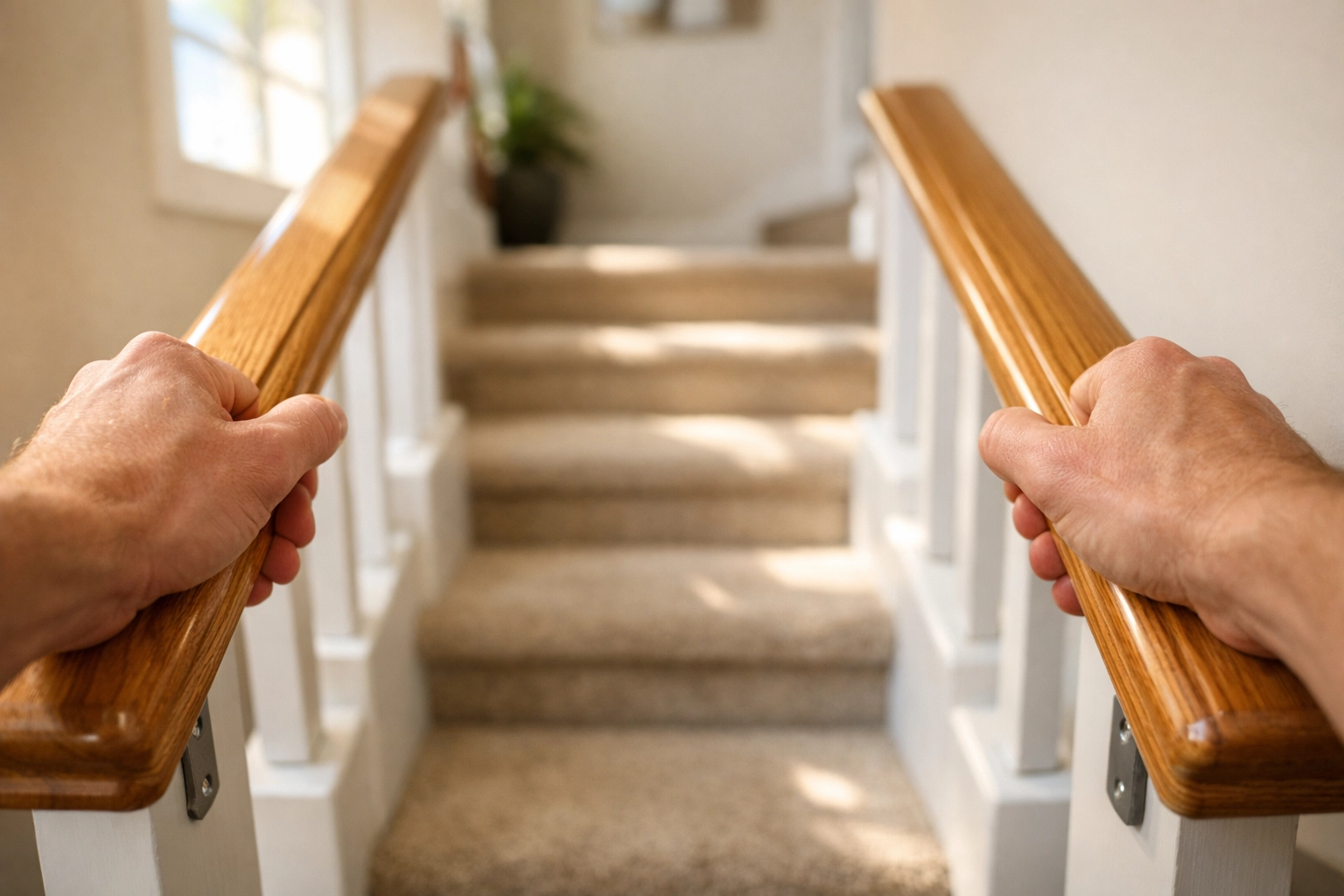
The Mistake: Failing to use the handrail or only having a handrail on one side of the staircase. Many older homes were built with a railing on only one side, leaving the other side open or flush against a wall.
The Fix: Always maintain at least one point of contact with a sturdy handrail. Ideally, you should have handrails on both sides of the stairs. This allows you to use your dominant hand for support regardless of whether you are going up or down.
If your current railing wiggles when you grab it, it’s not doing its job. Ensure that handrails are bolted into the wall studs and extend past the top and bottom steps so you have support before you even start your ascent or descent.
2. Rushing and Multi-Tasking
In our busy lives, we often treat the stairs as a transition zone: something to get through as quickly as possible. We might be checking a phone, looking at a watch, or shouting a conversation to someone in another room while we move between floors.
The Mistake: Moving too quickly or being distracted while navigating the steps. Rushing leads to "overstepping" or "short-stepping," where your foot doesn’t land squarely on the tread.
The Fix: Treat the stairs as a focused activity. When you are on the stairs, that is the only thing you are doing.
- The "One Step at a Time" Rule: Place both feet on a single step before moving to the next one. While this takes longer, it significantly increases your stability.
- Stop the Distractions: Never look at a mobile device while on the stairs. If you need to talk to someone, wait until you reach the landing.
- Focus on the Feet: Look down at your feet as you move. This helps your brain process the depth and distance of each step.
3. Wearing the Wrong Footwear
What you wear on your feet is just as important as the stairs themselves. Many falls occur because of a loss of traction between the foot and the step surface.
The Mistake: Navigating stairs in socks, loose-fitting slippers, or high heels. Socks are particularly dangerous on finished wood or polished stone stairs, as they provide almost zero grip. Loose slippers can easily slide off the heel, causing a trip.
The Fix: Always wear well-fitting, closed-toe shoes with non-slip rubber soles.
- House Shoes: If you prefer not to wear outdoor shoes inside, invest in a dedicated pair of "indoor-only" supportive sneakers or slippers with a firm back and a rubberized grip.
- Avoid Bare Feet: While bare feet provide more grip than socks, they don't offer the structural support that a shoe does, which can lead to foot fatigue on longer staircases.
- Check the Treads: If your stairs are naturally slippery (like polished wood), consider adding non-slip adhesive strips or low-pile carpet runners to increase traction.
4. Letting Clutter Accumulate
It’s a common habit: placing items on the bottom or top step that "need to go up" or "need to go down" later. We tell ourselves we’ll grab them on the next trip, but in the meantime, they become a dangerous obstacle course.
The Mistake: Using the stairs as temporary storage for shoes, books, packages, or laundry. Even a small item like a stray slipper or a rogue power cord can cause a devastating fall.
The Fix: Adopt a "Zero-Object Policy" for stairways.
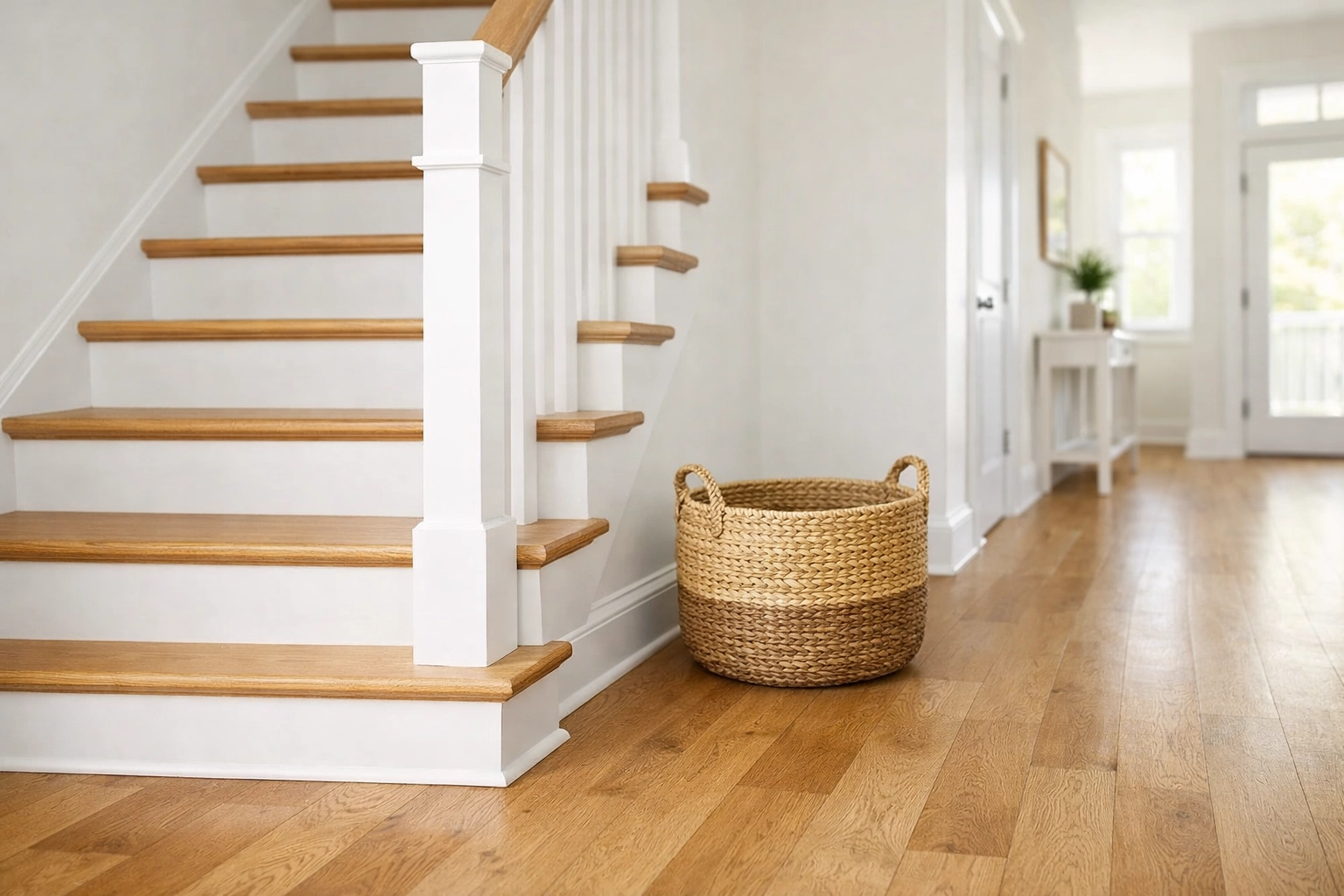
- The Landing Zone: If you have items that need to change floors, place them in a dedicated basket at least three feet away from the start of the stairs.
- Stair Baskets: If you use a stair basket (designed to sit on the steps), ensure it is only used on the landing, never on the actual treads.
- Clear the Path: Regularly check for loose rug corners or decorative items near the top and bottom of the stairs that could snag a foot.
5. Accepting Dim or Glaring Lighting
Vision plays a massive role in balance. As we age, our eyes require more light to see clearly, and our ability to distinguish depth in low-light conditions decreases.
The Mistake: Relying on a single, dim overhead light or, worse, navigating the stairs in the dark because you "know the way." Shadows can also be deceptive, making a step look deeper or shallower than it actually is.
The Fix: Ensure the entire staircase is bathed in bright, even light.
- Dual Switches: Ensure there are light switches at both the top and bottom of the stairs so you never have to navigate in the dark to find a switch.
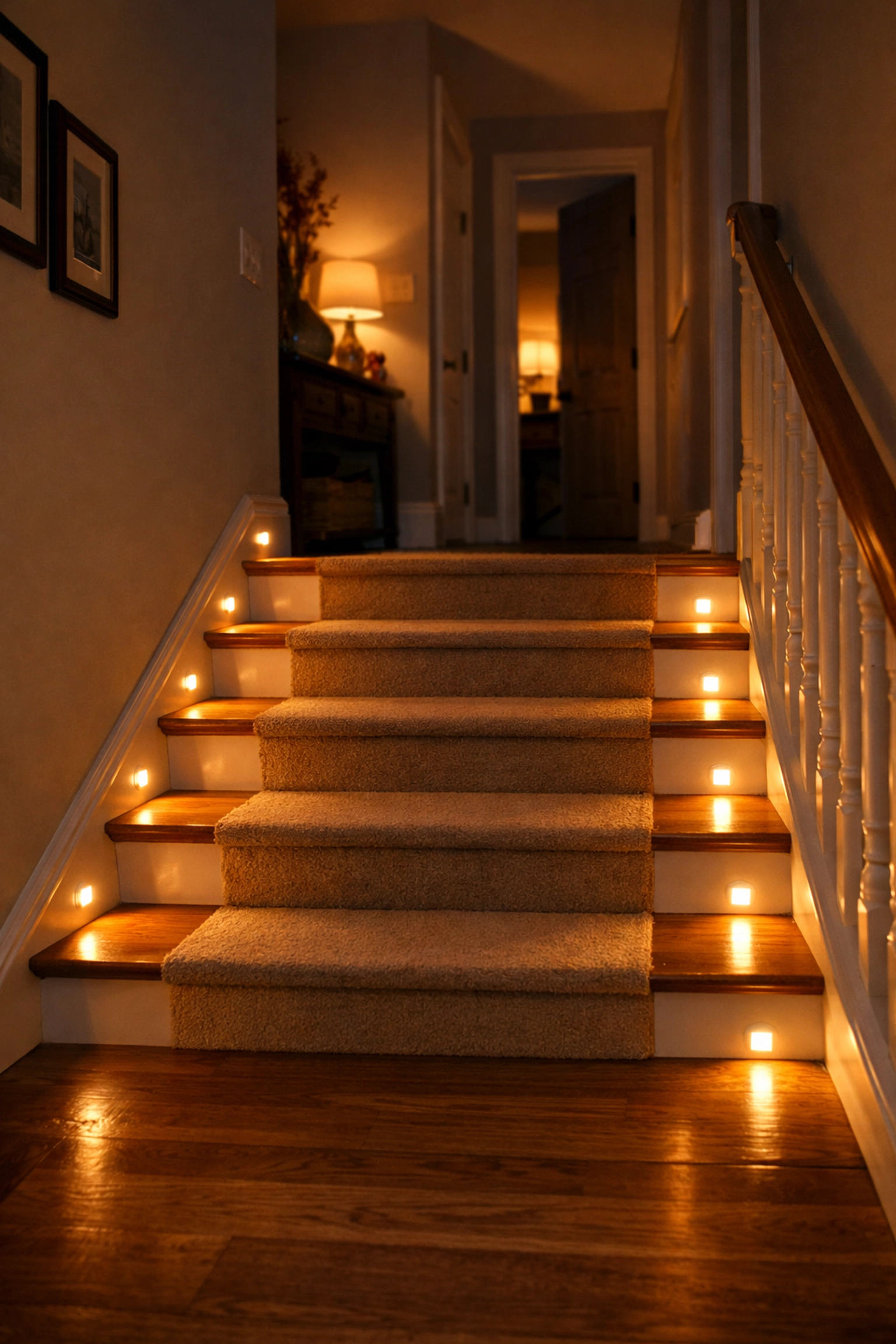
- Motion Sensors: Battery-operated LED motion sensor lights are an excellent, low-cost fix. You can stick them along the baseboards to illuminate the treads automatically as you approach.
- Reduce Glare: Avoid high-gloss finishes on wooden stairs, as they can reflect light in a way that obscures the edge of the step. Matte finishes or non-slip tapes are much safer.
6. Ignoring Structural Wear and Tear
Stairs undergo a lot of stress over the years. Over time, wood can warp, carpet can loosen, and nails can work their way out.
The Mistake: Ignoring "minor" issues like a creaking board, a slightly loose carpet edge, or a chipped outdoor concrete step. What feels like a small nuisance today can become a trip hazard tomorrow.
The Fix: Conduct a monthly "Stair Audit."
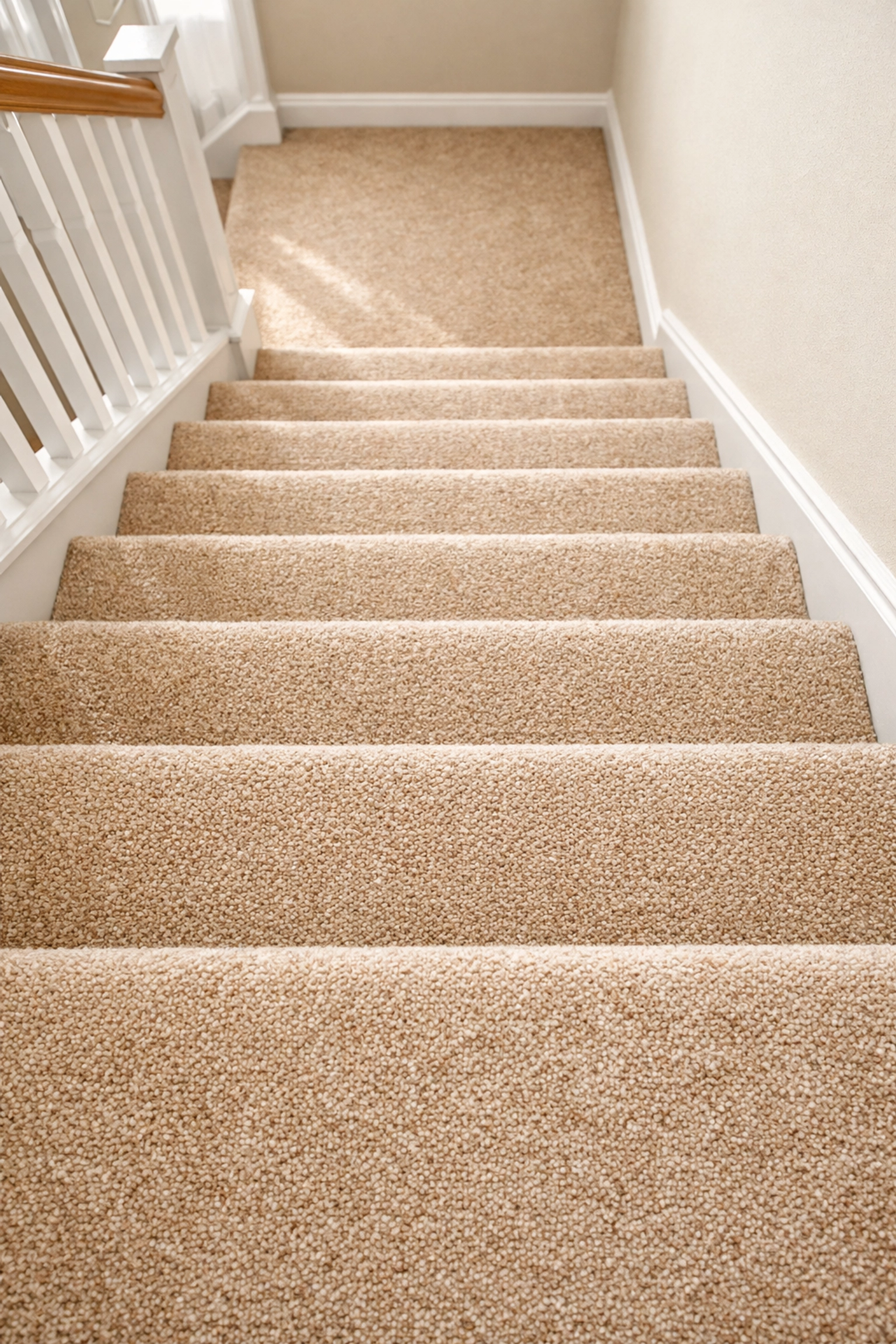
- The Carpet Check: Feel along the edges of carpeted stairs. If the carpet is "bunched" or loose, it needs to be re-stretched and secured immediately.
- The Tread Test: Step firmly on every part of each tread. If you feel any movement or hear significant creaking, the wood may be loose and require new screws or adhesive.
- Outdoor Hazards: For outdoor stairs, check for moss, ice, or crumbling concrete. These surfaces are even more prone to becoming slippery when wet.
7. Carrying Large or Heavy Loads
We often overestimate our ability to balance while carrying objects. When your arms are full, your center of gravity shifts, and your vision of your feet is often blocked.
The Mistake: Carrying bulky laundry baskets, heavy grocery bags, or large boxes up or down the stairs. This prevents you from using the handrail and obscures your view of the steps.
The Fix: Change how you move items between floors.
- The "One Hand Free" Rule: Never carry anything that requires both hands. If it’s too big for one hand, it’s too big for the stairs.
- Use a Backpack: For smaller items, use a backpack to keep your hands completely free for the railings.
- The Slide Method: For soft items like laundry, you can often "toss" the bag down to the bottom or use a plastic bin that you slide down the steps ahead of you (carefully) while you maintain your grip on the railing.
- Ask for Help: If a heavy package arrives, leave it until someone can help you move it. It’s not worth the risk.
The Impact of Vision and Health
Beyond the physical environment of the stairs, your personal health plays a role in stair safety. A common issue is the use of bifocal or trifocal lenses.
When you look down through bifocals to see the steps, you are often looking through the part of the lens meant for reading. This can blur the stairs and distort your depth perception. If you wear bifocals, it is often recommended to have a separate pair of single-vision glasses specifically for walking and navigating stairs.
Additionally, many medications can cause dizziness or orthostatic hypotension (a drop in blood pressure when you stand up). If you’ve just woken up or finished a meal, wait a few minutes before tackling the stairs to ensure your balance is steady.
Making Safety a Habit
Fixing these mistakes isn't just about home renovation; it's about shifting your mindset. It’s easy to think, "I've lived in this house for 30 years and never fallen," but the environment and our bodies change over time.
Start by addressing the easiest fixes first:
- Clear the clutter immediately.
- Swap your socks for shoes with grip.
- Add a motion-sensor light if your hallway is dim.
By taking these small, proactive steps, you aren't just preventing a fall; you are ensuring that you can continue to enjoy every level of your home with confidence and peace of mind. Stair safety isn't about limitation; it's about the freedom to move safely through your own space.

