
For many of us, the stairs in our homes are something we traverse dozens of times a day without a second thought. They are the gateway between our living spaces and our sleeping quarters, a functional necessity of multi-level living. However, as we age or help care for loved ones, these architectural features can transition from being a simple convenience to a significant source of anxiety.
At Fall Guys Products, we believe that the home should remain a sanctuary of independence and comfort. Safety shouldn't feel like a series of compromises; it should feel like a solid foundation that allows you to move freely. Statistics show that nearly one million stair-related injuries occur annually in the United States alone. Most of these aren't the result of a single catastrophic failure, but rather a series of small, overlooked mistakes in design, maintenance, or habit.
By identifying these common pitfalls, we can take proactive steps to ensure that every trip up and down is as safe as possible. Here are seven mistakes you might be making with your stairs and, more importantly, how you can fix them.
1. Underestimating the Importance of Consistent Dimensions
The human brain is a remarkable machine. When you begin climbing a flight of stairs, your brain quickly calculates the height (riser) and depth (tread) of the first two steps. It then sets a "rhythm" for your muscles to follow for the rest of the flight. This is known as proprioception: your body’s subconscious sense of its position in space.
The Mistake: Many older homes have stairs where the riser heights or tread depths vary by even half an inch. This inconsistency breaks the rhythm your brain has established, leading to trips, stumbles, or "phantom steps" where you expect the floor to be and it isn't.
How to Fix It: Ideally, residential stairs should have a riser height of about 7 inches and a tread depth of at least 10 to 11 inches. If you are renovating, ensure your contractor adheres to these standards strictly. For existing stairs, use a tape measure to check for consistency. If you find significant variations, you may need a carpenter to shim or adjust the treads. If a full repair isn't possible, using high-contrast "edge tape" can help your eyes manually detect the change in depth that your legs might miss.
2. Neglecting the "Grip" on Handrails
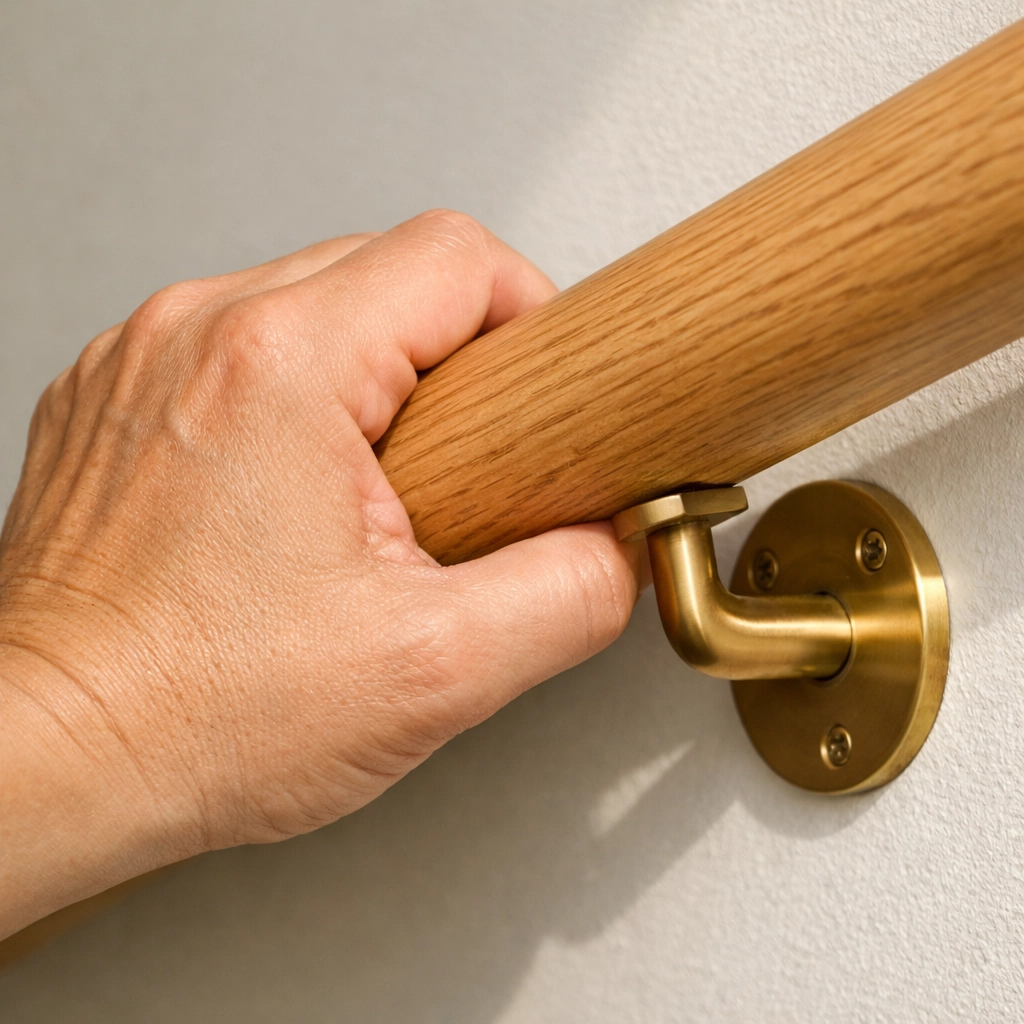
A handrail shouldn't just be a decorative piece of wood that matches your banister; it is a critical safety tool. In the event of a slip, your handrail is the only thing standing between a minor stumble and a serious fall.
The Mistake: Many handrails are too thick to wrap a hand around completely, or they are mounted too close to the wall, leaving no room for your fingers to get a firm "power grip." Furthermore, many staircases only have a rail on one side, which is insufficient for those with weakness on one side of the body.
How to Fix It: Ensure your handrail is "circumnavigable," meaning you can comfortably wrap your thumb and fingers around it. The ideal diameter is between 1.25 and 2 inches. There should be a clearance of at least 1.5 inches between the rail and the wall. Most importantly, consider installing a second handrail. Having "dual-sided" support allows you to use your strongest arm whether you are going up or down.
3. Relying on "Mood Lighting" Instead of Task Lighting
We all enjoy the warm, soft glow of a well-decorated home, but the staircase is the one place where shadows are your enemy.
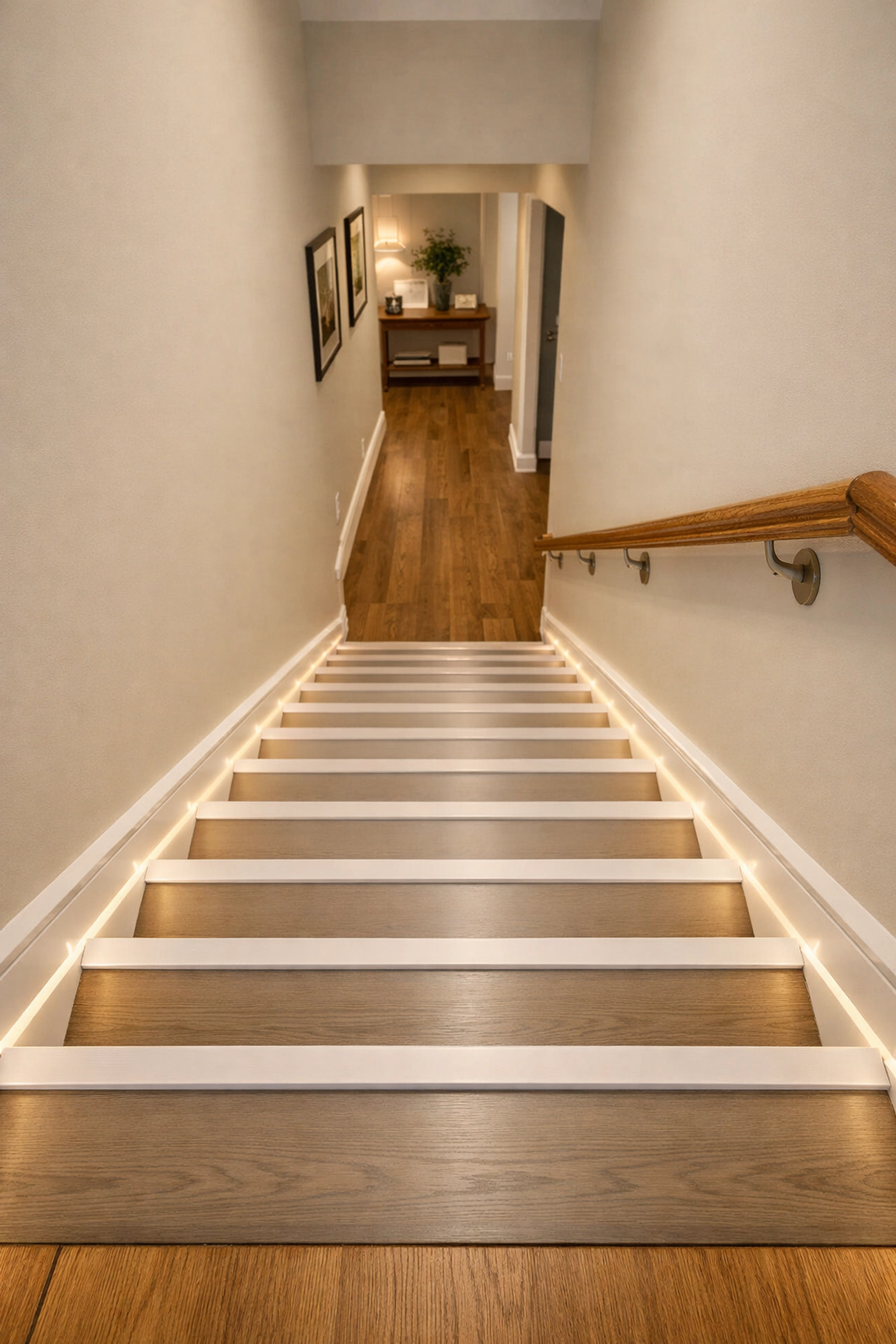
The Mistake: Many staircases are lit by a single overhead bulb at the top or bottom of the landing. This creates long shadows that can obscure the "nosing" (the front edge) of the steps. Without a clear view of where one step ends and the next begins, the risk of a misstep increases exponentially, especially for those with declining night vision or cataracts.
How to Fix It: Lighting should be bright and uniform. Consider installing motion-activated LED strip lighting under the lip of each tread or along the baseboard. This illuminates the actual walking surface rather than just the air above it. If a hardwired solution is too invasive, battery-operated, motion-sensing night lights can be placed at regular intervals along the wall to ensure the path is always visible the moment you approach it.
4. Prioritizing Aesthetics Over Traction
Hardwood stairs are beautiful. They offer a timeless look that many homeowners cherish. However, polished wood, tile, and even some low-pile carpets can be incredibly slippery, especially if you are wearing socks or slippers.
The Mistake: Using high-gloss finishes or leaving stairs as bare wood creates a surface with very little friction. Even a small amount of moisture or a pair of smooth-soled slippers can turn the stairs into a slide.
How to Fix It: You don't have to cover your beautiful wood with thick, ugly rubber mats. There are several subtle ways to add traction. Transparent anti-slip adhesive strips are nearly invisible but provide a gritty texture for shoes and feet to grip. Alternatively, you can install a carpet runner. If you choose a runner, ensure it is low-pile and tightly woven, and that it is securely fastened with "stair rods" or heavy-duty staples so it doesn't bunch up or slide.
5. Overlooking the "Landing Zone" Clutter
Stairs often become a temporary storage spot. We place a book on the bottom step to take up later, or a basket of laundry at the top to bring down eventually.
The Mistake: Treating stairs or landings as storage areas creates a primary tripping hazard. Even if you think you "know" the items are there, a moment of distraction or a midnight trip to the kitchen can lead to a disaster. Additionally, many homes have loose "throw rugs" at the top or bottom of the stairs, which can slide out from underfoot.
How to Fix It: Adopt a "zero-tolerance" policy for items on the stairs. Use a small table or a designated "up/down" bin that sits safely away from the walking path to hold items waiting to be moved. Remove all loose rugs from the landing zones. If you must have a rug at the base, ensure it has a high-quality non-slip rubber backing or is secured to the floor with double-sided rug tape.
6. Ignoring Wear, Tear, and Minor Movements
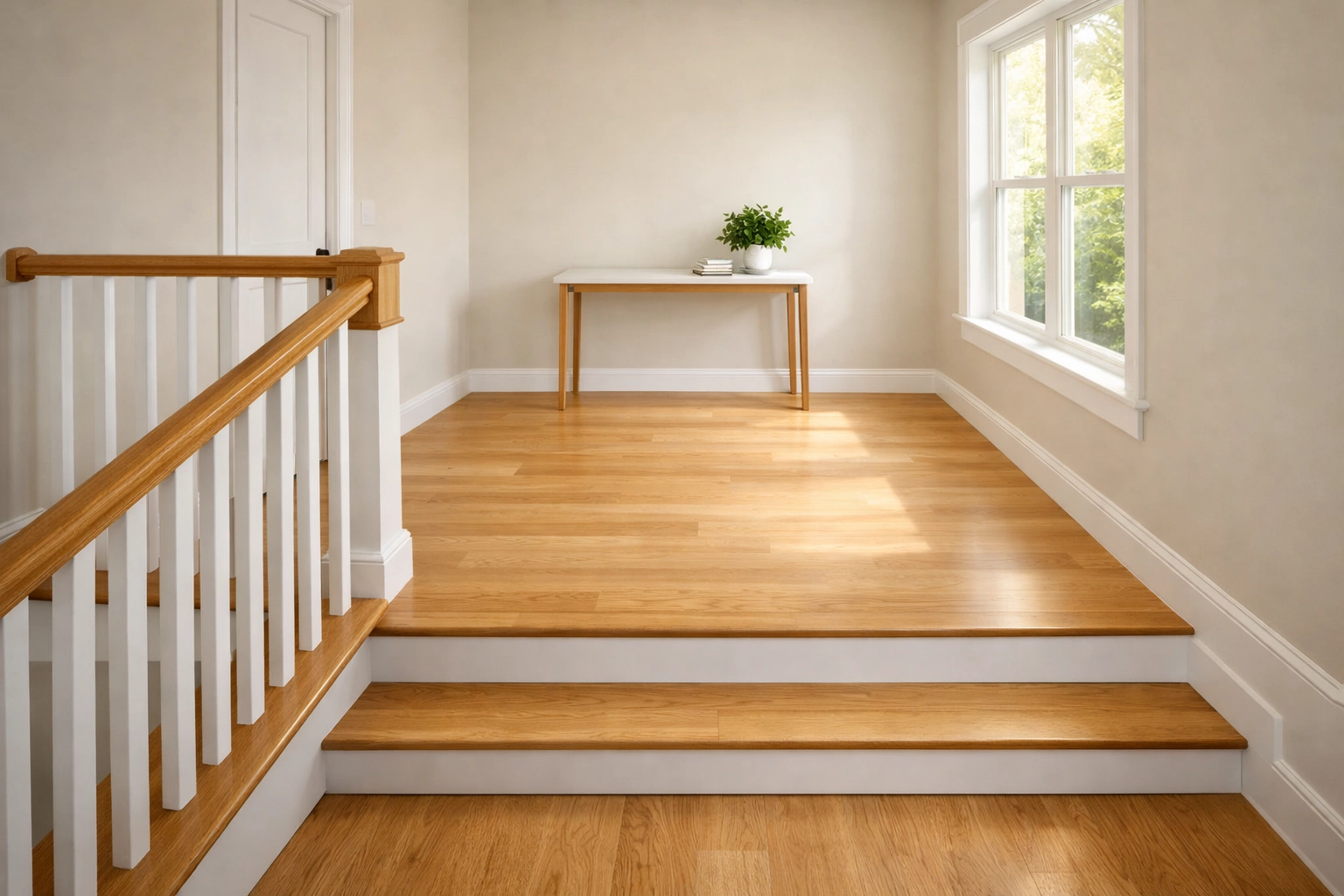
Staircases are structural elements, but they are subject to constant stress. Over decades, the wood can dry out, nails can loosen, and the house itself can settle.
The Mistake: We often ignore the "creaks" or the slight "give" in a step, assuming it’s just the house’s character. However, a loose tread or a wobbly banister is an accident waiting to happen. If a step moves even a quarter of an inch when you put your weight on it, it can catch the toe of your shoe or cause a momentary loss of balance.
How to Fix It: Conduct a "stair audit" every six months. Walk up and down slowly, intentionally stepping on different parts of each tread. Listen for squeaks and feel for movement. Check the banister by giving it a firm shake; it should feel like it is part of the wall. If you find issues, use wood screws (not nails) to secure loose treads and reinforce handrail brackets. These are often simple fixes that provide immense peace of mind.
7. The "Bifocal" Blind Spot
This mistake isn't about the stairs themselves, but how we interact with them. As vision changes, many people begin wearing bifocals or progressive lenses.
The Mistake: Bifocals are designed so the bottom portion of the lens is for reading or close-up work. When you look down at your feet while walking down stairs, you are looking through the reading portion of your glasses. This blurs the steps and can distort your depth perception, making the stairs appear closer or further away than they actually are.
How to Fix It: This requires a behavioral change and, potentially, a conversation with your optometrist. When navigating stairs, try to tuck your chin slightly toward your chest so you are looking through the "distance" (top) portion of your lenses. If you find this difficult or if you have a high fall risk, some specialists recommend having a dedicated pair of "single-vision" glasses specifically for walking and moving around the house.
Building a Culture of Safety
Addressing these seven mistakes goes a long way toward making your home safer, but safety is also a mindset. In addition to physical changes, consider these behavioral habits:
- Take Your Time: Rushing is a leading cause of falls. Give yourself an extra thirty seconds to navigate the stairs.
- Keep One Hand Free: Avoid carrying heavy or bulky loads that require two hands. This ensures you always have one hand available for the handrail.
- Proper Footwear: Avoid walking in socks or smooth-soled slippers. Opt for a shoe with a rubber sole and a closed heel, even inside the house.
- The Power of the Pause: If you feel dizzy or lightheaded, wait at the landing until it passes before attempting the stairs.
When to Seek Professional Advice
While many of these fixes are DIY-friendly, some situations require a professional eye. If you or a loved one are experiencing frequent near-misses or if a medical condition makes stair navigation increasingly difficult, it may be time for a formal mobility assessment. Physical therapists can provide specific exercises to strengthen the muscles used for climbing, and occupational therapists can help suggest specialized equipment if standard modifications aren't enough.
Stairs don't have to be a source of fear. By ensuring they are well-lit, properly sized, sturdy, and clear of obstacles, you can continue to enjoy every level of your home with confidence. At Fall Guys Products, our goal is to help you stay grounded, secure, and independent for as long as possible. A little bit of prevention today ensures a safer tomorrow.

