
Stairs are often the most daunting part of a home as we get older. They represent a transition: sometimes a literal one between the living room and the bedroom, but also a metaphorical one regarding independence. For many of us, the goal is to stay in the homes we love for as long as possible. To do that, the staircase needs to be a predictable, safe environment rather than a source of anxiety.
The reality is that most stair-related incidents don't happen because of a single catastrophic failure. Instead, they occur due to small, accumulated habits and minor environmental oversights. We often walk our stairs hundreds of times a month, and that repetition can lead to a sense of "auto-pilot" where we stop noticing the risks right under our feet.
By identifying common mistakes and applying simple, practical fixes, we can significantly reduce the risk of a tumble and maintain the confidence needed to navigate the home freely.
1. The "Single Hand" or "No Hand" Habit
One of the most frequent mistakes is relying on balance alone or using only one handrail when two are available. As we age, our proprioception: the body's ability to sense its position in space: can naturally decline. We might feel steady, but a slight dizzy spell or a momentary loss of focus can lead to a misstep.
Many people also use the "touch-and-go" method, where they lightly graze the wall or the railing without actually gripping it. This provides a false sense of security but offers no real support if a slip occurs.
How to Fix It:
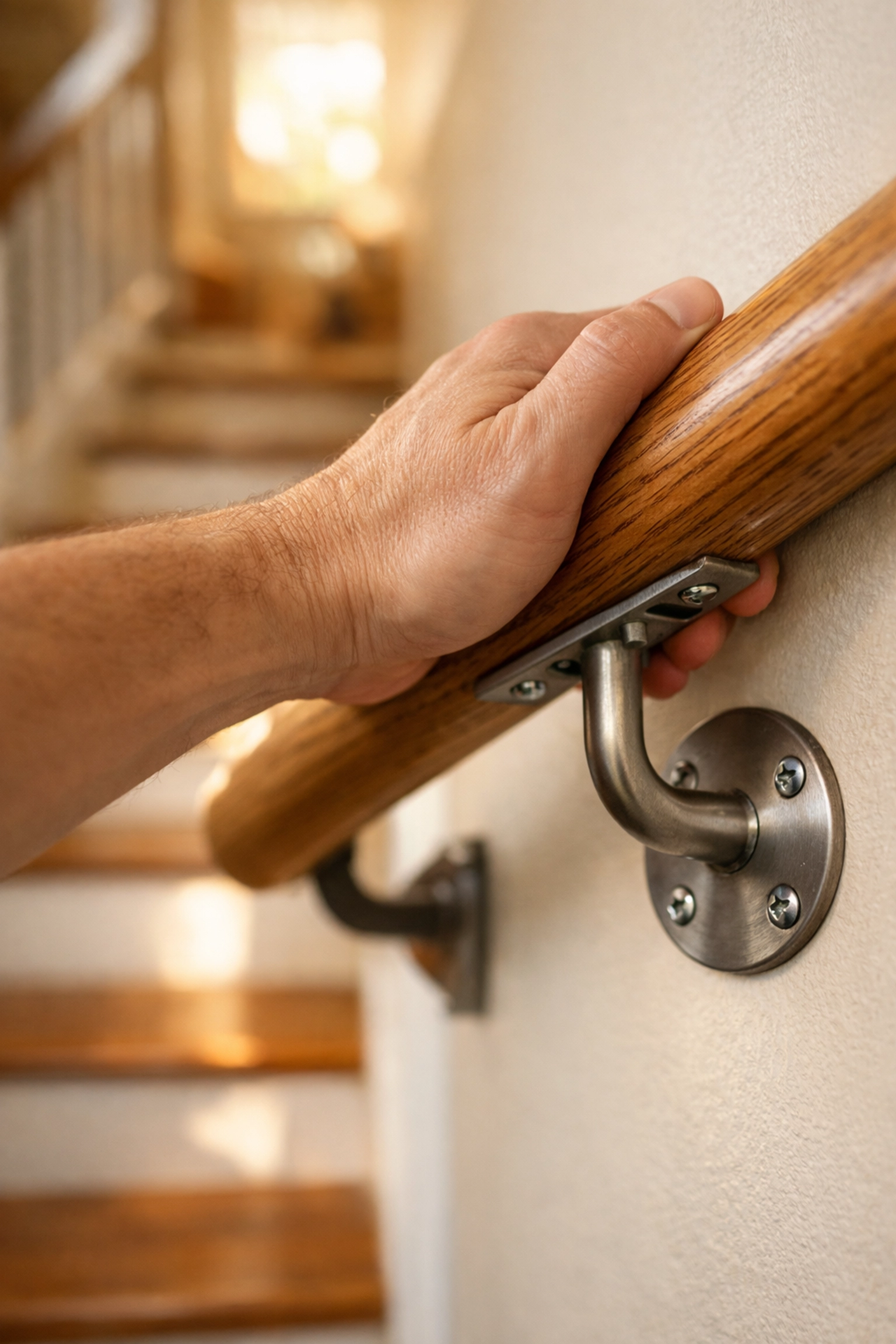
The gold standard for stair safety is the "three-point contact" rule. This means having both feet and at least one hand (preferably two) in contact with the structure at all times. If your staircase only has a railing on one side, consider installing a second one on the opposite wall. Having a rail on both sides allows you to stay centered and provides a backup should one arm feel weak.
Make it a conscious habit to wrap your fingers around the rail rather than just resting your palm on top. A closed grip allows you to pull yourself toward the wall or catch your weight instantly.
2. Navigating in the "Twilight Zone"
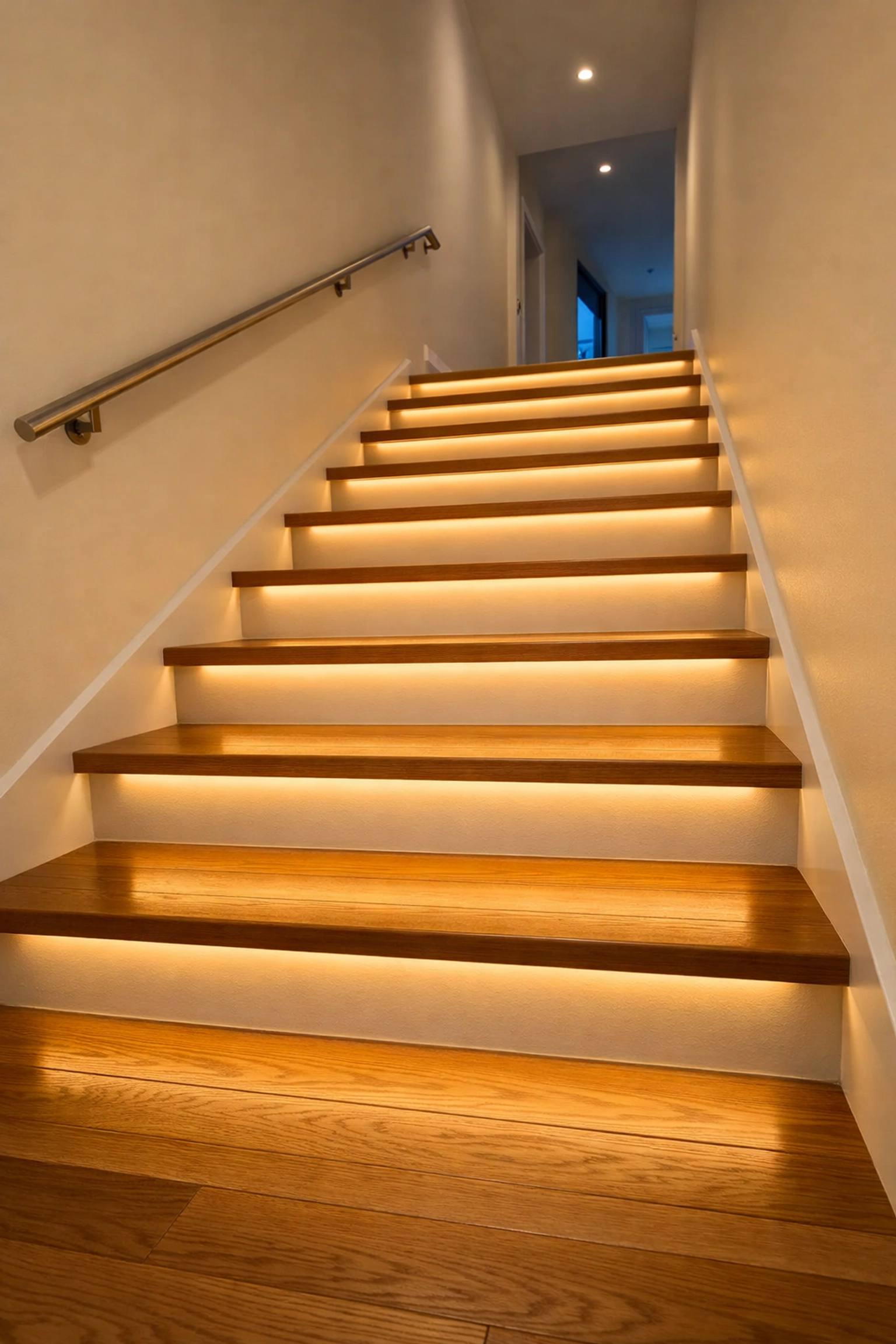
Lighting is perhaps the most underrated aspect of home safety. Many staircases are lit by a single overhead bulb at the top or bottom of the landing. This creates "the twilight zone": the middle section of the stairs where shadows are cast by the steps themselves, making it difficult to judge the depth and edge of each tread.
If you find yourself squinting or moving slower specifically because you can't see where the step ends, your lighting is failing you. This is especially dangerous at night when the eyes take longer to adjust to the dark.
How to Fix It:
Increase the wattage of your bulbs (within the fixture's safety limits) or switch to high-output LED bulbs that mimic daylight. However, brightness isn't the only factor; placement matters too.
Consider installing motion-activated LED strip lighting under the lip of each step or along the baseboard. These lights illuminate the path exactly where your feet land without creating a blinding glare. Another simple fix is ensuring there are light switches at both the top and bottom of the stairs, so you never have to navigate a dark flight to turn on a light.
3. The "I’ll Take It Up Later" Pile
We’ve all done it: we place a book, a pair of shoes, or a folded basket of laundry on the bottom step, intending to carry it up on our next trip. This creates a significant tripping hazard. Stairs are narrow by design, and even a small object reduces the available "foot room."
Objects on stairs are particularly dangerous because they break your rhythm. When you’re climbing, your brain expects a clear, flat surface. If your foot hits a shoe instead of the wood, your center of gravity shifts unexpectedly, often leading to a backwards fall.
How to Fix It:
Adopt a strict "Zero Objects" policy for the staircase. If something needs to go up or down, it should go in a dedicated basket kept at the landing: completely off the steps. Better yet, if you have a lot to carry, wait for someone to assist you or make multiple trips with your hands free to hold the railings. Never try to carry a large, bulky item that obscures your view of your feet while navigating stairs.
4. Prioritizing Aesthetics Over Traction
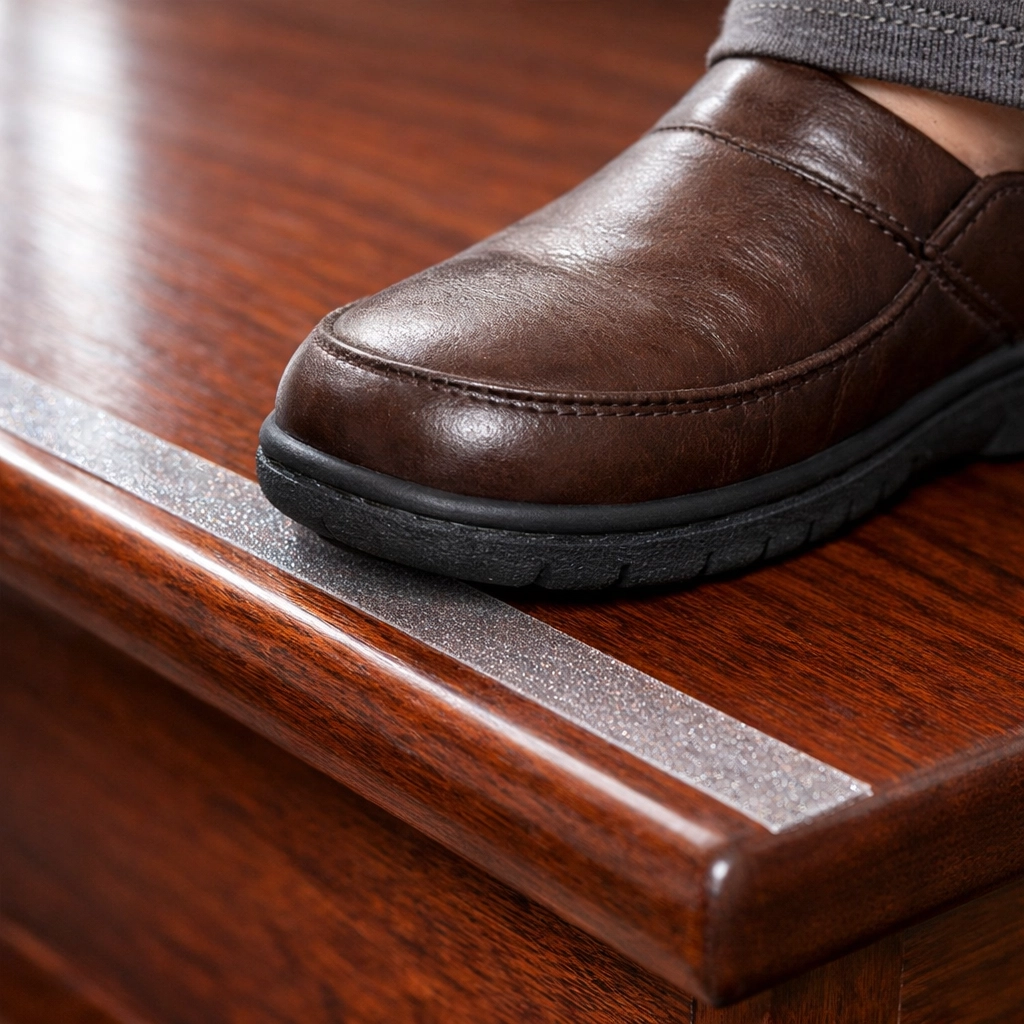
Beautifully polished hardwood or high-gloss painted stairs look wonderful in interior design magazines, but they are incredibly slippery, especially if you are wearing socks or smooth-soled slippers. Even carpet can be a risk if it’s a high-pile variety that hides the edge of the step or if it has become loose over time.
Slippery surfaces are a leading cause of "slip-and-slide" falls, where the foot shoots forward from under the body.
How to Fix It:
If you have wooden or tiled stairs, traction is non-negotiable. You can apply clear, anti-slip adhesive strips to the edge of each step. These provide a "gritty" texture that grips the bottom of your footwear without ruining the look of the wood.
For carpeted stairs, ensure the carpet is pulled tight and "waterfalled" over the edge of each step securely. If the carpet is worn or feels "squishy," it might be time to replace it with a low-pile, industrial-grade carpet that offers better stability.
5. Overlooking the "Visual Edge"
As vision changes, the ability to distinguish between similar colors and textures decreases. This is known as contrast sensitivity. If your stairs and the floor at the bottom are the same color: say, all light oak or all beige carpet: it can be very difficult to tell where the last step ends and the flat floor begins.
Many falls happen at the very bottom of the stairs because the person thought they were on level ground when they still had one step to go.
How to Fix It:
Create visual contrast. You can do this by using a different color of paint or a strip of colored tape on the "nose" (the very edge) of each step. This creates a clear visual "stop" sign for your brain, helping you identify exactly where to place your foot. Even a simple transition strip at the bottom of the stairs that is a different color than the flooring can help signal that you have reached the landing.
6. Wearing the Wrong Footwear indoors
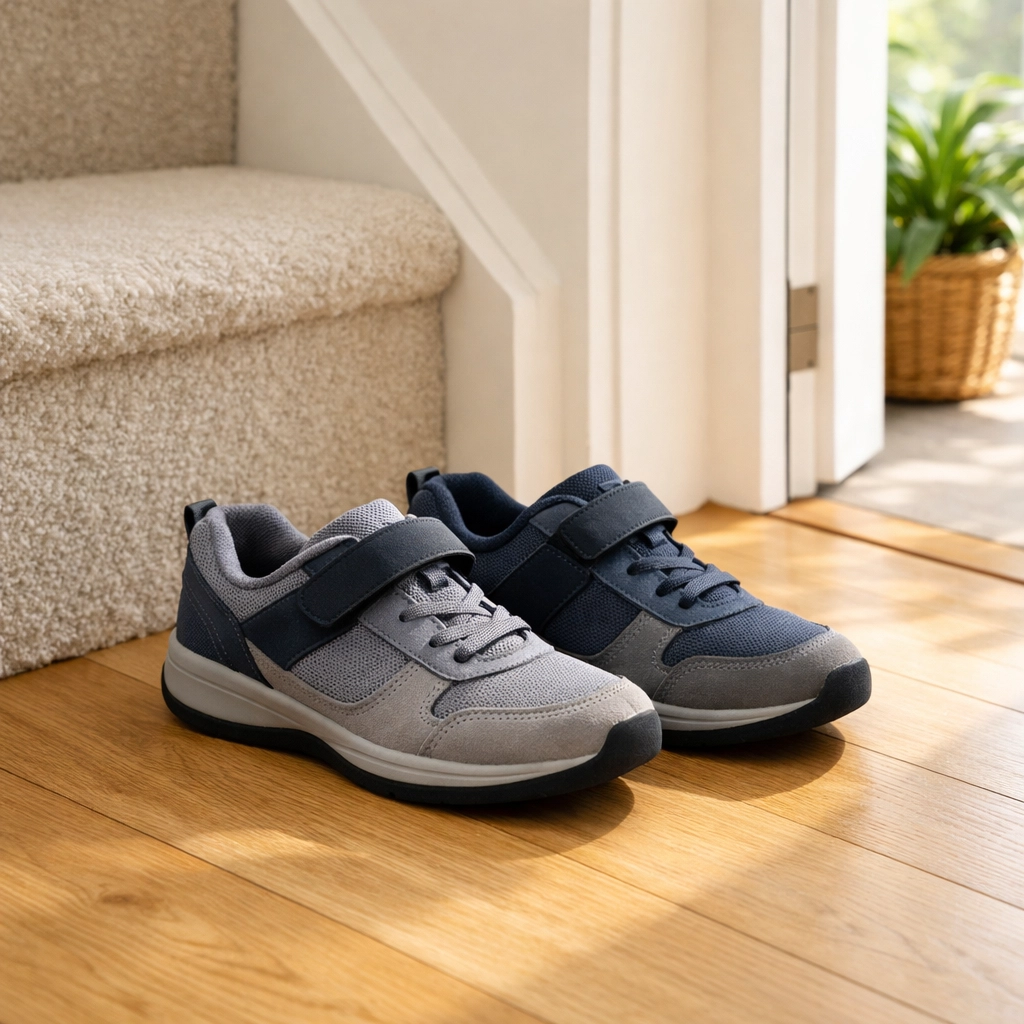
It’s tempting to walk around the house in just socks or loose-fitting scuff slippers. However, socks offer zero traction on smooth surfaces, and loose slippers can easily slide off your heel, causing you to trip over your own shoe.
In fact, many specialists suggest that "indoor-only" shoes are the best choice for stair safety. Footwear that doesn't securely attach to the back of your foot is a recipe for a misstep.
How to Fix It:
Wear sturdy, well-fitting shoes even inside the house. Look for shoes with a thin, firm sole and a closed heel. While thick, cushioned soles might feel comfortable, they actually decrease your "ground feel," making it harder for your brain to process where your foot is in relation to the step. If you absolutely prefer socks, ensure they have high-quality rubber grips on the bottom, though a firm shoe is always the safer bet for stairs.
7. Neglecting Basic Staircase Maintenance
Staircases take a lot of abuse. Over the years, wood can warp, nails can pop, and handrails can become loose. A handrail that wobbles even a half-inch is not safe. If you reach out to catch yourself and the rail gives way, the fall could be much worse.
Similarly, "carpet bubbles" or loose metal nosing can catch the toe of a shoe as you ascend, causing a forward trip.
How to Fix It:
Perform a "stair audit" every few months. Walk up and down slowly and listen for squeaks or feel for any movement in the treads. Use your full weight to pull on the handrails from several different angles. If they move, they need to be tightened or re-bolted into the wall studs.
Check the height of your railing as well. Standard building code usually requires railings to be between 34 and 38 inches high. If yours was built decades ago, it might be too low, causing you to lean over awkwardly and shifting your balance.
The Role of Physical Awareness
Beyond the physical environment, your own physical condition plays a huge role in stair safety.
- Pace Yourself: Rushing is a major factor in falls. We often rush to answer a ringing phone or a doorbell. Remember: a missed phone call is a minor inconvenience; a fall is a major event. Take your time.
- Focus: Avoid carrying things that require two hands. If you must move items, use a shoulder bag or a backpack so your hands remain free for the railings.
- Health Checks: If you find you are getting dizzy or winded on the stairs, talk to a doctor. It could be a simple blood pressure issue or a need for a quick session with a physical therapist to strengthen the muscles used for climbing.
Conclusion
Stair safety isn't about one big expensive renovation. It's about a series of small, intentional choices. By fixing the lighting, clearing the clutter, and ensuring your handrails are rock-solid, you turn a potential hazard into a safe part of your daily routine.
Your home should be your sanctuary. Taking the time to audit your staircase today ensures that it remains a safe place for years to come. Start with one fix: perhaps clearing the objects or checking the light bulbs: and build from there. Each step you take toward safety is a step toward maintaining your independence.

