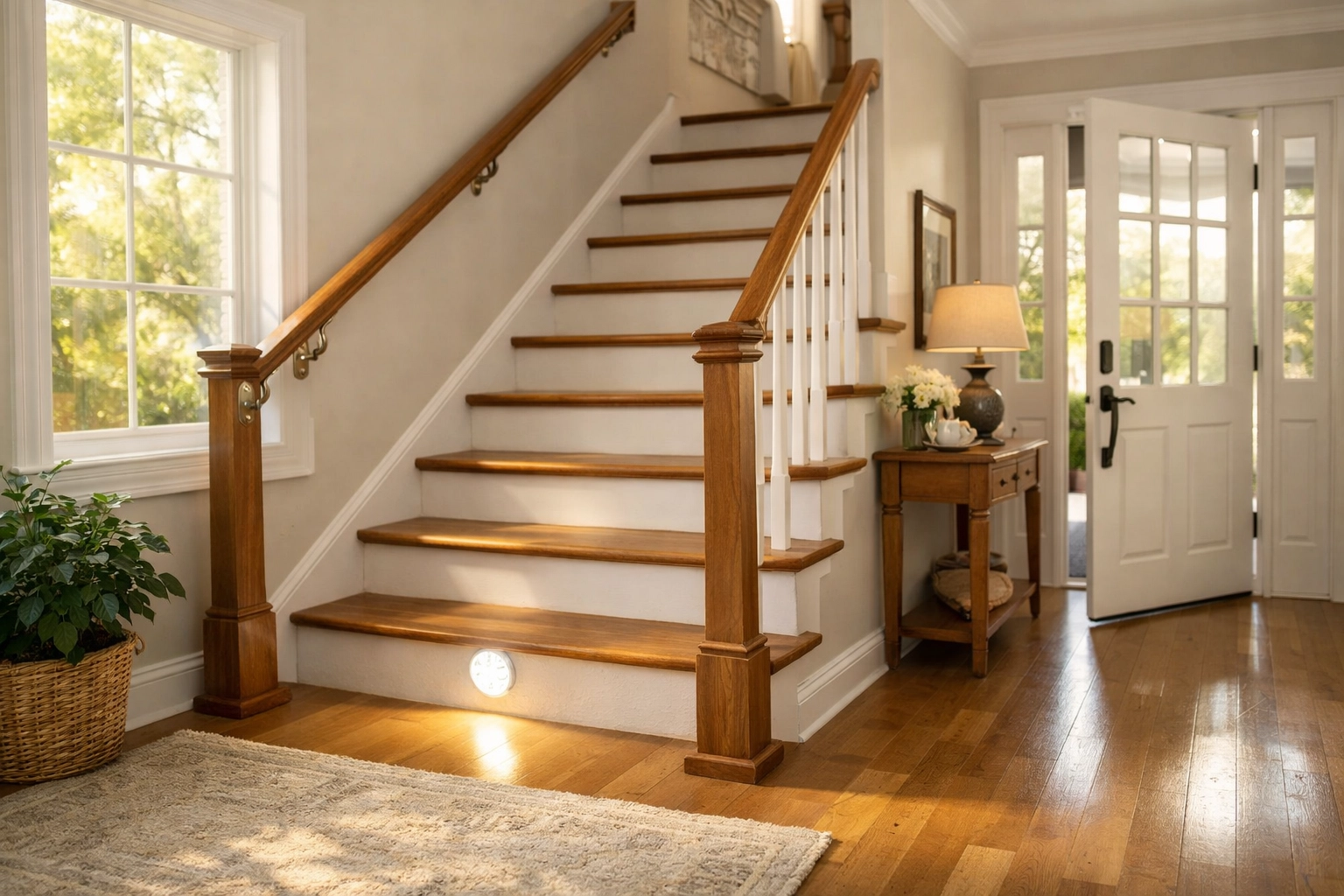
Stairs are a fundamental part of many homes, providing access to bedrooms, basements, and second stories. However, they are also one of the most common areas where balance is challenged. For seniors or those with mobility concerns, the staircase can start to feel like a daunting obstacle rather than a simple transition between floors.
At Fall Guys Products, we believe that your home should be your sanctuary. Safety isn't about restriction; it's about empowerment. When we address the small mistakes in our environment, we regain the confidence to move freely. Many of the hazards found on staircases are subtle: things we walk past every day without a second thought.
In this guide, we will break down seven common mistakes people make with stair safety and provide practical, straightforward ways to fix them.
1. Navigating in the "Twilight Zone" (Inadequate Lighting)
The most common mistake people make is underestimating the power of a well-lit path. As we age, our eyes often require more light to distinguish between different depths and textures. If your staircase is dim, or if there are heavy shadows cast across the steps, it becomes incredibly difficult to judge exactly where one tread ends and the next begins. This is what we call the "Twilight Zone" effect, where the edges of the steps blur together.
The Fix: Eliminate Shadows and Increase Lumens
To fix this, look at your lighting from two perspectives: brightness and placement.
First, ensure there are light switches at both the top and bottom of the stairs. This prevents the dangerous habit of "braving the dark" because you don't want to walk back down to turn off a light.
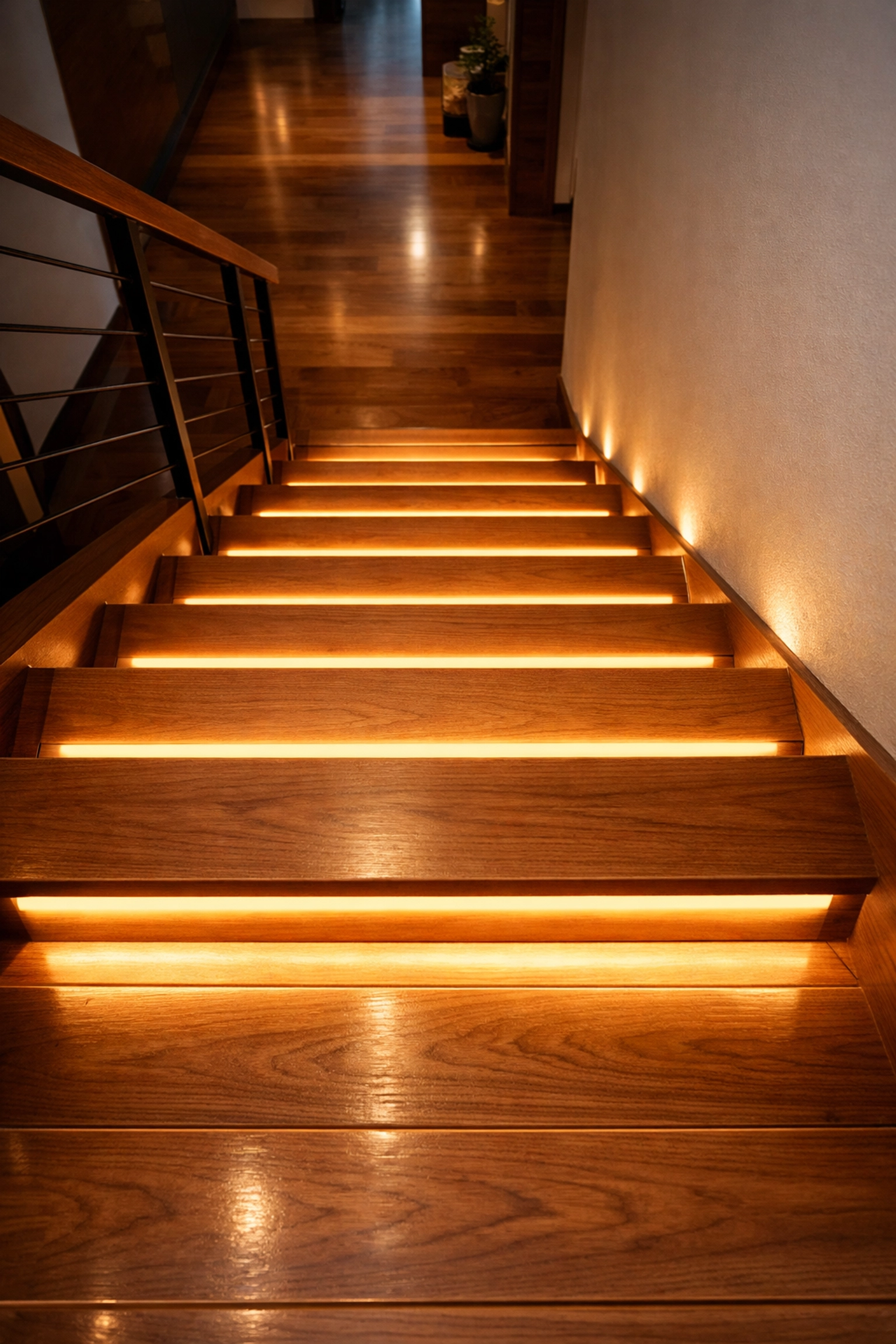
Second, consider the quality of the light. Overhead lights can sometimes create glare or cast long shadows from the person walking. Installing LED motion-sensor strip lighting under the lip of each tread or along the baseboards can provide clear, direct illumination of the walking surface. This ensures that the edge of every step is crisply defined, even in the middle of the night.
2. Relying on "Decorative" Handrails
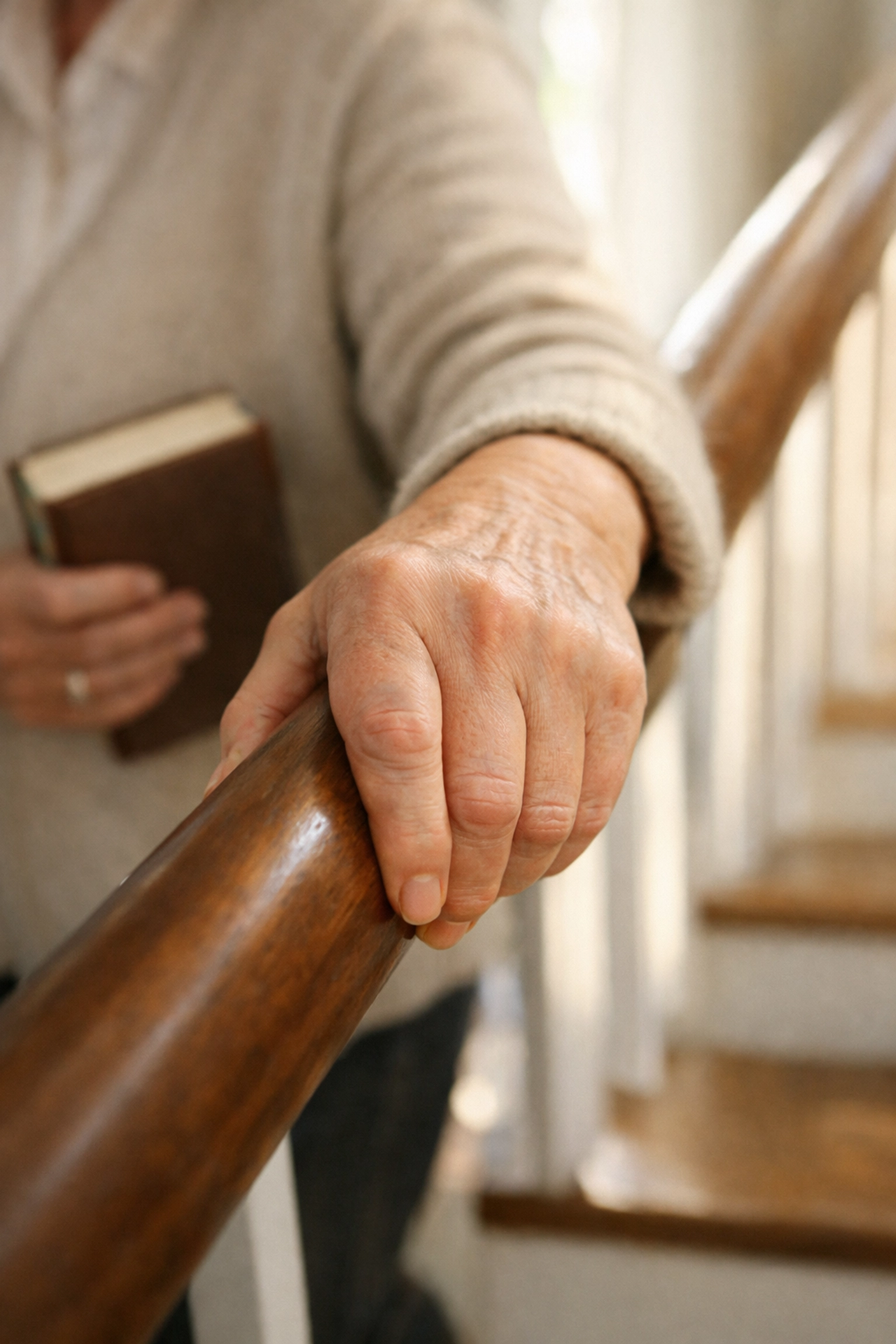
Many homes feature handrails that were designed more for aesthetics than for actual support. A common mistake is having a handrail on only one side of the staircase, or worse, having a railing that is loose, too thin to grip, or positioned at the wrong height. If you cannot wrap your hand completely around the rail (a "power grip"), it won't be able to support your full weight in the event of a slip.
The Fix: Secure, Dual-Sided, and Graspable Rails
The gold standard for stair safety is having sturdy handrails on both sides of the staircase. This allows you to use both arms for stability, which significantly reduces the load on your joints and improves your center of balance.
Check your current rails. They should be mounted securely into the wall studs, not just the drywall. A rail should be able to withstand at least 200 pounds of force without budging. If your handrail is too wide (like a flat piece of 2×4 lumber), it’s difficult to hold. Replace it with a round or "mop-handle" style rail that allows your fingers to meet your thumb for a secure hold.
3. Treating Stairs as Temporary Storage
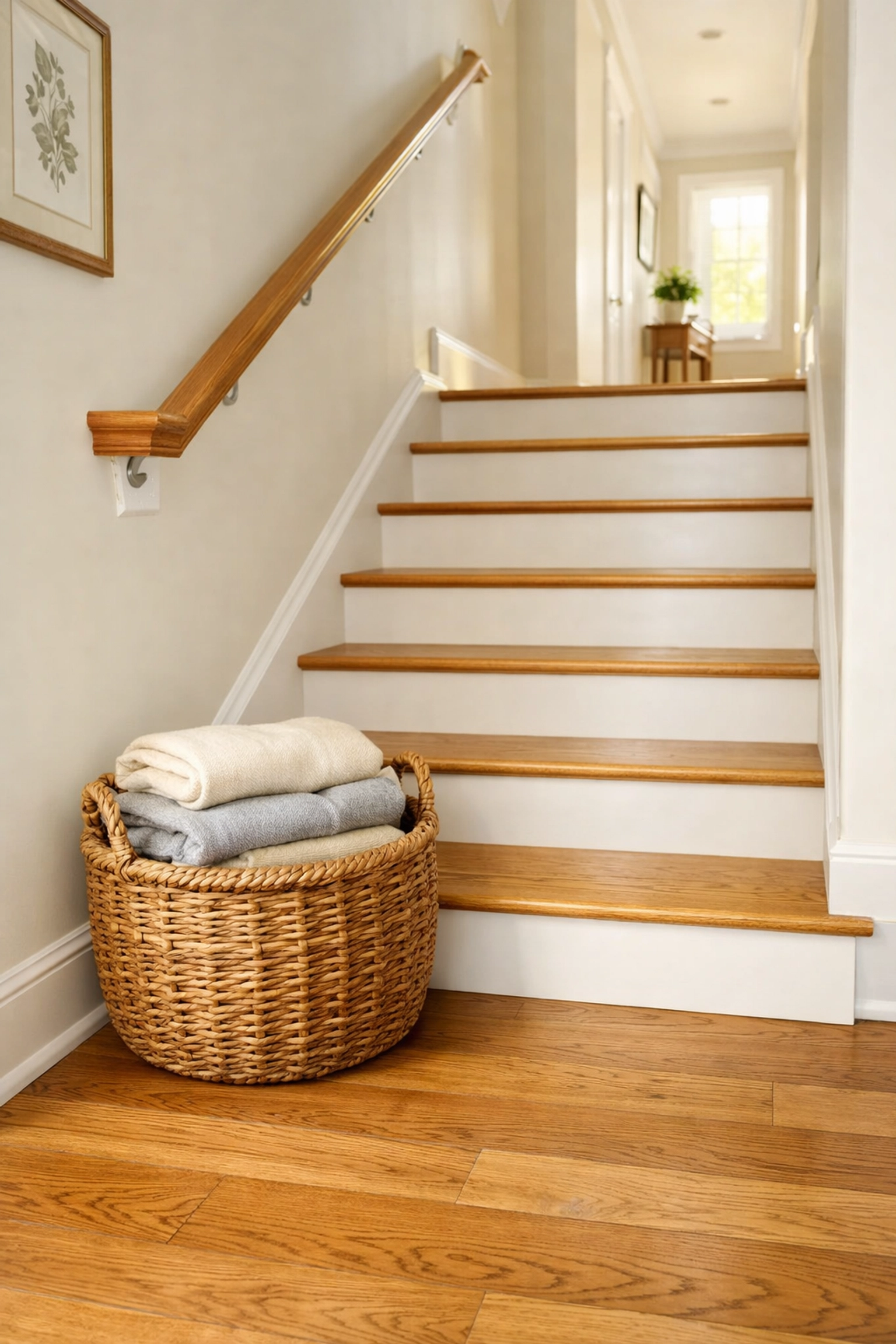
We’ve all done it: we place a stack of books, a pair of shoes, or a basket of laundry on the bottom step, intending to take it up on the next trip. This is perhaps the most dangerous habit in the home. Objects on stairs create a significant tripping hazard, and because we often focus on our feet while climbing, we might not notice an object until it's too late. Furthermore, these objects often force us to alter our gait, which shifts our center of gravity and increases the risk of a fall.
The Fix: The "Clear Path" Policy
Implement a strict "nothing on the stairs" rule. If something needs to go up or down, it stays on a designated table or shelf near the staircase: not on the steps themselves.
If you find that clutter accumulates because it’s difficult to carry items while holding the handrail, consider alternatives. A small "stair basket" kept at the top or bottom (off to the side) can hold items, but it should only be moved when you have a free hand or help from someone else. Never carry anything that requires both hands while navigating stairs.
4. Overlooking the "Slip Factor" of Surfaces
Aesthetic choices often conflict with safety. Polished hardwood, sleek tile, and even some types of low-pile carpet can be incredibly slippery, especially when wearing socks or smooth-soled slippers. If the surface of your stairs doesn't provide enough friction, your foot can easily slide forward off the "nosing" (the front edge) of the step.
The Fix: Adding Traction
You don't have to rip out your beautiful staircase to make it safe. There are several ways to add traction without sacrificing style.
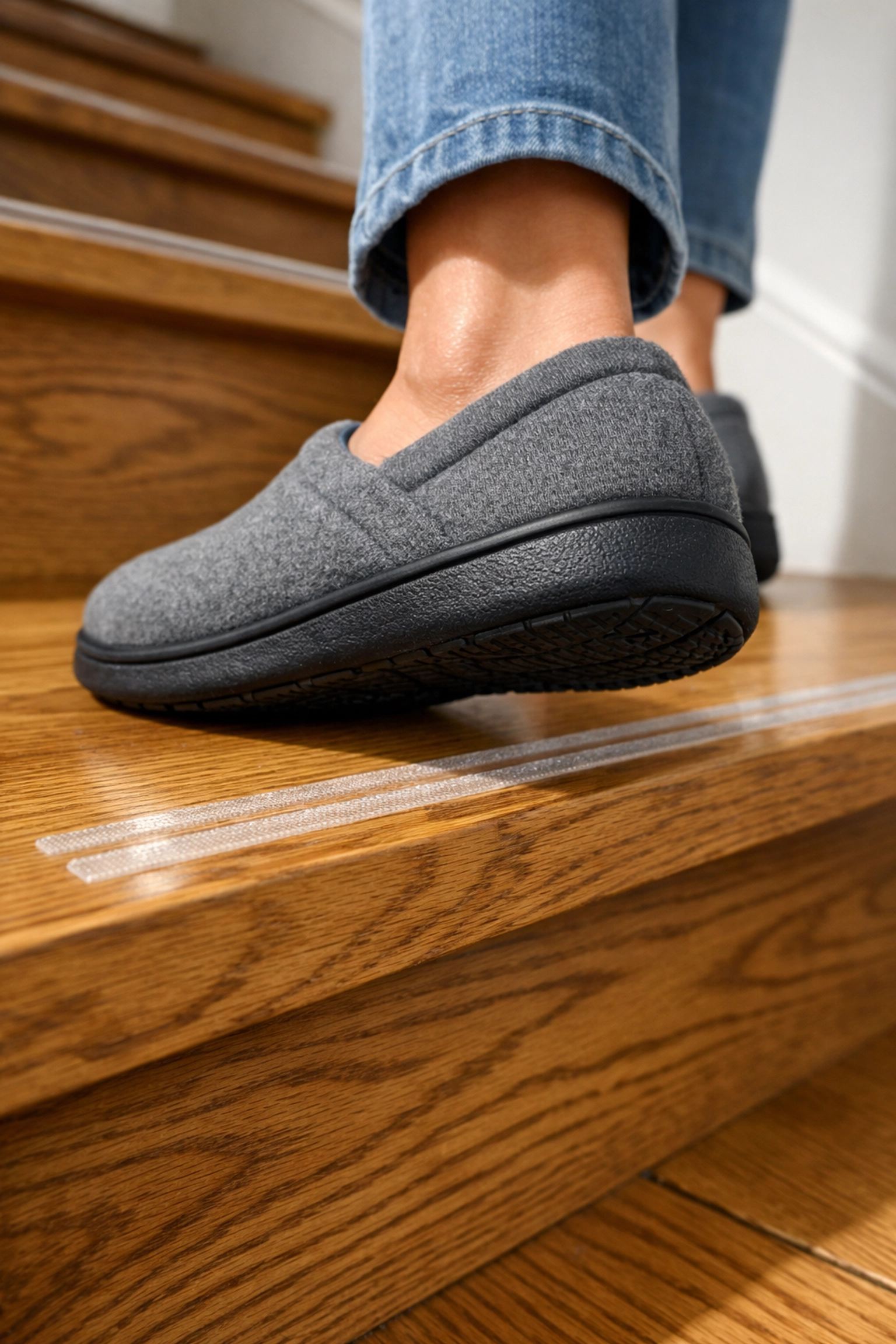
- Non-slip adhesive strips: These are clear or textured strips that adhere to the edge of each step. They provide a "bite" for your footwear.
- Stair treads: These are small sections of carpet or rubber that cover the center of each step. If you use carpet treads, ensure they are firmly tacked down so they don't become a trip hazard themselves.
- Anti-slip coatings: There are transparent paints and sprays that add a gritty texture to wooden or tiled stairs, increasing friction significantly while remaining nearly invisible.
5. The "One-Trip" Mentality (Carrying Too Much)
Many falls occur because we try to carry too much at once to save ourselves a trip. When your arms are full of groceries, laundry, or a bulky box, three things happen: you lose your sightline to your feet, you lose your ability to use the handrail, and your center of gravity is thrown off-balance. This "one-trip" mentality is a shortcut that often leads to a long recovery.
The Fix: The "One Hand Free" Rule
As a rule of thumb, you should always have at least one hand free to grip the handrail. If an item is too large to carry in one hand, it’s too large to carry up the stairs alone.
Consider breaking loads into smaller pieces. Instead of a giant laundry basket, use two smaller bags. If you have a lot of items to move, ask a family member for help or move the items one by one. It might take five minutes longer, but the safety benefit is immeasurable.
6. Ignoring Wear and Tear
Stairs are high-traffic areas, and they naturally degrade over time. A mistake many homeowners make is ignoring the small signs of wear: a slight creak, a carpet that’s beginning to fray at the edge, or a wooden tread that feels a bit loose. Over time, these small issues become major hazards. A loose carpet can catch a heel, and an uneven tread can cause a misstep.
The Fix: The Seasonal Stair Inspection
Once every season, perform a dedicated safety audit of your stairs.
- Check the "Nosing": Look at the front edge of every step. Is the wood rounded off or slippery? Is the carpet worn thin?
- Test the Stability: Step on every part of each tread. Does it shift or squeak? If so, it may need to be re-secured with screws or wood glue.
- Check the Rise and Run: Sometimes, especially in older homes, the height of the steps (the rise) is inconsistent. Even a half-inch difference between steps can cause the brain to miscalculate the movement, leading to a stumble. If your stairs are structurally uneven, it may be time to consult a professional for a modification.
7. Wearing the Wrong Footwear Indoors
What you wear on your feet is just as important as the stairs themselves. A common mistake is walking on stairs in stocking feet, floppy slippers, or shoes with heavy treads that might "catch" on the edge of a step. Socks on wood are a recipe for a slide, and slippers without backs can easily fall off mid-step.
The Fix: Support and Grip
The safest footwear for stairs is a sturdy, well-fitting shoe with a thin, non-slip rubber sole. A thin sole is actually better than a thick, "pillowy" one because it allows your feet to feel the position of the step (proprioception).
If you prefer not to wear shoes in the house, look for "grip socks" with rubberized bottoms or high-quality house shoes that have a back and a slip-resistant sole. Avoid "mules" or "flip-flops" that don't secure the heel.
Building a Safer Routine
Fixing the environment is half the battle; the other half is mindfulness. We often treat stairs as a mindless transition, but they require our full attention.
Beyond the physical fixes mentioned above, consider your technique. When descending, place your feet at a slight angle rather than straight ahead; this gives your foot more surface area on the tread. Always take one step at a time, ensuring both feet are planted firmly before moving to the next.
If you find that even after these fixes, the stairs still feel unmanageable, it might be time to look into more significant aids. This could include a mobility assessment from a physical therapist to improve your strength and balance, or exploring the installation of specialized equipment like a chair lift if the stairs become a barrier to your quality of life.
Conclusion
Stair safety isn't about one single fix; it's about a combination of environment, behavior, and maintenance. By brightening the lights, clearing the clutter, and ensuring your handrails are up to the task, you transform a high-risk area into a safe, predictable part of your home.
Take a moment today to walk your stairs with a critical eye. Which of these seven mistakes can you fix this afternoon? Your future self will thank you for the confidence and security that comes with a safer home.