
Stairs are often the most intimidating part of a home for anyone concerned about mobility. For many of us, they represent a transition: from the social areas of the ground floor to the sanctuary of the bedroom. But they also represent a significant risk. According to many safety assessments, the staircase is the site of some of the most serious falls in the domestic environment.
The good news is that most stair-related accidents aren't caused by the stairs themselves, but by how we maintain and use them. Often, we live with small hazards for so long that we stop seeing them. We walk over that loose carpet or around that pile of books every day until it becomes "normal."
In this guide, I want to walk you through the seven most common mistakes homeowners and caregivers make regarding stair safety. More importantly, I’ll show you how to fix them with practical, manageable steps that prioritize your independence and peace of mind.
1. The "One Rail" Reliance
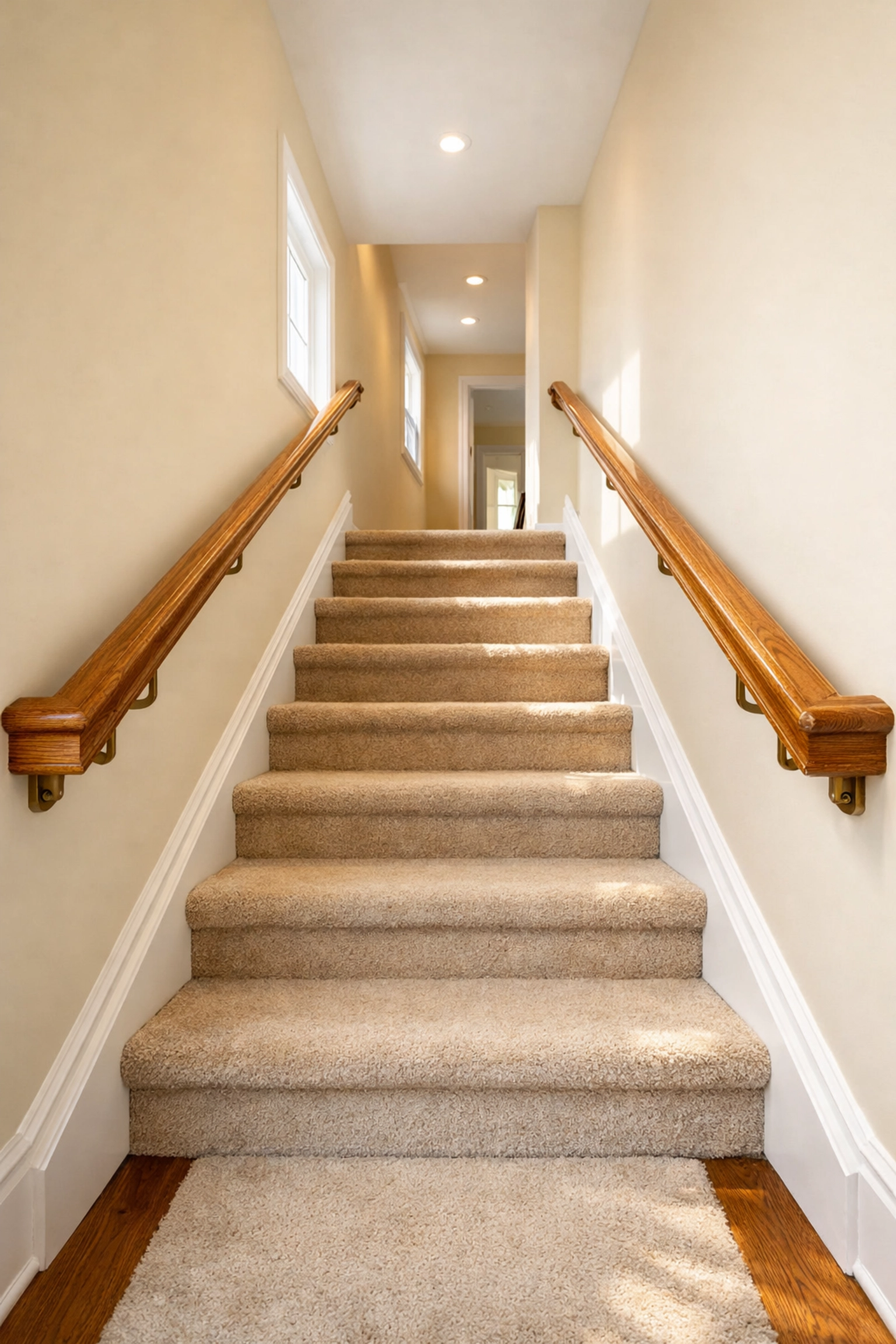
Many homes are built with a handrail on only one side of the staircase. While this might meet minimum building codes in some areas, it’s a significant safety oversight for anyone with balance or strength concerns.
The Mistake: Relying on a single rail forces you to use one specific side of your body for support. If your dominant side or your "strong" side is away from the rail when you're going up or down, you may feel unstable. Furthermore, if you lose your balance toward the wall side that lacks a rail, you have nothing to grab.
The Fix: Install a second handrail. Having rails on both sides allows for a "dual-grip" approach, which significantly increases stability. It also ensures that whether you are ascending or descending, you always have a rail available for your strongest hand. Ensure the rails extend a few inches past the top and bottom steps so you have support before you even start your climb and after you finish.
2. Inadequate or Glaring Lighting
Lighting is perhaps the most underestimated factor in fall prevention. As we age, our eyes require more light to see clearly, and our ability to distinguish between similar colors and depths decreases.
The Mistake: Many staircases have a single overhead light at the top or bottom, which creates long shadows. These shadows can hide the edge of a step, making it look like the "tread" (the flat part you step on) is deeper or shallower than it actually is. Conversely, high-gloss finishes on stairs combined with bright, direct bulbs can create a "glare" that temporarily blinds or disorients you.
The Fix:
- Increase Lumens: Use higher-wattage (but safe for the fixture) LED bulbs to brighten the entire area.
- Uniformity: Install lighting that illuminates the entire length of the stairs. Battery-operated, motion-sensor LED strips that stick under the lip of each step or along the baseboard are excellent because they guide the way without creating shadows.
- Contrast: Use a high-contrast strip of tape or paint on the edge (the "nosing") of each step. If your stairs are dark wood, a white or light-colored strip helps your brain instantly identify where the step ends.
3. Treating the Stairs as a Storage Zone
We’ve all done it: "I’ll just leave these shoes on the bottom step so I remember to take them up later." Or, "This stack of mail can sit here until my next trip to the office."
The Mistake: Using stairs as a temporary staging area is a recipe for disaster. Clutter on stairs reduces the available foot space and creates a major trip hazard. Even if you think you know where the items are, a moment of distraction or a midnight trip for a glass of water can lead to a stumble.
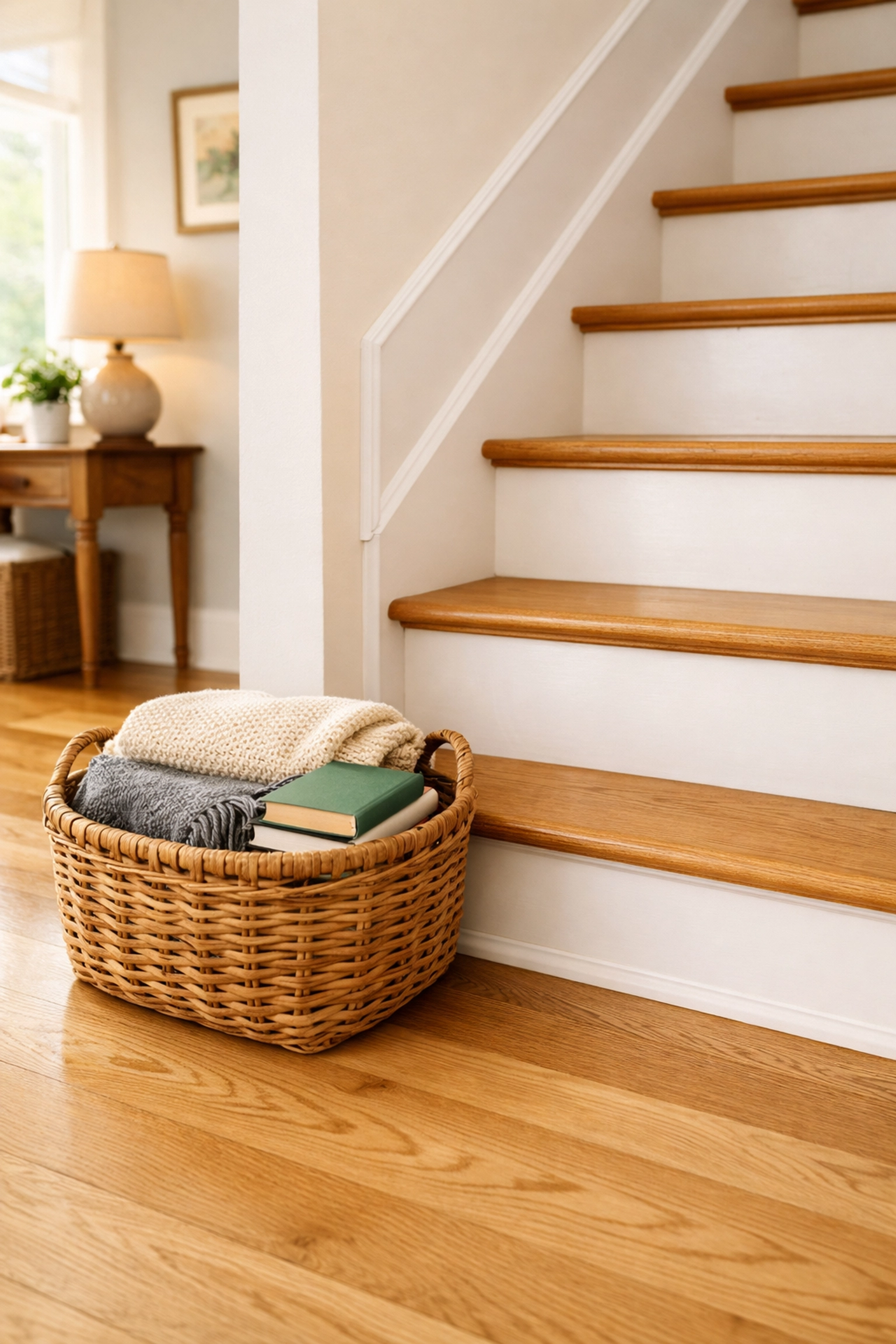
The Fix: Adopt a "zero-tolerance" policy for stair clutter. If something needs to go up or down, it should either go in your hand immediately (if you can carry it safely) or be placed in a dedicated "stair basket" that sits on the floor near the stairs, but never on the steps themselves.
If you find yourself carrying too many items, remember the "one hand free" rule: Never carry so much that you cannot keep at least one hand firmly on the handrail at all times.
4. Neglecting the "Three-Point Contact" Rule
In the world of professional safety, there is a concept called "three points of contact." This means that at any given time, three of your four limbs should be in contact with a stable surface (e.g., two feet and one hand, or two hands and one foot).
The Mistake: Many people treat stairs as a rhythmic exercise, moving quickly and letting go of the rail to adjust their grip or carry an item. Rushing is a primary cause of falls. When we rush, our center of gravity shifts too far forward or backward, and our feet may not land securely on the center of the tread.
The Fix: Slow down and prioritize contact. Place your hand on the rail before you take your first step. Move one step at a time, ensuring your foot is firmly planted before moving the next. If you feel tired or winded, stop. There is no rule saying you have to climb a flight of stairs in one continuous motion. Taking a ten-second break halfway up can prevent the muscle fatigue that leads to a misstep.
5. Overlooking Footwear Hazards
What you wear on your feet is just as important as the stairs themselves.
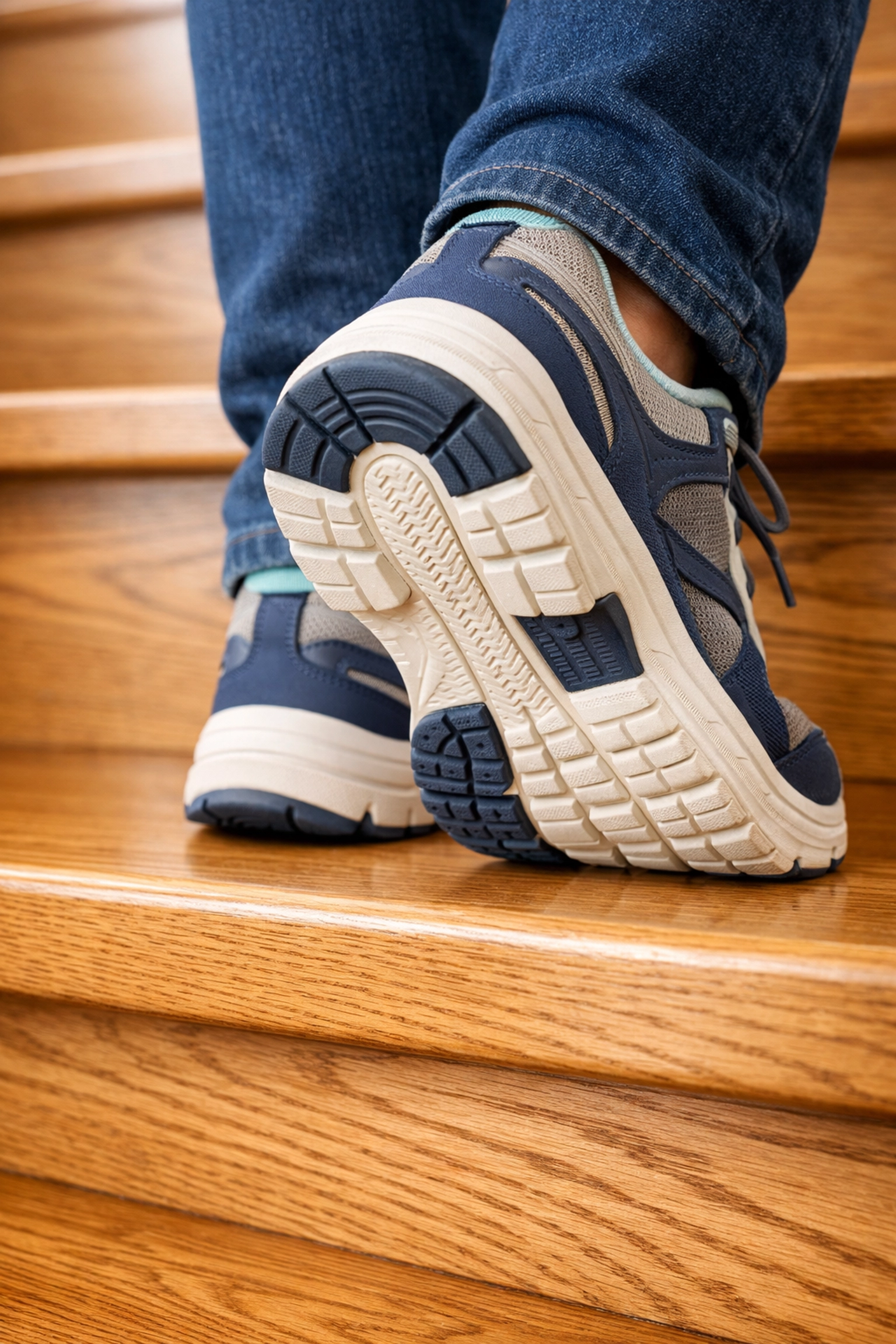
The Mistake: Navigating wooden or tiled stairs in socks is incredibly dangerous, as socks provide almost zero traction. Likewise, loose-fitting slippers, "flip-flops," or shoes with smooth, worn-out soles can easily slide off the edge of a step.
The Fix: Always wear footwear with a non-slip rubber sole and a closed back. If you prefer not to wear outdoor shoes inside, keep a pair of dedicated "indoor-only" sneakers or sturdy supportive slippers by the stairs. If you absolutely must go barefoot, ensure your feet are dry, but generally, a supportive shoe with a grip is the gold standard for stair safety.
6. Ignoring Minor Structural Issues
Staircases are under constant stress. Over time, wood expands and contracts, nails loosen, and carpet fibers wear down.
The Mistake: Ignoring "the squeak" or "the wobble." A handrail that wiggles slightly might seem like a minor annoyance, but if you actually stumble and put your full weight on it, that "wiggle" could lead to a total structural failure. Similarly, a carpet runner that has become loose or "bunched" can catch a toe and cause a forward fall.
The Fix: Perform a monthly "Stair Audit."
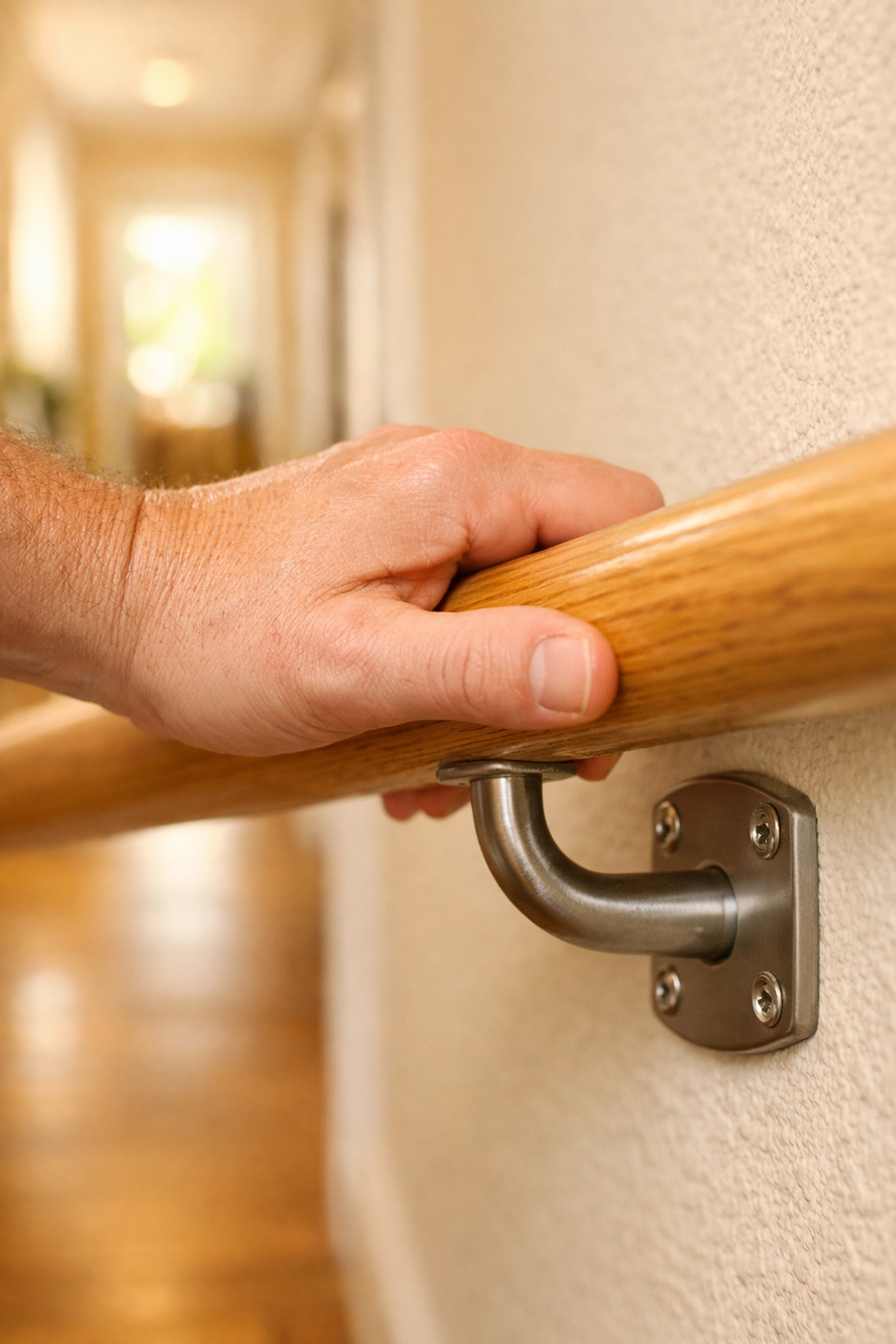
- The Rail Test: Pull on your handrails with significant force. They should not move at all. If they do, tighten the brackets or add more support.
- The Tread Test: Step on the front, middle, and back of each step. Listen for creaks and feel for movement. If a board is loose, secure it with wood screws (not nails, which can pull back out).
- The Carpet Check: Ensure carpet is pulled tight and secured with tack strips or staples. If the carpet is balding or slippery, consider removing it and replacing it with non-slip adhesive treads.
7. Vision and Depth Perception Challenges
How we see the stairs is often more important than the physical state of the stairs.
The Mistake: Wearing bifocals or multifocal lenses while using the stairs. Multifocal lenses are designed so the bottom portion of the lens is for reading (close-up). When you look down at your feet to navigate a staircase, you are looking through the "reading" part of your glasses. This can make the steps appear blurry or shifted, severely distorting your depth perception.
The Fix: This is a tip often shared by physical therapists: If you use bifocals, try to tuck your chin down further so you are looking through the "distance" (top) part of your glasses when looking at the steps. Alternatively, talk to your optometrist about having a pair of single-vision glasses specifically for walking and moving around the house. It may seem like a hassle to switch, but the clarity it provides on the stairs is a game-changer for safety.
Bonus: The Role of the Landing
The safety of a staircase doesn't end with the last step. The "landing": the flat area at the top and bottom: is where many accidents happen as people transition from climbing to walking.
Make sure your landings are clear of area rugs that don't have a non-slip backing. A rug that slides out from under you just as you finish a descent is a major hazard. Ensure the lighting remains bright for several feet beyond the stairs so your eyes don't have to adjust to a dark hallway immediately after the physical exertion of the climb.
Moving Forward with Confidence
Stair safety isn't about fear; it's about empowerment. By identifying these seven mistakes and taking small, methodical steps to fix them, you are protecting your independence. You are making your home a place where you can move freely and securely.
Start with one thing today. Maybe it’s clearing the shoes off the bottom step, or perhaps it’s ordering a roll of high-contrast grip tape. Each small change adds a layer of protection, ensuring that the stairs remain a functional part of your home rather than a source of worry.
Take your time, use your handrails, and stay safe.

